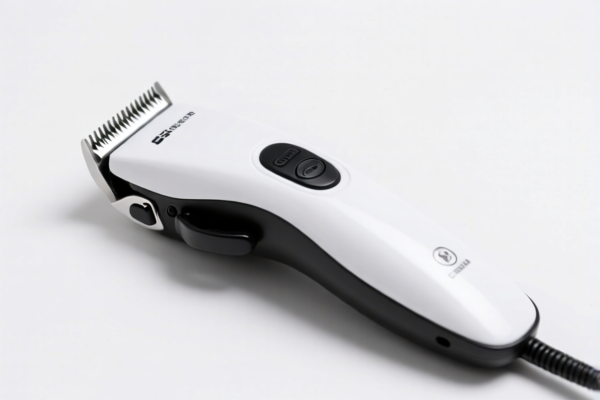
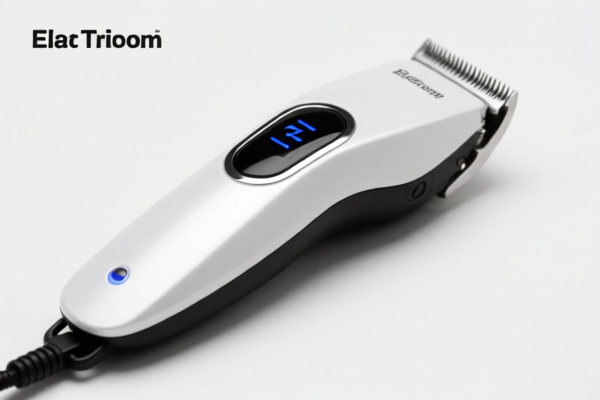
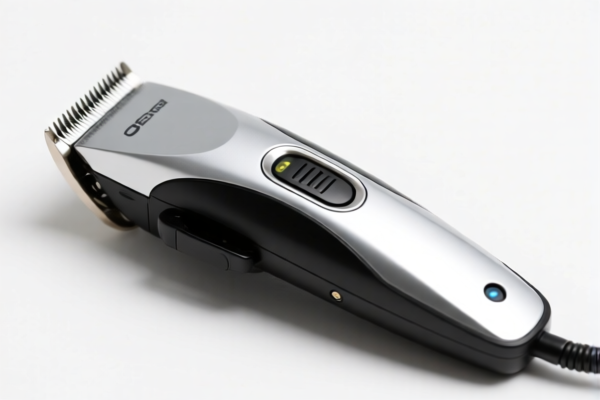
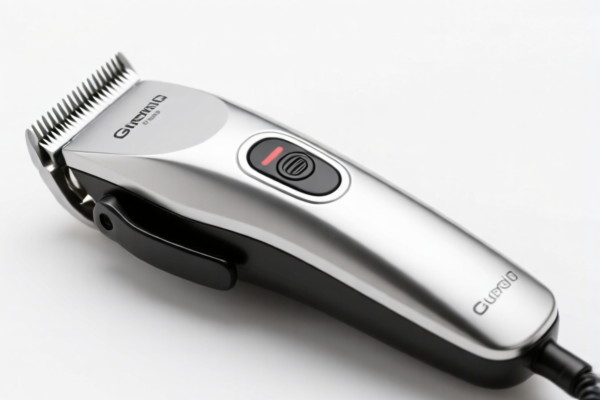
electric clipper
CN → US| HS Code | Tariff Rate | Origin | Destination | Doc |
|---|---|---|---|---|
| 8203300000 | 35.0% | CN | US | Official Doc |
| 8205595510 | 40.3% | CN | US | Official Doc |
| 8467195090 | 35.0% | CN | US | Official Doc |
| 8203206060 | 0.0% | CN | US | Official Doc |
| 8205595505 | 40.3% | CN | US | Official Doc |
| 8467891000 | 17.5% | CN | US | Official Doc |
Product Images
AI Analysis
✂️ Electric Clippers / Cable Cutters (Metal Cutting Tools)
🌐 HS Code Reference & Customs Clearance Guide | 2026 Latest Tariff Analysis | Professional Clearance Strategy
📌 I. Product Definition & Classification: Do You Really Understand "Electric Clippers"?
In international trade, "Electric Clippers" (often referred to as Electric Cable Cutters or Rechargeable Scissor-Type Cutters) are power tools used for cutting metal cables, bolts, and thick wires. They are generally classified under Hand Tools or Power Tools, depending on their structural characteristics (motorized vs. manual) and specific mechanism.
The provided data highlights a critical divergence in classification based on whether the tool is viewed primarily as a Hand Tool (Chapter 82) or a Power Tool/Part of Power Tools (Chapter 84).
⚠️ Key Distinction Point:
- If classified as a metal hand tool (even if motor-assisted, focusing on the cutting action), it often falls under 8203 or 8205.
- If classified as a power tool (focusing on the motor/drive mechanism), it may fall under 8467.
- Material: The summary explicitly states the material is Metal (Steel/Iron).
📦 II. HS Code Classification Details (2026 Latest Tariff Authority Match)
| HS Code | Product Description | Application Scenario | Tax Category |
|---|---|---|---|
8203.30.00.00 |
Pliers, pincers, tweezers, and similar hand tools; cutting tools made of metal; shears for metal | Electric/Manual metal shears, heavy-duty cable cutters | 🛠️ Metal Shear/Tool |
8205.59.55.10 |
Other hand tools (not specified elsewhere): Cutting tools; Steel-made | Steel cable cutters, specialized steel hand tools | 🛠️ Steel Hand Tool |
8467.19.50.90 |
Tools for working in the direction of the goods of heading 84.56 to 84.65, other; Pneumatic or other tools | Motorized/Pneumatic cable cutting tools, power tool accessories | 🔌 Power/Pneumatic Tool |
8203.20.60.60 |
Pipe cutters, bolt cutters, and similar hand tools; Metal material | Heavy-duty bolt/cable cutters, manual or semi-electric | 🛠️ Pipe/Bolt Cutter |
8205.59.55.05 |
Other hand tools: Iron or Steel; Hand tool shape | Iron/Steel cable clippers, standard hand-held cutters | 🛠️ Iron/Steel Tool |
8467.89.10.00 |
Other power tools; Scissor-type tools; Manual tool attribute for cutting cables | Scissor-style electric cutters, manual-assisted power tools | 🔌 Scissor/Power Tool |
🔍 Key Reminder:
- Chapter 82 (8203, 8205): Focuses on the cutting function and metal material. Even if electric, if the core identity is a "hand-held cutting tool," this chapter is often chosen for specific duty calculations.
- Chapter 84 (8467): Focuses on the power source (electric/pneumatic) or broader "tools for working metal."
- Discrepancy in Duty: Notice that8467.89.10.00has a 17.5% total tax, while most Chapter 82 codes have 35% or 40.3%. This makes Chapter 84 potentially more cost-effective for electric models, provided the classification is justified.
💰 III. 2026 Latest Tariff Rate Details (Including Surtaxes & Policy Surcharges)
✅ Applicable Country: United States (US)
✅ Origin: China (CN)
✅ Effective Date: Post-2025 (Based on provided tax details)
🎯 1. 8203.30.00.00 —— Metal Shears / Cutting Tools (Metal Material)
| Item | Content |
|---|---|
| Base Duty | 0% (ad valorem) |
| USITC Surtax (Section 301) | +25.0% |
| 122 Clause Tariff (IEEPA) | +10.0% |
| Total Rate | 35.0% |
| Tax Calculation | CIF Value × 35% |
| De Minimis Exemption | ❌ Not Eligible (High tax rate excludes de minimis clearance under current rules) |
| Legal Basis Path | Section 301: 8203.30.00.00 → IEEPA:122 Clause |
📌 Explanation:
- Although the base duty is 0%, the Section 301 surtax (25%) and 122 Clause (10%) add up to 35%.
- This is a high-cost classification for Chinese-origin metal cutting tools.
🎯 2. 8205.59.55.10 & 8205.59.55.05 —— Steel/Iron Hand Tools
| Item | Content |
|---|---|
| Base Duty | 5.3% (ad valorem) |
| USITC Surtax (Section 301) | +25.0% |
| 122 Clause Tariff (IEEPA) | +10.0% |
| Total Rate | 40.3% |
| Tax Calculation | (CIF Value × 5.3%) + (CIF Value × 35%) = CIF × 40.3% |
| De Minimis Exemption | ❌ Not Eligible |
| Legal Basis Path | Section 301: 8205.59.55 → IEEPA:122 Clause |
📌 Explanation:
- This is the highest tax bracket among the provided options.
- The base duty of 5.3% adds to the 35% surtaxes.
- Risk: High clearance cost. Avoid this HS Code if a lower tax alternative (like 8467) is applicable.
🎯 3. 8467.19.50.90 & 8467.89.10.00 —— Power Tools / Pneumatic Tools
| Item | Content |
|---|---|
| Base Duty (8467.19) | 0% |
| Base Duty (8467.89) | 0% |
| USITC Surtax (Section 301) | +25.0% (for 8467.19) / +7.5% (for 8467.89) |
| 122 Clause Tariff (IEEPA) | +10.0% |
| Total Rate (8467.19) | 35.0% |
| Total Rate (8467.89) | 17.5% |
| Tax Calculation | CIF × Total Rate |
| De Minimis Exemption | ❌ Not Eligible (for 35%); ⚠️ Check for 17.5% |
| Legal Basis Path | Section 301: 8467 → IEEPA:122 Clause |
📌 Critical Insight:
-8467.89.10.00is the most cost-effective option at 17.5%.
- This requires the product to be classified as a "Scissor-type tool" with "Manual tool attribute" but falling under power tools.
- Justification: Must prove the tool is a power tool (electric) but functions like a manual scissor/cutter.
-8467.19.50.90is also 35.0%, same as Chapter 82.
🎯 4. 8203.20.60.60 —— Pipe Cutters / Bolt Cutters (Specific Hand Tools)
| Item | Content |
|---|---|
| Base Duty | 12¢/doz. + 5.5% |
| USITC Surtax (Section 301) | +25.0% |
| 122 Clause Tariff (IEEPA) | +10.0% |
| Total Rate | 12¢/doz. + 5.5% + 35.0% |
| Tax Calculation | Specific Duty (per dozen) + Ad Valorem (40.5% of CIF) |
| De Minimis Exemption | ❌ Not Eligible |
| Legal Basis Path | Section 301: 8203.20.60 → IEEPA:122 Clause |
📌 Explanation:
- This classification includes a Specific Duty (12 cents per dozen).
- The Ad Valorem rate is effectively 40.5% (5.5% base + 35% surtaxes).
- This is higher than 17.5% and comparable to 35-40% rates. Not recommended for low-value items due to specific duty.
🛠️ IV. Customs Clearance Practical Advice (Pitfall Avoidance Guide)
✅ 1. Document Checklist (All Required)
| Document | Required | Description |
|---|---|---|
| ✅ Product Specification Sheet | ✔️ | Must detail: Power source (Electric/Battery/Pneumatic), Cutting Capacity (mm/inches), Material (Steel/Alloy). |
| ✅ Photographs | ✔️ | Clear images showing: Brand, Model, Power Cord/Battery Pack, Cutting Jaw, Label. |
| ✅ Commercial Invoice | ✔️ | Must clearly state: "Electric Cable Cutter" or "Rechargeable Metal Cutter." Avoid vague terms like "Tool." |
| ✅ Packing List | ✔️ | Include accessories (batteries, chargers, cables). |
| ✅ FCC Certification | ✔️ | Mandatory for US. All electric tools must have FCC ID. |
| ✅ UL/ETL Report | ✔️ | Highly recommended for safety compliance. |
✅ 2. Declaration Strategy (Key Tips)
🔥 “Classify by Power Source, Justify by Function, Avoid ‘Hand Tool’ Trap if Possible!”
| Scenario | Correct Declaration | Wrong Practice |
|---|---|---|
| Electric Rechargeable Cutter | 8467.89.10.00 (If scissor-type) or 8467.19.50.90 |
Declaring as 8203 (Hand Tool) → 35-40% Duty |
| Manual Steel Cutter (Non-Electric) | 8203.30.00.00 or 8203.20.60.60 |
Declaring as 8467 → Misclassification Risk |
| Kit with Battery & Charger | Declare as Main Product (Cutter) | Splitting battery & tool → Higher total duty or compliance issues |
| Scissor-style Electric Cutter | 8467.89.10.00 (17.5%) |
Declaring as 8205 (40.3%) → Save 22.8% Duty! |
📌 Critical Advice:
- If your product is electric, try to justify classification under Chapter 84 (8467) to benefit from the 17.5% rate (specifically8467.89.10.00).
- To justify8467.89.10.00, emphasize the "Scissor-type" mechanism and "Power Tool" aspect in the description.
- If classified as a "Hand Tool" (Chapter 82), you are stuck with 35-40.3% duty.
✅ 3. Special Handling Cases
| Case | Handling Advice |
|---|---|
| OEM/White Label | Provide customer order + design specs to prove "Electric Power Tool" nature, not just "Metal Hand Tool." |
| Battery Included | Ensure UN38.3 and FCC certification are ready. Lithium batteries may require additional shipping declarations. |
| High-Capacity Cutters | If cutting capacity > 20mm, emphasize "Industrial Grade Power Tool" to support 8467 classification. |
| Misclassification Risk | If US CBP audits, they may reclassify 8467 to 8203 if they deem the motor a minor component. Pre-emptively justify the power tool classification. |
🌍 V. Global Market Clearance Comparison (2026 Latest)
| Country/Region | Recommended HS Code | Duty Rate | Certification | Note |
|---|---|---|---|---|
| 🇺🇸 USA | 8467.89.10.00 |
17.5% | FCC + UL | Best for Electric Scissor Cutters |
| 🇺🇸 USA | 8203.30.00.00 |
35.0% | None | Higher cost for Hand Tool classification |
| 🇪🇺 EU | 8205.59.55 |
~5-7% | CE + RoHS | No Section 301/122 surtaxes |
| 🇨🇳 China | 8203.30.00 |
~5-15% | CCC | Lower base duty |
| 🇬🇧 UK | 8203.30.00 |
~12-15% | UKCA | Post-Brexit rules apply |
📌 Conclusion:
- USA is the most complex market due to Section 301 (25%) and 122 Clause (10%) surtaxes.
- Optimization Strategy: Use8467.89.10.00for electric scissor-type cutters to achieve 17.5% total duty instead of 35-40%.
- EU/Asia: Lower duties, but ensure CE/UKCA compliance.
📌 VI. Common Errors & Pitfall Guide (Lessons Learned)
❌ Error 1: Declaring an Electric Cutter as a Hand Tool (8203)
👉 Consequence: 35-40.3% Duty. Missed opportunity to use 17.5% under 8467.
❌ Error 2: Declaring a Manual Cutter as a Power Tool (8467)
👉 Consequence: Misclassification. CBP may reclassify to 8203 and impose penalties.
✅ Correct: Manual = 8203; Electric = 8467.
❌ Error 3: Ignoring FCC Certification for Electric Tools
👉 Consequence: Seizure or Return at US Customs.
✅ Correct: Ensure FCC ID is on the label and documentation.
❌ Error 4: Vague Description "Tool"
👉 Consequence: Customs Holds for reclassification.
✅ Correct: Use "Electric Rechargeable Cable Cutter, Scissor-Type, 5000mAh Battery."
🎯 VII. Conclusion: Professional Declaration, Save Costs!
🎯 Remember the Mantra:
🔹 "Electric = 8467 (17.5%), Hand = 8203 (35-40%)"
🔹 "Scissor-Type Electric Cutter = Best Rate!"
🔹 "FCC is Mandatory for Electric Tools in USA!"
📌 Pro Tip:
If your electric clipper is Scissor-Type and Rechargeable, insist on 8467.89.10.00 with a detailed technical sheet proving the power-driven scissor mechanism. This can save you ~23% in duties compared to hand tool classification.
📣 Immediate Action:
📞 Contact a Licensed Customs Broker to verify the 8467 vs. 8203 classification for your specific model.
📄 Prepare FCC Certificate & UL Report before shipping to the US.
🚀 Declare Accurately to avoid delays, penalties, and excessive duties!
✨ Professional Customs Clearance Starts with Accurate Classification!
💼 Every Percent Saved is Pure Profit!
Customer Reviews
About HS Code Classification
The Harmonized System (HS) is an internationally standardized nomenclature developed by the World Customs Organization (WCO) to classify traded products. Over 200 countries use the HS system as the basis for customs tariffs, trade statistics, and import/export regulations.
Each HS code follows a hierarchical structure:
- Chapter (2 digits) — Broad category of goods (e.g., Chapter 84: Machinery and Mechanical Appliances)
- Heading (4 digits) — More specific grouping within the chapter
- Subheading (6 digits) — Internationally standardized breakdown, used by all WCO member countries
- National subdivisions (8-10 digits) — Country-specific extensions for further classification, such as US HTSUS 10-digit codes
Correct HS code classification is essential for smooth customs clearance, accurate duty payment, and compliance with trade regulations. Misclassification can lead to customs delays, overpayment of duties, or penalties.
When importing from CN to US, the applicable tariff rates may include:
- Most-Favored-Nation (MFN) rate — The standard duty rate applied to WTO members
- General rate — Applied to countries without trade agreements
- Trade remedy duties — Additional tariffs such as Section 301 (anti-dumping), Section 232 (national security), or countervailing duties
The information provided on this page is for reference purposes only. For official classification, please consult with your local customs authority or a licensed customs broker.