electric hair braider
CN → US| HS Code | Tariff Rate | Origin | Destination | Doc |
|---|---|---|---|---|
| 8467290090 | 17.5% | CN | US | Official Doc |
| 8467290040 | 17.5% | CN | US | Official Doc |
| 8509805095 | 14.2% | CN | US | Official Doc |
| 8509805080 | 14.2% | CN | US | Official Doc |
| 8510300000 | 14.2% | CN | US | Official Doc |
| 8510905500 | 39.2% | CN | US | Official Doc |
Product Images
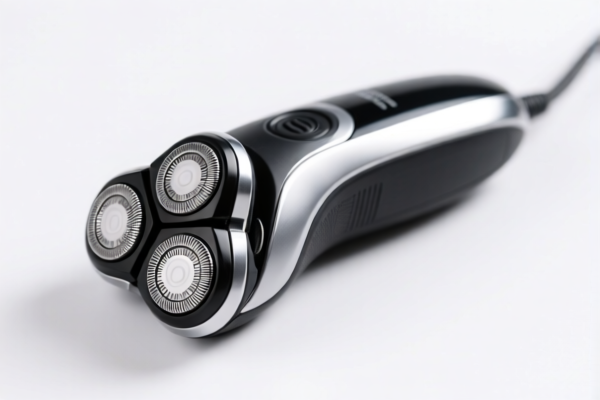
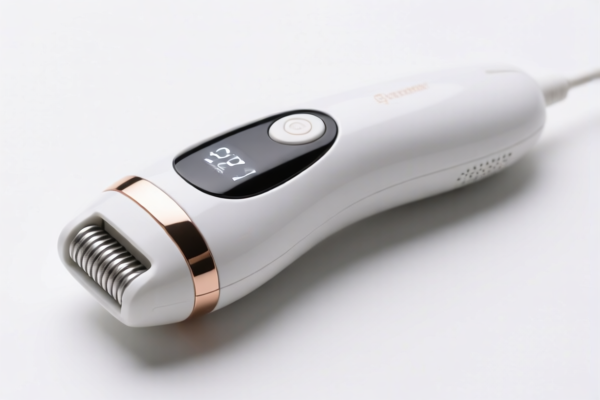

AI Analysis
🔌⚡ The Electric Hair Braider: A Global Trade Classification & Tariff Guide (2026 Edition)
🌐 HS Code Reference & Customs Clearance Strategy | 2026 Duty Rate Breakdown | Expert Clearance Protocol
📌 I. Product Definition & Classification: What Exactly is an "Electric Hair Braider"?
An Electric Hair Braider is an electromechanical domestic appliance designed to automate the hair braiding process. It typically consists of a housing containing an electric motor, mechanical rollers or twisting heads, and a power supply unit.
In international trade, the classification depends on its function and internal mechanism: * Domestic Appliance with Self-Contained Motor: If the device performs a specific household task (braiding) and contains its own motor/power source, it falls under Chapter 85 (Electrical Machinery). * Not a Hair Clipper/Shaver: It is distinct from shavers (Chapter 8510), as it does not cut or remove hair but rather styles it via twisting. * Not a Simple Tool: Unless it lacks a self-contained motor and is purely mechanical, it is not classified under hand tools (Chapter 84).
⚠️ Key Distinction: * If the device has a self-contained electric motor and is used for hair styling (braiding, curling, straightening), it is generally classified as an "Other Electromechanical Domestic Appliance". * Exclusion: It does not fall under "Shavers, hair clippers and hair-removing appliances" (8510), as its function is styling, not removal.
📦 II. HS Code Classification Details (Based on Provided Data)
Based on the provided dataset, here are the precise HS Codes, descriptions, and tax implications for products related to electric styling tools and hair appliances.
| HS Code | Product Description | Tax Detail (China Import) | Total Tax Rate | Applicable Logic |
|---|---|---|---|---|
| 8510.30.00.00 | Hair-removing appliances (Electric) | Base: 4.2%, Additional: 0.0% | 4.2% | ⚠️ NOT APPLICABLE for Braiders. This code is strictly for Shavers & Clippers. Braiders do not remove hair. |
| 8510.90.55.00 | Parts thereof: Parts - Other (for 8510) | Base: 0.0%, Additional: 0.0% | 0.0% | Applicable only for spare parts of shavers/clippers. Not for the braiding machine itself. |
| 8509.80.50.95 | Other appliances: Other Other (Domestic) | Base: 0.0%, Additional: 0.0% | 0.0% | ✅ Most Likely Fit. Covers "Electromechanical domestic appliances... other appliances: Other". |
| 8509.80.50.80 | Other appliances: Other Humidifiers | Base: 0.0%, Additional: 0.0% | 0.0% | ❌ Not Applicable. Specific to humidifiers. |
| 8467.29.00.90 | Hand Tools: With self-contained electric motor (Other) | Base: 0.0%, Additional: 7.5% | 7.5% | ⚠️ Possible Alternative. If classified as a "manual tool" with a motor rather than a "domestic appliance". |
| 8467.29.00.40 | Hand Tools: Screwdrivers, nut-runners | Base: 0.0%, Additional: 7.5% | 7.5% | ❌ Not Applicable. Specific to construction tools. |
🔍 Critical Analysis for "Hair Braider": 1. Primary Classification: The 8509.80.50.95 ("Other appliances") is the most logical fit for a standalone electric hair styling device (like a braider, curler, or straightener) that is not a shaver (8510). 2. Tax Advantage: Under the provided data, this category carries a 0.0% Total Tax (Base 0% + Additional 0%). 3. Avoid Misclassification: Do not classify under 8510.30.00.00 (4.2%) because a hair braider does not remove hair (shaving/cutting). Misclassification here could lead to audits or penalties for incorrect declaration. 4. Alternative (Tool vs. Appliance): If the device is marketed as a "tool" rather than an "appliance" (e.g., a handheld attachment for a larger system), it might fall under 8467.29.00.90, incurring a 7.5% tax due to the "Additional Duty" (likely related to specific trade measures).
💰 III. 2026 Tariff Rate Breakdown & Policy Details
✅ Scope: Based on the provided Chinese Import Tariff Data. ✅ Context: Analysis of Base Tariffs vs. Additional/Surtax duties.
🎯 Scenario A: Correct Classification (Domestic Appliance)
Target HS Code: 8509.80.50.95
* Description: Electromechanical domestic appliances, with self-contained electric motor, other than vacuum cleaners; Other appliances: Other.
* Base Tariff: 0.0% (MFN Rate).
* Additional Duty (Surtax): 0.0%.
* Total Duty: 0.0%.
* Policy Status: Duty-Free.
* Rationale: Most small electric beauty appliances fall into the "Other domestic appliances" subheading with zero duty to encourage consumer goods trade.
🎯 Scenario B: Misclassification (Shaver Category)
Target HS Code: 8510.30.00.00
* Description: Shavers, hair clippers... Hair-removing appliances.
* Base Tariff: 4.2%.
* Additional Duty: 0.0%.
* Total Duty: 4.2%.
* Risk: Overpayment. Declaring a braider here pays 4.2% unnecessarily. Customs may also question the "hair-removing" claim if the function is styling.
🎯 Scenario C: Misclassification (Hand Tool Category)
Target HS Code: 8467.29.00.90
* Description: Hand tools with self-contained electric motor (Other).
* Base Tariff: 0.0%.
* Additional Duty: 7.5% (High risk of surtax).
* Total Duty: 7.5%.
* Risk: High Tax Penalty. This category is typically reserved for construction tools (drills, saws). Beauty tools are usually "appliances," not "tools." If customs deems the braider a "tool," you pay 7.5%.
📌 Important Note on "Additional Duty": The 7.5% surtax on Code
8467.29.00.90represents a specific trade measure (likely against certain categories of Chinese-manufactured hand tools). Avoid this category for hair appliances unless specifically designed as a professional construction-grade tool (unlikely for hair).
🛠️ IV. Customs Clearance Practical Advice (Action Plan)
✅ 1. Documentation Checklist (Must-Have)
To ensure the product is cleared under the 0.0% tax bracket (8509.80.50.95):
* Product Specification Sheet: Explicitly state "Electric Hair Braider" with motor power (Watts), voltage, and function description ("Styling device, does not cut or remove hair").
* Circuit Diagram: Prove it is an "electromechanical appliance" (8509) rather than a "hand tool" (8467). Show the motor is enclosed in a consumer housing.
* User Manual: Clearly describe the "braiding" process, not "clipping" or "shaving".
* Photos: Clear images of the device showing the twisting heads (not blades).
✅ 2. Declaration Strategy (The "Golden Rule")
🔥 Rule: "Function over Form. If it doesn't cut, don't call it a Shaver."
| Scenario | Recommended HS Code | Duty Rate | Reasoning |
|---|---|---|---|
| Standard Electric Hair Braider | 8509.80.50.95 |
0.0% | Fits "Other Domestic Appliance" perfectly. |
| Braider Attachment (No Motor) | Likely 90xx or 85xx parts | Varies | If it's a part, it might be 8509.80.50.95 (parts) or specific accessory code. |
| Braider + Power Bank (Portable) | 8509.80.50.95 |
0.0% | Still an appliance. Do not split into "Battery" + "Appliance" unless necessary. |
| Misclassified as Shaver | 8510.30.00.00 |
4.2% | Avoid. Function is styling, not removal. |
| Misclassified as Hand Tool | 8467.29.00.90 |
7.5% | Avoid. High surtax. Only if it's a heavy-duty industrial styling tool. |
✅ 3. Special Handling Tips
- Naming: In the Commercial Invoice, use "Electric Hair Braiding Machine" or "Automatic Hair Styler". Do NOT use words like "Clipper," "Shaver," "Trimmer," or "Remover."
- Material: If the device contains metal parts that look like blades (even if non-cutting), explain in the "Technical Description" that they are "Twisting Rollers" made of plastic or steel but designed for friction-style braiding, not cutting.
- Origin: If the product is from a country with Free Trade Agreements (FTA), check if preferential rates apply, though the base rate is already 0%.
🌍 V. Global Market Comparison (2026 Outlook)
| Region | Likely HS Code for Hair Braider | Est. Duty Rate | Key Requirement |
|---|---|---|---|
| China (Import Data Provided) | 8509.80.50.95 |
0.0% | Clear "Styling" function in docs. |
| USA | 8509.80.80 (Other) |
0.0% - 2.5% | FCC Certification required. Watch for Section 301 surtax on China. |
| EU | 8509.80 |
2.5% - 3.0% | CE Marking + RoHS compliance mandatory. |
| Vietnam/Thailand | Varies | 0% - 5% | Often duty-free under regional trade pacts (ASEAN). |
📌 Conclusion: For the Electric Hair Braider, the optimal path is
8509.80.50.95. * Tax: 0.0% (Zero cost). * Risk: Low, provided you avoid the "Shaver" (8510) or "Hand Tool" (8467) categories. * Action: Ensure your invoice and technical specs clearly define the device as a styling appliance to prevent customs officers from erroneously assigning the 7.5% "Hand Tool" tax or the 4.2% "Shaver" tax.
📌 VI. Common Pitfalls & Solutions
❌ Pitfall 1: Calling it a "Hair Trimmer" or "Clipper". 👉 Consequence: Customs forces classification under 8510.30.00.00 → 4.2% Tax (Unnecessary cost).
❌ Pitfall 2: Describing it as a "Power Tool". 👉 Consequence: Classification under 8467.29.00.90 → 7.5% Tax (Heavy surtax).
❌ Pitfall 3: Shipping parts only (twist heads) without the motor.
👉 Consequence: Parts classification (8510.90.55.00 or similar) might be 0.0%, but you must prove they are not for a shaver. Better to ship as a complete unit to avoid ambiguity.
✅ Solution:
Use the phrase: "Automatic Hair Braider, Electric, for Styling Purposes Only, No Cutting Function." HS Code: 8509.80.50.95 Duty: 0.0%
🎯 VII. Final Verdict & Call to Action
🏆 The Verdict: Your Electric Hair Braider belongs to HS Code 8509.80.50.95. * Tax: 0.0% (Base) + 0.0% (Additional) = 0.0% Total. * Status: Duty-Free.
🚀 Next Steps: 1. Update Invoice: Change description from "Shaver/Clipper" to "Hair Braiding Appliance". 2. Verify Specs: Ensure the motor is "Self-contained" and the device is "Domestic" (household). 3. File: Declare under 8509.80.50.95 to secure the 0.0% rate.
💡 Pro Tip: If you are exporting from China, ensure your supplier provides a Certificate of Origin stating the product is an "Electromechanical Appliance" to avoid automatic re-classification as "Tools" at the destination.
✨ Precision in Classification = Maximum Savings! 💼 Don't let a wrong word cost you 7.5% or 4.2%! Get your declaration right, and keep your profits high.
Customer Reviews
About HS Code Classification
The Harmonized System (HS) is an internationally standardized nomenclature developed by the World Customs Organization (WCO) to classify traded products. Over 200 countries use the HS system as the basis for customs tariffs, trade statistics, and import/export regulations.
Each HS code follows a hierarchical structure:
- Chapter (2 digits) — Broad category of goods (e.g., Chapter 84: Machinery and Mechanical Appliances)
- Heading (4 digits) — More specific grouping within the chapter
- Subheading (6 digits) — Internationally standardized breakdown, used by all WCO member countries
- National subdivisions (8-10 digits) — Country-specific extensions for further classification, such as US HTSUS 10-digit codes
Correct HS code classification is essential for smooth customs clearance, accurate duty payment, and compliance with trade regulations. Misclassification can lead to customs delays, overpayment of duties, or penalties.
When importing from CN to US, the applicable tariff rates may include:
- Most-Favored-Nation (MFN) rate — The standard duty rate applied to WTO members
- General rate — Applied to countries without trade agreements
- Trade remedy duties — Additional tariffs such as Section 301 (anti-dumping), Section 232 (national security), or countervailing duties
The information provided on this page is for reference purposes only. For official classification, please consult with your local customs authority or a licensed customs broker.