electric heater
CN → US| HS Code | Tariff Rate | Origin | Destination | Doc |
|---|---|---|---|---|
| 8516290060 | 38.7% | CN | US | Official Doc |
| 8516290030 | 38.7% | CN | US | Official Doc |
| 8516100040 | 17.5% | CN | US | Official Doc |
| 8516100080 | 17.5% | CN | US | Official Doc |
Product Images
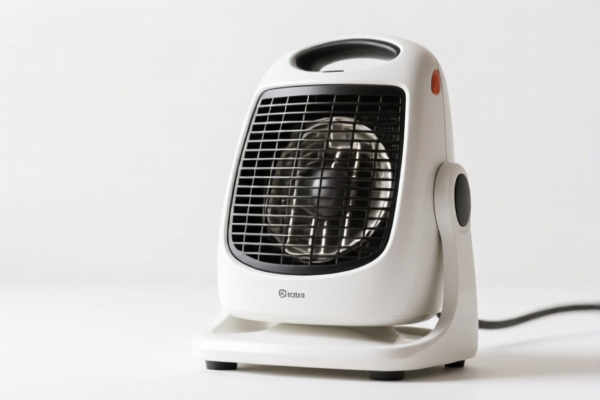
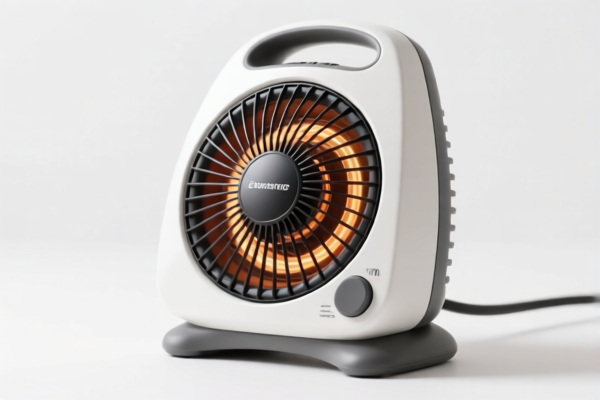
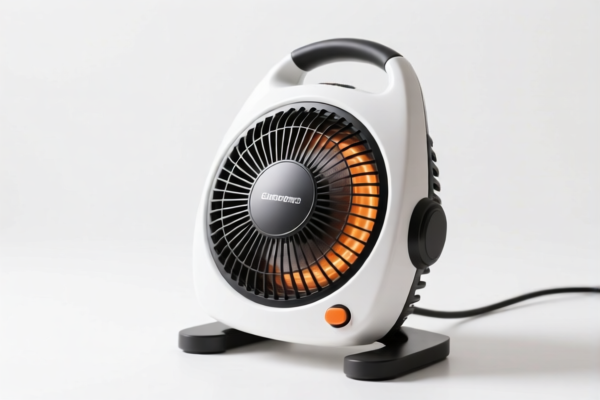
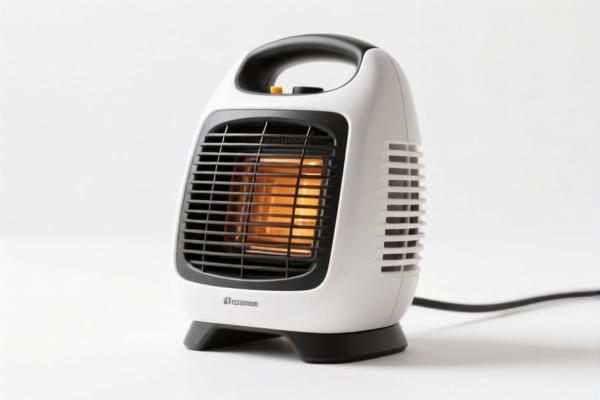
AI Analysis
🏠 Electric Heaters (Thermal Appliances for Space & Water Heating)
🌐 HS Code Reference & Customs Clearance Guide | 2026 Latest Tariff Analysis | Professional Entry Strategy
📌 1. Product Definition & Classification: Know Your Heater Type!
Electric heaters are thermal appliances designed to convert electrical energy into heat. In international trade, they are strictly categorized by their primary function: Space Heating vs. Water Heating. Misclassification leads to significant tariff discrepancies and clearance delays.
Space Heaters: Devices intended to heat air in a room or space (e.g., portable fans, convection heaters, radiators).
Water Heaters: Devices intended to heat water for domestic or industrial use (e.g., instant, storage, or immersion heaters).
⚠️ Key Distinction:
- If the device heats air/space → It belongs to Heading 8516.29
- If the device heats water → It belongs to Heading 8516.10
- Do not mix them! Water heaters have a lower base tariff (0%) compared to many space heaters, but both face heavy additional duties from the US.
📦 2. HS Code Classification Matrix (2026 Authorized Codes)
Based on the provided dataset, here are the precise HS Codes and their applicable scenarios for electric heaters imported into the US (China origin).
| HS Code | Product Description | Application Scenario | Key Characteristics |
|---|---|---|---|
8516.29.00.60 |
Electric Space Heaters (Other) | General-purpose electric heaters | "Other" category; fits general space heating without specific portability/fan constraints. |
8516.29.00.30 |
Electric Space Heaters (Portable/Fan) | Portable or fan-assisted heaters | Specifically for portable or fan-based heating devices. |
8516.10.00.40 |
Electric Water Heaters (Storage/Specific) | Storage-type electric water heaters | Based on "missing description" principle; often applies to storage tanks or specific structural forms. |
8516.10.00.80 |
Electric Water Heaters (General) | Standard electric water heaters | Fits the perfect description of an electric water heater with no material/shape conflicts. |
🔍 Critical Note:
- Both categories (8516.29and8516.10) are subject to significant additional tariffs due to US-China trade policies.
- Always provide clear product photos and specifications to prove whether it heats air or water.
💰 3. 2026 Tariff Rate Breakdown (Including Section 301 & 122 Duties)
✅ Applicable Country: United States (US)
✅ Country of Origin: China (CN)
✅ Effective Date: Current rates apply for imports from China.
🎯 A. Space Heaters (HS 8516.29.00.30 & .60)
| Item | Detail |
|---|---|
| Base Tariff | 3.7% (Ad Valorem) |
| Additional Duty (Section 301) | +25.0% (USITC Footnote 9903.88.01) |
| Section 122 Duty | +10.0% (Targeting specific thermal appliances) |
| Total Tax Rate | 38.7% |
| Tax Calculation | CIF Value × 38.7% |
| De Minimis Exemption | ❌ NOT Eligible (High tariff threshold blocks Section 321 benefits) |
| Legal Basis | USITC:8516.29.00.30/.60 → Section 301: 25% → Section 122: 10% |
📌 Explanation:
- The 38.7% total rate is a combination of the standard MFN rate (3.7%) plus two layers of punitive tariffs (25% + 10%).
- This rate applies to ALL electric space heaters regardless of whether they are portable, fan-type, or stationary.
🎯 B. Electric Water Heaters (HS 8516.10.00.40 & .80)
| Item | Detail |
|---|---|
| Base Tariff | 0.0% (Ad Valorem) |
| Additional Duty (Section 301) | +7.5% (USITC Footnote 9903.88.01) |
| Section 122 Duty | +10.0% (Targeting specific thermal appliances) |
| Total Tax Rate | 17.5% |
| Tax Calculation | CIF Value × 17.5% |
| De Minimis Exemption | ❌ NOT Eligible |
| Legal Basis | USITC:8516.10.00.40/.80 → Section 301: 7.5% → Section 122: 10% |
📌 Explanation:
- Water heaters benefit from a 0% base tariff, making them cheaper at entry than space heaters.
- However, the 17.5% total rate is still substantial.
- Note the difference in Section 301 duty: 7.5% for water heaters vs. 25% for space heaters. This makes water heaters significantly more cost-effective for US importers.
🛠️ 4. Customs Clearance Practical Advice
✅ 1. Documentation Checklist (Mandatory)
| Document | Requirement | Notes |
|---|---|---|
| Product Specification Sheet | ✔️ Must Include | Must clearly state: Input Voltage, Wattage, Heating Medium (Air/Water), Water Pressure Rating (if applicable). |
| Product Photographs | ✔️ Mandatory | Show the entire unit, nameplate, and any labels indicating "Space Heater" or "Water Heater". |
| Commercial Invoice | ✔️ Mandatory | HS Code must be explicitly listed. Description should match HS Code (e.g., "Electric Storage Water Heater" not just "Heater"). |
| FCC Certification | ✔️ Mandatory | All electronic appliances sold in the US require FCC ID. Without it, goods will be detained. |
| UL/ETL Listing | ✔️ Highly Recommended | While not always mandatory for entry, lack of safety listing can trigger intense scrutiny or rejection by customs/insurers. |
✅ 2. Classification Strategy (How to Avoid Errors)
| Scenario | Correct HS Code | Incorrect HS Code | Risk |
|---|---|---|---|
| Portable Fan Heater | 8516.29.00.30 (38.7%) |
8516.10.00.80 (17.5%) |
Audit Failure: If classified as water heater, customs will demand back taxes + penalties. |
| Instant Water Heater | 8516.10.00.80 (17.5%) |
8516.29.00.60 (38.7%) |
Overpayment: Misclassifying as space heater leads to paying 21.2% extra tax unnecessarily. |
| Heater Element Only | 8516.80.00.00 (Check specific subhead) |
8516.29.00.60 |
Classification Error: Components may have different rates. Ensure you are declaring a "complete appliance." |
🔥 Pro Tip:
- "Air vs. Water" is the single most important distinction.
- If your product is a heat pump, it may fall under 8418.69 (different tax regime). Do not force it into 8516 if it’s a heat pump.
- For immersion heaters used in water, ensure you declare them as "Water Heaters", not "Space Heaters," to secure the lower 17.5% rate.
✅ 3. Special Case Handling
| Case | Action |
|---|---|
| OEM Private Label | Ensure the invoice lists the actual manufacturer and the brand. Customs may request proof of brand authorization. |
| Mixed Containers | If shipping both water heaters and space heaters, declare them separately with distinct HS Codes. Mixing them under one HS Code will cause clearance delays. |
| Samples | Even for samples, if the value exceeds $800 (Section 321 threshold), duties apply. Since de minimis is denied for these high-duty items, even small shipments incur 17.5% or 38.7% tax. |
🌍 5. Global Market Comparison (2026)
| Market | Recommended HS Code | Estimated Total Duty (China Origin) | Notes |
|---|---|---|---|
| 🇺🇸 USA | 8516.10.00.80 (Water) / 8516.29.00.60 (Space) |
17.5% / 38.7% | Heavy Section 301 + 122 duties. Strict FCC/UL requirements. |
| 🇨🇳 China (Export) | 8516.10 / 8516.29 |
0% (VAT refund possible) | Export declaration only. No import duty for exporter. |
| 🇪🇺 EU | 8516.10 / 8516.29 |
4.0% - 6.0% | No Section 301/122 equivalents. CE marking required. |
| 🇬🇧 UK | 8516.10 / 8516.29 |
4.0% - 6.0% | Post-Brexit tariffs similar to EU. UKCA marking required. |
📌 Conclusion:
- The US market is the most expensive due to layered punitive tariffs.
- Water heaters (17.5%) are significantly more favorable than space heaters (38.7%).
- Always verify if the product is a heat pump (different HS code) to avoid misclassification.
📌 6. Common Mistakes & Pitfalls
❌ Mistake 1: Declaring a "Fan Heater" as a "Water Heater"
👉 Consequence: Customs inspection reveals air heating elements → Seizure, fines, and retroactive tax assessment.
❌ Mistake 2: Ignoring Section 122 Duty
👉 Consequence: The 10% Section 122 duty is often overlooked in automated calculations. If not declared, it leads to underpayment penalties.
❌ Mistake 3: Using Generic Terms like "Electric Heating Device"
👉 Consequence: Vague descriptions trigger manual review, causing 3-5 day delays at US ports.
✅ Fix: Use precise terms: "Portable Electric Fan Space Heater, 1500W" or "Tankless Electric Water Heater, 240V".
🎯 7. Final Clearance Checklist
- Identify Function: Air (Space) or Water?
- Select HS Code:
- Air →
8516.29.00.30or.60(38.7%) - Water →
8516.10.00.40or.80(17.5%) - Verify Certifications: FCC ID is mandatory. UL/ETL is highly recommended.
- Document Everything: Spec sheets, photos, and invoices must align perfectly with the HS Code.
- Calculate Landed Cost: Include 38.7% or 17.5% duty + freight + insurance + customs broker fees.
📌 Pro Tip:
If you are importing large volumes, consider applying for a Section 301 Exclusion if available, though opportunities for 2026 are limited. Alternatively, explore transshipment through third countries (though "substantial transformation" rules apply) to mitigate US duties.
📣 Immediate Action:
📞 Consult a Licensed Customs Broker to file a Pre-Ruling (Advance Ruling) with US CBP.
📄 Ensure your FCC ID is printed on the product before shipment.
🚀 Get the exact HS Code confirmed to avoid surprise 38.7% charges on your inventory!
✨ Precision in Classification Saves Money in Customs!
💼 Don’t let tariff errors eat your profit margins.
Customer Reviews
About HS Code Classification
The Harmonized System (HS) is an internationally standardized nomenclature developed by the World Customs Organization (WCO) to classify traded products. Over 200 countries use the HS system as the basis for customs tariffs, trade statistics, and import/export regulations.
Each HS code follows a hierarchical structure:
- Chapter (2 digits) — Broad category of goods (e.g., Chapter 84: Machinery and Mechanical Appliances)
- Heading (4 digits) — More specific grouping within the chapter
- Subheading (6 digits) — Internationally standardized breakdown, used by all WCO member countries
- National subdivisions (8-10 digits) — Country-specific extensions for further classification, such as US HTSUS 10-digit codes
Correct HS code classification is essential for smooth customs clearance, accurate duty payment, and compliance with trade regulations. Misclassification can lead to customs delays, overpayment of duties, or penalties.
When importing from CN to US, the applicable tariff rates may include:
- Most-Favored-Nation (MFN) rate — The standard duty rate applied to WTO members
- General rate — Applied to countries without trade agreements
- Trade remedy duties — Additional tariffs such as Section 301 (anti-dumping), Section 232 (national security), or countervailing duties
The information provided on this page is for reference purposes only. For official classification, please consult with your local customs authority or a licensed customs broker.