electric motor 8501514040
CN → USProduct Images
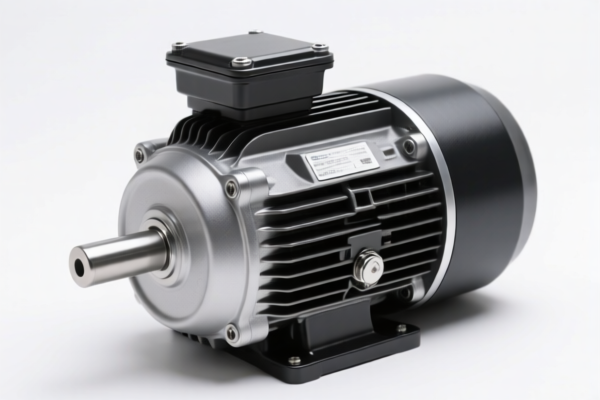
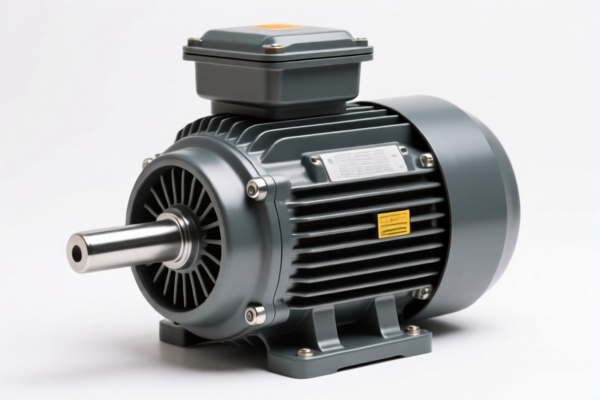
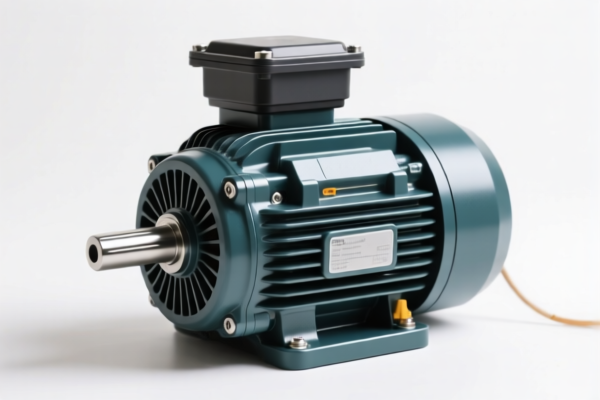
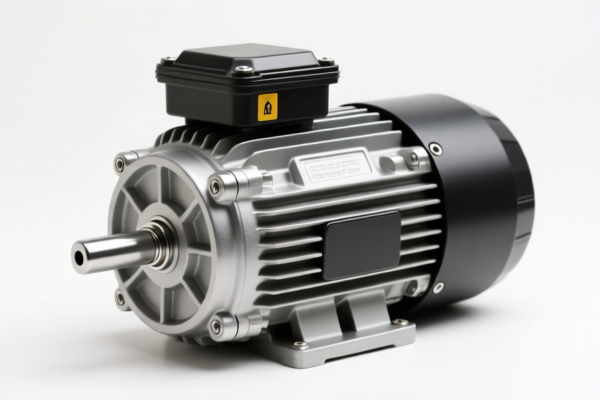
AI Analysis
⚡ Electric Motors (Specifically: AC Motors with Output ≤ 37.5W)
🌐 HS Code 8501.51.40.40 Clearance Guide | 2026 Tariff Deep Dive | Precision Classification Strategy
📌 I. Product Definition & Classification: Is Your Motor Really "Small"?
Electric motors are the heart of industrial automation, consumer appliances, and automotive systems. However, HS Code 8501.51.40.40 is highly specific. It does not refer to large industrial motors or DC motors. It strictly refers to:
AC Synchronous or Asynchronous Motors with an Output Power ≤ 37.5 Watts.
⚠️ Critical Distinction:
- If the motor is DC (Direct Current) → It falls under 8501.10 or 8501.33/34/35 depending on power.
- If the motor is AC (Alternating Current) but output > 37.5W → It falls under 8501.52 or 8501.53.
- If the motor is AC and output ≤ 37.5W → It falls under 8501.51.
Key Components of 8501.51.40.40: 1. Type: AC Motor (Synchronous or Asynchronous/Induction). 2. Power: Rated output must be ≤ 37.5 Watts (approx. 0.05 HP). 3. Sub-Country Code: The .40.40 suffix typically indicates a specific national sub-heading (e.g., China’s specific export/import code for this power range).
📌 Common Applications:
- Small household appliances (blenders, fans, coffee grinders).
- Precision instruments (medical devices, optical equipment).
- Hobbyist electronics (RC cars, drones – if AC driven via inverter, though rare).
- Industrial control valves (small actuators).
📦 II. HS Code Classification Details (2026 Tariff Book Reference)
| HS Code | Product Description | Power Range | Motor Type |
|---|---|---|---|
8501.51.40.40 |
Electric motors, alternating current, synchronous, output ≤ 37.5W | ≤ 37.5W | AC Synchronous/Asynchronous |
8501.52.10.00 |
AC Motors, output > 37.5W but ≤ 750W | 37.5W – 750W | AC |
8501.33.00.00 |
DC Series Motors, output ≤ 37.5W | ≤ 37.5W | DC (Incorrect for 8501.51) |
8501.10.00.00 |
DC Motors, output ≤ 37.5W | ≤ 37.5W | DC (Incorrect for 8501.51) |
🔍 Focus on 8501.51.40.40:
- This code is strictly for AC motors.
- The .40.40 is often a national sub-code (e.g., in China, it may refer to specific export categories).
- Do not confuse with 8501.52 (higher power) or 8501.10 (DC).
💰 III. 2026 Tariff Rate Breakdown (US Import Scenario)
✅ Applicable Country: United States (US)
✅ Origin: China (CN)
✅ Effective Date: November 10, 2025 (current tariff regime)
🎯 1. HS Code: 8501.51.40.40 — AC Motors ≤ 37.5W
| Item | Content |
|---|---|
| Base Tariff Rate (MFN) | 2.5% (ad valorem) |
| Section 301 Exclusion | ❌ Excluded (Most motors from China are subject to Section 301) |
| Section 301 Additional Duty | +25% (Footnote 9903.88.01 applies to most electrical machinery) |
| IEEPA Additional Duty | +10% (Under EO 14117, effective Nov 10, 2025) |
| Total Effective Rate | 37.5% |
| Tax Calculation | (CIF Value) × 37.5% |
| De Minimis Eligibility | ❌ No (denied_de_minimis for Section 301 items) |
| Legal Authority Path | USITC:8501.51.40.40 → USITC:Footnote 9903.88.01 → IEEPA:9903.01.25 |
📌 Explanation:
- Base Rate: 2.5% is the standard Most Favored Nation (MFN) rate for small motors.
- Section 301: Added 25% due to the Trump-era tariffs, which remain in place under Biden.
- IEEPA: Added 10% as of November 2025, targeting strategic sectors including electronics and machinery.
- Total: 37.5% is a significant cost factor. Profit margins must account for this.
🛠️ IV. Clearance Practical Advice (Avoid Pitfalls)
✅ 1. Documentation Checklist (Non-Negotiable)
| Document | Must Provide | Notes |
|---|---|---|
| ✅ Product Specification Sheet | ✔️ | Must clearly state: AC Input, Output Power (Watts), Speed (RPM), Voltage. |
| ✅ Motor Nameplate Photo | ✔️ | Must show rated output in Watts (not HP or kW). |
| ✅ Circuit Diagram | ✔️ | To confirm it is AC-driven (not DC). |
| ✅ Commercial Invoice | ✔️ | Description: "AC Electric Motor, Output ≤ 37.5W, Model XYZ". |
| ✅ Certificate of Origin (CO) | ✔️ | Required for origin verification. |
| ✅ FCC Declaration (if US) | ✔️ | If the motor is sold as a standalone product, FCC certification may be required for electromagnetic compatibility. |
✅ 2. Classification Strategy (Key Rules)
| Scenario | Correct HS Code | Wrong HS Code | Consequence |
|---|---|---|---|
| AC Motor, 20W | 8501.51.40.40 |
8501.52.10.00 |
Overpaid tax (5.5% vs 2.5%) |
| DC Motor, 20W | 8501.10.00.00 |
8501.51.40.40 |
Underpayment + Penalty (DC is different) |
| AC Motor, 40W | 8501.52.10.00 |
8501.51.40.40 |
Misclassification (Power threshold violation) |
| Motor Controller (Driver) | 8537.10.00.00 |
8501.51.40.40 |
Wrong category (Controller ≠ Motor) |
🔥 Golden Rule:
"AC Power ≤ 37.5W = 8501.51.40.40"
"DC Power ≤ 37.5W = 8501.10"
"Power > 37.5W = 8501.52/53"
✅ 3. Special Cases
| Case | Handling Advice |
|---|---|
| Motor + Controller Sold Together | If sold as a single unit, classify based on the essential character. If the motor is the main component, it may still be 8501.51.40.40. However, if the controller is sophisticated, consider 8537.10 (control panels). |
| Used Motors | Generally not permitted for import without strict certification. New only. |
| Custom/Marine Motors | If for marine use, additional certifications (ABS, DNV) may be needed, but HS Code remains the same. |
🌍 V. Global Market Comparison (2026)
| Country/Region | Recommended HS Code | Tariff Rate (China Origin) | Certification Requirements |
|---|---|---|---|
| 🇺🇸 USA | 8501.51.40.40 |
37.5% (2.5% base + 25% Sec 301 + 10% IEEPA) | FCC, UL (if applicable) |
| 🇨🇳 China | 8501.51.40.40 |
5% (Import Duty) | CCC (if listed in mandatory catalog) |
| 🇪🇺 EU | 8501.51.10 |
1.7% | CE, RoHS, REACH |
| 🇬🇧 UK | 8501.51.10 |
1.7% | UKCA, RoHS |
| 🇯🇵 Japan | 8501.51.10 |
1.0% | PSE (if applicable) |
📌 Conclusion:
- USA has the highest tariff burden due to Section 301 and IEEPA.
- EU and UK have lower tariffs but strict environmental certifications (RoHS/REACH).
- China serves as a manufacturing hub, but export duties may apply if sourced from non-CEPA origins.
📌 VI. Common Mistakes & Pitfalls (Blood Lessons)
❌ Mistake 1: Confusing AC with DC
👉 Result: Incorrect HS Code → Customs seizure or reclassification penalty.
✅ Fix: Always verify the nameplate: "AC 110V/220V" vs "DC 12V/24V".
❌ Mistake 2: Miscalculating Output Power
👉 Result: Classifying a 40W motor as 8501.51.40.40.
✅ Fix: Use Output Power (Watts), not Input Power. Check the datasheet for "Rated Output".
❌ Mistake 3: Ignoring Section 301
👉 Result: Unexpected 25% tax at US Customs.
✅ Fix: Factor in 37.5% total tax for US imports. Consider supply chain diversification (e.g., Vietnam/Malaysia) for IEEPA exemptions.
❌ Mistake 4: Shipping Motors with Built-in Batteries
👉 Result: Hazardous goods declaration required (UN38.3, MSDS).
✅ Fix: If the motor is part of a device with a battery, classify as the device, not the motor.
🎯 VII. Conclusion: Precision is Profit
🎯 Remember the Mantra:
🔹 "AC, Small, Under 37.5W? That's 8501.51.40.40!"
🔹 "DC or Over? Different Code, Different Tax!"
🔹 "USA Tariff? 37.5% Total. Plan Your Margin!"
📌 Pro Tip:
If your motor is DC, use 8501.10.00.00 (if ≤37.5W) or 8501.33/34/35 (if higher). The tariff structure differs slightly, but the Section 301 and IEEPA add-ons still apply.
📣 Immediate Action:
📞 Confirm Motor Type (AC/DC) and Power (Watts) before shipping.
📄 Request a Tariff Engineering Review from your customs broker if combining motors with controllers.
🚀 Optimize Supply Chain: For US-bound goods, consider non-China origins to mitigate the 37.5% total tax.
✨ Expert Clearance Starts with Accurate Classification!
💼 Every Watt Counts – In Tariffs and Profits!
Customer Reviews
About HS Code Classification
The Harmonized System (HS) is an internationally standardized nomenclature developed by the World Customs Organization (WCO) to classify traded products. Over 200 countries use the HS system as the basis for customs tariffs, trade statistics, and import/export regulations.
Each HS code follows a hierarchical structure:
- Chapter (2 digits) — Broad category of goods (e.g., Chapter 84: Machinery and Mechanical Appliances)
- Heading (4 digits) — More specific grouping within the chapter
- Subheading (6 digits) — Internationally standardized breakdown, used by all WCO member countries
- National subdivisions (8-10 digits) — Country-specific extensions for further classification, such as US HTSUS 10-digit codes
Correct HS code classification is essential for smooth customs clearance, accurate duty payment, and compliance with trade regulations. Misclassification can lead to customs delays, overpayment of duties, or penalties.
When importing from CN to US, the applicable tariff rates may include:
- Most-Favored-Nation (MFN) rate — The standard duty rate applied to WTO members
- General rate — Applied to countries without trade agreements
- Trade remedy duties — Additional tariffs such as Section 301 (anti-dumping), Section 232 (national security), or countervailing duties
The information provided on this page is for reference purposes only. For official classification, please consult with your local customs authority or a licensed customs broker.