electric motor hs code 8501104020
CN → US| HS Code | Tariff Rate | Origin | Destination | Doc |
|---|---|---|---|---|
| 8501106040 | 37.8% | CN | US | Official Doc |
| 8501106040 | 37.8% | CN | US | Official Doc |
| 8501516020 | 37.5% | CN | US | Official Doc |
| 8501106040 | 37.8% | CN | US | Official Doc |
| 8501106040 | 37.8% | CN | US | Official Doc |
Product Images


AI Analysis
🚀 DC Brushless Motors: The "Hidden" Power Behind Automation
HS Code 8501.10.40.20 | 18.65W - 37.5W Output Range | US Import Guide
🌐 HS Code Reference & Customs Clearance Guide | 2026 Latest Tariff Analysis | Strategic通关 Strategies
📌 One: Product Definition & Classification: Do You Really Understand "DC Brushless Motors"?
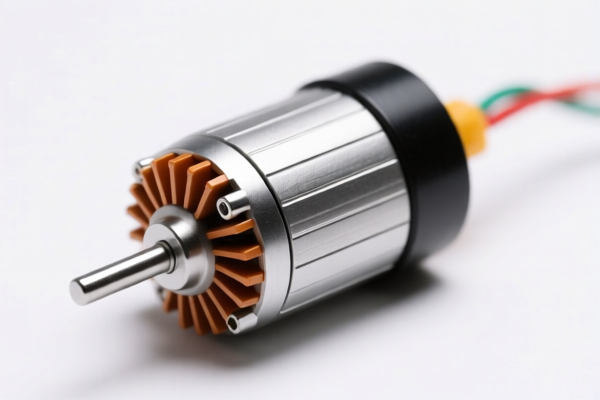
A DC Brushless Motor (BLDC) is a synchronous motor that uses electronic commutation instead of brushes. It is the heartbeat of modern electronics, from drones and electric vehicles to industrial automation and home appliances.
In international trade, classification depends heavily on output power and commutation type. The specific code 8501.10.40.20 targets a very specific niche: Low-power DC Brushless Motors with an output between 18.65W and 37.5W.
⚠️ Critical Distinction Point:
- If the motor is AC or has brushes, it does NOT belong here.
- If the output power is < 18.65W, it falls under different sub-headings (e.g.,8501.10.60.40for slightly different power bands or other sub-codes).
- If the output power is > 37.5W, it moves to higher power categories (e.g.,8501.51...or8501.61...).
📦 Two: HS Code Classification Details (2026 Latest Tariff Authority)
The provided data confirms two very similar codes for this product category. In practice, 8501.10.60.40 and 8501106040 refer to the same tariff line, while 8501.51.60.20 is a common misclassification that must be avoided.
| HS Code | Product Description | Applicable Scenario | Is it DC Brushless? | Output Power Range |
|---|---|---|---|---|
8501.10.60.40 |
DC Brushless Motor, Output 18.65W-37.5W | Drones, precision instruments, small fans | ✅ Yes | 18.65W - 37.5W |
8501106040 |
DC Brushless Motor, Output 18.65W-37.5W | Same as above (Format variation) | ✅ Yes | 18.65W - 37.5W |
8501.51.60.20 |
AC Motor with Gear Motor Attributes | Industrial AC motors, gear-driven systems | ❌ No (AC) | N/A |
🔍 Key Warning:
- Code8501.51.60.20is for AC Motors, not DC. If you classify a DC motor here, you risk a classification error.
- Codes8501.10.60.40and8501106040are identical in substance. The format with dots (.) is the standard US HTS format; the format without dots (8501106040) is often used in summary lists. Both apply to the DC Brushless category.
- Power Band is Critical: Ensure your motor’s rated output is strictly between 18.65W and 37.5W. Outside this range, the tax rate and code may change.
💰 Three: 2026 Latest Tariff Rate Breakdown (Including Surcharges)
✅ Applicable Country: United States (US)
✅ Origin: China (CN)
✅ Effective Date: 2025/2026 (Current Trade War Policies)
🎯 1. 8501.10.60.40 / 8501106040 —— DC Brushless Motor (18.65W-37.5W)
| Item | Content |
|---|---|
| Base Tariff Rate | 2.8% (Ad Valorem) |
| Section 301 Surcharge | +25.0% (USITC Footnote 9903.88.01) |
| Section 122 Tariff | +10.0% (Specific trade policy surcharge) |
| Total Tax Rate | 37.8% |
| Tax Calculation | CIF Value × 37.8% |
| De Minimis Eligibility | ❌ Not Eligible (Denied for Section 301 goods) |
| Legal Basis Path | HTS:8501.10.60.40 → USITC:301 → IEEPA:122 |
📌 Explanation:
- Base Rate (2.8%): The standard Most Favored Nation (MFN) rate for DC motors.
- Section 301 (25%): The major tariff imposed on Chinese goods under the Trump/Biden trade war policies. This is the largest component.
- Section 122 (10%): A specific additional tariff layer, often applied to strategic components or under specific executive orders.
- Total (37.8%): This is a high-cost import category. Margins must be carefully calculated.
- De Minimis: Items valued under $800 (Section 321) are NOT exempt from these tariffs if they are Chinese-made and fall under Section 301/122 lists.
🎯 2. 8501.51.60.20 —— AC Motor (Common Mistake)
| Item | Content |
|---|---|
| Base Tariff Rate | 2.5% |
| Section 301 Surcharge | +25.0% |
| Section 122 Tariff | +10.0% |
| Total Tax Rate | 37.5% |
| Tax Calculation | CIF Value × 37.5% |
📌 Note:
- Even if misclassified as AC (8501.51.60.20), the total tax is 37.5%, which is very close to the DC rate (37.8%).
- However, misclassification is illegal and carries penalties. Always declare DC Brushless for the correct product.
🛠️ Four: Customs Clearance Practical Advice (Real-World Pitfall Guide)
✅ 1. Preparation Checklist (Mandatory Documents)
| Document | Required | Explanation |
|---|---|---|
| ✅ Product Specification Sheet | ✔️ | Must clearly state: DC, Brushless, Output Power (Watts), Voltage, RPM. |
| ✅ Motor Data Label Photo | ✔️ | Clear photo of the nameplate showing model, power, and electrical specs. |
| ✅ Circuit/Control Diagram | ✔️ | Proves it is electronic commutation (Brushless) and not brush-based. |
| ✅ Commercial Invoice | ✔️ | Must describe as "DC Brushless Electric Motor, 18.65W-37.5W Output, Model XYZ". |
| ✅ Bill of Lading | ✔️ | Matches invoice and package details. |
| ✅ Certificate of Origin | ✔️ | Required for US customs; confirms CN origin (triggering tariffs). |
✅ 2. Declaration Tips (Key Mantras)
🔥 "Power Defines Code, DC Defines Nature, Full Name Avoids Risk!"
| Situation | Correct Declaration | Wrong Practice |
|---|---|---|
| Motor Output is 25W | 8501.10.60.40 |
Declaring as "General Motor" → Vague, risk of audit |
| Motor Output is 15W | Different HS Code (e.g., lower power bracket) | Using 8501.10.60.40 → Under-declaration/Classification Error |
| Motor Output is 50W | Different HS Code (e.g., 8501.51... or higher) |
Using 8501.10.60.40 → Over-declaration/Classification Error |
| AC Motor | 8501.51.60.20 |
Using 8501.10... code → Fraudulent Misclassification |
✅ 3. Special Cases Handling
| Situation | Handling Advice |
|---|---|
| Motor with Integrated Controller | If the controller is sold with the motor as a single unit, it may still be classified as a motor, but the power rating must include the load. Check with customs. |
| OEM Custom Motors | Provide customer PO and technical drawings. Avoid generic names like "Electric Part." Use "DC Brushless Motor." |
| Sample Shipments (Under $800) | ⚠️ DO NOT assume De Minimis exemption. Section 301 goods are excluded from Section 321 de minimis. You must file a formal entry and pay the 37.8% tax. |
| Gear Motor Combo | If the motor is matched with a gear reducer, the classification depends on the essential character. Usually, if the motor is the main component, it stays in 8501. But ensure the output power refers to the motor shaft, not the gear output (which is lower due to efficiency loss). |
🌍 Five: Global Market Comparison (2026 Latest)
| Country/Region | Recommended HS Code | Tariff (China Origin) | Certification | Notes |
|---|---|---|---|---|
| 🇺🇸 USA | 8501.10.60.40 |
37.8% (2.8% + 25% + 10%) | FCC (if radio) | High Tariff. No de minimis. |
| 🇨🇳 China | 8501.10.40.20 (Approx) |
~6-10% | CCC | Domestic trade, lower tax. |
| 🇪🇺 EU | 8501.10.60 |
0-4% | CE + RoHS | No Section 301 equivalent. |
| 🇲🇽 Mexico | 8501.10.60 |
0% (if USMCA compliant) | NOM | Potential USMCA benefit if manufactured in US/Mexico. |
📌 Conclusion:
- The USA is the most expensive market for this product due to the cumulative 37.8% tariff.
- EU and Mexico are significantly more favorable.
- If sourcing from China for the US market, cost optimization is critical.
📌 Six: Common Errors & Pitfall Guide (Blood Lessons)
❌ Error 1: Using "Electric Motor" as a generic description
👉 Consequence: Customs may assign a higher default rate or hold the shipment for classification review.
👉 Fix: Always specify "DC Brushless" and Power Range.
❌ Error 2: Confusing Input Power with Output Power
👉 Consequence: If you declare Input Power (e.g., 50W) for a 25W Output motor, you might be classified under a higher power bracket (higher tax).
👉 Fix: Always declare Output Power (Watts). The nameplate usually has both. Use the Output value for HS classification.
❌ Error 3: Assuming Small Packages (Under $800) are Tax-Free
👉 Consequence: Customs will seize the package and demand payment of 37.8% + penalties.
👉 Fix: For Section 301 goods, always declare formally.
❌ Error 4: Misclassifying DC as AC (8501.51...)
👉 Consequence: While the tax is similar (37.5% vs 37.8%), it triggers an audit flag. Recurring errors lead to increased inspections and delays.
👉 Fix: Verify the commutation type. Brushless = DC.
✅ Correct Declaration Example:
"DC Brushless Electric Motor, Model XYZ, Output Power 25W, Voltage 24V, No Brushes, Electronic Commutation, For Use in HVAC Systems."
🎯 Seven: Conclusion: Professional Declaration, Save Money, Avoid Delays
🎯 Remember the Mantra:
🔹 "Power Defines, DC Defines, 37.8% is Real, De Minimis is Dead!"
🔹 "Check the Nameplate: Input vs Output. Wrong Number, Wrong Tax."
📌 Tips:
- If your motor is exported to the US, build the 37.8% tariff into your pricing model.
- Consider Supply Chain Diversification: Manufacturing in Vietnam, Mexico, or Thailand may help avoid Section 301 tariffs (subject to rules of origin).
- Pre-Ruling: Consider applying for an Advance Ruling from U.S. Customs if you have a high-volume, consistent product. This locks in the HS Code and provides legal certainty.
📣 Immediate Action:
📞 Verify your motor’s Output Power (Watts) and Communtation Type.
📄 Prepare a detailed Product Data Sheet.
🚀 Calculate Landed Cost: CIF Price + 37.8% Tariff + Duties + Brokerage Fees.
✨ Professional Customs Clearance Starts with Precise Classification!
💼 Every cent of tariff cost deserves to be calculated accurately!
Customer Reviews
About HS Code Classification
The Harmonized System (HS) is an internationally standardized nomenclature developed by the World Customs Organization (WCO) to classify traded products. Over 200 countries use the HS system as the basis for customs tariffs, trade statistics, and import/export regulations.
Each HS code follows a hierarchical structure:
- Chapter (2 digits) — Broad category of goods (e.g., Chapter 84: Machinery and Mechanical Appliances)
- Heading (4 digits) — More specific grouping within the chapter
- Subheading (6 digits) — Internationally standardized breakdown, used by all WCO member countries
- National subdivisions (8-10 digits) — Country-specific extensions for further classification, such as US HTSUS 10-digit codes
Correct HS code classification is essential for smooth customs clearance, accurate duty payment, and compliance with trade regulations. Misclassification can lead to customs delays, overpayment of duties, or penalties.
When importing from CN to US, the applicable tariff rates may include:
- Most-Favored-Nation (MFN) rate — The standard duty rate applied to WTO members
- General rate — Applied to countries without trade agreements
- Trade remedy duties — Additional tariffs such as Section 301 (anti-dumping), Section 232 (national security), or countervailing duties
The information provided on this page is for reference purposes only. For official classification, please consult with your local customs authority or a licensed customs broker.