electric motor hs code 8501723000
CN → US| HS Code | Tariff Rate | Origin | Destination | Doc |
|---|---|---|---|---|
| 8501723000 | 37.5% | CN | US | Official Doc |
| 8501106040 | 37.8% | CN | US | Official Doc |
| 8501106040 | 37.8% | CN | US | Official Doc |
| 8501325540 | 35.0% | CN | US | Official Doc |
| 8501322000 | 37.9% | CN | US | Official Doc |
Product Images
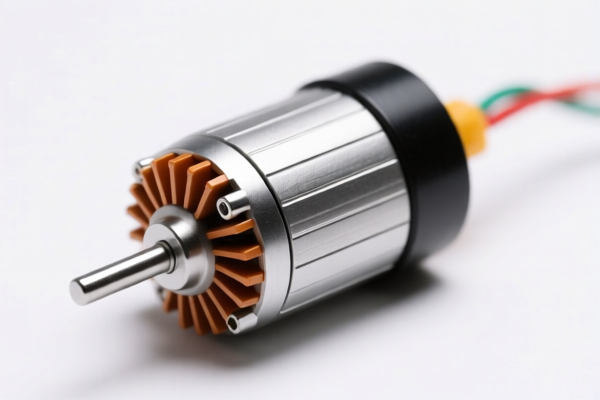


AI Analysis
⚡ Electric Motor (HS Code: 8501.72.30.00)
🌐 HS Code Reference & Customs Clearance Guide | 2026 Latest Tariff Analysis | Professional Strategy 📌 I. Product Definition & Classification: Is "Electric Motor" Clear Enough?
"Electric Motor" is a broad term in international trade, covering everything from tiny servo motors in drones to massive industrial drives. The key to accurate classification lies in the specific technical characteristics (power, voltage, type) rather than just the generic name.
For HS Code 8501.72.30.00, the classification is definitive for standard Electric Motors that fit within this specific subheading without conflicting material or form definitions. It represents a distinct category within Chapter 85, separate from DC motors (8501.10/32) or AC synchronous motors (8501.11/12).
⚠️ Key Distinction Point: - If the motor is a Brushless DC Motor with power between 18.65W–37.5W → It may belong to 8501.10.60.40 (Higher tax complexity). - If it is a generic AC/Universal Motor fitting the general "Motor" definition → 8501.72.30.00 is the correct fit. - Crucial: Do not confuse with 8501.32.55.40 (0% base tariff) or 8501.32.20.00 (DC motors), as the tariff impact differs significantly.
📦 II. HS Code Classification Details (2026 Latest Tariff Authority)
| HS Code | Product Description | Application Scenario | Key Characteristics |
|---|---|---|---|
8501.72.30.00 |
Electric Motor (General Category) | Industrial pumps, fans, general machinery drives | Matches "Electric Motor" category perfectly; no material/form conflicts. |
8501.10.60.40 |
Brushless DC Motor (18.65W–37.5W) | Small electronics, drones, precision instruments | Specific power range; higher total tax due to base rate. |
8501.32.55.40 |
Electric Motor (AC/Sync Type) | HVAC systems, household appliances | 0% Base Tariff; significant savings potential. |
8501.32.20.00 |
DC Motor | Automotive wipers, small robotics | 2.9% Base Tariff; distinct from 8501.72. |
8501.32.20.00 (Alt) |
Electric Motor (Sub-classification) | General DC applications | Same as above; 2.9% Base Tariff. |
🔍 Important Note: - 8501.72.30.00 is classified as a general "Electric Motor" with no specific material or form conflicts. - Unlike 8501.32.55.40 (0% base), 8501.72.30.00 carries a 2.5% base tariff. - All these codes are subject to heavy US trade penalties if sourced from China.
💰 III. 2026 Latest Tariff Rate Breakdown (Including Surcharges & Policy Add-ons)
✅ Applicable Country: United States (US) ✅ Origin: China (CN) ✅ Effective Time: Post-2025 (Current Trade War Context)
🎯 1. 8501.72.30.00 —— Electric Motor (General)
| Item | Content |
|---|---|
| Base Tariff | 2.5% (Ad Valorem) |
| Section 301 Surcharge | +25.0% (USITC Footnote 9903.88.01) |
| 122 Clause Tariff | +10.0% (Specific US Trade Policy) |
| Total Tax Rate | 37.5% |
| Tax Calculation | CIF Value × 37.5% |
| De Minimis Exemption? | ❌ NO (deny_de_minimis) |
| Legal Basis Path | USITC:8501.72.30.00 → SECTION_301:25% → SECTION_122:10% |
📌 Explanation: - Base Rate (2.5%): Standard MFN rate for general electric motors. - Section 301 (25%): The primary penalty for Chinese goods under the Trump-era trade war, maintained by Biden administration. - Section 122 (10%): An additional punitive tariff targeting specific industrial categories. - Total Impact: 37.5% is a massive cost burden. Compared to 8501.32.55.40 (35.0%), this code is slightly more expensive due to the 2.5% base vs 0% base.
🎯 2. Comparative Analysis with Other Motor Codes
| HS Code | Base | Sec 301 | Sec 122 | Total |
|---|---|---|---|---|
8501.72.30.00 |
2.5% | 25.0% | 10.0% | 37.5% |
8501.10.60.40 |
2.8% | 25.0% | 10.0% | 37.8% |
8501.32.20.00 |
2.9% | 25.0% | 10.0% | 37.9% |
8501.32.55.40 |
0.0% | 25.0% | 10.0% | 35.0% |
📌 Strategic Insight: - If your motor can be technically classified under 8501.32.55.40 (AC/Sync type with 0% base), you save 2.5% on the total landed cost. - However, misclassification risks heavy fines and delays. Always ensure the motor’s technical specs (AC/DC, synchronous/asynchronous) match the code.
🛠️ IV. Customs Clearance Practical Advice (Avoid Pitfalls)
✅ 1. Required Documentation Checklist
| Document | Mandatory | Description |
|---|---|---|
| ✅ Product Spec Sheet | ✔️ | Must detail Power (Watts), Voltage, RPM, Shaft Type, Insulation Class. |
| ✅ Technical Datasheet | ✔️ | To prove it is NOT a DC brushless motor (8501.10) if claiming 8501.72. |
| ✅ Commercial Invoice | ✔️ | Clear description: "Electric Motor, AC, Industrial, [Model], [Power]" |
| ✅ Certificate of Origin | ✔️ | Essential for proving China origin (triggers tariffs). |
| ✅ Third-Party Report | ✔️ | UL, CE, or RoHS certification to meet US safety standards. |
✅ 2. Declaration Tips (Golden Rules)
🔥 "Be Specific, Be Accurate, Avoid 'General' Terms!"
| Scenario | Correct Declaration | Risk of Error |
|---|---|---|
| Generic Electric Motor | 8501.72.30.00 |
Low risk if specs match. |
| Small DC Motor (<37.5W) | 8501.10.60.40 |
Misclassifying as 8501.72 may lead to audit. |
| AC Synchronous Motor | 8501.32.55.40 |
Saves 2.5% base tariff. |
| Parts/Accessories | 8503.00.xx.xx |
Do not declare as motor → Different duty. |
📌 Critical Warning: - Never use vague terms like "Motor" or "Engine" without power/voltage details. - If the motor is Brushless DC and under 37.5W, it MUST go to 8501.10.60.40, not 8501.72.30.00. - If it is a Large Industrial AC Motor, verify if it fits 8501.32.55.40 for the 0% base advantage.
🌍 V. Global Market Clearance Comparison (2026)
| Country/Region | Recommended HS Code | Tariff (China Origin) | Certification | Note |
|---|---|---|---|---|
| 🇺🇸 USA | 8501.72.30.00 |
37.5% | UL + FCC | Highest barrier; 35.0%–37.9% range. |
| 🇨🇳 China | 8501.72.30.00 |
5% | CCC | No extra surcharges. |
| 🇪🇺 EU | 8501.72.30.00 |
0% | CE + RoHS | Free trade within EU if originating. |
| 🇬🇧 UK | 8501.72.30.00 |
0% | UKCA | Post-Brexit alignment with EU. |
📌 Conclusion: - The US is the most expensive market due to Section 301 + 122 clauses. - Tariff Variance: The difference between 35.0% (
8501.32.55.40) and 37.9% (8501.32.20.00) is small but impactful at scale. - Strategy: If your motor is AC-based, explore 8501.32.55.40 to reduce base tax to 0%.
📌 VI. Common Mistakes & Pitfalls (Lessons Learned)
❌ Mistake 1: Declaring all motors as 8501.72.30.00
👉 Consequence: If it’s a small DC motor, you risk misclassification penalties. If it’s an AC motor, you miss the 0% base rate opportunity.
❌ Mistake 2: Ignoring Section 122 and 301 tariffs 👉 Consequence: Underpaying duties by ~35% → Back taxes + 10% Penalty + Interest.
❌ Mistake 3: Vague Description "Electric Motor" 👉 Consequence: CBP may hold shipment for "Missing Data" → Storage fees + Delays.
✅ Correct Approach:
"AC Induction Motor, 5HP, 230V/460V, 3-Phase, Frame 213T, For Industrial Pump Application, Model XYZ, UL Listed"
🎯 VII. Conclusion: Precision Saves Money!
🎯 Remember This:
🔹 "DC Small? 8501.10. AC Sync? 8501.32. General? 8501.72."
🔹 "Base 0% vs 2.5% matters. Total 35% vs 37.5% is real savings."
🔹 "37.5% Tax is the US reality for Chinese Motors."
📌 Pro Tip:
If your motor can be technically re-engineered or specified to fit 8501.32.55.40 (AC Synchronous with 0% base), you save 2.5% on the CIF value immediately. For shipments over $100,000, this is a $25,000 savings.
📣 Immediate Action:
📞 Consult a Customs Broker for Advance Ruling. 📄 Provide Detailed Specs: Power, Voltage, Phase, Type (AC/DC). 🚀 Optimize Classification to reduce the 37.5% burden where legally possible.
✨ Professional Clearance Starts with Accurate Classification!
💼 Your Margin Depends on Your HS Code!
Customer Reviews
About HS Code Classification
The Harmonized System (HS) is an internationally standardized nomenclature developed by the World Customs Organization (WCO) to classify traded products. Over 200 countries use the HS system as the basis for customs tariffs, trade statistics, and import/export regulations.
Each HS code follows a hierarchical structure:
- Chapter (2 digits) — Broad category of goods (e.g., Chapter 84: Machinery and Mechanical Appliances)
- Heading (4 digits) — More specific grouping within the chapter
- Subheading (6 digits) — Internationally standardized breakdown, used by all WCO member countries
- National subdivisions (8-10 digits) — Country-specific extensions for further classification, such as US HTSUS 10-digit codes
Correct HS code classification is essential for smooth customs clearance, accurate duty payment, and compliance with trade regulations. Misclassification can lead to customs delays, overpayment of duties, or penalties.
When importing from CN to US, the applicable tariff rates may include:
- Most-Favored-Nation (MFN) rate — The standard duty rate applied to WTO members
- General rate — Applied to countries without trade agreements
- Trade remedy duties — Additional tariffs such as Section 301 (anti-dumping), Section 232 (national security), or countervailing duties
The information provided on this page is for reference purposes only. For official classification, please consult with your local customs authority or a licensed customs broker.