electric pen
CN → US| HS Code | Tariff Rate | Origin | Destination | Doc |
|---|---|---|---|---|
| 9608996000 | 17.5% | CN | US | Official Doc |
| 9608994000 | 17.5% | CN | US | Official Doc |
Product Images
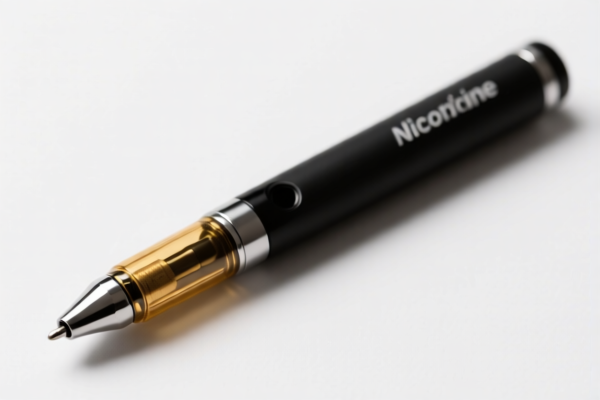
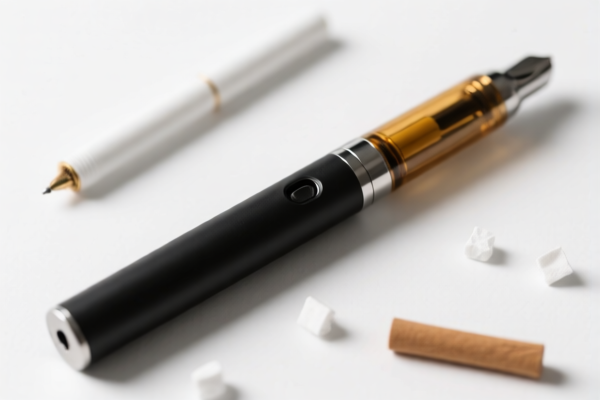
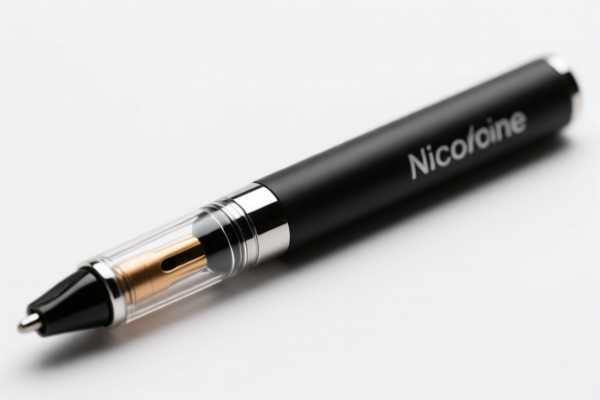
AI Analysis
🖊️ Electric Pens / Writing Instruments (Electric Pen)
🌐 HS Code Reference & Customs Clearance Guide | 2026 Latest Tariff Analysis | Professional Clearance Strategy
📌 I. Product Definition & Classification: Do You Really Understand "Electric Pens"?
In international trade, "Electric Pen" is often a colloquial or marketing term. It typically refers to writing instruments such as ballpoint pens, felt-tipped markers, fountain pens, or mechanical pencils. Crucially, if the term "electric" implies a pen with electronic components (like an auto-filler or digital stylus), it generally does not reclassify the item into Chapter 85 (Electrical Machinery), but rather falls under Chapter 96 (Miscellaneous Manufactured Articles), specifically Heading 9608.
The key distinction lies in whether the item is a complete writing instrument or merely a part/component of one.
⚠️ Key Distinction Point:
- If it is a complete pen (e.g., a stylus that looks like a pen but is part of a tablet system, or a motorized refill pen): It may fall under other headings depending on function, but standard "writing pens" go to 9608.
- If it is a ballpoint/fountain pen or its parts/caps/clips: It falls strictly under HS Code 9608.
- Note: The provided specifically covers parts and other writing instruments under 9608.99.
📦 II. HS Code Classification Details (2026 Latest Tariff Authority Comparison)
Based on the provided , the classification depends on whether the item is a general "other" pen or a specific part for pens described in subheadings 9608.10 (ballpoints) or 9608.30 (fountain pens).
| HS Code | Product Description | Applicable Scenario | Type of Item |
|---|---|---|---|
9608.99.60.00 |
Ball point pens; felt tipped and other porous-tipped pens... Other: Other: Other: Other | Complete ballpoint pens, markers, fountain pens, or general writing instruments not specifically categorized elsewhere in 9608.10/9608.30. | ✅ Complete Article |
9608.99.40.00 |
... Other: Other: Other: Parts of articles provided for in subheadings 9608.10 and 9608.30 (other than balls for ball point pens) | Parts only: Caps, clips, barrels, ink cartridges (non-refillable), nibs for fountain pens, or grip sections. | ✅ Part/Component |
🔍 Important Reminder:
- Complete Pens (even if they have electronic features like auto-writers, unless they are primarily computers/tablets) are usually classified under 9608.99.60.00 as "Other" writing instruments.
- Parts (caps, clips, grips) are classified under 9608.99.40.00.
- Do not classify standard pens as "electrical machines" (Chapter 85) unless they are clearly part of a larger electronic device (e.g., a digital signature pad).
💰 III. 2026 Latest Tariff Rate Details (Including Surcharge & Policy Additions)
✅ Applicable Country: United States (US)
✅ Country of Origin: China (CN) (Assumed based on typical surcharge context in )
✅ Effective Date: Current 2026 Trade Rules
🎯 1. 9608.99.60.00 —— Other Writing Instruments (Complete Pens)
| Item | Content |
|---|---|
| Base Tariff Rate | 0.0% (ad valorem) |
| Surcharge (Section 301 / IEEPA) | +7.5% |
| Total Tariff Rate | 7.5% |
| Tax Calculation | CIF Value × 7.5% |
| De Minimis Eligibility | ✅ Yes (For shipments ≤ $800, typically duty-free under Section 321, subject to current policy changes) |
| Legal Basis Path | HTSUS:9608.99.60.00 → Surcharge: 7.5% (China Origin) |
📌 Explanation:
- The base rate for most writing instruments (9608) is 0%.
- The 7.5% surcharge is applied due to the product's origin (likely China, based on typical trade data structures).
- No additional IEEPA 10% or USITC 25% applies to this specific subheading in the provided , unlike the display panels in the example. This makes it a lower-cost category compared to electronics.
🎯 2. 9608.99.40.00 —— Parts of Pens (Caps, Clips, Barrels)
| Item | Content |
|---|---|
| Base Tariff Rate | 0.0% (ad valorem) |
| Surcharge (Section 301 / IEEPA) | +7.5% |
| Total Tariff Rate | 7.5% |
| Tax Calculation | CIF Value × 7.5% |
| De Minimis Eligibility | ✅ Yes (For shipments ≤ $800) |
| Legal Basis Path | HTSUS:9608.99.40.00 → Surcharge: 7.5% (China Origin) |
📌 Note:
- Parts carry the same 7.5% surcharge as the complete pens in this dataset.
- Ensure you declare correctly: If you ship caps and clips separately, use9608.99.40.00. If you ship complete pens, use9608.99.60.00. Misclassification can lead to audits.
🛠️ IV. Customs Clearance Practical Advice (Combat Pitfall Guide)
✅ 1. Required Documentation Checklist (No Exceptions)
| Document | Must Provide | Description |
|---|---|---|
| ✅ Commercial Invoice | ✔️ | Must clearly state "Ballpoint Pen," "Fountain Pen," or "Pen Parts." Avoid vague terms like "Stationery." |
| ✅ Product Photographs | ✔️ | Show the pen in use, including tips, caps, and any branding. For parts, show clear views of clips/caps. |
| ✅ Material Composition | ✔️ | Specify materials (plastic, metal, ink). Crucial for duty assessment. |
| ✅ Brand & Model Number | ✔️ | Helps customs identify the specific HS subheading. |
| ✅ Country of Origin Certificate | ✔️ | Confirms origin to apply the correct 7.5% surcharge. |
✅ 2. Declaration Tips (Key Mnemonics)
🔥 "Complete Pens Go to .60, Parts Go to .40, Don't Mix!"
| Scenario | Correct Declaration | Wrong Practice |
|---|---|---|
| Selling complete ballpoint pens | 9608.99.60.00 (Other) |
Declaring as "Parts" → Risk of underpayment penalty |
| Selling fountain pen nibs | 9608.99.40.00 (Parts) |
Declaring as "Complete Pens" → Overpayment (but safer) |
| Selling pen caps/clips | 9608.99.40.00 (Parts) |
Declaring as "Electronics" → Wrong Chapter |
| Bulk Shipment | List each item separately | Packing all into one generic "Stationery" line → Customs audit |
✅ 3. Special Circumstances Handling
| Scenario | Handling Advice |
|---|---|
| "Electric" Auto-Writers | If the pen has a motorized ink-feeding mechanism, it is still typically classified under 9608 as a "writing instrument," not under Chapter 85, unless it functions primarily as a computer input device. |
| Digital Stylus (Tablet Pen) | If the "electric pen" is a digital stylus for a tablet, it may fall under Chapter 85 (e.g., 8544 or 8517) and NOT under 9608. Check if it connects via USB/Bluetooth. If it does, do NOT use 9608.99.60.00. |
| Gift Sets | If a pen is part of a gift set with other items (e.g., a card), the entire set is classified according to the principal character (usually the pen). |
🌍 V. Global Major Market Clearance Comparison (2026 Latest)
| Country/Region | Recommended HS Code | Tariff (China Origin) | Certification Requirements | Notes |
|---|---|---|---|---|
| 🇺🇸 United States | 9608.99.60.00 / 40.00 |
7.5% (Total) | No major certs needed for basic pens. | Low tariff compared to electronics. |
| 🇪🇺 European Union | 9608.30 / 9608.10 |
2.7% (Avg) | CE (if electrical parts). | Slightly higher base rate. |
| 🇨🇳 China (Export) | 9608.99.60.00 |
0% (Export Duty) | None. | Export from China is duty-free. |
| 🇬🇧 United Kingdom | 9608.99.60.00 |
0% (Post-Brexit) | UKCA (if applicable). | No tariffs on most pens. |
📌 Conclusion:
- The US tariff of 7.5% is relatively low for manufacturing goods, making it a favorable category for exporters.
- Unlike high-tech electronics (which can face 25-100% tariffs), pens are low-risk, low-cost items in terms of customs duties.
📌 VI. Common Mistakes & Pitfall Guide (Blood & Tears Lessons)
❌ Mistake 1: Calling a "Digital Stylus" an "Electric Pen" and using 9608.99.60.00
👉 Consequence: Customs may reclassify it as an electronic device (Chapter 85) with higher tariffs or require FCC certification.
👉 Fix: Check connectivity. If it has wires/Bluetooth, use Chapter 85 codes.
❌ Mistake 2: Mixing complete pens and pen parts in one HS Code line
👉 Consequence: Customs may reject the declaration or apply the higher rate to the entire batch.
👉 Fix: Separate line items: Line 1: Pens (9608.99.60.00); Line 2: Caps (9608.99.40.00).
❌ Mistake 3: Ignoring the 7.5% Surcharge for Chinese Origin
👉 Consequence: Underpayment of duties, leading to penalties and interest.
👉 Fix: Always apply the 7.5% surcharge if origin is China.
✅ Correct Practice:
"Ballpoint Pen, Blue Ink, Plastic Barrel, Brand XYZ, Made in China"
HS Code:9608.99.60.00
Duty: 7.5%
🎯 VII. Conclusion: Professional Declaration, Save Time, Cut Costs!
🎯 Remember the Mnemonic:
🔹 "Complete Pens = .60 (7.5%), Parts = .40 (7.5%), Digital Stylus = Check Chapter 85!
🔹 "Low Tariff, Low Risk, Declare Clearly!"
📌 Pro Tip:
If your "electric pen" is a digital stylus for an iPad or Samsung Galaxy, DO NOT use the HS codes above. Use HS Code 8544.42.90.80 or similar, and check for FCC/CE requirements. The provided only covers traditional writing instruments.
📣 Immediate Action:
📞 Verify if your "electric pen" is analog (ink-based) or digital (electronic input).
🚀 Analog → Use9608.99.60.00.
🚀 Digital → Use Chapter 85.
✨ Professional Clearance Starts with Accurate Classification!
💼 Your Every Penny Matters, Calculate Precisely!
Customer Reviews
About HS Code Classification
The Harmonized System (HS) is an internationally standardized nomenclature developed by the World Customs Organization (WCO) to classify traded products. Over 200 countries use the HS system as the basis for customs tariffs, trade statistics, and import/export regulations.
Each HS code follows a hierarchical structure:
- Chapter (2 digits) — Broad category of goods (e.g., Chapter 84: Machinery and Mechanical Appliances)
- Heading (4 digits) — More specific grouping within the chapter
- Subheading (6 digits) — Internationally standardized breakdown, used by all WCO member countries
- National subdivisions (8-10 digits) — Country-specific extensions for further classification, such as US HTSUS 10-digit codes
Correct HS code classification is essential for smooth customs clearance, accurate duty payment, and compliance with trade regulations. Misclassification can lead to customs delays, overpayment of duties, or penalties.
When importing from CN to US, the applicable tariff rates may include:
- Most-Favored-Nation (MFN) rate — The standard duty rate applied to WTO members
- General rate — Applied to countries without trade agreements
- Trade remedy duties — Additional tariffs such as Section 301 (anti-dumping), Section 232 (national security), or countervailing duties
The information provided on this page is for reference purposes only. For official classification, please consult with your local customs authority or a licensed customs broker.