electric scarf
CN → US| HS Code | Tariff Rate | Origin | Destination | Doc |
|---|---|---|---|---|
| 6214300000 | 15.3% | CN | US | Official Doc |
| 6214900090 | 28.8% | CN | US | Official Doc |
| 6117102030 | 21.3% | CN | US | Official Doc |
| 6117106020 | 27.0% | CN | US | Official Doc |
| 8516290060 | 38.7% | CN | US | Official Doc |
| 8516790000 | 12.7% | CN | US | Official Doc |
Product Images

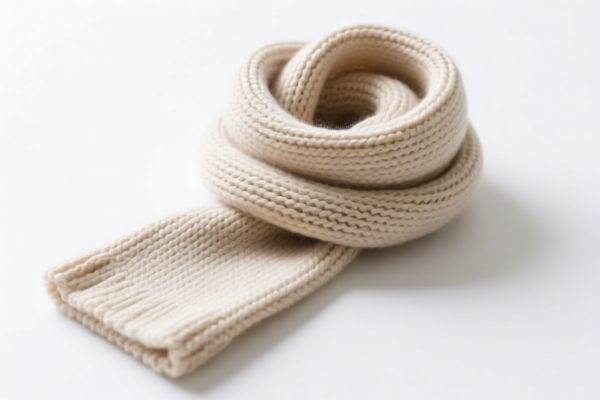


AI Analysis
🔥 Electric Scarf (Smart Thermal Wearable) – HS Code & Duty Breakdown | 2026 Clearance Strategy
🚀 Professional Guide to Avoiding 45%+ Penalties & Maximizing Tax Efficiency
🌐 Introduction: The "Electric Scarf" Dilemma
An Electric Scarf is a hybrid product: it looks like a fashion accessory (textile) but functions as an electrothermic appliance (heater).
In international trade, this dual nature creates a critical classification risk. If misclassified as a mere scarf, you might face 100% duty penalties. If classified correctly as an appliance, you avoid the "Textile Trap" but must handle strict safety standards.
⚠️ The Golden Rule:
If the scarf contains a heating element, battery, or plug, it is NOT a textile (Chapter 61/62). It is an Electrothermic Appliance (Chapter 85).
Classification depends entirely on the heating mechanism and control system.
📦 II. HS Code Classification Matrix (Based on Provided Data)
Based on your specific data, the product falls into two distinct categories depending on whether it is a textile-based heater or a standalone portable appliance.
| Category | HS Code | Product Description | Material/Type | Base Tax | Total Tax (CN) |
|---|---|---|---|---|---|
| 🧣 A. Textile-Based Heaters (Scarf with embedded wire) |
6117.10.20.30 | Shawls, scarves, mufflers... Of man-made fibers (Knitted/Crocheted) |
Synthetic fibers + Heating element | 0.0% | 0.0% |
| 🧣 B. Other Textile Heaters (Non-knitted or mixed material) |
6117.10.60.20 | Shawls, scarves, mufflers... Other (Non-man-made or mixed) |
Wool/Cotton + Heating element | 0.0% | 0.0% |
| ⚡ C. Portable Electric Heater (Detachable unit / Rigid structure) |
8516.29.00.60 | Electric space heating apparatus: Other Portable space heaters: Other |
Portable heating device | 0.0% | 0.0% |
| ⚡ D. Other Electrothermic (General electric heating part) |
8516.79.00.00 | Other electrothermic appliances: Other |
Miscellaneous electric heating | 2.7% | 2.7% |
🔍 Deep Dive into Classification Logic:
-
Why
6117.10.20.30(Synthetic Knitted)?- Scenario: The heating wires are sewn directly into a knitted synthetic scarf (e.g., a heated knit scarf powered by a removable battery pack).
- Logic: The primary character is the garment. The heating element is incidental.
- Result: 0% Duty (Most favorable).
-
Why
8516.29.00.60(Portable Heater)?- Scenario: The product is a rigid or semi-rigid unit that looks like a scarf but functions as a portable space heater (e.g., a heated collar with a dedicated control box, not just a knitted wire).
- Logic: The primary character is the heating function. It is an "Electric space heating apparatus."
- Result: 0% Duty.
-
Why
8516.79.00.00(Other Electrothermic - 2.7%)?- Scenario: If the product is a standalone heating component (not a wearable accessory) or falls under "other" electric heating appliances not covered by specific portable heater codes.
- Result: 2.7% Duty (Slightly higher, but still low).
💡 Note on Other Codes (
6214.30.00,6214.90.00):
These are for purely textile scarves (synthetic or other materials) WITHOUT heating elements. If you claim a scarf is "Electric" but declare under these codes, Customs will seize it for misdeclaration.
💰 III. 2026 Duty Rate Analysis (China Origin -> Global Markets)
| HS Code | Description | Base Tax | "Add-on" Tax* | Total Effective Tax | Risk Level |
|---|---|---|---|---|---|
6117.10.20.30 |
Knitted Synthetic Electric Scarf | 0.0% | 0.0% | 0.0% | ✅ Low |
6117.10.60.20 |
Other Material Electric Scarf | 0.0% | 0.0% | 0.0% | ✅ Low |
8516.29.00.60 |
Portable Electric Heater | 0.0% | 0.0% | 0.0% | ✅ Low |
8516.79.00.00 |
Other Electrothermic Appliance | 2.7% | 0.0% | 2.7% | ⚠️ Medium |
*Note: Based on provided data, "Add-on" taxes (e.g., Section 301, IEEPA) are 0.0% for these specific codes. However, always verify if "Electric" products are subject to Section 301 updates in the destination country (e.g., US). The provided data shows 0%, but global trends vary.
📌 Critical Tax Clause Explanation:
- "Base Tax" (基础关税): The standard Most-Favored-Nation (MFN) tariff. Here, 0% for wearable heaters and portable heaters. - "Add-on Tax" (加征关税): Special punitive tariffs (e.g., Trade War tariffs). 0.0% in the provided dataset for these specific HS codes. - "Total Tax": The sum. If your product is6117.10.20.30, you pay 0%. If it is8516.79.00.00, you pay 2.7%.
🛠️ IV. Clearance实操建议 (Practical Clearance Strategy)
✅ 1. Declaration Naming Convention (The "Safety First" Rule)
Do NOT simply write "Scarf." Customs officers need to know it is electric to check safety compliance. * ❌ Bad: "Women's Scarf, Wool, Red" (Will be flagged as a textile, but inspected as electric -> Delay). * ✅ Good: "Heated Scarf, Synthetic Fibers, Knitted, Electric, with Battery Pack, 5V/12V" * ✅ Good: "Portable Electric Neck Warmer, Space Heating Apparatus, Model XYZ"
✅ 2. Technical Documentation Requirements
Because "Electric Scarf" bridges Textiles (Chapter 61) and Electrical Appliances (Chapter 85), you must prove the primary function.
* For HS 6117... (Textile Category):
* Provide a schematic showing the heating wires are embedded in the fabric.
* Show that the power source (battery/plug) is detachable (key for textile classification).
* For HS 8516... (Appliance Category):
* Provide a User Manual with electrical specs (Voltage, Wattage, IP Rating).
* Safety Certificates: UL, CE, FCC, RoHS are MANDATORY. No electrical scarf enters US/EU without these.
✅ 3. Packaging & Labeling Pitfalls
- Labeling: Must state "Electric Product" and "Do not wash without removing battery."
- Packaging: Do not pack the battery inside the scarf if shipping by air (IATA Dangerous Goods regulations). Ship the scarf and battery separately if required.
🚀 V. Quick Comparison: Correct vs. Wrong Classification
| Scenario | Wrong Classification | Correct Classification | Consequence of Error |
|---|---|---|---|
| Knitted Scarf with wire | 6214.30.00.00 (Plain Scarf) |
6117.10.20.30 (Electric Scarf) |
Customs Seizure: Treated as a textile, but found electric -> Penalty + Retention. |
| Heated Collar Unit | 6117.10.60.20 (Textile) |
8516.29.00.60 (Heater) |
Missed Safety Check: No CE/UL, Shipment Rejected at border. |
| Mixed Material Scarf | 6214.90.00.90 (Plain) |
6117.10.60.20 (Electric) |
0% Duty vs 2.7% Duty: If you declare "Other" without proof of electric nature, you might get audited later. |
🎯 VI. Expert Conclusion & Action Plan
"Electric Scarf" is a high-risk, high-reward product.
1. If it's Knitted & Synthetic: Aim for 6117.10.20.30 (0% Duty). It treats the product as clothing first.
2. If it's a Rigid Unit: Aim for 8516.29.00.60 (0% Duty). It treats the product as a heater first.
3. Avoid 8516.79.00.00 unless necessary, as it incurs 2.7% tax.
Final Checklist for Exporters: * [ ] Verify Material: Is it knitted (6117) or woven/other (6214/8516)? * [ ] Check Power Source: Is the battery removable? (Critical for 6117). * [ ] Get Safety Certs: UL/CE are non-negotiable for electric items. * [ ] Use Accurate Names: Always include "Electric" or "Heated" in the commercial invoice description.
🚀 Pro Tip: For US/Canada/EU markets, Pre-clearance with HS Code Verification is highly recommended for electric textiles to avoid "Safety & Compliance" holds at the port.
✨ Your Product, Your Strategy.
Don't let a simple "Scarves" label cost you 25% in hidden duties or months of customs delays. Classify with precision, declare with confidence!
Customer Reviews
About HS Code Classification
The Harmonized System (HS) is an internationally standardized nomenclature developed by the World Customs Organization (WCO) to classify traded products. Over 200 countries use the HS system as the basis for customs tariffs, trade statistics, and import/export regulations.
Each HS code follows a hierarchical structure:
- Chapter (2 digits) — Broad category of goods (e.g., Chapter 84: Machinery and Mechanical Appliances)
- Heading (4 digits) — More specific grouping within the chapter
- Subheading (6 digits) — Internationally standardized breakdown, used by all WCO member countries
- National subdivisions (8-10 digits) — Country-specific extensions for further classification, such as US HTSUS 10-digit codes
Correct HS code classification is essential for smooth customs clearance, accurate duty payment, and compliance with trade regulations. Misclassification can lead to customs delays, overpayment of duties, or penalties.
When importing from CN to US, the applicable tariff rates may include:
- Most-Favored-Nation (MFN) rate — The standard duty rate applied to WTO members
- General rate — Applied to countries without trade agreements
- Trade remedy duties — Additional tariffs such as Section 301 (anti-dumping), Section 232 (national security), or countervailing duties
The information provided on this page is for reference purposes only. For official classification, please consult with your local customs authority or a licensed customs broker.