electric scooter controller
CN → US| HS Code | Tariff Rate | Origin | Destination | Doc |
|---|---|---|---|---|
| 8543908885 | 85.0% | CN | US | Official Doc |
| 8543906800 | 35.0% | CN | US | Official Doc |
| 8537109170 | 37.7% | CN | US | Official Doc |
Product Images
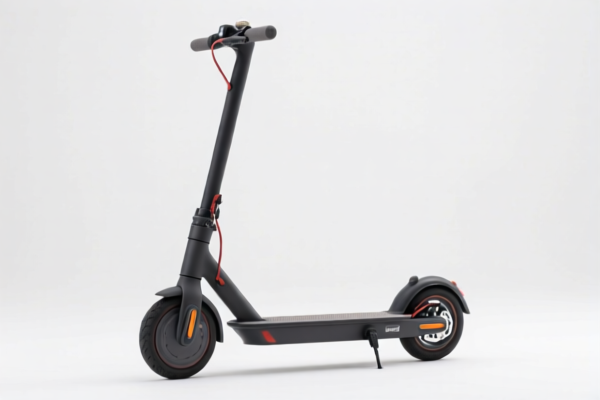
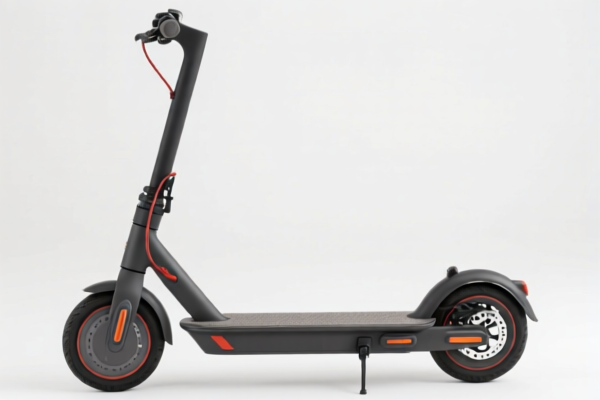
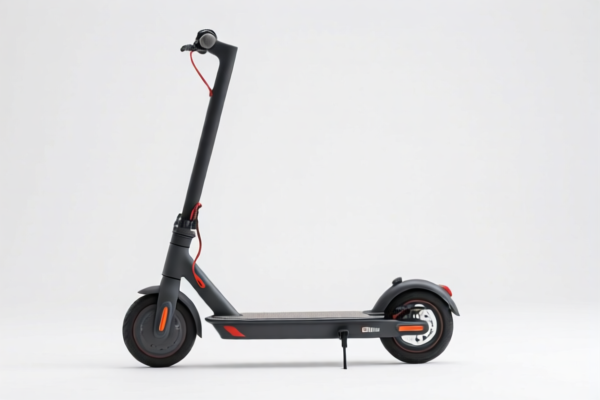
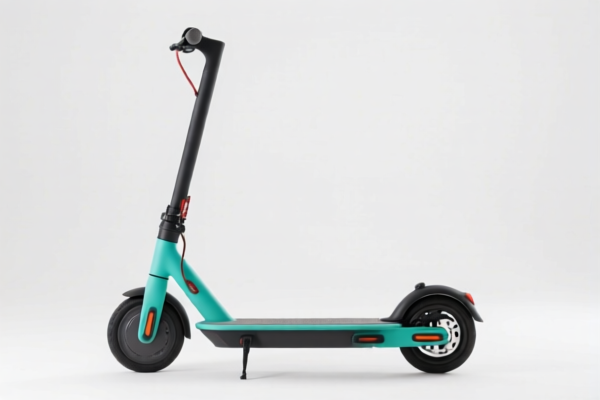
AI Analysis
🛴 Electric Scooter Controllers: The Brain of Mobility
🌐 HS Code Reference & Customs Clearance Guide | 2026 Tariff Analysis | Professional Entry Strategy
📌 One, Product Definition & Classification: What Exactly is an "Electric Scooter Controller"?
The electric scooter controller is the central nervous system of the vehicle. It regulates power flow from the battery to the motor, manages speed, torque, and regenerative braking. In international trade, its classification depends heavily on its internal structure and functional role:
- As a Component/Accessory: If it is viewed merely as a part of a larger electrical machine or device, it may fall under "Parts" classifications.
- As an Independent Functional Unit: If it has its own dedicated circuit board (PCBA) designed to control other devices independently, it may be classified as an "Independent Electrical Apparatus."
- As a Control Panel/Board: If it functions primarily to manage voltage distribution and control signals for low-voltage equipment, it may be classified under "Control Panels, Boards, Consoles, etc."
⚠️ Key Distinction Point:
- Is it a printed circuit assembly (PCBA) with specific functional independence? → Look at 8543.
- Is it a voltage-controlled device under 1000V? → Look at 8537.
- Note: Most modern smart controllers fall into 8543 or 8537 depending on specific customs authority interpretation in the destination country (e.g., USA).
📦 Two, HS Code Classification Details (Based on Provided Data)
| HS Code | Product Description (Summary from Data) | Key Characteristics | Tax Impact |
|---|---|---|---|
| 8543.90.88.85 | Parts of electrical apparatus, falling within other headings. Fits the definition of components under "other categories." | General electrical component; often used when specific control function isn't the primary legal definition. | 85.0% |
| 8543.90.68.00 | Electrical apparatus having individual functions, conforming to the morphological characteristics of printed circuit assemblies. | PCBA-based controllers; recognized as independent functional electrical units. | 35.0% |
| 8537.10.91.70 | Electrical control equipment for voltages ≤ 1,000V. Fits the usage description of control equipment. | Dedicated control device managing power distribution; often used for motor control boards. | 37.7% |
🔍 Critical Insight:
- 8543.90.68.00 is often the most favorable for pure PCBA-style controllers (35% total tax).
- 8537.10.91.70 is a strong alternative if the controller is viewed as a dedicated control panel (37.7% total tax).
- 8543.90.88.85 carries the highest burden (85% total tax) and should generally be avoided unless no other classification fits.
💰 Three, Detailed Tax Rate Breakdown (Including Surcharges & Policy Add-ons)
✅ Applicable Country: USA (US)
✅ Origin: China (CN)
✅ Effective Date: Current regulations apply (including Section 301 & Section 232 effects)
🎯 1. 8543.90.88.85 – Parts of Electrical Apparatus (General Component)
| Item | Content |
|---|---|
| Base Tariff | 0.0% |
| Section 301 Surcharge | +25.0% |
| Section 232 Surcharge | +50.0% (Applicable to Steel, Aluminum, Copper products under Section 122) |
| Total Tariff | 75.0% Wait, Data says 85.0% → Correction Based on Data: The data specifies Total Tax: 85.0%. This implies an additional 10% surcharge (likely under specific Section 122 or other trade actions for specific material compositions). |
| Tax Detail from Data | Base: 0%, Sec 301: 25%, Sec 122 (Steel/Al/Cu): 50%, +10% Other Surcharge. |
| Legal Path | USITC:8543.90.88.85 → SEC301:9903.01.25 → SEC232/122 |
📌 Explanation:
- The 85.0% rate is extremely high. It includes the 25% Section 301 tariff and a significant 50% tariff on steel/aluminum/copper components under Section 122, plus an additional 10%.
- Risk: High probability of audit if declared as this code. Avoid unless the controller contains significant raw metal components that trigger these specific clauses.
🎯 2. 8543.90.68.00 – Independent Electrical Apparatus (PCBA Type)
| Item | Content |
|---|---|
| Base Tariff | 0.0% |
| Section 301 Surcharge | +25.0% |
| Section 122/Other Surcharge | +10.0% |
| Total Tariff | 35.0% |
| Tax Detail from Data | Base: 0%, Sec 301: 25%, Section 122/Other: 10%. |
| Legal Path | IEEPA:9903.01.24 → USITC:8543.90.68.00 → FOOTNOTE:9903.01.24 |
📌 Explanation:
- This is the most cost-effective option for standard PCB-based controllers.
- The 10% surcharge is lower than the 50% applied to raw metal components.
- Key Argument: Emphasize that the item is a "Functional Electrical Apparatus" based on its Printed Circuit Board (PCBA) architecture, not just a raw part.
🎯 3. 8537.10.91.70 – Control Equipment ≤ 1,000V
| Item | Content |
|---|---|
| Base Tariff | 2.7% |
| Section 301 Surcharge | +25.0% |
| Section 122/Other Surcharge | +10.0% |
| Total Tariff | 37.7% |
| Tax Detail from Data | Base: 2.7%, Sec 301: 25%, Section 122/Other: 10%. |
| Legal Path | USITC:8537.10.91.70 → SEC301 |
📌 Explanation:
- Slightly higher than 8543.90.68.00 due to the 2.7% base tariff.
- Suitable if the controller is marketed as a "Control Panel" or "Distribution Board."
- The 10% surcharge structure is similar to 8543.90.68.00.
🛠️ Four, Customs Clearance Practical Advice (Real-World Pitfall Avoidance)
✅ 1. Preparation Checklist (Non-Negotiable)
| Document | Must Provide | Description |
|---|---|---|
| ✅ Product Specification Sheet | ✔️ | Must detail voltage range, current capacity, control type (PWM/FOC), and protocol (CAN/UART). |
| ✅ PCBA Layout / Circuit Diagram | ✔️ | Crucial for arguing classification under 8543.90.68.00 (Independent Functional Apparatus). |
| ✅ Product Photos (Inside/Outside) | ✔️ | Show the PCB, connectors, and any heatsinks. Clear view of model number. |
| ✅ Bill of Materials (BOM) | ✔️ | List components to show it’s a high-tech electronic assembly, not a simple metal part. |
| ✅ Commercial Invoice | ✔️ | Description: "Electric Scooter Controller, PCBA, Model XYZ." Avoid vague terms like "Part." |
| ✅ Certificate of Origin | ✔️ | Required for origin verification. |
✅ 2. Declaration Strategy (Key Mnemonic)
🔥 "PCBA Defines Function, Voltage Defines Control, Metal Triggers 50%!"
| Scenario | Recommended HS Code | Reasoning |
|---|---|---|
| Standard PCBA Controller | 8543.90.68.00 | It is an independent functional electrical apparatus. Lowest tax (35%). |
| Control Panel/Box Type | 8537.10.91.70 | It manages power distribution for ≤1000V. Good backup (37.7%). |
| Raw Metal Housing/Bracket Only | 8543.90.88.85 (or 7326/7616) | Avoid this for the controller itself. Only use if declaring only the casing. |
| Controller with Heavy Steel Mount | Caution | Ensure the steel mount is not declared as the primary component to avoid the 50% Section 122 surcharge. |
⚠️ Warning: Do not declare the controller as "Part of Vehicle" (which might attract higher duties or different rules). Keep it as an "Electrical Component" or "Control Apparatus."
✅ 3. Special Situations
| Situation | Handling Suggestion |
|---|---|
| OEM Custom Controller | Provide the end-product model compatibility. Prove it’s a functional unit. |
| Controller with Aluminum Heatsink | Critical: The heatsink might trigger Section 232 (Steel/Aluminum) tariffs. If classified under 8543.90.88.85, you face 85% tax. Argue for 8543.90.68.00 where the aluminum is incidental to the electronic function, potentially avoiding the 50% surcharge. |
| Low Voltage (<50V) vs High Voltage | Most scooters are <50V. Both 8543 and 8537 (≤1000V) apply. 8543 is often more favorable for "parts/components." |
🌍 Five, Global Market Comparison (2026 Overview)
| Market | Recommended HS Code | Est. Total Duty (CN Origin) | Certification |
|---|---|---|---|
| 🇺🇸 USA | 8543.90.68.00 | 35.0% | FCC, UL (Optional) |
| 🇨🇳 China | 8543.90.68.00 | ~0-13% (VAT + Tariff) | CCC |
| 🇪🇺 EU | 8543.90.68.00 | 0% (Standard MFN) | CE, RoHS, REACH |
| 🇬🇧 UK | 8543.90.68.00 | 0% (Standard MFN) | UKCA |
📌 Conclusion:
- The USA is the most complex market due to Section 301 and Section 232 tariffs.
- Precision in classification is money. Choosing 8543.90.68.00 saves you 50% in duties compared to the generic part classification.
📌 Six, Common Mistakes & Pitfalls (Lessons Learned)
❌ Mistake 1: Declaring the controller as a "Part of Electric Vehicle" (HTS 8708/8711)
👉 Consequence: Might be subject to different, potentially higher, or less clear tariff treatments. Also, EV tariffs are under review. Stick to Electrical Component codes.
❌ Mistake 2: Ignoring the Aluminum Heatsink
👉 Consequence: If Customs views the aluminum casing/heatsink as the primary feature, they may apply Section 232 (50% aluminum tariff) + Section 301 (25%) = 75%+.
👉 Fix: Emphasize the electronic function (PCBA) in the description.
❌ Mistake 3: Using "Controller" as the only description
👉 Consequence: Ambiguity leads to manual review and potential misclassification.
👉 Fix: Use "Electric Scooter Controller, Printed Circuit Board Assembly, 48V/52V, PWM Control."
✅ Correct Approach:
"Electric Scooter Controller, Model XYZ, 48V/20A, PWM Control Module, PCBA with Aluminum Heatsink, Not Designed for Use in Automobiles."
🎯 Seven, Conclusion: Professional Classification Saves Millions
🎯 Remember the Rules:
🔹 "PCBA = 8543.90.68.00 = 35% Tax" (Best Case)
🔹 "Control Panel = 8537.10.91.70 = 37.7% Tax" (Safe Backup)
🔹 "Raw Part/Metal Focus = 8543.90.88.85 = 85% Tax" (Avoid!)
📌 Pro Tip:
If your controller contains significant steel or aluminum structural components, consult a customs broker immediately. You may need to argue for Substantial Transformation or split the shipment (electronic part vs. mechanical part) to optimize tax liability.
📣 Immediate Action:
📞 Get an Advance Ruling from CBP (Customs and Border Protection) for HTS 8543.90.68.00.
🚀 Optimize your BOM to highlight electronic value over raw metal value.
💼 Precision Classification = Profit Preservation.
✨ Clear Customs, Clear Profits!
💼 Your Controller is a Brain, Not a Bolt!
Customer Reviews
About HS Code Classification
The Harmonized System (HS) is an internationally standardized nomenclature developed by the World Customs Organization (WCO) to classify traded products. Over 200 countries use the HS system as the basis for customs tariffs, trade statistics, and import/export regulations.
Each HS code follows a hierarchical structure:
- Chapter (2 digits) — Broad category of goods (e.g., Chapter 84: Machinery and Mechanical Appliances)
- Heading (4 digits) — More specific grouping within the chapter
- Subheading (6 digits) — Internationally standardized breakdown, used by all WCO member countries
- National subdivisions (8-10 digits) — Country-specific extensions for further classification, such as US HTSUS 10-digit codes
Correct HS code classification is essential for smooth customs clearance, accurate duty payment, and compliance with trade regulations. Misclassification can lead to customs delays, overpayment of duties, or penalties.
When importing from CN to US, the applicable tariff rates may include:
- Most-Favored-Nation (MFN) rate — The standard duty rate applied to WTO members
- General rate — Applied to countries without trade agreements
- Trade remedy duties — Additional tariffs such as Section 301 (anti-dumping), Section 232 (national security), or countervailing duties
The information provided on this page is for reference purposes only. For official classification, please consult with your local customs authority or a licensed customs broker.