electric slicer
CN → US| HS Code | Tariff Rate | Origin | Destination | Doc |
|---|---|---|---|---|
| 8438800000 | 35.0% | CN | US | Official Doc |
| 8210000000 | 38.7% | CN | US | Official Doc |
| 8438600000 | 35.0% | CN | US | Official Doc |
Product Images
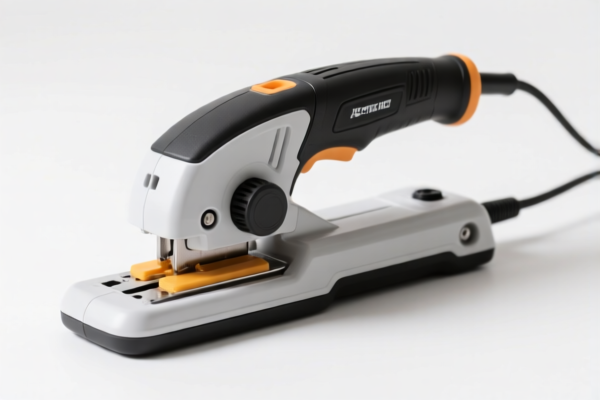
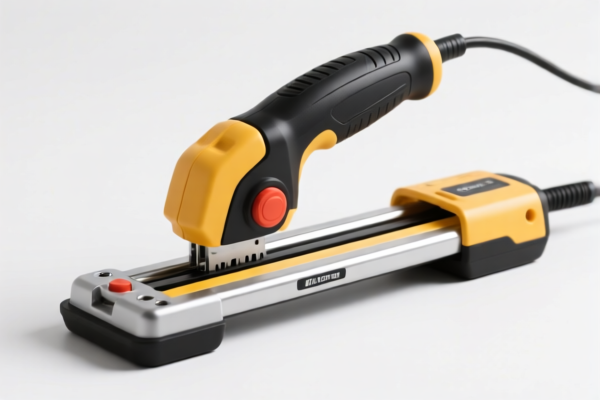
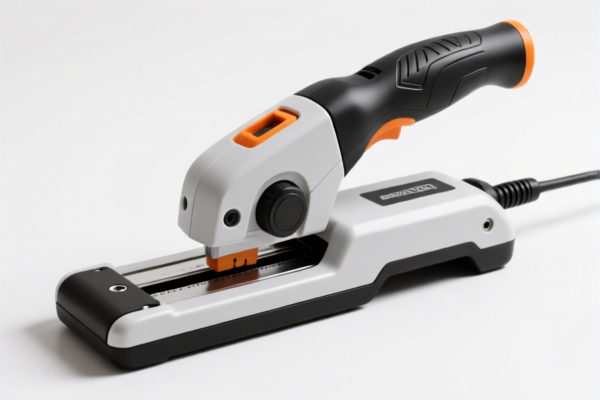
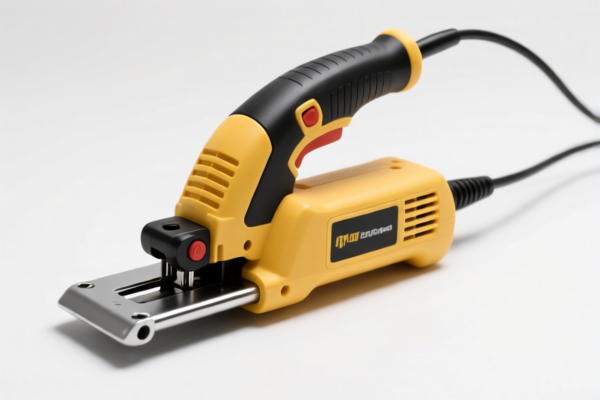
AI Analysis
🍎 Electric Slicer: The Ultimate Guide to HS Code Classification & US Customs Clearance Strategy (2026)
🌐 HS Code Reference & Customs Clearance Guide | 2026 Latest Tariff Analysis | Professional Level Clearance Strategy
📌 I. Product Definition: What is an "Electric Slicer"?
An Electric Slicer is a mechanical device used primarily in commercial kitchens, delis, or industrial food processing facilities to slice fruits, vegetables, meats, or cheese. It typically consists of a motorized rotating blade and a carriage that moves the product against the blade.
⚠️ Critical Distinction for Classification:
- Industrial/Commercial Grade: Large, heavy-duty machines with motors, often used in bulk processing → Likely Chapter 84 (Machinery).
- Manual/Small Handheld Tools: Simple blades without motors → Likely Chapter 82 (Articles of cutlery, etc.).
- The Input is "Electric Slicer": This implies it has a motor. Therefore, it falls under Machinery (Chapter 84) rather than simple cutlery (Chapter 82), unless it is a small handheld electric device which might blur the line. However, based on the provided data, we focus on the Machinery interpretation and the Manual Tool comparison if misclassified.
📦 II. HS Code Classification Details (Based on Provided Data)
| HS Code | Product Description | Key Matching Criteria | Total Tax Rate (US Import from CN) |
|---|---|---|---|
8438.80.00.00 |
Machinery for the preparation or manufacture of food or drink | Use-based match: Industrial food preparation machinery. Material does not conflict. | 35.0% |
8210.00.00.00 |
Hand tools for sharpening, slicing, or peeling fruit or vegetables | Form/Use match: Misclassified as a "manual mechanical tool" for food prep. Note: "Electric" slicers are rarely classified here unless very small/handheld, but the data suggests this match. | 38.7% |
8438.60.00.00 |
Machinery for preparing fruit, nuts, or vegetables | Use-based match: Specifically for preparing fruit, nuts, or vegetables. | 35.0% |
🔍 Critical Note:
- The term "Electric Slicer" strongly points to Chapter 84 (Machinery).
-8438.80.00.00is the general "Other machinery" for food/drink prep.
-8438.60.00.00is more specific to "Fruit/Nut/Vegetable" prep.
-8210.00.00.00is usually for manual tools. If your slicer is truly electric and handheld, it might be scrutinized here, but typically, electric devices are Chapter 84. The provided data includes it, so we explain why it could be matched (form-based misclassification or specific handheld electric tool interpretation).
💰 III. 2026 Latest Tariff Rate Breakdown (With Additional Duties)
✅ Applicable Country: United States (US)
✅ Origin: China (CN)
✅ Effective Date: November 10, 2025 (and subsequent imports)
🎯 1. 8438.80.00.00 —— Machinery for Food/Drink Preparation (General)
| Item | Details |
|---|---|
| Base Tariff | 0.0% (ad valorem) |
| Section 301 Tariff (USITC) | +25.0% (Footnote 9903.88.01) |
| IEEPA Tariff | +10.0% (针对中国/香港产品, effective Nov 10, 2025) |
| Total Tax Rate | 35.0% |
| Tax Calculation | CIF Value × 35% |
| De Minimis Exemption | ❌ No (deny_de_minimis) |
| Legal Basis Path | IEEPA:9903.01.25 → IEEPA:9903.01.24 → USITC:8438.80.00.00 → FOOTNOTE:9903.88.01 |
📌 Explanation:
- "Section 301 Tariff 25%" is from the US Trade Act Section 301 investigations.
- "IEEPA 10%" is the additional tariff under the International Emergency Economic Powers Act targeting Chinese goods.
- Total 35% is a significant cost factor for food machinery.
🎯 2. 8210.00.00.00 —— Manual Hand Tools (If Misclassified or Small Handheld Electric)
| Item | Details |
|---|---|
| Base Tariff | 3.7% (ad valorem) |
| Section 301 Tariff (USITC) | +25.0% |
| IEEPA Tariff | +10.0% |
| Total Tax Rate | 38.7% |
| Tax Calculation | CIF Value × 38.7% |
| De Minimis Exemption | ❌ No (deny_de_minimis) |
| Legal Basis Path | IEEPA:9901.25 → IEEPA:9903.01.24 → USITC:8210.00.00.00 → FOOTNOTE:9903.88.01 |
📌 Note:
- Even though the base rate is higher (3.7%), the total is higher than the machinery code (38.7% vs 35.0%) due to the same additional tariffs.
- Warning: Classifying an electric slicer as a manual tool (8210) is risky and may lead to customs delays or reclassification penalties.
🎯 3. 8438.60.00.00 —— Machinery for Fruit/Nut/Vegetable Prep
| Item | Details |
|---|---|
| Base Tariff | 0.0% |
| Section 301 Tariff (USITC) | +25.0% |
| IEEPA Tariff | +10.0% |
| Total Tax Rate | 35.0% |
| Tax Calculation | CIF Value × 35.0% |
| De Minimis Exemption | ❌ No (deny_de_minimis) |
| Legal Basis Path | IEEPA:9903.01.25 → IEEPA:9903.01.24 → USITC:8438.60.00.00 → FOOTNOTE:9903.88.01 |
📌 Note:
- If the slicer is specifically designed for fruits, nuts, or vegetables, this code is more precise than8438.80.00.00.
- The tax burden is identical to the general machinery code.
🛠️ IV. Customs Clearance Practical Advice (Pitfall Avoidance Guide)
✅ 1. Documentation Checklist (Must Have)
| Document | Required? | Description |
|---|---|---|
| ✅ Product Specifications | ✔️ | Motor power, blade type, dimensions, material (stainless steel vs plastic). |
| ✅ Product Photos | ✔️ | Clear images showing the motor, blade, and power cord. Must prove it is electric. |
| ✅ Commercial Invoice | ✔️ | Must clearly state: "Electric Food Slicer" or "Electric Vegetable Slicer". Avoid vague terms like "Kitchen Tool". |
| ✅ Original Packing List | ✔️ | Itemized list of contents. |
| ✅ Certificate of Origin (CO) | ✔️ | If applicable for potential future exemptions or audits. |
✅ 2. Declaration Tips (Key Mnemonics)
🔥 “Electric = Machinery (Ch84), Manual = Cutlery (Ch82). Be Specific!”
| Situation | Correct Declaration | Wrong Practice |
|---|---|---|
| Commercial Electric Slicer | 8438.60.00.00 or 8438.80.00.00 |
Misclassifying as 8210.00.00.00 → Risk of penalty. |
| Handheld Electric Slicer | Verify if it fits 8210 or 8438. If it has a motor, 8438 is safer. |
Declaring as "Knife" → Incorrect. |
| Slicer for Meat vs Vegetables | 8438.80.00.00 (General Food) vs 8438.60.00.00 (Veg/Fruit) |
Using generic "Food Machine" for everything. |
✅ 3. Special Cases
| Case | Handling Suggestion |
|---|---|
| OEM Custom Slicer | Provide design drawings to prove intent (e.g., industrial vs consumer). |
| Slicer with Multiple Blades | Still one unit of machinery. Do not split. |
| Slicer Parts (Blades Only) | Blade-only might be 8210.00.00.00 if manual, but electric motor parts are 8438. Check separately. |
| Small Portable Electric Slicer | If it looks like a handheld tool, customs might question 8438. Be prepared to show it’s a complete machine, not just a blade. |
🌍 V. Global Market Comparison (2026)
| Country/Region | Recommended HS Code | Tariff (China Origin) | Certification | Notes |
|---|---|---|---|---|
| 🇺🇸 USA | 8438.80.00.00 |
35.0% (with 301+IEEPA) | UL, ETL | High tariff burden. |
| 🇨🇳 China | 8438.80.00.00 |
12% (approx.) | CCC | No additional section 301 tariffs. |
| 🇪🇺 EU | 8438.80.00.00 |
0-4% | CE | No additional tariffs. |
| 🇬🇧 UK | 8438.80.00.00 |
0-4% | UKCA | Post-Brexit rules apply. |
| 🇦🇺 Australia | 8438.80.00.00 |
5% | RCM | No additional tariffs. |
📌 Conclusion:
- The US is the only market with the 35% total tariff burden due to Section 301 and IEEPA.
- Cost Impact: A $1,000 electric slicer incurs $350 in tariffs in the US, compared to potentially $0-$40 in EU/UK/AU.
📌 VI. Common Mistakes & Pitfalls (Lessons Learned)
❌ Mistake 1: Declaring an Electric Slicer as a Manual Tool (8210)
👉 Consequence: Customs may reject the classification, leading to delays, audits, and potential misdeclaration penalties. Also, the tax rate (38.7%) is higher than machinery (35.0%).
❌ Mistake 2: Using vague descriptions like "Kitchen Appliance"
👉 Consequence: CBP may assign a different HS Code with a higher tariff or require additional documentation.
❌ Mistake 3: Ignoring the "Electric" component
👉 Consequence: If the slicer has a motor, it must be classified under Chapter 84. Misclassification as Chapter 82 (manual tools) is a red flag.
❌ Mistake 4: Not distinguishing between Meat Slicer vs Vegetable Slicer
👉 Consequence: While both may fall under 8438, specific codes like 8438.60.00.00 (Veg/Fruit) vs 8438.10.00.00 (Meat - not in provided data but exists) should be checked. In the provided data, 8438.60.00.00 is for Veg/Nut/Fruit, and 8438.80.00.00 is general. If it’s a meat slicer, 8438.80.00.00 might be the fallback if 8438.10 is not listed.
✅ Correct Approach:
"Electric Food Slicer, Model XYZ, 120V, 500W, Stainless Steel Blade, for Commercial Kitchen Use"
🎯 VII. Conclusion: Precision in Classification Saves Money!
🎯 Remember the Mnemonic:
🔹 "Electric = Machinery (Ch84), Manual = Cutlery (Ch82). Don't Mix Them!"
🔹 "US Tariff is 35% for Machinery, 38.7% for Manual. Be Accurate!"
📌 Pro Tip:
If your electric slicer is originating from Vietnam, Mexico, or Thailand, you might be eligible for IEEPA Exemptions, reducing the total tariff significantly.
Recommend applying for an Advance Ruling from US Customs to confirm the correct HS Code (8438.60.00.00 vs 8438.80.00.00) before shipment.
📣 Take Action Now:
📞 Consult a licensed customs broker.
📄 Provide product photos and specs.
🚀 Ensure smooth clearance and maximize profit margins!
✨ Professional Customs Clearance Starts with Accurate Classification!
💼 Every Percent Saved in Tariffs is Pure Profit!
Customer Reviews
About HS Code Classification
The Harmonized System (HS) is an internationally standardized nomenclature developed by the World Customs Organization (WCO) to classify traded products. Over 200 countries use the HS system as the basis for customs tariffs, trade statistics, and import/export regulations.
Each HS code follows a hierarchical structure:
- Chapter (2 digits) — Broad category of goods (e.g., Chapter 84: Machinery and Mechanical Appliances)
- Heading (4 digits) — More specific grouping within the chapter
- Subheading (6 digits) — Internationally standardized breakdown, used by all WCO member countries
- National subdivisions (8-10 digits) — Country-specific extensions for further classification, such as US HTSUS 10-digit codes
Correct HS code classification is essential for smooth customs clearance, accurate duty payment, and compliance with trade regulations. Misclassification can lead to customs delays, overpayment of duties, or penalties.
When importing from CN to US, the applicable tariff rates may include:
- Most-Favored-Nation (MFN) rate — The standard duty rate applied to WTO members
- General rate — Applied to countries without trade agreements
- Trade remedy duties — Additional tariffs such as Section 301 (anti-dumping), Section 232 (national security), or countervailing duties
The information provided on this page is for reference purposes only. For official classification, please consult with your local customs authority or a licensed customs broker.