electric spinner
CN → US| HS Code | Tariff Rate | Origin | Destination | Doc |
|---|---|---|---|---|
| 8543908885 | 85.0% | CN | US | Official Doc |
| 8501106080 | 37.8% | CN | US | Official Doc |
| 8501104080 | 39.4% | CN | US | Official Doc |
| 8543906800 | 35.0% | CN | US | Official Doc |
| 9503000073 | 10.0% | CN | US | Official Doc |
| 9503000071 | 10.0% | CN | US | Official Doc |
Product Images
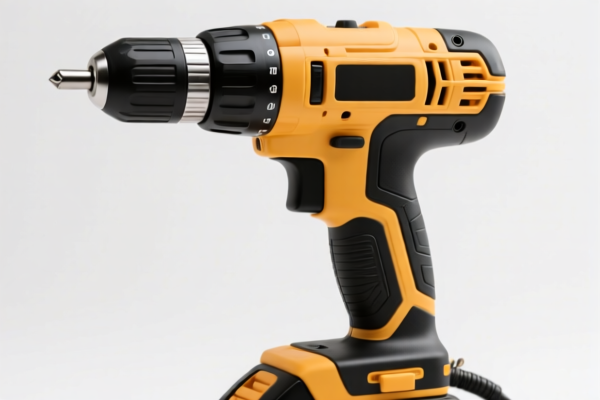
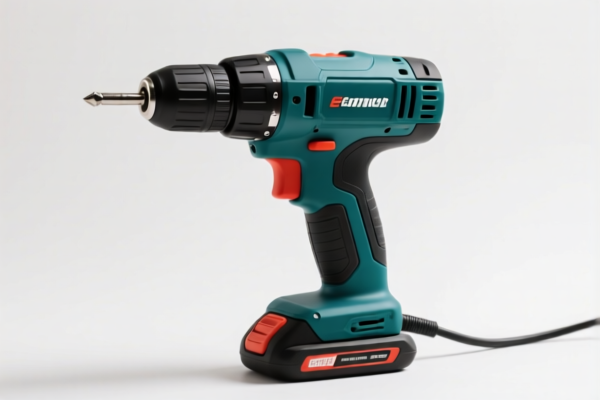
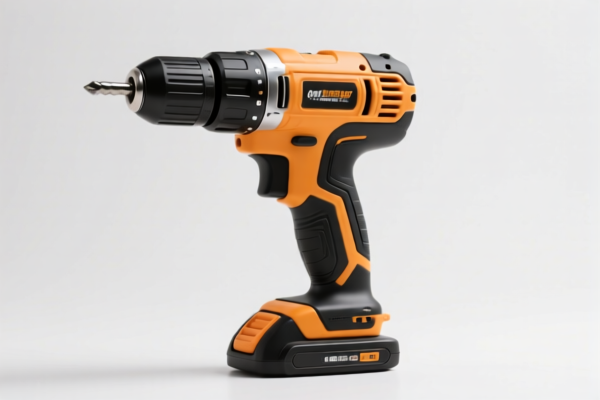

AI Analysis
🌪️ Electric Spinner (电动陀螺)
🌐 HS Code Reference & Customs Clearance Guide | 2026 Latest Tariff Analysis | Professional Entry Strategies
📌 I. Product Definition & Classification: What is an "Electric Spinner"?
An Electric Spinner is typically a toy or recreational device powered by an electric motor that spins a top or similar component. In international trade, classification depends heavily on primary function and internal components:
- As a Toy: If the primary purpose is entertainment/play for children, it falls under Chapter 95 (Toys).
- As an Electrical Device/Motor: If the primary purpose is industrial, educational, or if the core value lies in the motor/mechanism itself, it may fall under Chapter 85 (Electrical Machinery).
⚠️ Key Distinction:
- If it is a complete toy for play →归入 9503.00
- If it is a motor component or specialized electrical apparatus →归入 8501 or 8543
📦 II. HS Code Classification Matrix (Based on Provided Data)
| HS Code | Product Description | Core Component / Logic | Total Tax Rate |
|---|---|---|---|
9503.00.00.73 |
Other Toys (Rotational Entertainment Model) | Core function is play/entertainment; form is a rotating toy model. | 10.0% |
9503.00.00.71 |
Other Toys (Plastic/Metal Rotating Toy) | Core function is play; material inferred as plastic/metal; no conflict with toy category. | 10.0% |
8543.90.68.00 |
Other Electrical Apparatus (Independent Function) | Core components fit printed circuit assemblies; considered an independent electrical device. | 35.0% |
8501.10.40.80 |
Electric Motors (Low Power) | Core power source is a low-power motor; fits characteristics of low-power motors. | 39.4% |
8501.10.60.80 |
Electric Motors (Consumer Grade) | Consumer-driven product; core component is a motor matching this power range. | 37.8% |
8543.90.88.85 |
Other Electrical Equipment Parts | Core parts involve motors/electrical components; classified under "other" in Chapter 85. | 85.0% |
🔍 Critical Insight:
- Toy Classification (9503) offers the lowest tax burden (10%).
- Electrical/Motor Classification (8501/8543) incurs significantly higher taxes due to additional tariffs (Section 301, IEEPA, etc.).
- Classification Choice: If the product is clearly intended for children/play, 9503.00 is the strategic and legally sound choice to minimize duties.
💰 III. Detailed Tariff Breakdown (2026 Current Rates)
✅ Applicable Country: USA (US)
✅ Origin: China (CN)
✅ Effective Date: 2025-11-10 onwards
🎯 1. 9503.00.00.71 & 9503.00.00.73 —— Toys (Optimal Choice)
| Item | Detail |
|---|---|
| Base Duty | 0.0% |
| Section 301 Surcharge | 0.0% |
| IEEPA Surcharge (122-Clause) | 10.0% |
| Total Duty Rate | 10.0% |
| Calculation | CIF Value × 10% |
| De Minimis Eligibility | ✅ Eligible (Under $800) |
| Legal Basis | HTSUS:9503.00.00 + IEEPA:9903.01.25 (122-Clause) |
📌 Explanation:
- Toys are generally exempt from Section 301 (25%) surcharges.
- However, 10% IEEPA surcharge applies to Chinese-origin toys.
- Total effective rate: 10%.
- Advantage: Lowest tax rate, de minimis exemption available for small packages.
🎯 2. 8543.90.68.00 —— Independent Electrical Apparatus
| Item | Detail |
|---|---|
| Base Duty | 0.0% |
| Section 301 Surcharge | 25.0% |
| IEEPA Surcharge (122-Clause) | 10.0% |
| Total Duty Rate | 35.0% |
| De Minimis Eligibility | ❌ Not Eligible (Electrical goods often excluded) |
📌 Explanation:
- Classified as an electrical device, not a toy.
- Subject to full 25% Section 301 + 10% IEEPA.
- High compliance risk if misclassified from a toy.
🎯 3. 8501.10.40.80 & 8501.10.60.80 —— Electric Motors
| Item | Detail |
|---|---|
| Base Duty | 4.4% (8501.10.40) / 2.8% (8501.10.60) |
| Section 301 Surcharge | 25.0% |
| IEEPA Surcharge (122-Clause) | 10.0% |
| Total Duty Rate | 39.4% (8501.10.40) / 37.8% (8501.10.60) |
| De Minimis Eligibility | ❌ Not Eligible |
📌 Explanation:
- If declared as a "motor" or "motor part," base duties apply.
- High total rate (~38-39%) due to cumulative surcharges.
- Not recommended unless the product is sold as a spare motor, not a finished toy.
🎯 4. 8543.90.88.85 —— Other Electrical Equipment Parts
| Item | Detail |
|---|---|
| Base Duty | 0.0% |
| Section 301 Surcharge | 25.0% |
| IEEPA Surcharge | 10.0% |
| Steel/Aluminum/Copper Surcharge (122-Clause) | 50.0% |
| Total Duty Rate | 85.0% |
| De Minimis Eligibility | ❌ Not Eligible |
📌 Explanation:
- Highest tax bracket!
- Applies if the spinner contains significant steel, aluminum, or copper components classified under specific 122-Clause provisions.
- Avoid this classification unless absolutely necessary.
🛠️ IV. Customs Clearance Practical Advice
✅ 1. Documentation Checklist
| Document | Required | Notes |
|---|---|---|
| Product Photos | ✅ Yes | Clear images showing it is a toy (colorful, child-friendly, no industrial markings). |
| User Manual | ✅ Yes | Should indicate "For Play/Entertainment" or "Ages 3+". |
| Safety Certification | ✅ Yes | ASTM F963 (US), CPSIA compliance is critical for toys. |
| Commercial Invoice | ✅ Yes | Describe as "Plastic/Metal Electric Spinning Top Toy", NOT "Electric Motor" or "Mechanical Apparatus". |
| Material Declaration | ✅ Yes | Specify plastic/metal composition to avoid Steel/Aluminum surcharges under 8543.90.88.85. |
✅ 2. Classification Strategy & Risk Mitigation
🔥 "Toy First, Motor Second! Clear Description, Lower Tax!"
| Scenario | Recommended HS Code | Reason |
|---|---|---|
| Finished Toy for Kids | 9503.00.00.71 / 73 |
Primary function is play; lowest tax (10%); de minimis eligible. |
| Educational STEM Kit | 9503.00.00.71 / 73 |
Even if educational, if it's a toy top, classify as toy. |
| Sold as Spare Motor | 8501.10.60.80 |
Only if sold without toy housing, purely as a motor part. |
| Industrial Spinner Machine | 8543.90.68.00 |
If used in factories for sorting/testing, not play. |
⚠️ Warning:
- Do NOT declare as "Electric Motor" if it is a complete toy.
- Do NOT include steel/ aluminum parts in a way that triggers the 50% surcharge under8543.90.88.85.
- Best Practice: Use9503.00.00.71or9503.00.00.73for standard electric spinner toys.
✅ 3. Special Cases
| Case | Advice |
|---|---|
| OEM Toys | Provide design files and approval letters to prove toy nature. |
| Mixed Containers | If mixed with electrical parts, ensure clear separation in invoice. |
| High-Value Parts | If the motor alone costs more than the toy, consult customs broker for potential 8501 classification (but expect higher taxes). |
🌍 V. Global Market Comparison (2026)
| Country | Recommended HS Code | Est. Duty | Key Requirement |
|---|---|---|---|
| 🇺🇸 USA | 9503.00.00.71/73 |
10% | ASTM F963, CPSIA, IEEPA 10% |
| 🇨🇳 China | 9503.00.00.00 |
0% | CCC (if applicable) |
| 🇪🇺 EU | 9503.00.00 |
0% | CE, EN71 |
| 🇬🇧 UK | 9503.00.00 |
0% | UKCA |
📌 Conclusion:
- USA has unique IEEPA 10% surcharge on Chinese toys.
- EU/UK have no such surcharge for toys (0% base).
- Strategy: If targeting US market, ensure toy classification to keep duty at 10%. If misclassified as electrical, tax jumps to 35-85%.
📌 VI. Common Mistakes & Pitfalls
❌ Mistake 1: Declaring as "Electric Motor" (8501)
👉 Result: Duty increases from 10% to 37.8%.
👉 Fix: Emphasize "Toy" in description and packaging.
❌ Mistake 2: Ignoring Material Composition
👉 Result: If classified as 8543.90.88.85, 50% steel/aluminum surcharge applies.
👉 Fix: Ensure materials are plastic or non-susceptible metals, or classify as toy.
❌ Mistake 3: Missing Safety Certifications
👉 Result: Customs hold or rejection for toy imports.
👉 Fix: Provide ASTM F963 and CPSIA certificates for US market.
✅ Correct Description Example:
"Electric Spinning Top Toy, Plastic, Ages 3+, with LED Lights, ASTM F963 Certified"
🎯 VII. Final Recommendation
🎯 Choose 9503.00.00.71 or 9503.00.00.73 for electric spinner toys.
- Lowest Duty: 10% (vs. 35-85% for electrical).
- De Minimis Eligible: Saves costs on small shipments.
- Clear Compliance: Aligns with "Toy" intent and packaging.
🚀 Action Plan:
1. Update Invoice Description to "Toy".
2. Attach Safety Certs (ASTM/CPSIA).
3. Apply HS Code9503.00.00.71.
4. Avoid Electrical Terminology (Motor, Apparatus, Circuit).
📌 Pro Tip:
If your electric spinner is high-end educational STEM, still classify as Toy unless it is strictly an electronic component for repair/sale. The tax savings are massive.
📣 Contact Your Customs Broker to verify:
- Product photos
- Safety certifications
- Final HS Code pre-ruling
Smart Classification = Lower Costs = Higher Profits!
✨ Precision in Classification, Power in Savings!
💼 Your Electric Spinner, Cleared Efficiently!
Customer Reviews
About HS Code Classification
The Harmonized System (HS) is an internationally standardized nomenclature developed by the World Customs Organization (WCO) to classify traded products. Over 200 countries use the HS system as the basis for customs tariffs, trade statistics, and import/export regulations.
Each HS code follows a hierarchical structure:
- Chapter (2 digits) — Broad category of goods (e.g., Chapter 84: Machinery and Mechanical Appliances)
- Heading (4 digits) — More specific grouping within the chapter
- Subheading (6 digits) — Internationally standardized breakdown, used by all WCO member countries
- National subdivisions (8-10 digits) — Country-specific extensions for further classification, such as US HTSUS 10-digit codes
Correct HS code classification is essential for smooth customs clearance, accurate duty payment, and compliance with trade regulations. Misclassification can lead to customs delays, overpayment of duties, or penalties.
When importing from CN to US, the applicable tariff rates may include:
- Most-Favored-Nation (MFN) rate — The standard duty rate applied to WTO members
- General rate — Applied to countries without trade agreements
- Trade remedy duties — Additional tariffs such as Section 301 (anti-dumping), Section 232 (national security), or countervailing duties
The information provided on this page is for reference purposes only. For official classification, please consult with your local customs authority or a licensed customs broker.