electric stapler
CN → US| HS Code | Tariff Rate | Origin | Destination | Doc |
|---|---|---|---|---|
| 8472909080 | 35.0% | CN | US | Official Doc |
| 8472300000 | 36.8% | CN | US | Official Doc |
Product Images
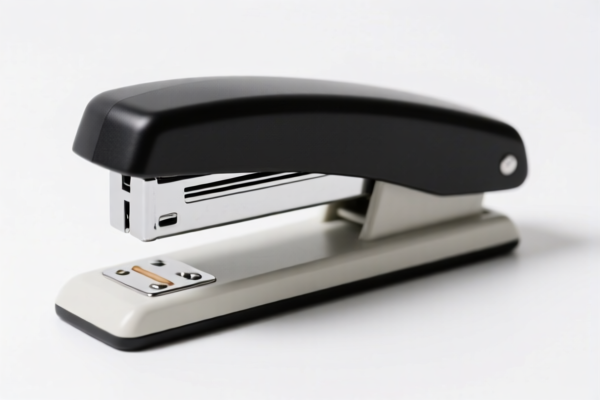
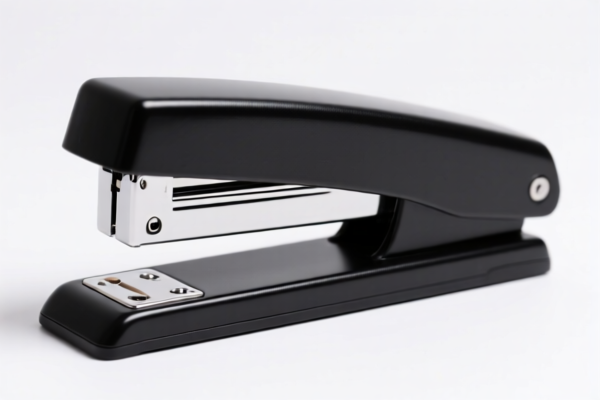
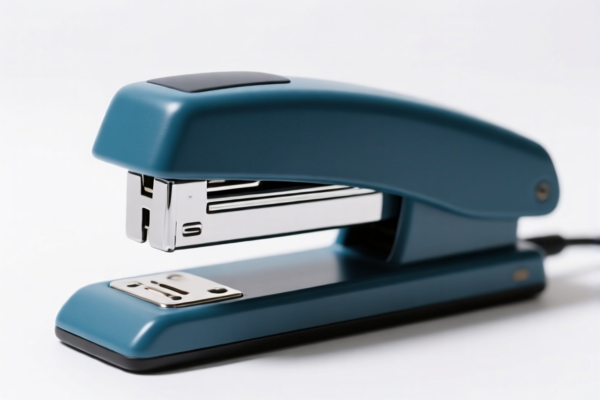

AI Analysis
🪛 Electric Stapler (Automatic Fastening Devices)
🌐 HS Code Reference & Customs Clearance Guide | 2026 Latest Tariff Analysis | Professional Level Strategy
📌 I. Product Definition & Classification: Do You Really Understand “Electric Staplers”?
An electric stapler, often referred to in international trade as an "Automatic Stapling Machine" or part of "Office Machines," is a device designed to fasten papers together using metal staples. Unlike manual staplers (which are generally excluded from Chapter 84 and classified under Chapter 96 as hand tools), electric or automatic staplers fall under Chapter 84: Nuclear reactors, boilers, machinery and mechanical appliances.
In international trade, these devices are categorized based on their primary function: 1. General Office Use: Stapling documents, reports, and files. 2. Specialized Mail Processing: Machines specifically designed for opening, closing, sealing mail, or inserting mail into envelopes (often combined with stapling).
⚠️ Critical Distinction:
- If the machine is a standalone electric stapler for general document organization → 8472.90.90.80
- If the machine is a dedicated mail processing unit (e.g., automatically opens envelopes, inserts letters, and staples them in one flow) → 8472.30.00.00
📦 II. HS Code Classification Details (2026 Latest Tariff Authority Comparison)
| HS Code | Product Description | Applicable Scenario | Primary Function |
|---|---|---|---|
8472.90.90.80 |
Other office machines: Other: Other | General electric staplers, heavy-duty binding machines, standalone document assembly units | Document Fastening (General Office) |
8472.30.00.00 |
Machines for sorting/folding mail, inserting mail, opening/closing/sealing mail, or affixing/canceling postage stamps | Automated mailrooms, high-volume direct mail systems, envelope stuffing & sealing lines | Mail Processing & Sealing |
🔍 Key Reminder:
- Most standalone Electric Staplers used in offices for binding reports, manuals, or contracts fall under8472.90.90.80.
-8472.30.00.00is reserved for machines whose primary purpose is handling mail (opening, sealing, stamping), even if they have stapling capabilities. If a machine is just for stapling papers, do not use this code.
💰 III. 2026 Latest Tariff Rate Details (Including Surcharges & Policy Add-ons)
✅ Applicable Country: United States (US)
✅ Origin: China (CN)
✅ Effective Date: 2025/2026 (Current Trade Policy)
🎯 1. 8472.90.90.80 —— Other Office Machines (General Electric Staplers)
| Item | Content |
|---|---|
| Base Tariff Rate | 0.0% (Ad Valorem) |
| Section 301 Surcharge | +25.0% (From USITC Footnote 9903.88.01) |
| Total Tariff Rate | 25.0% |
| Tax Calculation | CIF Value × 25% |
| De Minimis Exemption | ❌ Not Applicable (Subject to high tariffs) |
| Legal Basis Path | USITC:8472.90.90.80 → FOOTNOTE:9903.88.01 (Section 301) |
📌 Explanation:
- While the base tariff for "other office machines" is 0%, the Section 301 tariff (retaliatory tariff on Chinese goods) adds a flat 25%.
- Total Cost Impact: For every $1,000 of CIF value, you pay $250 in additional tariffs.
- This is a high-cost category due to the 25% surcharge, regardless of the 0% base rate.
🎯 2. 8472.30.00.00 —— Mail Sorting/Inserting/Sealing Machines
| Item | Content |
|---|---|
| Base Tariff Rate | 0.0% (Ad Valorem) |
| Section 301 Surcharge | +0.0% (Exempt from Section 301) |
| Total Tariff Rate | 0.0% |
| Tax Calculation | CIF Value × 0% |
| De Minimis Exemption | N/A (Tariff is already 0%) |
| Legal Basis Path | USITC:8472.30.00.00 |
📌 Note:
- This category enjoys a 0% total tariff rate.
- CRITICAL WARNING: You can ONLY use this 0% rate if the machine is specifically designed and marketed for mail processing (opening, sealing, inserting).
- If you ship a standard electric stapler under this code, Customs will likely reclassify it to8472.90.90.80and charge 25%, plus penalties for misdeclaration.
🛠️ IV. Customs Clearance Practical Advice (Real-World Pitfall Avoidance Guide)
✅ 1. Required Documentation Checklist (Non-Negotiable)
| Document | Must Provide | Description |
|---|---|---|
| ✅ Product Specification Sheet | ✔️ | Must specify: Voltage, Staple Size, Stapling Speed, Power Source (Electric/Air). |
| ✅ Product Photos | ✔️ | Clear images of the machine, label, and usage context (e.g., stapling paper vs. sealing envelopes). |
| ✅ Commercial Invoice | ✔️ | Description must match HS Code: e.g., "Electric Stapler, Model XYZ" vs. "Automatic Mail Sealing System." |
| ✅ User Manual/Operating Guide | ✔️ | Helps Customs determine if the primary function is "stapling" or "mail processing." |
| ✅ Certificate of Origin (CO) | ✔️ | Proof of Chinese origin triggers the 25% tariff for 8472.90.90.80. |
✅ 2. Declaration Strategy (Key Mantra)
🔥 "Function Determines Code, Misclassification Costs 25%!"
| Scenario | Correct HS Code | Wrong Action | Consequence |
|---|---|---|---|
| Standard Electric Stapler (Office Use) | 8472.90.90.80 |
Declare as 8472.30.00.00 |
25% Penalty + Back Taxes |
| Automated Mail Insertion Machine (with stapler) | 8472.30.00.00 |
Declare as 8472.90.90.80 |
Overpayment of 25% (Lost profit) |
| Manual Hand Stapler | Chapter 96 | Declare as 8472.90.90.80 |
Incorrect Classification |
✅ 3. Special Case Handling
| Situation | Recommendation |
|---|---|
| Hybrid Machine (e.g., Mail sorter that can staple) | If the primary function is mail sorting/sealing, declare under 8472.30.00.00. Provide proof of mail-processing features. |
| Standalone Electric Stapler | Always declare under 8472.90.90.80. Accept the 25% tariff cost. |
| Bundled Sale (Stapler + Paper) | Declare separately. Stapler under 8472, Paper under 48. Do not bundle to hide the 25%. |
| Origin Shift (e.g., Assembled in Vietnam) | If substantial transformation occurs in Vietnam, apply for Vietnam Origin CO to avoid Section 301 tariffs. |
🌍 V. Global Market Comparison (2026 Latest)
| Country/Region | Recommended HS Code | Total Tariff (China Origin) | Key Requirement | Remarks |
|---|---|---|---|---|
| 🇺🇸 USA | 8472.90.90.80 |
25% | FCC (if electronic) | High tariff due to Section 301 |
| 🇺🇸 USA | 8472.30.00.00 |
0% | Must be Mail-Processing | Only if primary function is mail |
| 🇨🇳 China | 8472.90.90.80 |
~6-10% (Import Duty) | CCC (if applicable) | Lower export tax burden |
| 🇪🇺 EU | 8472.90.90.80 |
0-2% | CE Marking | No major trade wars |
| 🇬🇧 UK | 8472.90.90.80 |
0-2% | UKCA Marking | Post-Brexit rules apply |
📌 Conclusion:
- USA is the only major market with a 25% tariff on standard electric staplers (8472.90.90.80).
- Strategic Tip: If your product is a complex machine capable of mail processing, ensure your marketing materials and manual emphasize "Mail Sealing/Insertion" to justify8472.30.00.00(0% tariff). If it's just a stapler, budget for the 25%.
📌 VI. Common Errors & Pitfall Guide (Blood & Tears Lessons)
❌ Error 1: Declaring a standard electric stapler as 8472.30.00.00 to avoid taxes.
👉 Consequence: Customs audits the invoice/photos, finds no mail-sorting mechanism, reclassifies to 8472.90.90.80, and imposes 25% back taxes + penalties.
❌ Error 2: Not declaring "Electric" or "Automatic."
👉 Consequence: If described as "Stapler," Customs may assume it's a manual hand tool (Chapter 96, lower duty) and later discover it's electric, leading to misdeclaration fines.
❌ Error 3: Bundling electric staplers with free accessories and declaring as "Office Supplies."
👉 Consequence: HS Code error. Machinery cannot be hidden under generic "Supplies."
✅ Correct Practice:
"Electric Automatic Stapler, 20 Staples/Min, 110V/60Hz, Model XYZ, For Office Document Binding" →
8472.90.90.80
"Automatic Envelope Inserting and Sealing Machine with Stapling Function, Model ABC, Industrial Mail Processing" →8472.30.00.00
🎯 VII. Conclusion: Precise Classification, Cost Control!
🎯 Remember the Mantra:
🔹 "Stapler Only = 8472.90 = 25% Tax"
🔹 "Mail System = 8472.30 = 0% Tax"
🔹 "Don't Force a Stapler into Mail Code – It Will Get Caught!"
🔹 "HS Code Defines Your Cost; Precision Saves Money."
📌 Pro Tip:
If your electric stapler is part of a larger Mailroom Automation System, ensure the primary function is documented as mail handling. This can legitimately qualify for the 0% tariff under
8472.30.00.00. However, for standalone devices, accept the 25% tariff or explore supply chain relocation (e.g., final assembly in a non-China country) to mitigate costs.
📣 Immediate Action:
📞 Contact Customs Brokers Early
📦 Ensure Product Description Matches Function
🚀 Calculate Landed Cost Accurately (Include 25% if applicable)
✨ Professional Clearance Starts with Accurate Classification!
💼 Every Percentage Point in Tariff is Pure Profit Impact!
Customer Reviews
About HS Code Classification
The Harmonized System (HS) is an internationally standardized nomenclature developed by the World Customs Organization (WCO) to classify traded products. Over 200 countries use the HS system as the basis for customs tariffs, trade statistics, and import/export regulations.
Each HS code follows a hierarchical structure:
- Chapter (2 digits) — Broad category of goods (e.g., Chapter 84: Machinery and Mechanical Appliances)
- Heading (4 digits) — More specific grouping within the chapter
- Subheading (6 digits) — Internationally standardized breakdown, used by all WCO member countries
- National subdivisions (8-10 digits) — Country-specific extensions for further classification, such as US HTSUS 10-digit codes
Correct HS code classification is essential for smooth customs clearance, accurate duty payment, and compliance with trade regulations. Misclassification can lead to customs delays, overpayment of duties, or penalties.
When importing from CN to US, the applicable tariff rates may include:
- Most-Favored-Nation (MFN) rate — The standard duty rate applied to WTO members
- General rate — Applied to countries without trade agreements
- Trade remedy duties — Additional tariffs such as Section 301 (anti-dumping), Section 232 (national security), or countervailing duties
The information provided on this page is for reference purposes only. For official classification, please consult with your local customs authority or a licensed customs broker.