electric starter motor
CN → US| HS Code | Tariff Rate | Origin | Destination | Doc |
|---|---|---|---|---|
| 8511906040 | 37.5% | CN | US | Official Doc |
| 8511400000 | 37.5% | CN | US | Official Doc |
| 8501316000 | 37.4% | CN | US | Official Doc |
| 8501106080 | 37.8% | CN | US | Official Doc |
Product Images
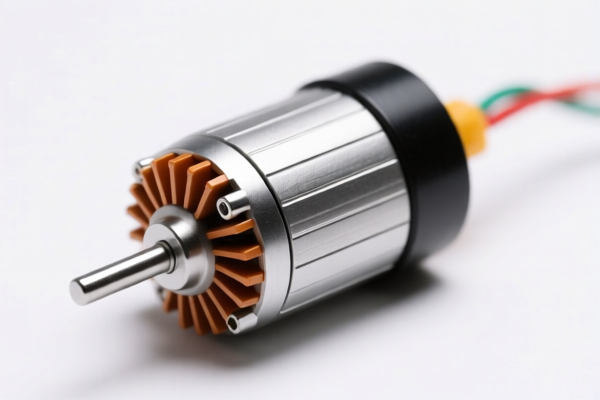


AI Analysis
⚡ Electric Starter Motor (Automotive/Engine Ignition & Starting)
🌐 HS Code Reference & Customs Clearance Guide | 2026 Latest Tariff Analysis | Professional Clearance Strategy
📌 I. Product Definition & Classification: Do You Really Understand "Starter Motors"?
The Electric Starter Motor is a critical electromechanical component designed to initiate the rotation of an internal combustion engine. In international trade, its classification depends heavily on whether it is viewed as a stand-alone motor or a specific part of an ignition/starting system.
Key Distinction:
- If classified under 8511: It is treated as a specific "electrical starting or ignition equipment" part.
- If classified under 8501: It is treated as a general "DC Electric Motor" based on its fundamental function and power output.
⚠️ Critical Note for Importers:
- Classification under 8511 is often preferred for automotive-specific starters because it aligns with the "starting equipment" definition.
- Classification under 8501 is possible if the motor’s power output falls within specific DC motor brackets (e.g., ≤750W), but this may lead to different tariff liabilities depending on the interpretation of "part" vs. "machine."
📦 II. HS Code Classification Details (2026 Latest Tariff Reference)
Based on the provided data, here are the four potential HS Codes, their summaries, and tax implications.
| HS Code | Product Description | Applicability & Rationale | Total Tax Rate |
|---|---|---|---|
8511.90.60.40 |
Parts of Electrical Starting/Ignition Equipment | Fits the definition of parts for electrical starting devices (internal combustion engines). No material conflict. | 37.5% |
8511.40.00.00 |
Starting Motors (Starters) | The term "Starter Motor" aligns directly with the classification explanation for "Starters." Use matches perfectly. | 37.5% |
8501.31.60.00 |
DC Motors (≤750W) | Starter motors are DC motors. Based on common sense, they are inferred to be ≤750W. No material conflict. | 37.4% |
8501.10.60.80 |
Other DC Motors | "Starter Motor" is a type of electric motor. Classified under "Other" due to unspecified power, but no obvious material/form conflict. | 37.8% |
🔍 Key Insight:
- 8511 Codes (37.5%) are specifically tailored for starting/ignition equipment, making them the most semantically accurate for automotive starters.
- 8501 Codes (37.4% - 37.8%) treat the starter as a generic DC motor. The slight variance in tax rates is due to different base tariffs (2.4% vs. 2.8%).
- Note on Tax Details: All codes incur significant additional tariffs (see Section III).
💰 III. 2026 Latest Tariff Rate Breakdown (Including Surcharges & Policy Add-ons)
✅ Applicable Country: United States (US)
✅ Origin: China (CN)
✅ Effective Time: From November 10, 2025 onwards
🎯 1. HS Code 8511.90.60.40 & 8511.40.00.00
Classification: Parts/Specific Starters for Internal Combustion Engines
| Item | Detail |
|---|---|
| Base Tariff | 2.5% |
| Section 301 Surcharge (Add-on Tariff) | 25.0% |
| Section 122 Tariff | 10.0% |
| Total Effective Tax Rate | 37.5% |
| Calculation Method | CIF Value × 37.5% |
| De Minimis Exemption | ❌ Not Eligible (High risk of audit if declared as low-value shipment) |
| Legal Basis Path | USITC:8511.90.60.40 / USITC:8511.40.00.00 → Section 301: 25% → Section 122: 10% |
📌 Explanation:
- The 25% is the standard Section 301 tariff for Chinese goods in this category.
- The 10% is an additional tariff under Section 122 (often related to national security or trade remedies).
- Total: 37.5%. This is a high-cost classification.
🎯 2. HS Code 8501.31.60.00
Classification: DC Motors, Power ≤750W
| Item | Detail |
|---|---|
| Base Tariff | 2.4% |
| Section 301 Surcharge (Add-on Tariff) | 25.0% |
| Section 122 Tariff | 10.0% |
| Total Effective Tax Rate | 37.4% |
| Calculation Method | CIF Value × 37.4% |
| De Minimis Exemption | ❌ Not Eligible |
| Legal Basis Path | USITC:8501.31.60.00 → Section 301: 25% → Section 122: 10% |
📌 Explanation:
- Slightly lower than 8511 due to a 0.1% lower base tariff (2.4% vs 2.5%).
- However, the 25% + 10% surcharges remain the same.
- Risk: If customs determines the motor is >750W, it may be reclassified, leading to penalties.
🎯 3. HS Code 8501.10.60.80
Classification: Other DC Motors
| Item | Detail |
|---|---|
| Base Tariff | 2.8% |
| Section 301 Surcharge (Add-on Tariff) | 25.0% |
| Section 122 Tariff | 10.0% |
| Total Effective Tax Rate | 37.8% |
| Calculation Method | CIF Value × 37.8% |
| De Minimis Exemption | ❌ Not Eligible |
| Legal Basis Path | USITC:8501.10.60.80 → Section 301: 25% → Section 122: 10% |
📌 Explanation:
- This is the most expensive option among the four, with a 37.8% total rate.
- The higher base tariff (2.8%) makes it less attractive than 8501.31.60.00.
🛠️ IV. Customs Clearance Practical Advice (Best Practices)
✅ 1. Documentation Checklist (Mandatory)
| Document | Required? | Purpose |
|---|---|---|
| ✅ Product Specification Sheet | ✔️ | Must state: Power (Watts/Volts), RPM, Type (DC), Application (Automotive/Engine). |
| ✅ Technical Diagram | ✔️ | To prove it is a "starter motor" and not a general-purpose motor. |
| ✅ Commercial Invoice | ✔️ | Clearly describe as "Electric Starter Motor for Internal Combustion Engines." |
| ✅ Proof of Origin (CO) | ✔️ | Confirm China origin to apply correct Section 301/122 rates. |
| ✅ Packing List | ✔️ | Include all accessories (bendix gears, solenoids) if shipped together. |
✅ 2. Classification Strategy & Risk Mitigation
🔥 "Specific Function Wins: Starters go to 8511, Generic Motors to 8501!"
| Scenario | Recommended HS Code | Why? | Risk |
|---|---|---|---|
| Standard Automotive Starter | 8511.40.00.00 |
Explicitly covers "Starters." Best semantic match. | Low if specs clearly state "for engine starting." |
| Automotive Starter Part (e.g., Gear) | 8511.90.60.40 |
Fits "Parts of starting equipment." | Low. |
| High-Power DC Motor Used as Starter | 8501.31.60.00 |
If >750W or not specifically an "engine starter," use DC motor codes. | Medium. Must justify ≤750W. |
| Generic DC Motor | 8501.10.60.80 |
If not clearly a starter or ≤750W. | High. Highest tax rate (37.8%). |
📌 Critical Warning:
- Do NOT claim "De Minimis" (Section 321) for these shipments. The total tax rate (>37%) means the duty will likely exceed the $800 de minimis threshold, or customs may deny entry due to Section 301/122 restrictions.
- Ensure the power rating is clearly stated. If claiming8501.31.60.00(≤750W), the motor must genuinely be ≤750W. Misdeclaration can lead to fraud penalties.
✅ 3. Special Considerations
| Situation | Advice |
|---|---|
| OEM Starters for Cars | Use 8511.40.00.00. It is the most accurate for "Starters." |
| Starter Motors for Generators/Industrial Engines | Still use 8511 if intended for ignition/starting. If it’s a general-purpose motor, use 8501. |
| Shipment with Multiple Items | Declare starters separately. Do not mix with unrelated parts to avoid classification complexity. |
| Section 122 Tariff Impact | The 10% Section 122 tariff is significant. Calculate total landed cost accurately. |
🌍 V. Global Market Comparison (2026 Outlook)
| Market | Recommended HS Code | Est. Tariff (China Origin) | Notes |
|---|---|---|---|
| 🇺🇸 USA | 8511.40.00.00 |
37.5% | High due to Section 301 (25%) + Section 122 (10%). |
| 🇨🇳 China | 8511.40.00.00 |
~5-10% (Check latest) | Lower base tariff, no US surcharges. |
| 🇪🇺 EU | 8503.00.00 (Parts) |
0-4% | EU often classifies starter parts under 8503. Check EU Tariff Book. |
| 🇯🇵 Japan | 8501.31 or 8511 |
0-5% | Japan may have different interpretations. |
📌 Conclusion:
- The US market is the most expensive due to aggressive trade policies (Section 301 & 122).
- Diversification: Consider sourcing from countries not subject to Section 301/122 (e.g., Vietnam, Mexico) if volume is high, to reduce tariff burden.
📌 VI. Common Mistakes & Pitfalls (Learn from Others’ Errors)
❌ Mistake 1: Classifying a starter motor as 8504.40.00 (Static Converters)
👉 Consequence: Misclassification, delay, and possible penalties. Starters are electromechanical, not static.
❌ Mistake 2: Ignoring the Section 122 Tariff in cost calculations
👉 Consequence: Underestimating landed cost by 10%. Profit margin erosion.
❌ Mistake 3: Claiming De Minimis for starter motors
👉 Consequence: Shipment denied or seized. The duty amount exceeds $800, and Section 301/122 goods are often excluded from de minimis relief.
❌ Mistake 4: Vague Description: "Electric Motor"
👉 Consequence: Customs may choose the highest applicable rate (8501.10.60.80 at 37.8%) or demand further documentation, causing delays.
✅ Correct Approach:
"Electric Starter Motor, DC, 12V, 1.5kW, for Internal Combustion Engines, Model XYZ, No. 12345"
🎯 VII. Conclusion: Precision in Classification Saves Money!
🎯 Key Takeaways:
🔹 Use
8511.40.00.00for standard automotive starters for the most accurate classification.
🔹 Total Tax Rate is ~37.5%. Factor this into your pricing strategy.
🔹 Do NOT use De Minimis. The high tariff makes it ineligible/risky.
🔹 Document Power Ratings clearly to support8501classifications if chosen.
📌 Pro Tip:
If you are importing large volumes, consider applying for an HTS USITC Exclusion (if applicable) or exploring supply chain relocation to avoid the 25% Section 301 and 10% Section 122 tariffs.
📣 Immediate Action:
📞 Consult a Licensed Customs Broker before shipping.
📄 Prepare Detailed Tech Specs to support your HS Code claim.
💼 Calculate Landed Cost including the 37.5% total tariff to ensure profitability.
✨ Professional Clearance Starts with Accurate Classification!
💼 Your Profit Margin Depends on It!
Customer Reviews
About HS Code Classification
The Harmonized System (HS) is an internationally standardized nomenclature developed by the World Customs Organization (WCO) to classify traded products. Over 200 countries use the HS system as the basis for customs tariffs, trade statistics, and import/export regulations.
Each HS code follows a hierarchical structure:
- Chapter (2 digits) — Broad category of goods (e.g., Chapter 84: Machinery and Mechanical Appliances)
- Heading (4 digits) — More specific grouping within the chapter
- Subheading (6 digits) — Internationally standardized breakdown, used by all WCO member countries
- National subdivisions (8-10 digits) — Country-specific extensions for further classification, such as US HTSUS 10-digit codes
Correct HS code classification is essential for smooth customs clearance, accurate duty payment, and compliance with trade regulations. Misclassification can lead to customs delays, overpayment of duties, or penalties.
When importing from CN to US, the applicable tariff rates may include:
- Most-Favored-Nation (MFN) rate — The standard duty rate applied to WTO members
- General rate — Applied to countries without trade agreements
- Trade remedy duties — Additional tariffs such as Section 301 (anti-dumping), Section 232 (national security), or countervailing duties
The information provided on this page is for reference purposes only. For official classification, please consult with your local customs authority or a licensed customs broker.