electrical grade insulation tape
CN → US| HS Code | Tariff Rate | Origin | Destination | Doc |
|---|---|---|---|---|
| 3926909989 | 22.8% | CN | US | Official Doc |
| 3919905030 | 40.8% | CN | US | Official Doc |
| 3919102020 | 40.8% | CN | US | Official Doc |
| 3926904590 | 38.5% | CN | US | Official Doc |
| 8547900010 | 89.6% | CN | US | Official Doc |
Product Images
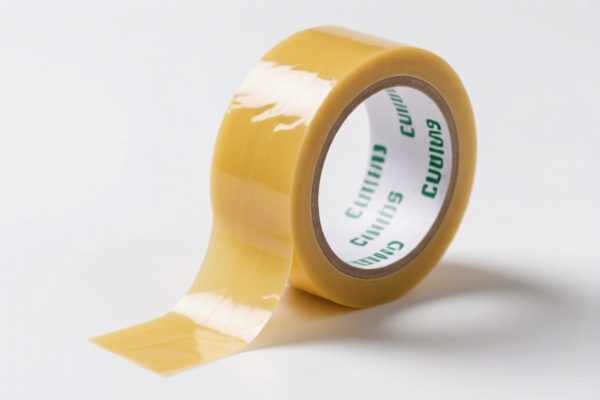
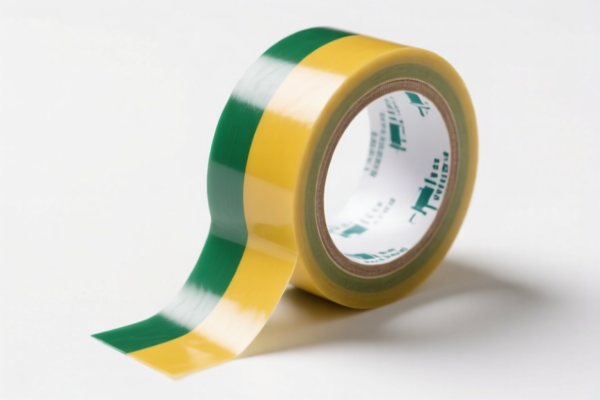
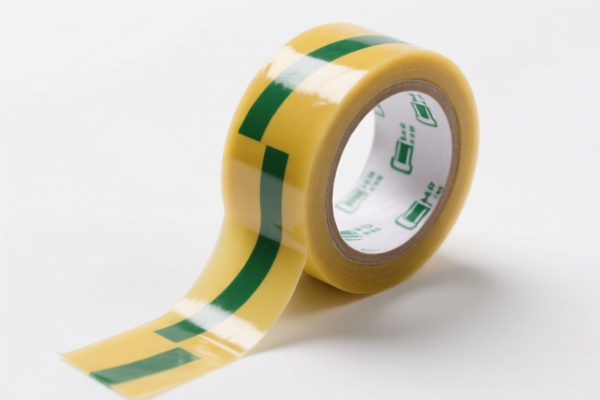
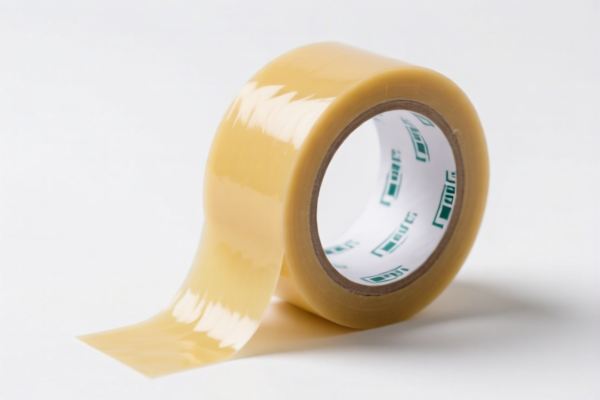
AI Analysis
🎗️ Electrical Grade Insulation Tape (电工绝缘胶带)
🌐 HS Code Reference & Customs Clearance Guide | 2026 Latest Tariff Analysis | Professional Clearance Strategy 📌 I. Product Definition & Classification: What is "Insulation Tape"?
Electrical Grade Insulation Tape is a critical safety component used in electrical wiring and circuitry to prevent short circuits, electric shocks, and environmental damage. In international trade, its classification is highly sensitive to material composition, application, and physical form.
The data provided indicates that while the core function is identical, the HS Code classification varies significantly based on how the tape is defined (e.g., self-adhesive roll vs. general plastic accessory) and its specific end-use (e.g., automotive vs. general electrical). This leads to drastically different tax liabilities.
⚠️ Key Distinction Point: - Is it a "Self-Adhesive Roll" (卷状自粘)? → Likely 3919.xx.xx - Is it a "Plastic Accessory/Fitting" (其他塑料制品)? → Likely 3926.xx.xx - Is it "Specifically for Automotive"? → Risk of 8547.xx.xx - Note: The specific HS Code chosen directly impacts whether you pay 22.8% or 89.6% in tariffs.
📦 II. HS Code Classification Details (Based on Provided Data)
| HS Code | Product Description / Summary | Key Characteristics | Total Tax Rate |
|---|---|---|---|
3926.90.99.89 |
Other Plastic Articles | Made of plastic/polymer; classified as a general "other" plastic article. | 22.8% |
3919.90.50.30 |
Self-Adhesive Plastic Tape | Used for electrical insulation; fits the material attribute of plastic self-adhesive tape. | 40.8% |
3919.10.20.20 |
Plastic Self-Adhesive Tape | Has electrical purposes; fits the definition of plastic self-adhesive tape. | 40.8% |
3926.90.45.90 |
Plastic Gaskets/Shims | Material is plastic/polymer; classified under other plastic products like gaskets/washers. | 38.5% |
8547.90.00.10 |
Insulation Fittings/Accessories | Specifically for automotive insulation; fits the definition of insulation fittings. | 89.6% |
🔍 Critical Warning: -
3919vs3926: If the tape is a roll used for wrapping wires, customs may favor 3919 (Self-adhesive tapes). However, if it is cut into shapes or used as a spacer/gasket, 3926 might be argued. -8547is a Trap: While technically "insulation fittings," this code attracts the highest tax rate (89.6%) due to specific "Steel, Aluminum, Copper"附加 tariffs mentioned in the data. Avoid this unless specifically required for automotive parts under strict definitions.
💰 III. 2026 Latest Tariff Rate Breakdown (Including Surtaxes & Policy Add-ons)
✅ Applicable Country: United States (US)
✅ Origin: China (CN)
✅ Effective Date: Current policies apply
🎯 1. 3926.90.99.89 —— Other Plastic Articles (Lowest Risk/Cost)
| Item | Content |
|---|---|
| Base Duty | 5.3% (ad valorem) |
| Section 301 Surcharge | +7.5% |
| Section 122 Tariff | +10% |
| Total Effective Rate | 22.8% |
| Tax Calculation | CIF Value × 22.8% |
| De Minimis Eligibility | ❌ Not Eligible (High tax rate usually excludes small package exemptions in practice) |
| Legal Basis Path | Base Tariff → Section 301: 7.5% → Section 122: 10% |
📌 Explanation: - This is the most cost-effective classification in the provided data. - It treats the tape as a generic plastic good rather than a specific electronic component or self-adhesive specialty item. - Strategy: If the tape is generic PVC electrical tape without special automotive specifications, argue for this classification to minimize costs.
🎯 2. 3919.90.50.30 & 3919.10.20.20 —— Self-Adhesive Plastic Tapes (Mid-Range)
| Item | Content |
|---|---|
| Base Duty | 5.8% |
| Section 301 Surcharge | +25.0% |
| Section 122 Tariff | +10% |
| Total Effective Rate | 40.8% |
| Tax Calculation | CIF Value × 40.8% |
| De Minimis Eligibility | ❌ Not Eligible |
| Legal Basis Path | Base Tariff → Section 301: 25% → Section 122: 10% |
📌 Explanation: - These codes classify the product as "Self-Adhesive Tapes". - The Section 301 surcharge jumps to 25%, significantly higher than the 7.5% for
3926. - Why the difference? Customs often view self-adhesive tapes under HTS 3919 as more specific industrial materials, attracting higher protectionist tariffs.
🎯 3. 3926.90.45.90 —— Plastic Gaskets/Shims (Mid-High Cost)
| Item | Content |
|---|---|
| Base Duty | 3.5% |
| Section 301 Surcharge | +25.0% |
| Section 122 Tariff | +10% |
| Total Effective Rate | 38.5% |
| Tax Calculation | CIF Value × 38.5% |
| De Minimis Eligibility | ❌ Not Eligible |
| Legal Basis Path | Base Tariff → Section 301: 25% → Section 122: 10% |
📌 Explanation: - If customs interprets the tape as a "shim" or "gasket" (垫圈/垫片) rather than a roll of tape, this code applies. - Lower base rate (3.5%) but high surcharge (25%) results in a total of 38.5%.
🎯 4. 8547.90.00.10 —— Insulation Fittings (Highest Cost / High Risk)
| Item | Content |
|---|---|
| Base Duty | 4.6% |
| Section 301 Surcharge | +25.0% |
| Section 122 Tariff | +10% |
| Steel/Alu/Copper Surtax | +50% (Note: Data mentions "Steel, Aluminum, Copper products add 50%". If the tape has any metallic backing, this may apply) |
| Total Effective Rate | 89.6% |
| Tax Calculation | CIF Value × 89.6% |
| De Minimis Eligibility | ❌ Not Eligible |
| Legal Basis Path | Base Tariff → Section 301: 25% → Section 122: 10% → Metallic Surtax: 50% |
📌 Explanation: - This code is for "Insulation Fittings" (绝缘附件), often used in automotive contexts. - WARNING: The data explicitly mentions a 50% additional tariff for products containing Steel, Aluminum, or Copper. If your insulation tape has a foil backing (aluminum) or metallic adhesive, this 89.6% rate is triggered. - Avoid this code for standard PVC/Electrical tapes unless absolutely necessary for automotive compliance.
🛠️ IV. Customs Clearance Practical Advice (Combat Pitfalls Guide)
✅ 1. Documentation Checklist (Must-Haves)
| Document | Required? | Explanation |
|---|---|---|
| ✅ Product Specification Sheet | ✔️ | Must state: Material (PVC/PE/Rubber), Thickness, Width, Voltage Rating, Self-adhesive nature. |
| ✅ Product Photos | ✔️ | Clear images of the roll, the adhesive side, and any packaging labeling. |
| ✅ Commercial Invoice | ✔️ | Description must match HS Code. E.g., "PVC Electrical Insulation Tape" for 3919, not "Automotive Insulation Fitting" for 8547. |
| ✅ Certificate of Origin (CO) | ✔️ | To prove origin (China) and apply correct tariff rates. |
| ✅ MSDS (Material Safety Data Sheet) | ✔️ | Sometimes required for chemical-based adhesives. |
✅ 2. Declaration Strategy (Key Rules)
🔥 "Declare Material, Not Just Function; Avoid 'Fitting' Labels!"
| Scenario | Correct Declaration | Incorrect Declaration | Consequence |
|---|---|---|---|
| Standard PVC Tape | "Plastic Self-Adhesive Tape, Electrical Grade" (3919) or "Other Plastic Article" (3926) |
"Insulation Fitting" (8547) |
Tax jumps to 89.6%! |
| Tape with Foil Backing | "Plastic Tape with Aluminum Layer" | "Metallic Insulation Fitting" | Risk of 50% surtax under 8547 |
| Generic Roll | "Polymer Insulation Tape" | "Electronic Component" | Risk of misclassification penalties |
| Automotive Specific | "Automotive Wiring Harness Tape" | "General Electrical Tape" | May force 3919 or 3926, avoid 8547 |
✅ 3. Special Case Handling
| Situation | Handling Advice |
|---|---|
| OEM Brand Tape | Provide brand authorization and design specs. Ensure description is generic enough to fit 3919 or 3926. |
| Tape for Medical Use | If for medical equipment, ensure no "Electrical Component" classification is triggered; stick to plastic articles (3926). |
| Mixed Containers | If shipping with other plastic goods, ensure clear separation to avoid cross-contamination of HS codes. |
| Aluminum-Foil Tape | CRITICAL: Avoid 8547. Declare as plastic tape with composite material under 3919 or 3926 to avoid the 50% metal surtax. |
🌍 V. Global Market Comparison (2026 Latest)
| Country/Region | Recommended HS Code | Tariff Rate | Certification | Notes |
|---|---|---|---|---|
| 🇺🇸 USA | 3926.90.99.89 |
22.8% | CE/FCC (if applicable) | Lowest US Tariff. Use this for general electrical tape. |
| 🇺🇸 USA | 3919.xx.xx |
40.8% | CE/FCC | Higher tax due to "Self-Adhesive" classification. |
| 🇺🇸 USA | 8547.90.00.10 |
89.6% | UL/SAE | Avoid. Only for specific automotive fittings with metal content. |
| 🇪🇺 EU | 3919.10.xx |
0-10% | CE/REACH | EU may classify differently; check local harmonized system. |
| 🇨🇳 China | 3919.10.xx |
5-8% | CCC (if applicable) | Lower import duty, but check export taxes from China. |
📌 Conclusion: - USA is the most challenging market due to Section 301 and Section 122 tariffs. -
3926.90.99.89is the optimal code for cost-saving, provided the tape can be legally defined as a "general plastic article" rather than a specialized self-adhesive tape or fitting. - Avoid8547unless you are an automotive supplier with specific documentation, and even then, verify if metallic content triggers the 50% surtax.
📌 VI. Common Errors & Pitfalls (Blood & Tears Lessons)
❌ Error 1: Declaring standard PVC electrical tape as "Insulation Fitting" (8547)
👉 Consequence: Tax rate jumps from 22.8% to 89.6%. Loss of profit!
❌ Error 2: Ignoring Aluminum/Foil Backing
👉 Consequence: If the tape has metallic layers, customs may apply the 50% surtax under 8547 or specific metal rules. Double tax penalty!
❌ Error 3: Using vague descriptions like "Tape" 👉 Consequence: Customs may classify it under the highest duty bracket available for plastics or adhesives. Delay and Inspection!
❌ Error 4: Mixing "Self-Adhesive" and "General Plastic" codes
👉 Consequence: If you claim 3926 but the product is clearly a self-adhesive roll, customs may reclassify to 3919 (40.8%) and charge back-duties. Compliance Risk!
✅ Correct Approach:
"PVC Electrical Insulation Tape, Self-Adhesive, 19mm x 10m, Black, Non-Conductive, Made of Polymer" Target HS Code:
3926.90.99.89(if deemed general plastic) or3919.90.50.30(if deemed self-adhesive tape).
🎯 VII. Conclusion: Professional Declaration, Save Money, Ensure Compliance!
🎯 Remember the Rules:
🔹 "General Plastic = 22.8% | Self-Adhesive = 40.8% | Fitting/Metal = 89.6%" 🔹 "Avoid 'Fitting' and 'Metal' words if possible!" 🔹 "HS Code Choice Determines Profit Margin!"
📌 Pro Tip:
- If your tape is generic PVC, push for
3926.90.99.89.- If it is specialized self-adhesive, expect
3919(40.8%).- Never use
8547unless legally required for automotive parts, and always check for metallic content to avoid the 50% surtax.- Apply for Advance Ruling with US Customs (CBP) if unsure. The cost of a ruling is far less than the 60% tax difference!
📣 Immediate Action:
📞 Consult a Licensed Customs Broker 📸 Provide High-Resolution Photos + Spec Sheets 📝 Request HS Code Pre-Ruling to avoid surprise taxes.
✨ Professional Clearance Starts with Accurate Classification! 💼 Every Percent of Tax Saved is Pure Profit!
Customer Reviews
About HS Code Classification
The Harmonized System (HS) is an internationally standardized nomenclature developed by the World Customs Organization (WCO) to classify traded products. Over 200 countries use the HS system as the basis for customs tariffs, trade statistics, and import/export regulations.
Each HS code follows a hierarchical structure:
- Chapter (2 digits) — Broad category of goods (e.g., Chapter 84: Machinery and Mechanical Appliances)
- Heading (4 digits) — More specific grouping within the chapter
- Subheading (6 digits) — Internationally standardized breakdown, used by all WCO member countries
- National subdivisions (8-10 digits) — Country-specific extensions for further classification, such as US HTSUS 10-digit codes
Correct HS code classification is essential for smooth customs clearance, accurate duty payment, and compliance with trade regulations. Misclassification can lead to customs delays, overpayment of duties, or penalties.
When importing from CN to US, the applicable tariff rates may include:
- Most-Favored-Nation (MFN) rate — The standard duty rate applied to WTO members
- General rate — Applied to countries without trade agreements
- Trade remedy duties — Additional tariffs such as Section 301 (anti-dumping), Section 232 (national security), or countervailing duties
The information provided on this page is for reference purposes only. For official classification, please consult with your local customs authority or a licensed customs broker.