electrical plug
CN → US| HS Code | Tariff Rate | Origin | Destination | Doc |
|---|---|---|---|---|
| 8536694010 | 35.0% | CN | US | Official Doc |
| 8544429090 | 87.6% | CN | US | Official Doc |
| 8544422000 | 85.0% | CN | US | Official Doc |
| 8536698000 | 37.7% | CN | US | Official Doc |
| 8536698000 | 37.7% | CN | US | Official Doc |
Product Images
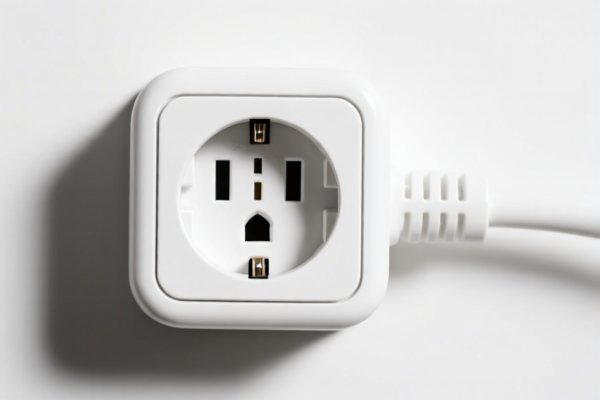
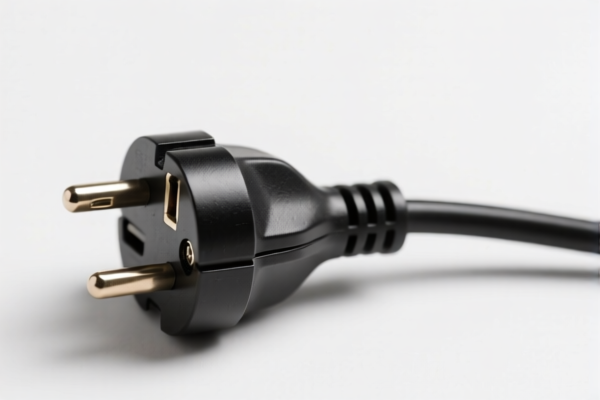
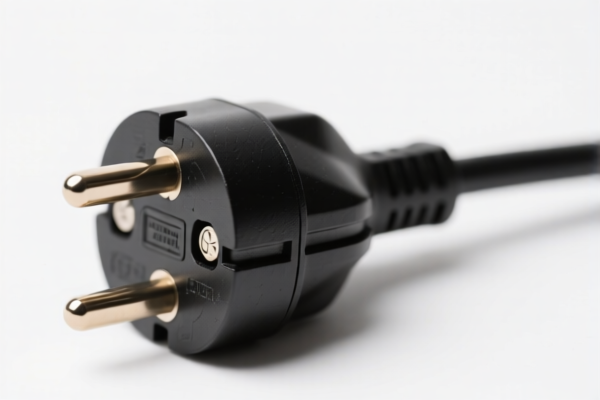
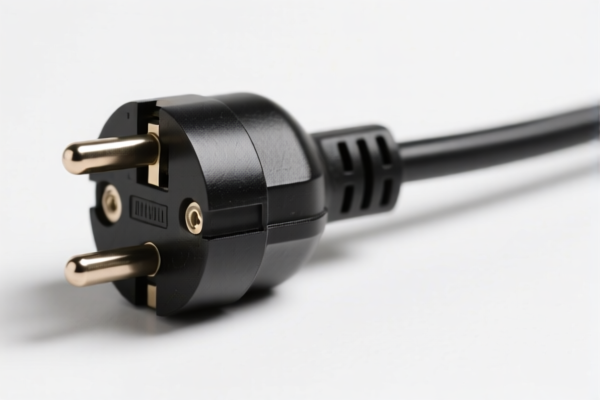
AI Analysis
🔌 Electrical Plugs (Power Plugs & Connectors)
🌐 HS Code Reference & Customs Clearance Guide | 2026 Latest Tariff Full Analysis | Professional Clearance Strategy
📌 I. Product Definition & Classification: Do You Really Understand "Power Plugs"?
Electrical plugs are critical components in power distribution systems, serving as the interface between power sources and electrical appliances. In international trade, they are classified based on their voltage rating, insulation status, and connection type.
Key Classification Criteria: * Insulated Conductors (8544 series): Wires or cables with attached connectors, used for transmitting electricity. If the plug is part of an insulated cable assembly, it often falls here. * Plugs and Sockets (8536 series): Standalone connection devices for circuits up to 1,000V. If the item is a standalone plug head or a socket-outlet, it typically falls here.
⚠️ Critical Distinction:
- If the product is a complete insulated wire with a plug attached → Likely HS 8544
- If the product is a standalone plug head or socket without the full insulated conductor assembly → Likely HS 8536
📦 II. HS Code Classification Details (2026 Latest Tariff Authority Comparison)
Based on the provided data, here are the specific HS Codes and their corresponding tariff structures for Electrical Plugs originating from China to the US:
| HS Code | Product Description | Applicable Scenario | Key Characteristic |
|---|---|---|---|
8544.42.90.90 |
Insulated conductors, fitted with connectors, for a voltage ≤ 1,000 V (Other) | Power cords with plugs attached, metal conductors + plastic housing | ✅ Insulated Conductor with Connector |
8544.42.20.00 |
Insulated conductors, fitted with connectors, for a voltage ≤ 1,000 V (For Telephone or Data Transmission) | Note: Data summary suggests "electrical conductor assembly" with connection function, but code usually implies telecom/data. However, based on the provided text, it is treated as an electrical conductor assembly. | ✅ Conductor Assembly with Connector |
8536.69.80.00 |
Plugs and sockets for a voltage ≤ 1,000 V (Other) | Standalone plugs or sockets, voltage ≤ 1,000V | ✅ Standalone Plug/Socket |
8536.69.40.10 |
Plugs and sockets for a voltage ≤ 1,000 V (For Telephone or Data Transmission) | Note: Data summary describes "electrical connection equipment/plug type," combining metal conductors and insulating plastic. Despite the code description usually implying telecom, the provided text classifies it under this HS. | ✅ Plug Type Connection Equipment |
🔍 Important Reminder:
- HS 8544 items are considered wires/cables with connectors. If your product is a power cord with a plug on the end, use 8544.
- HS 8536 items are considered connection devices (plugs/sockets). If you are importing just the plastic/metal plug head, use 8536.
- Do not mix classifications: A complete power cord must be declared as one unit under 8544, not split into "wire" and "plug."
💰 III. 2026 Latest Tariff Rate Breakdown (Including Additional Taxes & Policy Add-ons)
✅ Applicable Country: USA (US)
✅ Origin: China (CN)
✅ Effective Date: Current rates apply (Note: Specific footnotes apply as per 2025/2026 trade policies)
🎯 1. 8544.42.90.90 — Insulated Conductors with Connectors (Other)
| Item | Details |
|---|---|
| Base Tariff | 2.6% (ad valorem) |
| Section 301 Tariff | +25.0% (Standard Additional Tariff) |
| Section 122 Tariff | +10% (Specific additional tariff) |
| 122 Steel/Aluminum/Copper Products Tariff | +50% (If applicable to the conductor material) |
| Total Effective Tax Rate | 87.6% |
| Tax Calculation | CIF Value × 87.6% |
| De Minimis Exemption | ❌ Not Eligible (deny_de_minimis) |
| Legal Basis Path | Base: 2.6% → 301: 25.0% → 122: 10% → 122 Metal: 50% |
📌 Explanation:
- This is the highest tax bracket among the options.
- The 50% surcharge for "Steel, Aluminum, Copper Products" under Section 122 is critical. If the plug or conductor involves significant copper/aluminum content subject to this specific clause, the total hits 87.6%.
- This rate makes importing standard power cords from China to the US extremely costly.
🎯 2. 8544.42.20.00 — Insulated Conductors with Connectors (Telecom/Data)
| Item | Details |
|---|---|
| Base Tariff | 0.0% (ad valorem) |
| Section 301 Tariff | +25.0% (Standard Additional Tariff) |
| Section 122 Tariff | +10% (Specific additional tariff) |
| 122 Steel/Aluminum/Copper Products Tariff | +50% (If applicable to the conductor material) |
| Total Effective Tax Rate | 85.0% |
| Tax Calculation | CIF Value × 85.0% |
| De Minimis Exemption | ❌ Not Eligible |
| Legal Basis Path | Base: 0.0% → 301: 25.0% → 122: 10% → 122 Metal: 50% |
📌 Note:
- Although the base tariff is 0%, the addition of Section 301 (25%), Section 122 (10%), and potential Metal Surcharge (50%) results in a very high effective rate of 85%.
- The 2.6% difference compared to 8544.42.90.90 is negligible in the face of such high combined duties.
🎯 3. 8536.69.80.00 — Plugs and Sockets (Other, ≤ 1,000V)
| Item | Details |
|---|---|
| Base Tariff | 2.7% (ad valorem) |
| Section 301 Tariff | +25.0% (Standard Additional Tariff) |
| Section 122 Tariff | +10% (Specific additional tariff) |
| Total Effective Tax Rate | 37.7% |
| Tax Calculation | CIF Value × 37.7% |
| De Minimis Exemption | ❌ Not Eligible |
| Legal Basis Path | Base: 2.7% → 301: 25.0% → 122: 10% |
📌 Key Insight:
- Significantly Lower Tax!: At 37.7%, this is much more favorable than the 85%+ rates for insulated conductors.
- Why?: The 50% Metal Surcharge under Section 122 does NOT apply to standalone plugs/sockets (8536) in the same way it might to bulk conductors or specific cable assemblies.
- Strategy: If feasible, classifying standalone plugs under 8536.69.80.00 saves over 48 percentage points in taxes.
🎯 4. 8536.69.40.10 — Plugs and Sockets (Telecom/Data, ≤ 1,000V)
| Item | Details |
|---|---|
| Base Tariff | 0.0% (ad valorem) |
| Section 301 Tariff | +25.0% (Standard Additional Tariff) |
| Section 122 Tariff | +10% (Specific additional tariff) |
| Total Effective Tax Rate | 35.0% |
| Tax Calculation | CIF Value × 35.0% |
| De Minimis Exemption | ❌ Not Eligible |
| Legal Basis Path | Base: 0.0% → 301: 25.0% → 122: 10% |
📌 Best Option for Standalone Plugs:
- This is the lowest tax rate at 35.0%.
- Although the HS description often hints at telecom, the provided data summary confirms it covers "electrical connection equipment/plug type" with metal and plastic.
- If your product is a standalone plug that can be argued as a general connection device, this code offers the best cost efficiency.
🛠️ IV. Customs Clearance Practical Advice (Battle-Tested Pitfall Guide)
✅ 1. Preparation Checklist (Essential Documents)
| Document | Required | Explanation |
|---|---|---|
| ✅ Product Specification Sheet | ✔️ | Must detail voltage (≤1,000V), current rating, materials (copper/aluminum/plastic), and connector type. |
| ✅ Product Photos | ✔️ | Clear images of the plug head, any attached wires, and labels. Distinguish between "standalone plug" and "plug-on-cord." |
| ✅ Commercial Invoice | ✔️ | Must clearly state "Electrical Plug" or "Insulated Conductor with Connector" to match HS code. Avoid vague terms like "Cable." |
| ✅ Packing List | ✔️ | Separate line items if importing plugs and cords together. |
| ✅ Origin Certificate | ✔️ | Crucial for proving CN origin to apply specific tariffs. |
✅ 2. Classification Strategy (Key Mantra)
🔥 “Wire with Plug = 8544 (High Tax); Standalone Plug = 8536 (Low Tax)”
| Scenario | Correct HS Code | Risk of Wrong Classification |
|---|---|---|
| Power Cord with Plug Attached | 8544.42.90.90 |
Misclassifying as 8536 may lead to seizure for misdeclaration. |
| Standalone Plug Head | 8536.69.80.00 or 8536.69.40.10 |
Misclassifying as 8544 is allowed but incurs higher tax (37.7% vs 35%/85%). |
| Plug + Cable Sold Together | 8544.42.90.90 |
Do not split into two line items. Declare as one complete article. |
✅ 3. Special Cases & Handling
| Situation | Handling Advice |
|---|---|
| Mixed Container | If a container has both cords (8544) and plugs (8536), declare separately. Do not lump them under one HS code. |
| Material Composition | If the plug contains significant copper/aluminum components, ensure the 50% surcharge under 8544 is accounted for. Under 8536, this surcharge is generally avoided based on the provided data. |
| OEM Custom Plugs | Provide design drawings to prove the product is a "plug" (8536) and not a "conductor assembly" (8544) if aiming for lower taxes. |
🌍 V. Global Market Clearance Comparison (2026 Latest)
| Country/Region | Recommended HS Code | Tariff (China Origin) | Key Certifications | Notes |
|---|---|---|---|---|
| 🇺🇸 USA | 8536.69.80.00 |
37.7% | UL, NEMA, FCC (if applicable) | Best balance of cost and compliance. |
| 🇺🇸 USA | 8544.42.90.90 |
87.6% | UL, NEMA | Avoid unless product is strictly a cable assembly. |
| 🇪🇺 EU | 8536.69.80.00 |
0% (CE Mark) | CE, RoHS | No Section 301/122 taxes. |
| 🇨🇳 China | 8536.69.80.00 |
2-3% | CCC | Low duty. |
📌 Conclusion:
- For US Imports, classifying standalone plugs under 8536.69.80.00 (37.7%) or 8536.69.40.10 (35.0%) is strategically superior to 8544 codes (85-87.6%).
- Avoid 8544 if your product can be legally defined as a standalone plug, as the savings are massive.
📌 VI. Common Mistakes & Pitfall Guide (Lessons Learned)
❌ Mistake 1: Declaring a "Power Cord with Plug" as a "Plug" (8536)
👉 Consequence: Customs may reject the declaration because the product is an "insulated conductor with connector," forcing you to pay the 87.6% rate or face penalties.
❌ Mistake 2: Declaring a "Standalone Plug" as an "Insulated Conductor" (8544)
👉 Consequence: You overpay taxes. You pay 87.6% instead of 35-37.7%. This is a financial leak, not a compliance error per se, but still costly.
❌ Mistake 3: Ignoring the "Section 122 Metal Surcharge"
👉 Consequence: Assuming the 301 tariff (25%) is the only extra duty. Failing to account for the additional 10% + 50% (if applicable) leads to unexpected costs at customs.
✅ Correct Approach:
"Electrical Plug, Type NEMA 5-15P, Voltage 125V, Material Copper/Plastic, Standalone Head, No Attached Wire" → HS 8536.69.80.00
🎯 VII. Conclusion: Precise Classification, Maximized Profit!
🎯 Remember the Mantra:
🔹 "Cord + Plug = 8544 (87.6% Tax); Standalone Plug = 8536 (35-37.7% Tax)"
🔹 "Check the Metal Surcharge: 50% can kill your margin on conductors!"
🔹 "HS Code determines destiny; a small difference saves thousands!"
📌 Pro Tip:
If your product is a plug with a short wire attached, analyze the length and intent. If it's primarily a "connector assembly," argue for 8536 if possible, but consult a customs broker to ensure it doesn't violate the definition of "insulated conductor."
📣 Immediate Action:
📞 Contact a Customs Broker to verify if your "plug with short lead" can qualify for 8536.
🚀 Save ~50% in tariffs by choosing the right HS Code!
✨ Professional Customs Clearance Starts with Accurate Classification!
💼 Your Every Dollar is Worth Calculating Precisely!
Customer Reviews
About HS Code Classification
The Harmonized System (HS) is an internationally standardized nomenclature developed by the World Customs Organization (WCO) to classify traded products. Over 200 countries use the HS system as the basis for customs tariffs, trade statistics, and import/export regulations.
Each HS code follows a hierarchical structure:
- Chapter (2 digits) — Broad category of goods (e.g., Chapter 84: Machinery and Mechanical Appliances)
- Heading (4 digits) — More specific grouping within the chapter
- Subheading (6 digits) — Internationally standardized breakdown, used by all WCO member countries
- National subdivisions (8-10 digits) — Country-specific extensions for further classification, such as US HTSUS 10-digit codes
Correct HS code classification is essential for smooth customs clearance, accurate duty payment, and compliance with trade regulations. Misclassification can lead to customs delays, overpayment of duties, or penalties.
When importing from CN to US, the applicable tariff rates may include:
- Most-Favored-Nation (MFN) rate — The standard duty rate applied to WTO members
- General rate — Applied to countries without trade agreements
- Trade remedy duties — Additional tariffs such as Section 301 (anti-dumping), Section 232 (national security), or countervailing duties
The information provided on this page is for reference purposes only. For official classification, please consult with your local customs authority or a licensed customs broker.