electrical sockets
CN → US| HS Code | Tariff Rate | Origin | Destination | Doc |
|---|---|---|---|---|
| 3926909989 | 22.8% | CN | US | Official Doc |
| 8536698000 | 37.7% | CN | US | Official Doc |
| 8536694010 | 35.0% | CN | US | Official Doc |
| 3926904590 | 38.5% | CN | US | Official Doc |
| 8538906000 | 38.5% | CN | US | Official Doc |
| 8536694020 | 35.0% | CN | US | Official Doc |
Product Images
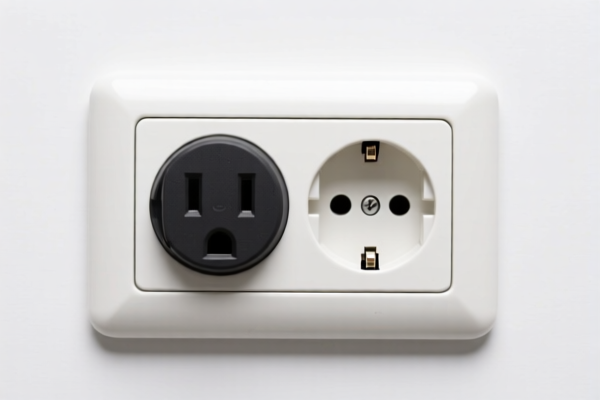
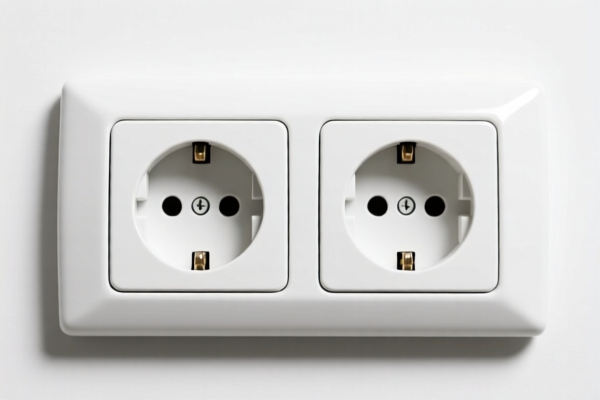
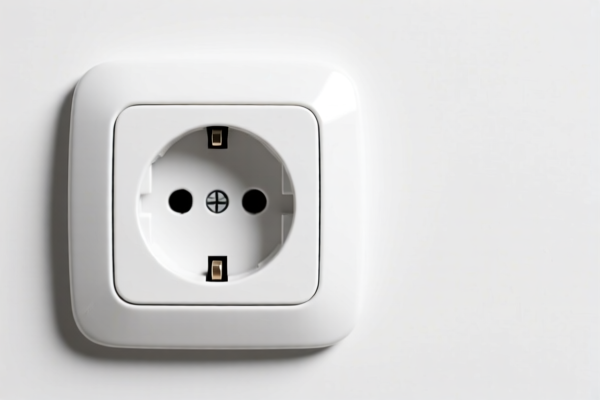
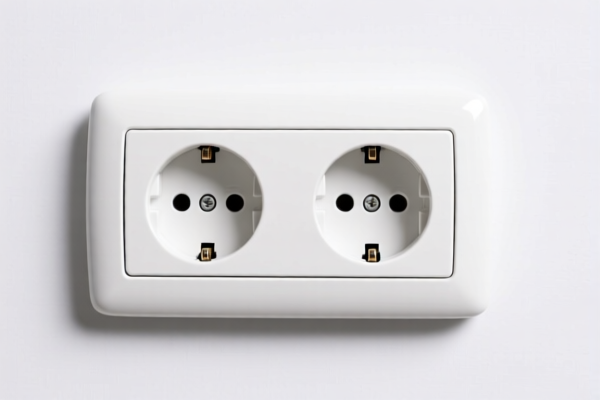
AI Analysis
🔌 Electrical Sockets (Wall Receptacles & Plugs)
🌐 HS Code Reference & Customs Clearance Guide | 2026 Latest Tariff Analysis | Professional Strategy
📌 I. Product Definition & Classification: Do You Really Understand "Electrical Sockets"?
Electrical sockets (also known as wall receptacles, outlets, or power points) are critical components in electrical installation, serving as the interface for connecting electrical appliances to the power grid. In international trade, they are categorized based on material, function, and form:
- Finished Electrical Fittings: Complete sockets with internal contacts, housing, and mounting frames. These are primarily classified under Chapter 85 (Electrical machinery and equipment).
- Plastic Components/Parts: If the item is merely a plastic housing or part intended for assembly into a socket, it may be classified under Chapter 39 (Plastics and articles thereof).
- Parts of Equipment: Plastic casings or non-electrical parts specifically identifiable for use solely with apparatus of Chapter 85 may fall under 8538.
⚠️ Key Distinction Point:
- If the item contains electrical contacts/conductors and is a finished connecting device → Chapter 85 (e.g., 8536)
- If the item is purely plastic (insulation housing only, no contacts) → Chapter 39 (e.g., 3926)
- If the item is a part/accessory specifically for socket apparatus → 8538
📦 II. HS Code Classification Details (2026 Latest Tariff Authoritative Comparison)
| HS Code | Product Description | Application Scenario | Material/Form Conflict |
|---|---|---|---|
3926.90.99.89 |
Other plastic articles | Plastic housings, non-electrical plastic fittings | ✅ Based on plastic material inference |
8536.69.80.00 |
Other plugs and sockets | Direct name match for socket category | ✅ Fits socket function directly |
8536.69.40.10 |
Other plugs and sockets (voltage ≤1000V) | Fits socket purpose, no material/form conflict | ✅ Meets insulation & voltage req. |
3926.90.45.90 |
Other plastic articles (specific subhead) | Plastic material inference, specific sub-category | ✅ Based on plastic material |
8538.90.60.00 |
Parts suitable for use solely with apparatus of 8535-8537 | Plastic material + molded part form | ✅ Matches plastic + part form |
8536.69.40.20 |
Other plugs and sockets (voltage ≤1000V, plastic) | Fits socket purpose + plastic insulation material | ✅ Meets insulation & material req. |
🔍 Key Reminder:
- Items classified under 8536 are generally preferred for finished electrical sockets because they directly describe the function ("Plugs and Sockets").
- Items classified under 3926 are typically for plastic housings or non-electrical plastic parts. Misclassifying a finished socket as a plastic part can lead to customs disputes regarding "essential character."
- 8538 is for parts (e.g., a base plate or cover) that are not complete sockets but are specific to socket apparatus.
💰 III. 2026 Latest Tariff Rate Breakdown (Including Additional Taxes & Policy Surcharges)
✅ Applicable Country: USA (US)
✅ Origin: China (CN)
✅ Effective Date: November 10, 2025 (and subsequent imports)
🎯 1. 3926.90.99.89 —— Other Plastic Articles (Plastic Material Inference)
| Item | Content |
|---|---|
| Base Tariff | 5.3% |
| Section 301 Additional Tariff | +7.5% |
| Section 122 Tariff | +10% |
| Total Tariff Rate | 22.8% |
| Tax Calculation | CIF Value × 22.8% |
| De Minimis Exemption Eligibility | ❌ Not Eligible (High risk of audit) |
| Legal Basis Path | USITC:3926.90.99.89 → Section 301: 7.5% → Section 122: 10% |
📌 Explanation:
- This classification is based on the material (plastic) rather than the function. It is often used if the item is deemed a "plastic article" rather than an electrical component.
- Total 22.8% is moderately high due to the Section 122 tariff.
🎯 2. 8536.69.80.00 —— Other Plugs and Sockets (Direct Name Match)
| Item | Content |
|---|---|
| Base Tariff | 2.7% |
| Section 301 Additional Tariff | +25.0% |
| Section 122 Tariff | +10% |
| Total Tariff Rate | 37.7% |
| Tax Calculation | CIF Value × 37.7% |
| De Minimis Exemption Eligibility | ❌ Not Eligible |
| Legal Basis Path | USITC:8536.69.80.00 → Section 301: 25.0% → Section 122: 10% |
📌 Explanation:
- This is the most direct functional match for electrical sockets.
- The high total rate (37.7%) is driven by the 25% Section 301 tariff, which applies broadly to electrical goods from China.
🎯 3. 8536.69.40.10 —— Other Plugs and Sockets (Voltage ≤1000V, No Conflict)
| Item | Content |
|---|---|
| Base Tariff | 0.0% |
| Section 301 Additional Tariff | +25.0% |
| Section 122 Tariff | +10% |
| Total Tariff Rate | 35.0% |
| Tax Calculation | CIF Value × 35.0% |
| De Minimis Exemption Eligibility | ❌ Not Eligible |
| Legal Basis Path | USITC:8536.69.40.10 → Section 301: 25.0% → Section 122: 10% |
📌 Explanation:
- This subheading benefits from a 0% base tariff, resulting in a lower total rate (35.0%) compared to 8536.69.80.00.
- It is suitable for sockets operating at ≤1000V with no material or form conflicts.
🎯 4. 3926.90.45.90 —— Other Plastic Articles (Specific Subhead)
| Item | Content |
|---|---|
| Base Tariff | 3.5% |
| Section 301 Additional Tariff | +25.0% |
| Section 122 Tariff | +10% |
| Total Tariff Rate | 38.5% |
| Tax Calculation | CIF Value × 38.5% |
| De Minimis Exemption Eligibility | ❌ Not Eligible |
| Legal Basis Path | USITC:3926.90.45.90 → Section 301: 25.0% → Section 122: 10% |
📌 Explanation:
- Despite being a "plastic article," this specific subheading incurs the full 25% Section 301 tariff.
- Total 38.5% is the highest among the plastic-based classifications. Avoid if possible.
🎯 5. 8538.90.60.00 —— Parts Suitable for Use Solely with 8535-8537 Apparatus
| Item | Content |
|---|---|
| Base Tariff | 3.5% |
| Section 301 Additional Tariff | +25.0% |
| Section 122 Tariff | +10% |
| Total Tariff Rate | 38.5% |
| Tax Calculation | CIF Value × 38.5% |
| De Minimis Exemption Eligibility | ❌ Not Eligible |
| Legal Basis Path | USITC:8538.90.60.00 → Section 301: 25.0% → Section 122: 10% |
📌 Explanation:
- Used for parts (e.g., plastic housing without contacts) that are identifiable for use with socket apparatus.
- Similar to 3926.90.45.90, it attracts the full 25% Section 301 tariff, leading to a high total rate (38.5%).
🎯 6. 8536.69.40.20 —— Other Plugs and Sockets (Voltage ≤1000V, Plastic)
| Item | Content |
|---|---|
| Base Tariff | 0.0% |
| Section 301 Additional Tariff | +25.0% |
| Section 122 Tariff | +10% |
| Total Tariff Rate | 35.0% |
| Tax Calculation | CIF Value × 35.0% |
| De Minimis Exemption Eligibility | ❌ Not Eligible |
| Legal Basis Path | USITC:8536.69.40.20 → Section 301: 25.0% → Section 122: 10% |
📌 Explanation:
- This subheading is specifically for plastic-insulated sockets at ≤1000V.
- It shares the lowest total rate (35.0%) among the electrical classifications, thanks to the 0% base tariff.
🛠️ IV. Customs Clearance Practical Advice (Battle-Tested Pitfall Avoidance Guide)
✅ 1. Required Documentation Checklist (Non-Negotiable)
| Document | Must Provide | Description |
|---|---|---|
| ✅ Product Specification Sheet | ✔️ | Include voltage, current rating, material type (plastic/ceramic), number of poles |
| ✅ Photographs (Including Labels) | ✔️ | Clear view of inlet/outlet, grounding pin, certification marks (UL, ETL, CE) |
| ✅ Circuit/Structure Diagram | ✔️ | To prove whether it contains conductive contacts (vs. pure plastic part) |
| ✅ Third-Party Test Reports | ✔️ | UL, ETL, CSA, CE, RoHS (if applicable) |
| ✅ Commercial Invoice | ✔️ | Clearly state "Electrical Socket/Receptacle" with model number |
| ✅ Packing List | ✔️ | Indicate whether items are packed with accessories (e.g., screws, covers) |
✅ 2. Declaration Tips (Key Mnemonics)
🔥 "Function First, Material Second; Finish vs. Part, Choose Wisely!"
| Scenario | Correct Declaration | Incorrect Action |
|---|---|---|
| Finished Socket (with contacts) | 8536.69.40.10 or 8536.69.40.20 |
Misdeclare as "Plastic Part" → 22.8% or 38.5% (Risk of Rejection) |
| Plastic Housing Only (No Contacts) | 3926.90.99.89 or 3926.90.45.90 |
Misdeclare as "Socket" → 35.0% or 37.7% (Overpaying or Rejection) |
| Socket Parts (e.g., Base Plate) | 8538.90.60.00 |
Misdeclare as "Finished Socket" → 35.0% (Risk of Rejection) |
| Mixed Shipment | Declare separately by HS Code | Lump sum declaration → High audit risk |
✅ 3. Special Case Handling
| Scenario | Handling Advice |
|---|---|
| OEM Custom Sockets | Provide client order + design drawings to prove specific purpose. |
| Smart Sockets (with Wi-Fi/Bluetooth) | Still classified under 8536.69 if primarily a socket. Do not declare as "Network Equipment." |
| Sockets with Integrated Surge Protection | May be classified under 8536.69 if surge protection is integral. Check for separate classification if complex. |
| High-Voltage Sockets (>1000V) | Do not use 8536.69.40.*. Use other subheadings in 8536.69 or 8536.50. |
🌍 V. Global Market Clearance Comparison (2026 Latest)
| Country/Region | Recommended HS Code | Tariff | Certification Requirements | Notes |
|---|---|---|---|---|
| 🇺🇸 USA | 8536.69.40.10 / 8536.69.40.20 |
35.0% | UL, ETL, FCC (if smart) | High Section 301 tariff |
| 🇨🇳 China | 8536.69.40.10 |
3.0% | CCC | Lower base tariff |
| 🇪🇺 EU | 8536.69.40 |
0% (if CE) | CE, RoHS | No Section 301 |
| 🇬🇧 UK | 8536.69.40 |
0% | UKCA | Post-Brexit rules apply |
| 🇯🇵 Japan | 8536.69.40 |
0% | PSE | No additional surcharges |
📌 Conclusion:
- The USA imposes the highest tariffs (35%-38.5%) due to Section 301 and Section 122.
- China, EU, UK, and Japan have 0% or very low base tariffs.
- Strategy: If targeting the US market, consider origin diversification (e.g., Vietnam, Thailand) to avoid Section 301 tariffs.
📌 VI. Common Errors & Pitfall Guide (Lessons Learned)
❌ Error 1: Declaring a finished socket (with contacts) as a plastic part (3926)
👉 Consequence: Customs may reject the declaration for "wrong classification" or apply the higher electrical tariff + penalties.
❌ Error 2: Declaring a plastic housing (no contacts) as a finished socket (8536)
👉 Consequence: Overpayment of tariff (35% vs. 22.8%) or audit for misdeclaration.
❌ Error 3: Failing to provide certification marks (UL/CE) on the product
👉 Consequence: Customs may delay clearance for safety verification.
❌ Error 4: Using generic terms like "Electrical Part" or "Accessory"
👉 Consequence: High risk of manual inspection, delayed clearance, and potential reclassification.
✅ Correct Practice:
"Electrical Receptacle, 15A, 125V, Plastic Housing, UL Listed, Model XYZ, Made in China"
🎯 VII. Conclusion: Precision Classification, Cost Optimization!
🎯 Remember Mnemonics:
🔹 "Finished Socket → 8536 (35%)"; "Plastic Part → 3926 (22.8%)"; "Part Only → 8538 (38.5%)"
🔹 "HS Code Dictates Destiny; 1% Difference Saves Thousands!"
🔹 "Section 301 is Inevitable for China Origin; Plan Ahead!"
📌 Pro Tip:
If your sockets are originally from Vietnam, Mexico, or Thailand, you may qualify for IEEPA Exemptions or 0% Section 301 tariffs.
Recommend Applying for Advance Ruling to avoid clearance risks.
📣 Act Now:
📞 Contact Professional Broker + Provide Product Photos + Apply for HS Code Advance Ruling
🚀 Let your sockets Clear Customs Smoothly, Maximize Profits!
✨ Professional Clearance Starts with Accurate Classification!
💼 Every Cent of Your Cost Deserves Precise Calculation!
Customer Reviews
About HS Code Classification
The Harmonized System (HS) is an internationally standardized nomenclature developed by the World Customs Organization (WCO) to classify traded products. Over 200 countries use the HS system as the basis for customs tariffs, trade statistics, and import/export regulations.
Each HS code follows a hierarchical structure:
- Chapter (2 digits) — Broad category of goods (e.g., Chapter 84: Machinery and Mechanical Appliances)
- Heading (4 digits) — More specific grouping within the chapter
- Subheading (6 digits) — Internationally standardized breakdown, used by all WCO member countries
- National subdivisions (8-10 digits) — Country-specific extensions for further classification, such as US HTSUS 10-digit codes
Correct HS code classification is essential for smooth customs clearance, accurate duty payment, and compliance with trade regulations. Misclassification can lead to customs delays, overpayment of duties, or penalties.
When importing from CN to US, the applicable tariff rates may include:
- Most-Favored-Nation (MFN) rate — The standard duty rate applied to WTO members
- General rate — Applied to countries without trade agreements
- Trade remedy duties — Additional tariffs such as Section 301 (anti-dumping), Section 232 (national security), or countervailing duties
The information provided on this page is for reference purposes only. For official classification, please consult with your local customs authority or a licensed customs broker.