electrolytic capacitors
CN → US| HS Code | Tariff Rate | Origin | Destination | Doc |
|---|---|---|---|---|
| 8532210020 | 35.0% | CN | US | Official Doc |
| 8548000000 | 35.0% | CN | US | Official Doc |
| 8532220020 | 35.0% | CN | US | Official Doc |
Product Images
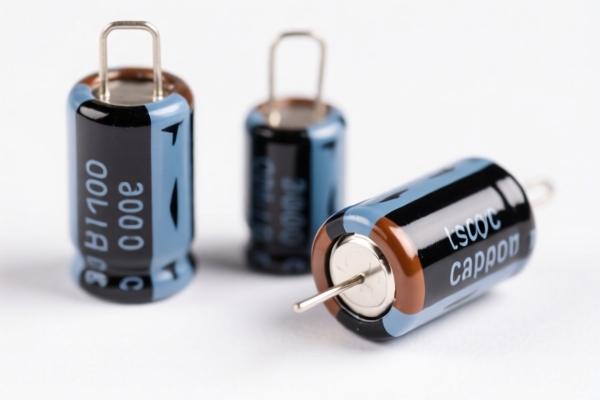
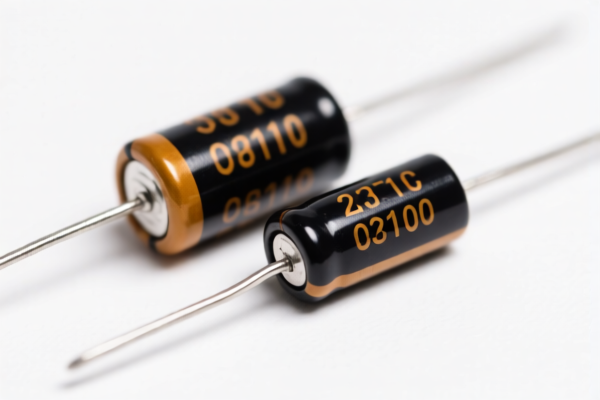
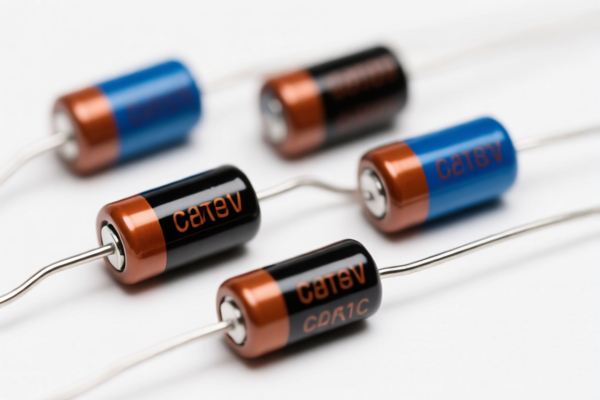
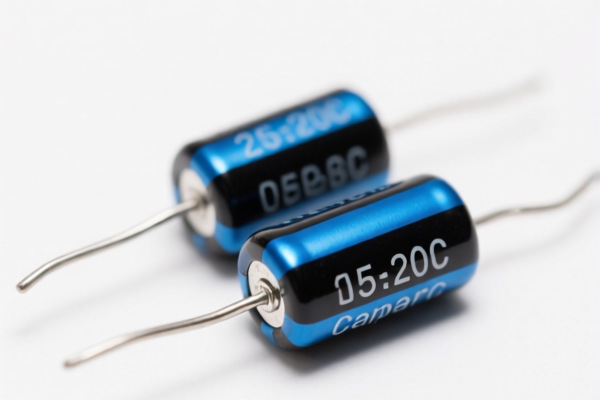
AI Analysis
⚡ Electrolytic Capacitors (Power Components & Circuit Building Blocks)
🌐 HS Code Reference & Clearance Guide | 2026 Latest Tariff Analysis | Professional Clearance Strategy
📌 I. Product Definition & Classification: Do You Really Know "Electrolytic Capacitors"?
Electrolytic capacitors are essential passive electronic components used for energy storage, filtering, and signal coupling in nearly all modern electronic devices, from consumer electronics to industrial machinery. In international trade, they are broadly categorized under Chapter 85 (Electrical Machinery and Equipment), specifically within the capacitor family.
⚠️ Key Distinction:
- Fixed Capacitors (8532): The primary category for standard electrolytic capacitors (Aluminum or Tantalum) that do not change capacitance during operation. - Parts of Machines (8548): Rarely applied to standalone capacitors unless they are integral parts of a specific device or scrap/remainder, but generally, functional capacitors fall under 8532.📌 Note on Data Constraints:
Based on the provided dataset, the analysis focuses on two main HS Codes: 8532 (Capacitors) and 8548 (Electrical Parts). While 8532 is the standard classification for finished capacitors, 8548 is included in the reference data as a potential functional classification for electrical components.
📦 II. HS Code Classification Details (2026 Latest Tariff Authority Comparison)
| HS Code | Product Description | Application Scenario | Taxation Status (China-Origin to US) |
|---|---|---|---|
8532.21.00.20 |
Capacitors; Fixed; With Dielectric of Paper, Plastic, or Metal Foil (Specific Sub-heading) | General-purpose electrolytic capacitors, aluminum electrolytic capacitors | ✅ 35% Total Tax |
8532.22.00.20 |
Capacitors; Fixed; With Dielectric of Ceramic or Glass (Specific Sub-heading) | Ceramic disc capacitors, MLCCs (Multi-Layer Ceramic Capacitors) | ✅ 35% Total Tax |
8548.00.00.00 |
Electrical Waste and Scraps; Parts of Machinery (General) | Capacitors classified as electrical parts/components for machinery | ✅ 35% Total Tax |
🔍 重点提醒 (Key Reminder):
- Both 8532.21.00.20 and 8532.22.00.20 fall under the broader "Capacitors" category. The distinction usually lies in the dielectric material. However, for electrolytic capacitors (typically aluminum or tantalum), 8532.21 is often the more appropriate fit if not specified by dielectric type in the summary. - 8548.00.00.00 is a "catch-all" for electrical parts. If a capacitor is sold as a replacement part for a motor or machine, some declarants may use this code, but it carries the same tax burden in this dataset. - All listed HS Codes in the share the exact same tax structure.
💰 III. 2026 Latest Tariff Rate Details (Including Surcharges & Policy Add-ons)
✅ Applicable Country: United States (US)
✅ Origin: China (CN)
✅ Effective Time: 2025 November 10 onwards (including subsequent imports)
🎯 1. 8532.21.00.20 & 8532.22.00.20 —— Capacitors (Fixed)
| Item | Content |
|---|---|
| Base Tariff Rate | 0.0% (ad valorem) |
| Section 301 Surcharge | +25.0% (Added Tariff) |
| Section 122 Tariff | +10.0% (Specific Policy Tariff) |
| Total Tax Rate | 35.0% |
| Tax Calculation | CIF Value × 35% |
| De Minimis Exemption Available? | ❌ No (deny_de_minimis) |
| Legal Basis Path | Base: 0% → Section 301: 25% → Section 122: 10% → Total: 35% |
📌 Explanation:
- "Base Tariff: 0.0%": Under normal Most Favored Nation (MFN) treatment, these electronic components often have a low or zero base duty. - "Section 301 Surcharge: 25.0%": This is the primary punitive tariff under the US Trade Act of 1974, Section 301, targeting Chinese imports. - "Section 122 Tariff: 10.0%": This refers to a specific additional tariff provision (often related to national security or trade remedy actions). - Total 35%: This is a high tariff burden. Importers must factor this into their cost structure. There is no de minimis exemption for these goods from China, meaning even small shipments are subject to full taxation.
🎯 2. 8548.00.00.00 —— Electrical Parts
| Item | Content |
|---|---|
| Base Tariff Rate | 0.0% |
| Section 301 Surcharge | +25.0% |
| Section 122 Tariff | +10.0% |
| Total Tax Rate | 35.0% |
| Tax Calculation | CIF Value × 35% |
| De Minimis Exemption Available? | ❌ No |
📌 Note:
- Even if classified as "parts" under 8548, the surcharge rules remain identical. - The summary states: "Capacitors as electrical components, functions belong to motor or device electrical parts... no material conflict." This confirms that the functional definition does not bypass the high tariffs.
🛠️ IV. Clearance Practical Advice (Battle-Tested Pitfall Guide)
✅ 1. Preparation Checklist (Missing items are not accepted)
| Document | Required? | Explanation |
|---|---|---|
| ✅ Product Specification Sheet | ✔️ | Must list capacitance, voltage rating, temperature range, and dielectric type (e.g., Aluminum, Tantalum). |
| ✅ Circuit Diagram / Schematic | ✔️ | To prove function and distinguish from "parts" of a machine. |
| ✅ Product Photos (with Label) | ✔️ | Clear image of the capacitor body, marking, and model number. |
| ✅ Commercial Invoice | ✔️ | Must explicitly state: "Electrolytic Capacitors, HS Code 8532.xx.xx.xx" |
| ✅ Packing List | ✔️ | Detailed quantity and weight. |
| ✅ Country of Origin Certificate | ✔️ | Crucial for tariff application. Must confirm China origin to apply 301/122 surcharges correctly. |
✅ 2. Declaration Tips (Key Mantras)
🔥 "Be Specific on Dielectric, Avoid Vague 'Parts'"
| Situation | Correct Declaration | Wrong Practice |
|---|---|---|
| Standard Aluminum Electrolytic Capacitor | 8532.21.00.20 |
Misdeclaring as 8548 (same tax, but audit risk if not a part) |
| Ceramic Capacitors | 8532.22.00.20 |
Misdeclaring as 8532.21 (dielectric mismatch) |
| Capacitor as part of a Motor Kit | Still declare Capacitors separately if sold as component | Bundle into "Motor Parts" → Potential reclassification audit |
| Bulk vs. Retail Packaging | Ensure invoice matches packaging | Discrepancy leads to delay |
📌 Critical Point:
Do not simply declare "Capacitors" without sub-heading specificity if possible. The dataset distinguishes between8532.21and8532.22. Use the correct dielectric-based sub-heading to avoid customs queries.
✅ 3. Special Circumstances Handling
| Situation | Handling Advice |
|---|---|
| High Voltage Capacitors | Ensure specifications are clear. Some high-voltage capacitors may fall under different sub-headings, but in this dataset, they are grouped under 8532. |
| Tantalum vs. Aluminum | Both are generally under 8532. However, Tantalum may face additional scrutiny due to conflict mineral regulations. Ensure compliance documentation is ready. |
| Small Sample Shipments | Despite being under $800, De Minimis does NOT apply. Prepare for full 35% tax payment. |
| Re-export from Third Country | If transshipped through Vietnam/Malaysia without substantial transformation, US Customs will still apply China-origin surcharges. |
🌍 V. Global Main Market Clearance Comparison (2026 Latest)
| Country/Region | Recommended HS Code | Tariff (China-Origin) | Certification Requirements | Notes |
|---|---|---|---|---|
| 🇺🇸 USA | 8532.21.00.20 / 8532.22.00.20 |
35% (0% Base + 25% 301 + 10% 122) | None specific for caps, but FCC/UL for end devices | Highest Tariff due to 301 & 122. |
| 🇨🇳 China | 8532.21.00.00 |
5% - 10% (Import Duty) | CCC (if for domestic use) | Lower base tax, no surcharges. |
| 🇪🇺 EU | 8532.10.00 |
0% - 2.7% | CE, RoHS, REACH | Generally low tariffs, strict environmental compliance. |
| 🇬🇧 UK | 8532.10.00 |
0% - 2.7% | UKCA, RoHS | Post-Brexit rules mirror EU closely. |
| 🇯🇵 Japan | 8532.21.00 |
0% - 5% | PSE, JIS | Low tariffs, high quality standards. |
📌 Conclusion:
- The USA is the most challenging market for Chinese-origin capacitors due to the 35% effective tariff rate. - European and Asian markets offer significantly lower tariffs, making them more cost-effective for re-export or direct sales if supply chains allow.
📌 VI. Common Mistakes & Pitfall Guide (Lessons Learned)
❌ Mistake 1: Assuming "Electronic Components" are exempt from de minimis.
👉 Consequence: Small shipments sent via postal/courier are seized or taxed 35% + penalties. China origin caps are NOT de minimis exempt.
❌ Mistake 2: Misidentifying Dielectric Type.
👉 Consequence: Declaring Aluminum capacitors as Ceramic (8532.22) leads to customs classification errors, delays, and potential fines.
❌ Mistake 3: Ignoring Section 122 Tariff.
👉 Consequence: Many importers only budget for Section 301 (25%) and forget the additional 10%, leading to underpayment and audits.
❌ Mistake 4: Using Vague Descriptions.
👉 Consequence: "Capacitors" without model/specs raises red flags. Customs may assign the highest general tariff code if specifics are missing.
✅ Correct Approach:
"Aluminum Electrolytic Capacitor, 1000uF 25V, Radial Lead, HS Code 8532.21.00.20, Made in China"
🎯 VII. Conclusion: Precise Classification Saves Money!
🎯 Remember the Mantra:
🔹 "No De Minimis for China Caps!"
🔹 "Base 0 + 301 25 + 122 10 = 35% Total."
🔹 "Specify Dielectric: 21 for Metal/Foil, 22 for Ceramic/Glass."
📌 Pro Tip:
If you are importing large volumes, consider:
1. Advance Ruling: Apply for a Binding Tariff Information (BTI) or US CBP ruling to confirm HS Code.
2. Supply Chain Diversification: Explore sourcing from non-China origins (e.g., Vietnam, India) if possible to mitigate Section 301/122 tariffs.
3. Bonded Warehouses: Use bonded facilities to defer tax payments until goods are entered for consumption.
📣 Immediate Action:
📞 Consult a licensed Customs Broker.
📤 Provide full spec sheets and origin documentation.
🚀 Ensure your electrolytic capacators clear customs smoothly and cost-effectively!
✨ Professional Clearance Starts with Accurate Classification!
💼 Every 1% of Tariff Avoided is 1% More Profit!
Customer Reviews
About HS Code Classification
The Harmonized System (HS) is an internationally standardized nomenclature developed by the World Customs Organization (WCO) to classify traded products. Over 200 countries use the HS system as the basis for customs tariffs, trade statistics, and import/export regulations.
Each HS code follows a hierarchical structure:
- Chapter (2 digits) — Broad category of goods (e.g., Chapter 84: Machinery and Mechanical Appliances)
- Heading (4 digits) — More specific grouping within the chapter
- Subheading (6 digits) — Internationally standardized breakdown, used by all WCO member countries
- National subdivisions (8-10 digits) — Country-specific extensions for further classification, such as US HTSUS 10-digit codes
Correct HS code classification is essential for smooth customs clearance, accurate duty payment, and compliance with trade regulations. Misclassification can lead to customs delays, overpayment of duties, or penalties.
When importing from CN to US, the applicable tariff rates may include:
- Most-Favored-Nation (MFN) rate — The standard duty rate applied to WTO members
- General rate — Applied to countries without trade agreements
- Trade remedy duties — Additional tariffs such as Section 301 (anti-dumping), Section 232 (national security), or countervailing duties
The information provided on this page is for reference purposes only. For official classification, please consult with your local customs authority or a licensed customs broker.