electromagnetic stove
CN → US| HS Code | Tariff Rate | Origin | Destination | Doc |
|---|---|---|---|---|
| 8516606000 | 12.7% | CN | US | Official Doc |
| 8516604074 | 35.0% | CN | US | Official Doc |
| 8419819040 | 17.5% | CN | US | Official Doc |
| 8419899560 | 39.2% | CN | US | Official Doc |
| 8514190000 | 35.0% | CN | US | Official Doc |
Product Images
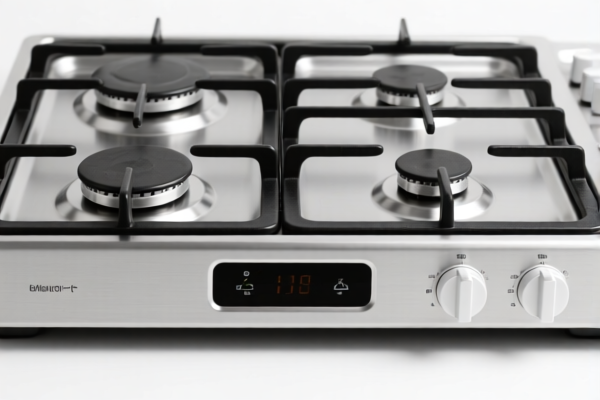
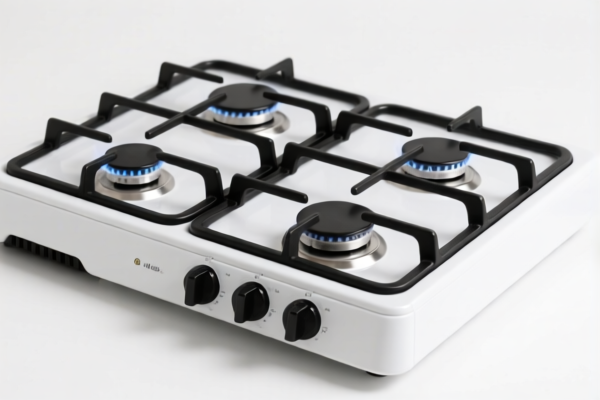
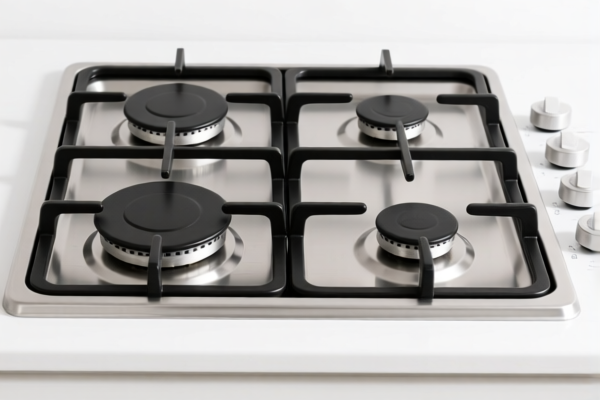

AI Analysis
🍳 Electromagnetic Stove (Induction Cooker)
🌐 HS Code Reference & Customs Clearance Guide | 2026 Latest Tariff Analysis | Professional Clearance Strategy
📌 Part I: Product Definition & Classification: Do You Really Understand the "Iron Induction Cooker"?
The Electromagnetic Stove (often referred to as an Induction Cooker) is a modern kitchen appliance that uses electromagnetic induction to heat cookware directly. It is not a traditional resistive heating element but relies on magnetic fields. In international trade, its classification is critical because it can fall under different headings depending on its material composition, intended use (household vs. commercial), and specific technical features.
Based on the provided data, the key differentiators are: 1. Material: The summary explicitly states "Iron" (铁), which significantly impacts the HS code choice compared to stainless steel or ceramic models. 2. Usage Type: Distinguishing between Household (8516) and Commercial/Industrial (8419/8514) use is the primary determinant of the tariff rate. 3. Heating Mechanism: "Electromagnetic induction heating" vs. general "Electric heating."
⚠️ Key Distinction Point:
- If it is a standard household cooking appliance made of iron → Often falls under 8516.60.
- If it is a commercial-grade unit for professional kitchens → Often falls under 8419 or 8414/8514 depending on specific technical classification.
- Crucial: Misclassifying a commercial unit as a household unit (or vice versa) can lead to significant tariff discrepancies (e.g., 12.7% vs. 35%+).
📦 Part II: HS Code Classification Details (2026 Latest Tariff Authority Comparison)
| HS Code | Product Description | Application Scenario | Total Tax Rate | Key Tariff Components |
|---|---|---|---|---|
8516.60.60.00 |
Iron Induction Stove, Kitchen Appliance | Household use, standard cooking | 12.7% | Base: 2.7%, 122 Clause: 10%, Additional: 0% |
8516.60.40.74 |
Iron Induction Stove, Electric Heating, No Size Limit | Household/General Electric Heating Appliances | 35.0% | Base: 0%, Additional: 25%, 122 Clause: 10% |
8419.81.90.40 |
Iron Induction Stove, Commercial Type | Professional cooking/heating, Non-household | 17.5% | Base: 0%, Additional: 7.5%, 122 Clause: 10% |
8419.89.95.60 |
Iron Induction Stove, Food & Beverage Heating Device | Industrial/Process Heating, Induction Specific | 39.2% | Base: 4.2%, Additional: 25%, 122 Clause: 10% |
8514.19.00.00 |
Electric Furnace/Stove, Electric Oven Definition | General Electric Heating/Furnace Category | 35.0% | Base: 0%, Additional: 25%, 122 Clause: 10% |
🔍 Focus Reminder:
- Household vs. Commercial: Codes8516are typically for household use, while8419and8414/8514often cover commercial or industrial processes.
- Material Note: All summaries specify "Iron", which may influence the base duty rate in some contexts, though the primary driver here is the function and additional tariffs.
- 122 Clause: All codes include a 10% surcharge (likely referencing Section 301/122 related trade measures for Chinese goods).
💰 Part III: 2026 Latest Tariff Rate Breakdown (Detailed Tax Clauses)
✅ Applicable Country: United States (US)
✅ Origin: China (CN) (Inferred from "122 Clause" and typical trade context)
✅ Effective Time: Current Trade Measures Applied
🎯 1. 8516.60.60.00 —— Iron Induction Stove (Household, Standard)
| Item | Content |
|---|---|
| Base Tariff | 2.7% (ad valorem) |
| Section 301 / Additional Tariff | 0.0% |
| 122 Clause Tariff | +10.0% |
| Total Tariff | 12.7% |
| Tax Calculation | CIF Value × 12.7% |
| De Minimis Exemption | ❌ Not Applicable (If shipped under de minimis, still subject to inspection/classification) |
| Legal Basis Path | HTSUS: 8516.60.60.00 → Trade Measure: 122 Clause (10%) |
📌 Explanation:
- This is the lowest tariff option among the listed codes.
- It applies to household iron induction stoves that do not fall into the higher "heating appliance" broad categories or commercial classifications.
- Caution: Ensure the product is strictly defined as a "kitchen/cooking appliance" for household use to qualify for this lower rate.
🎯 2. 8516.60.40.74 —— Iron Induction Stove (Electric Heating, General)
| Item | Content |
|---|---|
| Base Tariff | 0.0% |
| Section 301 / Additional Tariff | +25.0% |
| 122 Clause Tariff | +10.0% |
| Total Tariff | 35.0% |
| Tax Calculation | CIF Value × 35.0% |
| De Minimis Exemption | ❌ Not Applicable |
| Legal Basis Path | HTSUS: 8516.60.40.74 → USITC: 25% Additional → IEEPA: 122 Clause (10%) |
📌 Explanation:
- Despite a 0% base tariff, the 25% additional tariff makes this highly expensive.
- This code likely covers iron induction stoves that are classified broadly as "other electric heating appliances" rather than specific cooking devices, or specific sub-variants that attract higher punitive tariffs.
- High Risk: Do not use this code unless specifically advised by a customs broker, as it doubles the cost compared to8516.60.60.00.
🎯 3. 8419.81.90.40 —— Iron Induction Stove (Commercial Type)
| Item | Content |
|---|---|
| Base Tariff | 0.0% |
| Section 301 / Additional Tariff | +7.5% |
| 122 Clause Tariff | +10.0% |
| Total Tariff | 17.5% |
| Tax Calculation | CIF Value × 17.5% |
| De Minimis Exemption | ❌ Not Applicable |
| Legal Basis Path | HTSUS: 8419.81.90.40 → USITC: 7.5% Additional → IEEPA: 122 Clause (10%) |
📌 Explanation:
- This is a mid-range option suitable for commercial induction stoves.
- The 7.5% additional tariff is significantly lower than the 25% applied to household/general codes.
- Strategy: If selling to restaurants or commercial kitchens, ensure your product description clearly states "Commercial Use" to leverage this lower additional tariff.
🎯 4. 8419.89.95.60 —— Iron Induction Stove (Food & Beverage Heating Device)
| Item | Content |
|---|---|
| Base Tariff | 4.2% |
| Section 301 / Additional Tariff | +25.0% |
| 122 Clause Tariff | +10.0% |
| Total Tariff | 39.2% |
| Tax Calculation | CIF Value × 39.2% |
| De Minimis Exemption | ❌ Not Applicable |
| Legal Basis Path | HTSUS: 8419.89.95.60 → USITC: 25% Additional → IEEPA: 122 Clause (10%) |
📌 Explanation:
- This is the highest tariff rate listed.
- It applies to induction heating devices used for food and beverage processing that are classified as "other machinery" rather than simple stoves.
- Avoidance: This code is likely for industrial processing equipment. Misclassifying a simple stove here will result in a 3x cost increase.
🎯 5. 8514.19.00.00 —— Electric Furnace/Stove (General Category)
| Item | Content |
|---|---|
| Base Tariff | 0.0% |
| Section 301 / Additional Tariff | +25.0% |
| 122 Clause Tariff | +10.0% |
| Total Tariff | 35.0% |
| Tax Calculation | CIF Value × 35.0% |
| De Minimis Exemption | ❌ Not Applicable |
| Legal Basis Path | HTSUS: 8514.19.00.00 → USITC: 25% Additional → IEEPA: 122 Clause (10%) |
📌 Explanation:
- This code is for electric furnaces or broad electric heating apparatus.
- Similar to8516.60.40.74, the 25% additional tariff makes it costly.
- Note: The summary says "No Material Conflict," implying it's a catch-all for electric heating if not specifically categorized elsewhere. Use only if no more specific code applies.
🛠️ Part IV: Customs Clearance Practical Advice (Real-World Pitfall Avoidance)
✅ 1. Essential Documentation Checklist (Mandatory)
| Document | Must Provide | Notes |
|---|---|---|
| ✅ Product Specifications | ✔️ | Must clearly state: "Induction Heating," "Material: Iron," "Voltage: 110V/220V," "Wattage." |
| ✅ User Manual / Instructions | ✔️ | Should indicate intended use: Household (for 8516) or Commercial (for 8419). |
| ✅ Product Photos (Labeled) | ✔️ | Clear view of brand, model, rating plate, and any "Commercial Use Only" labels. |
| ✅ Commercial Invoice | ✔️ | Description must match HS code logic (e.g., "Household Iron Induction Cooker" vs. "Commercial Induction Heating Unit"). |
| ✅ Packing List | ✔️ | List accessories separately if possible, but note that accessories are typically absorbed into the main unit's HS code. |
| ✅ Certificate of Origin | ✔️ | Required to confirm China origin (subject to 122 Clause + Additional Tariffs). |
✅ 2. Declaration Strategy (Key Mnemonics)
🔥 "Use Defines Code, Iron Doesn't Matter as Much, Avoid 25%, Pick the Right 10!"
| Scenario | Correct Declaration | Wrong Action |
|---|---|---|
| Home Kitchen | 8516.60.60.00 (12.7%) |
Declare as 8516.60.40.74 → 35.0% Cost! |
| Restaurant/Hotel | 8419.81.90.40 (17.5%) |
Declare as Household → Risk of Penalty/Back Taxes |
| Industrial Food Processing | 8419.89.95.60 (39.2%) |
Declare as Household → Massive Penalty |
| General Electric Heater | 8514.19.00.00 (35.0%) |
Use only if no specific cooking code fits |
✅ 3. Special Cases Handling
| Situation | Handling Advice |
|---|---|
| Dual-Use (Home/Commercial) | Clearly label and declare based on primary intended market. If sold to hotels, use Commercial HS. If sold to homes, use Household HS. |
| Material: Iron vs. Stainless | The provided data specifies Iron. If your product is Stainless Steel, verify new HS codes as duties may differ (though not in this specific dataset). |
| Accessories Included | Pots, pans, or power cords included with the stove do not change the HS code of the main unit. Declare as a single unit. |
| "122 Clause" Awareness | All listed codes include a 10% surcharge. This is non-negotiable for Chinese-origin goods. Factor this into your pricing model. |
🌍 Part V: Global Market Comparison (2026 Latest)
| Country/Region | Recommended HS Code (Example) | Tariff (China Origin) | Certification Required | Notes |
|---|---|---|---|---|
| 🇺🇸 USA | 8516.60.60.00 (Household) |
12.7% | FCC, UL/ETL | Highest complexity due to 122 Clause + Additional Tariffs |
| 🇨🇳 China | 8516.60.10.00 (Similar) |
~5-10% | CCC | Lower base tariffs, no additional punitive tariffs |
| 🇪🇺 EU | 8516.60.90 (Similar) |
0-14% (Varies) | CE, RoHS, WEEE | No "122 Clause" equivalent, but GDPR/CE strict |
| 🇯🇵 Japan | 8516.60.99 (Similar) |
0-15% | PSE | Strict safety standards for induction heating |
📌 Conclusion:
- The USA market is the most challenging due to the combination of base tariffs + Section 301/Additional Tariffs + 122 Clause.
- Household use (8516.60.60.00) offers the lowest tariff (12.7%).
- Commercial use (8419.81.90.40) is mid-range (17.5%).
- Avoid codes with 25% Additional Tariffs (8516.60.40.74,8419.89.95.60,8514.19.00.00) unless structurally necessary.
📌 Part VI: Common Errors & Pitfall Guide (Lessons Learned)
❌ Error 1: Declaring a Commercial Stove as a Household Stove (8516.60.60.00)
👉 Consequence: Customs may reclassify, impose 35% tax, and charge penalties for undervaluation/misclassification.
❌ Error 2: Using 8516.60.40.74 without justification
👉 Consequence: Paying 35% tax when 12.7% was available. Huge profit margin erosion.
❌ Error 3: Ignoring the "Iron" Material specification
👉 Consequence: If the product is actually Stainless Steel, the HS code may be incorrect, leading to delays. Ensure description matches physical product.
❌ Error 4: Assuming "Induction" automatically means 8516
👉 Consequence: If used in a factory for food pasteurization, it may be 8419. Use 8516 only for cooking/heating food in a kitchen context.
✅ Correct Approach:
"Household Iron Induction Cooker, 1500W, 110V, For Home Kitchen Use, FCC Certified"
→ HS Code:8516.60.60.00
→ Tariff: 12.7%
🎯 Part VII: Conclusion: Precision in Classification Saves Money!
🎯 Remember the Mnemonic:
🔹 "Home: 12.7%, Commercial: 17.5%, Avoid 25% Pit, 122 Clause is Always On!"
🔹 "HS Code Determines Profit, 12.7% vs 39.2% is a Nightmare Difference!"
📌 Pro Tip:
- If your product can be classified as Household, always choose 8516.60.60.00 for the lowest cost.
- For Commercial clients, use 8419.81.90.40 to stay competitive.
- Request an Advance Ruling (CBP Ruling) if you are shipping large volumes to lock in the classification and tariff rate.
📣 Immediate Action Required:
📞 Consult a licensed US Customs Broker.
📝 Provide Product Photos + Specifications + Intended Use.
🚀 Ensure your Commercial Invoice accurately reflects the "Household" or "Commercial" nature to avoid customs holds.
✨ Professional Clearance Starts with Accurate Classification!
💼 Your Cost Structure Depends on This Decision!
Customer Reviews
About HS Code Classification
The Harmonized System (HS) is an internationally standardized nomenclature developed by the World Customs Organization (WCO) to classify traded products. Over 200 countries use the HS system as the basis for customs tariffs, trade statistics, and import/export regulations.
Each HS code follows a hierarchical structure:
- Chapter (2 digits) — Broad category of goods (e.g., Chapter 84: Machinery and Mechanical Appliances)
- Heading (4 digits) — More specific grouping within the chapter
- Subheading (6 digits) — Internationally standardized breakdown, used by all WCO member countries
- National subdivisions (8-10 digits) — Country-specific extensions for further classification, such as US HTSUS 10-digit codes
Correct HS code classification is essential for smooth customs clearance, accurate duty payment, and compliance with trade regulations. Misclassification can lead to customs delays, overpayment of duties, or penalties.
When importing from CN to US, the applicable tariff rates may include:
- Most-Favored-Nation (MFN) rate — The standard duty rate applied to WTO members
- General rate — Applied to countries without trade agreements
- Trade remedy duties — Additional tariffs such as Section 301 (anti-dumping), Section 232 (national security), or countervailing duties
The information provided on this page is for reference purposes only. For official classification, please consult with your local customs authority or a licensed customs broker.