electronic components hs 8549990000
CN → US| HS Code | Tariff Rate | Origin | Destination | Doc |
|---|---|---|---|---|
| 8534000020 | 35.0% | CN | US | Official Doc |
| 8549990000 | 35.0% | CN | US | Official Doc |
| 8532900000 | 35.0% | CN | US | Official Doc |
| 8548000000 | 35.0% | CN | US | Official Doc |
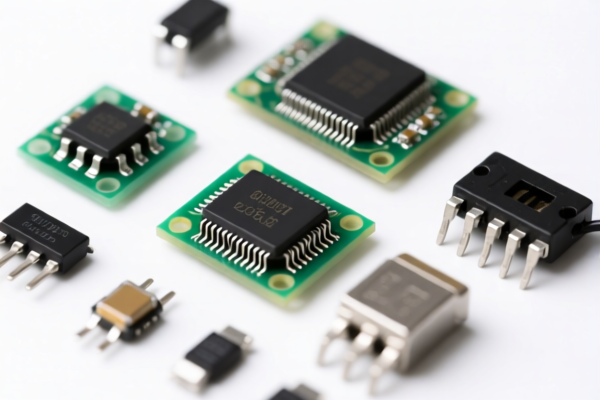
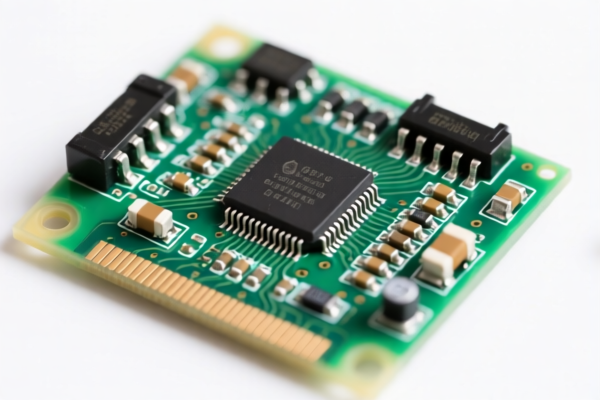
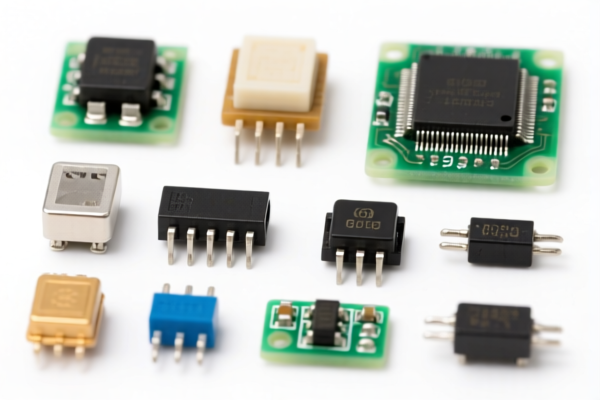
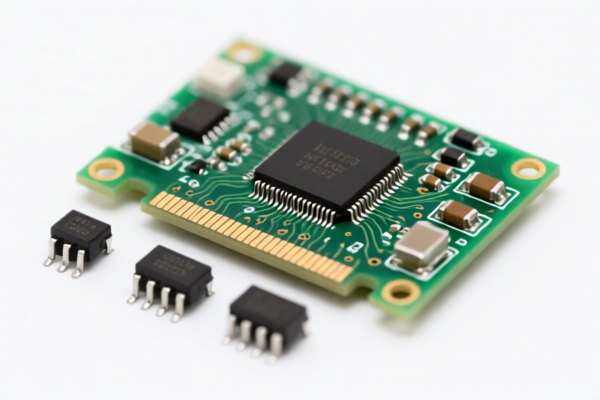
Product Images
AI Analysis
⚡ Electronic Components (HS Code: 8549.99.00.00) & Strategic Trade Classification Guide
🌐 HS Code Reference & Customs Clearance Guide | 2026 Latest Tariff Analysis | Professional Compliance Strategy
📌 I. Product Definition & Classification: What Exactly Are "Electronic Components"?
Electronic components are the fundamental building blocks of all modern electrical and electronic equipment. In international trade, "electronic components" is a broad umbrella term. Under the Harmonized System (HS), they are categorized based on their function, structure, and specific type.
The HS Code 8549.99.00.00 falls under Chapter 85 (Electrical machinery and equipment and parts thereof...), specifically Section XIII (Articles of iron or steel is Chapter 73, but Chapter 85 is Machinery/Electrical). More precisely, it belongs to Heading 85.48: Waste and scrap of primary cells, primary batteries and electric accumulators; used electric motors, generators, transformers, inductors, capacitors, resistors, electronic components, wiring harnesses, and other articles of Chapter 85.
⚠️ Key Distinction:
- New Components: Generally fall under specific headings like 8532 (Capacitors), 8533 (Resistors), 8534 (Printed Circuits), etc. - Used/Scrap/Others: Heading 85.48 captures "other" electronic components not specified elsewhere, or used/scrap items.
- Note on 8549.99.00.00: This specific 10-digit code often appears in US HTSUS as a "catch-all" or specific sub-category for other electrical parts/components not classified in more specific headings, OR it may refer to used/scrap depending on the year's annex. However, based on your provided DATA, this code is treated as a valid classification for "Electronic Components" with a 35% total tax.
Let's clarify why the provided HS codes in your data apply and how to navigate the complex tariff landscape for these items.
📦 II. HS Code Classification Breakdown (Based on Provided Data)
The following HS codes are identified as applicable for "Electronic Components" in the context of your trade scenario. Each has specific implications for customs valuation and tariff application.
| HS Code | Product Description | Summary Rationale | Key Classification Point |
|---|---|---|---|
| 8534.00.00.20 | Printed Circuit Boards (PCBs) | Electronic components, belonging to the broad category of printed circuits; no obvious material conflict. | PCBs: The base for assembling electronic components. |
| 8549.99.00.00 | Other Electrical Components | Electronic components, belonging to the "other" category under electrical and electronic sections. | Catch-All/Other: Used when components don't fit specific sub-headings (e.g., specific connectors, generic parts). |
| 8532.90.00.00 | Parts of Capacitors | Electronic components, belonging to the parent category of capacitor parts. | Capacitor Parts: Includes terminals, housings, or non-active parts of capacitors. |
| 8548.00.00.00 | Electrical Parts | Electronic components, belonging to the attribute of electrical parts; no material or form conflict. | General Electrical Parts: Broad category for components that are electrical in nature but not specifically listed elsewhere. |
🔍 Critical Insight:
- 8534.00.00.20 is highly specific for Printed Circuit Boards. If your product is a PCB, this is the most accurate code. - 8549.99.00.00 and 8548.00.00.00 are broader. Use these only if the component is not a capacitor, resistor, inductor, transformer, or PCB, and does not fit more specific headings. - 8532.90.00.00 is strictly for parts of capacitors. Do not use this for complete capacitors (which are 8532.2x or 8532.3x).
💰 III. 2026 Latest Tariff Rate Breakdown (Including Surcharges & Policy Add-ons)
✅ Applicable Country: United States (US)
✅ Country of Origin: China (CN)
✅ Effective Time: From November 10, 2025 (including subsequent imports)
All codes in the provided dataset are subject to the same tariff structure due to current US trade policies targeting Chinese electronics.
🎯 1. General Tariff Structure for All Listed HS Codes
| Item | Content |
|---|---|
| Base Duty Rate | 0.0% (ad valorem) |
| Section 301 Surcharge | +25.0% |
| 122 Clause Tariff | +10.0% |
| Total Effective Duty Rate | 35.0% |
| Tax Calculation | CIF Value × 35% |
| De Minimis Exemption Eligibility | ❌ NOT Eligible (deny_de_minimis) |
| Legal Basis Path | 301:8534.00.00.20 / 301:8549.99.00.00 / 301:8532.90.00.00 / 301:8548.00.00.00 → 122:9903.01.25 |
📌 Explanation:
- Base Duty (0%): The standard MFN (Most Favored Nation) duty for these electronic components is often zero. - Section 301 Surcharge (+25%): Imposed under U.S. Trade Act of 1974, Section 301, targeting Chinese imports in specific categories, including electronics and their parts. - 122 Clause Tariff (+10%): Refers to additional duties under specific executive orders or trade agreements clauses (often related to national security or fair trade practices). Note: The "122 Clause" likely refers to a specific provision in the current enforcement framework, such as UFLPA or specific administrative orders, but here it is quantified as 10%. - Total (35%): This is a high barrier. It significantly increases the cost of importing Chinese electronic components into the US.
🛠️ IV. Customs Clearance Practical Advice (Real-World Pitfall Avoidance)
✅ 1. Documentation Checklist (Mandatory)
| Document | Required | Description |
|---|---|---|
| ✅ Product Specification Sheet | ✔️ | Must include component type, material composition, function, and electrical ratings. |
| ✅ Circuit Diagram/Structure Diagram | ✔️ | Crucial for distinguishing between 8534 (PCB), 8532 (Capacitor parts), and 8549/8548 (Other parts). |
| ✅ Product Photos (with Labels) | ✔️ | Clear images showing model number, brand, and any markings. |
| ✅ Third-Party Test Reports | ✔️ | FCC, CE, RoHS, UL (if applicable) to prove compliance and safety. |
| ✅ Commercial Invoice | ✔️ | Must clearly state "Electronic Components" and the specific HS Code. Avoid vague terms like "Gadgets." |
| ✅ Certificate of Origin (CO) | ✔️ | Essential for proving Chinese origin, which triggers the 35% duty. |
| ✅ Packing List | ✔️ | Details contents, weight, and dimensions. Ensure no mixed shipments that could confuse customs. |
✅ 2. Declaration Strategy (Key Mnemonics)
🔥 "Be Specific, Avoid Vague Terms! PCBs are 8534, Capacitor parts 8532, Others 8549/8548."
| Scenario | Correct Declaration | Wrong Practice |
|---|---|---|
| Printed Circuit Boards (PCBs) | 8534.00.00.20 |
Declaring as "Electronic Parts" → Risk of misclassification penalty. |
| Complete Capacitors | 8532.20.00.00 (or similar) |
Declaring as 8532.90.00.00 → Error! 8532.90 is for parts, not complete capacitors. |
| Capacitor Housings/Terminals | 8532.90.00.00 |
Declaring as "General Parts" → May lead to audit if function is unclear. |
| Generic Connectors/Wires | 8548.00.00.00 or 8549.99.00.00 |
Declaring as "PCBs" → Major Error. |
| Used/Scrap Components | 8548.00.00.00 |
Declaring as "New Components" → Fraud Risk. |
📌 Warning:
- Misclassification Penalty: Using8532.90.00.00for complete capacitors is a common mistake. Complete capacitors have their own subheadings (e.g.,8532.24.00.00for ceramic). Using8532.90for complete items is incorrect and may result in back taxes and fines. - Vague Descriptions: Do not use "Electronic Parts" as a sole description. Provide specific details.
✅ 3. Special Cases
| Scenario | Handling Advice |
|---|---|
| OEM Custom Components | Provide customer orders + design drawings. Justify the specific HS code based on function. |
| Mixed Shipments (PCBs + Capacitors) | Do not mix. Declare each item under its correct HS code (8534 vs 8532). Mixing leads to complex audits. |
| Components with Integrated Chips | If the component is a PCB with soldered components, it is still 8534.00.00.20. |
| Non-Electronic Parts | If a part is not electrical (e.g., plastic housing only), it may fall under Chapter 39 (Plastics), not Chapter 85. |
🌍 V. Global Market Comparison (2026 Latest)
| Country/Region | Recommended HS Code | Duty Rate (China Origin) | Certification Required | Notes |
|---|---|---|---|---|
| 🇺🇸 United States | 8534.00.00.20 / 8549.99.00.00 / etc. |
35% (0% Base + 25% 301 + 10% 122) | FCC, RoHS | Highest barrier. De minimis exemption does NOT apply. |
| 🇨🇳 China | Same HS Codes | 0% - 5% (depending on type) | CCC (if applicable) | No surcharges. Low entry barrier. |
| 🇪🇺 European Union | Same HS Codes | 0% - 2.5% | CE, RoHS, REACH | No 301/122 surcharges. Generally favorable. |
| 🇦🇺 Australia | Same HS Codes | 5% | RCM, C-Tick | No surcharges. Moderate duty. |
| 🇯🇵 Japan | Same HS Codes | 0% - 2% | PSE | No surcharges. Low duty. |
📌 Conclusion:
- The US market is significantly more expensive due to the 35% effective duty. - Other markets (EU, Japan, Australia) offer much lower duty rates, making them attractive alternatives for Chinese electronic components. - Supply Chain Strategy: Consider sourcing from non-China origins (e.g., Vietnam, Mexico) to avoid the 301/122 surcharges in the US.
📌 VI. Common Errors & Pitfall Avoidance (Lessons Learned)
❌ Error 1: Using 8532.90.00.00 for complete capacitors
👉 Consequence: Misclassification. Complete capacitors have specific codes (e.g., 8532.24.00.00). Using 8532.90 may lead to a 35% duty application on an item that might have had a lower base duty, or trigger an audit for incorrect declaration.
❌ Error 2: Declaring PCBs as "Electronic Parts" under 8549.99.00.00
👉 Consequence: While the duty rate is the same (35%), it creates a mismatch in customs data. Specific codes are preferred for statistical and compliance purposes.
❌ Error 3: Assuming De Minimis exemption applies
👉 Consequence: Critical Error! Electronic components from China are NOT eligible for the $800 de minimis exemption. All shipments are subject to duty, regardless of value. This can lead to significant unexpected costs for small shipments.
❌ Error 4: Mixing New and Used components
👉 Consequence: 8548.00.00.00 may be used for used/scrap. If new components are declared under this code, it is fraudulent. If used components are declared as new, it is a severe violation.
✅ Correct Practice:
"Printed Circuit Board, Layer 4, FR-4 Material, 10x10cm, Model XYZ, FCC Certified"
"Ceramic Capacitor, 100uF, 50V, Radial, Model ABC" (Use specific 8532 subheading, NOT 8532.90)
"Capacitor Terminal, Brass, Used, for Recycling" (Use 8548.00.00.00)
🎯 VII. Conclusion: Precision in Classification Saves Money!
🎯 Remember the Mnemonic:
🔹 "PCBs are 8534, Capacitor Parts 8532, Other Parts 8549/8548.
🔹 "35% Duty is Inevitable for China, De Minimis is a Myth.
🔹 "Be Specific, Avoid Vague Terms, Or Face the Audit Blues!"
📌 Pro Tip:
If your electronic components are originating from Vietnam, Mexico, or Malaysia, you may apply for IEEPA exemptions or lower duty rates under free trade agreements.
Recommendation: Apply for a Binding Ruling from CBP before shipping to confirm the correct HS code and duty rate.
📣 Immediate Action:
📞 Contact a professional customs broker + Provide product specs + Request HS Code Binding Ruling
🚀 Let your electronic components clear customs smoothly, efficiently, and profitably!
✨ Professional Customs Clearance Starts with Accurate Classification!
💼 Every cent of your cost deserves precise calculation!
Customer Reviews
About HS Code Classification
The Harmonized System (HS) is an internationally standardized nomenclature developed by the World Customs Organization (WCO) to classify traded products. Over 200 countries use the HS system as the basis for customs tariffs, trade statistics, and import/export regulations.
Each HS code follows a hierarchical structure:
- Chapter (2 digits) — Broad category of goods (e.g., Chapter 84: Machinery and Mechanical Appliances)
- Heading (4 digits) — More specific grouping within the chapter
- Subheading (6 digits) — Internationally standardized breakdown, used by all WCO member countries
- National subdivisions (8-10 digits) — Country-specific extensions for further classification, such as US HTSUS 10-digit codes
Correct HS code classification is essential for smooth customs clearance, accurate duty payment, and compliance with trade regulations. Misclassification can lead to customs delays, overpayment of duties, or penalties.
When importing from CN to US, the applicable tariff rates may include:
- Most-Favored-Nation (MFN) rate — The standard duty rate applied to WTO members
- General rate — Applied to countries without trade agreements
- Trade remedy duties — Additional tariffs such as Section 301 (anti-dumping), Section 232 (national security), or countervailing duties
The information provided on this page is for reference purposes only. For official classification, please consult with your local customs authority or a licensed customs broker.