electronic device paper gasket
CN → US| HS Code | Tariff Rate | Origin | Destination | Doc |
|---|---|---|---|---|
| 4823908000 | 35.0% | CN | US | Official Doc |
| 4823906000 | 35.0% | CN | US | Official Doc |
| 8484900000 | 37.5% | CN | US | Official Doc |
Product Images
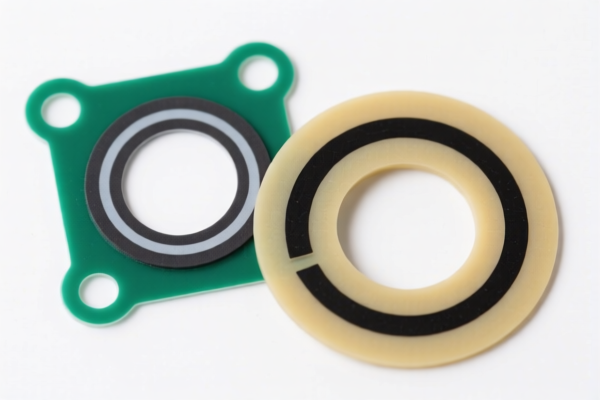
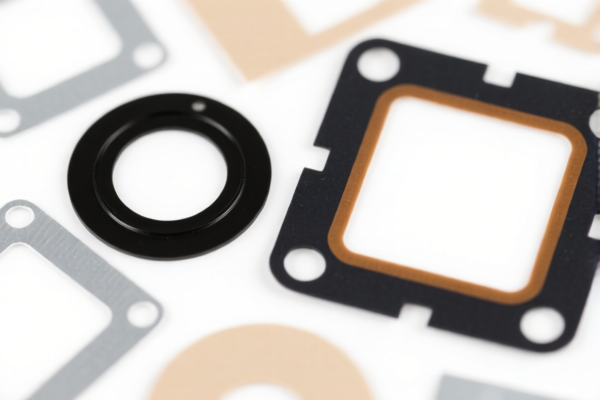

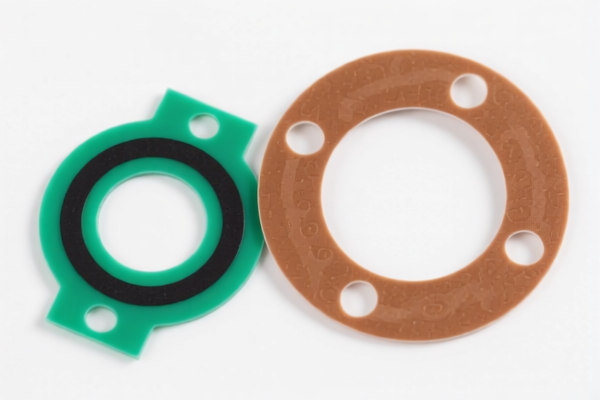
AI Analysis
📄 Electronic Device Paper Gasket (Paper Seals & Gaskets)
🌐 HS Code Reference & Customs Clearance Guide | 2026 Latest Tariff Analysis | Strategic Entry Strategy for US Imports
📌 I. Product Definition & Classification: Do You Really Understand "Paper Gaskets"?
Paper gaskets are critical sealing components used in electronics, automotive, and industrial applications. They prevent leakage of fluids or gases and ensure tight fits between mechanical parts. In international trade, Electronic Device Paper Gaskets can fall into different HS Code categories depending on their material composition, specific use, and structural form.
The ambiguity lies in whether they are classified primarily as paper products (Chapter 48) or as mechanical parts/gaskets (Chapter 84/85). This distinction drastically affects the tariff rate.
⚠️ Key Classification Distinction:
- If classified as Paper Products (based on material): Lower base duty, but subject to high additional tariffs.
- If classified as Mechanical Parts/Gaskets: Slightly higher base duty, but still subject to significant additional tariffs.
📦 II. HS Code Classification Details (2026 Latest Tariff Authority Reference)
Based on the provided data, there are three potential HS Codes for "Electronic Device Paper Gaskets." Here is the breakdown:
| HS Code | Product Description | Application Scenario | Material/Shape Focus | Total Tax Rate |
|---|---|---|---|---|
4823.90.80.00 |
Paper gaskets, material is paper, use is gasket, meets classification requirements. | General paper sealing components, non-specific mechanical use. | Material: Paper | 35.0% |
4823.90.60.00 |
Paper gaskets, material is paper, shape is gasket, meets classification explanation. | Specific paper gasket forms, compliant with paper product explanations. | Shape: Gasket | 35.0% |
8484.90.00.00 |
Paper gaskets, conform to gasket/adapter morphology, categorized under other classes. | Mechanical gaskets, seals, or joint parts in machinery/electronics. | Function: Mechanical Seal | 37.5% |
🔍 Critical Insight:
- Codes4823.90.80.00and4823.90.60.00classify the item as a paper product. They share the same 35.0% total tax rate.
- Code8484.90.00.00classifies the item as a mechanical part/gasket. It has a slightly higher total tax rate of 37.5% due to a 2.5% base duty.
- Why the difference? Section XVI (Chapters 84-85) generally applies to machinery/electrical parts, while Chapter 48 applies to paper. If the gasket is purely paper and not a specialized mechanical seal with rubber/metal composite, Chapter 48 is often preferred for lower base duty, but the additional tariffs dominate the cost.
💰 III. 2026 Latest Tariff Rate Breakdown (Including Additional Taxes & Policy Surcharges)
✅ Applicable Country: United States (US)
✅ Origin: China (CN)
✅ Effective Date: From November 10, 2025 (including subsequent imports)
🎯 1. 4823.90.80.00 & 4823.90.60.00 —— Paper Gaskets (Paper Products Category)
| Item | Content |
|---|---|
| Base Duty Rate | 0.0% (Ad Valorem) |
| Section 301 Additional Duty | +25.0% (USITC Footnote 9903.88.01) |
| Section 122 Additional Duty | +10.0% (Special provision for certain Chinese goods) |
| Total Tax Rate | 35.0% |
| Tax Calculation | CIF Value × 35% |
| De Minimis Eligibility | ❌ Not Eligible (deny_de_minimis) |
| Legal Basis Path | USITC:4823.90.60.00 / USITC:4823.90.80.00 → SECTION_301:9903.88.01 → SECTION_122 |
📌 Explanation:
- Base Duty 0%: Paper products under heading 4823 often enjoy zero base duty.
- Section 301 (25%): This is the primary "trade war" tariff applied to most Chinese goods.
- Section 122 (10%): An additional surcharge for specific categories.
- Total 35%: This is the final landed duty cost before other fees. High!
🎯 2. 8484.90.00.00 —— Mechanical Gaskets/Seals (Machinery Parts Category)
| Item | Content |
|---|---|
| Base Duty Rate | 2.5% (Ad Valorem) |
| Section 301 Additional Duty | +25.0% (USITC Footnote 9903.88.01) |
| Section 122 Additional Duty | +10.0% (Special provision for certain Chinese goods) |
| Total Tax Rate | 37.5% |
| Tax Calculation | CIF Value × 37.5% |
| De Minimis Eligibility | ❌ Not Eligible (deny_de_minimis) |
| Legal Basis Path | USITC:8484.90.00.00 → SECTION_301 → SECTION_122 |
📌 Explanation:
- Base Duty 2.5%: Mechanical parts often have a small base duty.
- Additional Taxes: Same 25% + 10% as above.
- Total 37.5%: Only 2.5% higher than the paper classification.
- Recommendation: Unless you have a strong legal argument for Chapter 84,4823.90.80.00or4823.90.60.00is safer as it has a lower base and same additional burden. However, if the gasket is complex (e.g., coated, specialized shape for engines),8484.90.00.00might be more accurate. But tax-wise, the difference is minimal.
🛠️ IV. Customs Clearance Practical Advice (Battle-Tested Pitfall Avoidance Guide)
✅ 1. Preparation Checklist (Non-Negotiable)
| Document | Must Provide | Notes |
|---|---|---|
| ✅ Product Specification Sheet | ✔️ | Detail material (e.g., fiber paper, cellulose), thickness, density, and temperature resistance. |
| ✅ Product Photos | ✔️ | Clear images of the gasket, showing shape, edges, and any coatings. |
| ✅ Commercial Invoice | ✔️ | Clearly state: "Paper Gasket, Material: Paper, Use: Sealing for Electronic Device". Avoid vague terms like "Part." |
| ✅ Packing List | ✔️ | Specify net weight and gross weight. Paper gaskets are lightweight but can be bulky. |
| ✅ Certificate of Origin (CO) | ✔️ | Essential for verifying China origin to apply correct tariffs. |
✅ 2. Declaration Tips (Key Mantras)
🔥 "Material First, Function Second, Name Precise, Tax Clear!"
| Scenario | Correct Declaration | Incorrect Approach |
|---|---|---|
| Pure Paper Gasket | HS: 4823.90.80.00Name: "Paper Gasket for Electronics" |
Misdeclare as 8484.90.00.00 to "save" 2.5% base? Risky if audit fails. |
| Coated/Composite Gasket | HS: 4823.90.80.00 or 8484.90.00.00 |
If it has metal/rubber, it’s not a pure paper gasket → Misclassification Penalty! |
| Gasket in Assembly | Declare as Part of Device | Do not split if it’s a critical seal. However, for gaskets, separate declaration is standard. |
| Small Samples | ❌ No De Minimis | Even 1 unit is subject to 35-37.5% tax. Do not use 800.3(a) exemption! |
✅ 3. Special Case Handling
| Situation | Handling Advice |
|---|---|
| OEM Custom Gaskets | Provide design drawings. Proving it’s "custom" doesn’t change HS, but helps prove "paper" nature. |
| Gaskets with Adhesive | If the adhesive layer changes the essential character, it might still be 4823. If it’s a multi-layer mechanical seal, consider 8484. |
| High-Temperature Electronic Gaskets | If they contain fiberglass or ceramic fibers, do not use 4823. Use appropriate chemical/insulating material codes. |
| Audit Defense | Keep samples. If CBP asks, prove it’s primarily paper (Chapter 48) not a machine part (Chapter 84). |
🌍 V. Global Market Clearance Comparison (2026 Latest)
| Country/Region | Recommended HS Code | Tariff (China Origin) | Certification | Notes |
|---|---|---|---|---|
| 🇺🇸 USA | 4823.90.80.00 / 8484.90.00.00 |
35.0% - 37.5% | No specific CE/FCC for passive parts | High Tariff Zone. No de minimis. |
| 🇨🇳 China | 4823.90.80.00 |
8.0% (Import Duty) | N/A | Domestic use vs. Export. |
| 🇪🇺 EU | 4823.90.80.00 |
4.0% | CE (if in final device) | No Section 301 equivalent. |
| 🇬🇧 UK | 4823.90.80.00 |
4.0% | UKCA (if in final device) | Post-Brexit tariff lines similar to EU. |
| 🇯🇵 Japan | 4823.90.80.00 |
6.0% | PSE (if in final device) | No major punitive tariffs. |
📌 Conclusion:
- USA is the most expensive market due to Section 301 (25%) + Section 122 (10%).
- Paper gaskets from China to US face a 35%+ effective duty rate.
- No duty-free loopholes exist for these items under de minimis.
📌 VI. Common Mistakes & Pitfall Guide (Lessons from Blood & Tears)
❌ Mistake 1: Claiming "De Minimis" ($800 exemption) for paper gaskets.
👉 Consequence: Goods seized, fines, and 100% tax + penalty. Rule: All goods from China are subject to scrutiny; no automatic exemption for Section 301 goods.
❌ Mistake 2: Misdeclaring as "Electronic Component" to avoid Chapter 48.
👉 Consequence: If it’s just a paper seal, CBP will reclassify to 4823, adding 25%+10% taxes you might have thought were avoided. Accuracy is key.
❌ Mistake 3: Ignoring Section 122 (10%).
👉 Consequence: Underpaying taxes by 10%. CBP audits will catch this, leading to back taxes + interest.
❌ Mistake 4: Using "Gasket" without specifying material.
👉 Consequence: CBP may assume it’s rubber/metal (8484), causing confusion. Specify "Paper" clearly.
✅ Correct Practice:
"Paper Gasket, Raw Material: Cellulose Fiber, Shape: Circular, Use: Sealing for Electronic Circuit Board, Model: PG-100"
🎯 VII. Conclusion: Professional Declaration, Save Time, Reduce Costs!
🎯 Remember the Mantra:
🔹 "Paper is Paper, 35% Tax, No De Minimis, Be Specific!"
🔹 "HS Code Dictates Cost, 2.5% Difference is Negligible, Accuracy Prevents Fines!"
📌 Pro Tip:
If your gaskets are not made in China (e.g., Vietnam, Thailand), you may avoid Section 301 and 122 tariffs, reducing duty to 0-4% (base rate only).
Recommendation: Consider supply chain diversification if volume is high.
Apply for Advance Ruling (Pre-classification) with CBP to lock in the correct HS Code and avoid post-import audits.
📣 Immediate Action:
📞 Contact a licensed customs broker + Provide Product Photos + Apply for HS Code Advance Ruling
🚀 Let your paper gaskets pass customs smoothly, efficiently, and profitably!
✨ Professional Clearance Starts with Accurate Classification!
💼 Every Cent of Cost Deserves Precise Calculation!
Customer Reviews
About HS Code Classification
The Harmonized System (HS) is an internationally standardized nomenclature developed by the World Customs Organization (WCO) to classify traded products. Over 200 countries use the HS system as the basis for customs tariffs, trade statistics, and import/export regulations.
Each HS code follows a hierarchical structure:
- Chapter (2 digits) — Broad category of goods (e.g., Chapter 84: Machinery and Mechanical Appliances)
- Heading (4 digits) — More specific grouping within the chapter
- Subheading (6 digits) — Internationally standardized breakdown, used by all WCO member countries
- National subdivisions (8-10 digits) — Country-specific extensions for further classification, such as US HTSUS 10-digit codes
Correct HS code classification is essential for smooth customs clearance, accurate duty payment, and compliance with trade regulations. Misclassification can lead to customs delays, overpayment of duties, or penalties.
When importing from CN to US, the applicable tariff rates may include:
- Most-Favored-Nation (MFN) rate — The standard duty rate applied to WTO members
- General rate — Applied to countries without trade agreements
- Trade remedy duties — Additional tariffs such as Section 301 (anti-dumping), Section 232 (national security), or countervailing duties
The information provided on this page is for reference purposes only. For official classification, please consult with your local customs authority or a licensed customs broker.