Electronic Grade Polyether Resin
CN → US| HS Code | Tariff Rate | Origin | Destination | Doc |
|---|---|---|---|---|
| 3911909150 | 41.5% | CN | US | Official Doc |
| 3911909110 | 41.5% | CN | US | Official Doc |
| 3907290000 | 41.5% | CN | US | Official Doc |
| 3824999397 | 40.0% | CN | US | Official Doc |
| 3824992900 | 41.5% | CN | US | Official Doc |
Product Images

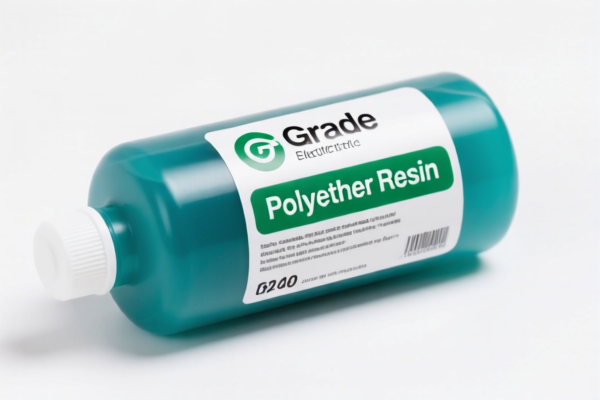

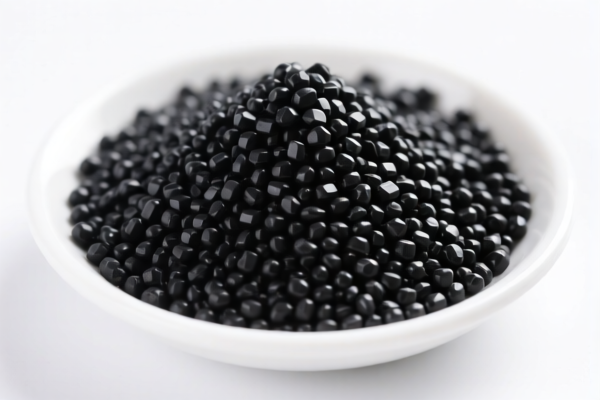
AI Analysis
🧪 Electronic Grade Polyether Resin (Electronic Polymers)
🌐 HS Code Reference & Customs Clearance Guide | 2026 Latest Tariff Analysis | Professional Clearance Strategy
📌 I. Product Definition & Classification: Do You Really Understand "Polyether Resin"?
Electronic Grade Polyether Resin is a high-purity chemical material primarily used in the semiconductor, PCB (Printed Circuit Board), and advanced packaging industries. Its key characteristics include high dielectric strength, low moisture absorption, and excellent thermal stability.
In international trade, classification depends on the purity level and chemical structure: - Primary Resin Forms: Raw polymer powders or beads suitable for further processing. - Chemical Preparations: Mixtures or modified resins classified under chemical products.
⚠️ Key Classification Point:
- If the product is a pure polyether polymer (e.g., polyethylene glycol derivatives, polypropylene glycol derivatives) → Generally falls under Chapter 39 (Plastics).
- If it is a prepared chemical mixture or falls outside specific polymer subheadings → May fall under Chapter 38 (Miscellaneous Chemical Products).
📦 II. HS Code Classification Details (Based on Provided Data)
The following HS codes are derived from the provided <DATA> set for Electronic Grade Polyether Resin. Note that all listed codes imply a high tariff burden due to trade measures.
| HS Code | Summary/Reasoning (From Data) | Total Tax Rate | Tax Detail Breakdown |
|---|---|---|---|
3911.90.91.50 |
Electronic Grade Polyether Resin归类为聚醚树脂,符合树脂类初级产品范畴,基于高纯度用途倾向判定。 (Classified as Polyether Resin, fits primary resin category, judged by high-purity usage tendency.) | 41.5% | Base: 6.5% Section 301: 25.0% Section 122: 10% |
3911.90.91.10 |
电子级聚醚树脂属于聚醚树脂类,材质与3911.90范畴一致,推断符合该类目下的其他树脂产品。 (Belongs to polyether resin class, material consistent with 3911.90 scope, inferred as other resin products.) | 41.5% | Base: 6.5% Section 301: 25.0% Section 122: 10% |
3907.29.00.00 |
电子级聚醚树脂明确包含聚醚材质,符合其他聚醚要求,树脂形态属于初级产品。 (Explicitly contains polyether material, meets other polyether requirements, resin form is primary product.) | 41.5% | Base: 6.5% Section 301: 25.0% Section 122: 10% |
3824.99.93.97 |
电子级聚醚树脂属于化学产品及制剂范畴,树脂属性可推断为化学原料,与兜底类目不冲突。 (Belongs to chemical products/preparations, resin attribute inferred as chemical raw material, no conflict with catch-all category.) | 40.0% | Base: 5.0% Section 301: 25.0% Section 122: 10% |
3824.99.29.00 |
电子级聚醚树脂属于化学树脂类,符合化学产品及制剂属性,根据兜底类目规则判定。 (Belongs to chemical resin class, fits chemical product/preparation attributes, judged by catch-all category rules.) | 41.5% | Base: 6.5% Section 301: 25.0% Section 122: 10% |
🔍 Critical Insight:
- The majority of classifications (3911,3907,3824) incur a total tariff of 41.5% or 40.0%. - All codes include Section 301 Tariffs (25%) and Section 122 Tariffs (10%), indicating significant trade restrictions on Chinese-origin goods. - The slight difference in3824.99.93.97(40.0%) is due to a lower base duty (5.0%) compared to others (6.5%).
💰 III. 2026 Latest Tariff Rate Details (Including Surtaxes & Policy Add-ons)
✅ Applicable Country: United States (US)
✅ Origin: China (CN)
✅ Effective Time: Current trade measures (Section 301 & Section 122 apply)
🎯 1. Primary Classification: 3911.90.91.50 / 3911.90.91.10 (Polyether Resins)
| Item | Content |
|---|---|
| Base Duty Rate | 6.5% (Ad Valorem) |
| Section 301 Surtax | +25.0% (Against Chinese goods) |
| Section 122 Surtax | +10.0% (National Security/Supply Chain) |
| Total Tax Rate | 41.5% |
| Calculation | CIF Value × 41.5% |
| De Minimis Exemption | ❌ Not Eligible (Due to Section 301/122) |
| Legal Basis | HTSUS 3911.90 + USITC Footnotes for China |
📌 Explanation:
- Base Duty (6.5%): Standard duty for other resins in Chapter 39. - Section 301 (25%): Imposed under Trade Act of 1974, Section 301, targeting specific Chinese chemical products. - Section 122 (10%): Imposed under Section 122 of the Trade Expansion Act of 1962, often for national security or balance of payments reasons. - Total (41.5%): This is a very high tariff, significantly impacting profit margins.
🎯 2. Alternative Classification: 3907.29.00.00 (Other Polyethers)
| Item | Content |
|---|---|
| Base Duty Rate | 6.5% |
| Section 301 Surtax | +25.0% |
| Section 122 Surtax | +10.0% |
| Total Tax Rate | 41.5% |
| Calculation | CIF Value × 41.5% |
| De Minimis Exemption | ❌ Not Eligible |
📌 Note:
- If customs determines the resin is a "polyether" rather than a generic "resin," this code applies. - The tariff structure is identical to3911, so cost impact is the same.
🎯 3. Catch-All Classification: 3824.99.93.97 (Chemical Preparations)
| Item | Content |
|---|---|
| Base Duty Rate | 5.0% |
| Section 301 Surtax | +25.0% |
| Section 122 Surtax | +10.0% |
| Total Tax Rate | 40.0% |
| Calculation | CIF Value × 40.0% |
| De Minimis Exemption | ❌ Not Eligible |
📌 Note:
- This code has a 1.5% savings compared to the primary resin codes (40.0% vs 41.5%) due to a lower base rate (5.0% vs 6.5%). - However, classification accuracy is critical; misclassification can lead to penalties.
🛠️ IV. Customs Clearance Practical Advice (Real-world Pitfall Avoidance Guide)
✅ 1. Documentation Checklist (Indispensable)
| Document | Required? | Description |
|---|---|---|
| ✅ Product Specification Sheet | ✔️ | Must detail chemical structure, purity level (e.g., 99.9%+), and molecular weight. |
| ✅ Material Safety Data Sheet (MSDS) | ✔️ | Essential for chemical imports; must indicate no hazardous materials. |
| ✅ Certificate of Analysis (COA) | ✔️ | Proves "Electronic Grade" purity; critical for justifying HS Code 3911 or 3907. |
| ✅ Commercial Invoice | ✔️ | Must clearly state "Electronic Grade Polyether Resin" and HS Code. |
| ✅ Country of Origin Certificate | ✔️ | Required for Section 301/122 application. |
| ✅ Usage Declaration | ✔️ | Explain end-use (e.g., "For semiconductor packaging") to support "Electronic Grade" classification. |
✅ 2. Declaration Tips (Key Mantras)
🔥 "Purity is King, Structure is Queen, Code Match Saves Queen!"
| Scenario | Correct Declaration | Wrong Approach |
|---|---|---|
| High-purity Polyether for Electronics | 3911.90.91.50 (Resin) |
Declare as general plastic → Risk of reclassification penalty |
| Chemical Mixture/Preparation | 3824.99.93.97 (Chemical Prep) |
Declare as pure resin → May be rejected by customs |
| Low-purity Industrial Resin | Different HS Code | Declare as "Electronic Grade" when not → Fraud risk |
📌 Important:
- "Electronic Grade" is a quality claim, not a structural one. Customs will look at the chemical composition first. - If the product is a polyether (e.g., PEG, PPG),3907.29.00.00or3911is appropriate. - If it is a modified chemical preparation,3824might apply, but justify why it’s not a simple resin.
✅ 3. Special Circumstances Handling
| Situation | Handling Advice |
|---|---|
| OEM/Custom Formulation | Provide detailed formula/ingredients to prove it’s not a standard trade resin. |
| Partial Exemptions | Check if the specific HTS code is exempt from Section 301 (unlikely for chemicals). |
| Supply Chain Diversification | Consider sourcing from non-China origins (e.g., Taiwan, South Korea) to avoid Section 301/122. |
| Pre-Ruling Application | Strongly Recommended: Submit an Application for Binding Tariff Information to US CBP before shipment. |
🌍 V. Global Market Comparison (2026 Latest)
| Country/Region | Recommended HS Code | Tariff (China Origin) | Certification | Remarks |
|---|---|---|---|---|
| 🇺🇸 USA | 3911.90.91.50 / 3824.99.93.97 |
40.0% - 41.5% | TSCA Compliance | High tariffs due to Sections 301 & 122. |
| 🇨🇳 China | 3911.90.91 |
~6.5% | REACH (if exported) | Domestic trade no tariff. |
| 🇪🇺 EU | 3911.90 |
~6.5% | REACH | No Section 301/122 equivalents. |
| 🇯🇵 Japan | 3911.90 |
~6.0% | JIS | Low base tariff. |
| 🇮🇳 India | 3911.90 |
~7.5% - 10% | BIS | Moderate tariffs. |
📌 Conclusion:
- USA is the most expensive market for Electronic Grade Polyether Resin due to additional surtaxes. - Total cost in US = Base Duty (6.5%) + Section 301 (25%) + Section 122 (10%) = 41.5%. - Strategy: Consider pricing adjustments, tariff engineering, or supply chain relocation to mitigate costs.
📌 VI. Common Mistakes & Pitfall Guide (Lessons Learned)
❌ Mistake 1: Declaring "Electronic Grade" as a separate HS Code
👉 Consequence: Customs will reclassify based on chemical structure, potentially leading to incorrect duty payment and delays.
❌ Mistake 2: Ignoring Section 122 Tariffs
👉 Consequence: Many importers only account for Section 301 (25%) and forget the additional 10% Section 122, leading to underpayment and penalties.
❌ Mistake 3: Misclassifying as "Plastics" (Chapter 39) vs "Chemicals" (Chapter 38) without justification
👉 Consequence: If deemed a "preparation," it might fall under 3824, but if declared as 3911 without proof, it may be rejected. Consistency in documentation is key.
❌ Mistake 4: Using "De Minimis" for small shipments
👉 Consequence: Section 301 and 122 tariffs apply to ALL shipments, regardless of value. No $800 exemption for these surtaxes.
✅ Correct Approach:
"Polyether Resin, Electronic Grade, High Purity (>99%), For Semiconductor Packaging, HTS 3911.90.91.50, Origin China, Subject to Section 301 & 122 Tariffs."
🎯 VII. Conclusion: Precise Classification, Cost Control, Efficiency!
🎯 Remember the Mantra:
🔹 "Resin vs. Prep, Check Structure First."
🔹 "41.5% is the US Price, Don’t Get Caught in the Crossfire."
🔹 "Pre-Ruling is Your Best Friend for Chemicals."
📌 Pro Tip:
If your polyether resin is originating from Vietnam, Malaysia, or other non-China countries, you may avoid Section 301 & 122 tariffs, reducing the total duty to just the Base Rate (~6.5%).
Recommendation:
1. Apply for a Binding Tariff Ruling from US CBP before shipping.
2. Audit your supply chain to see if non-China sources are viable for cost savings.
3. Ensure MSDS and COA perfectly match the declared HS Code.
📣 Take Action Now:
📞 Consult a licensed customs broker + Provide detailed chemical specs + Apply for CBP Pre-Ruling
🚀 Clear your goods smoothly, control your costs, and maximize your profits!
✨ Professional Clearance Starts with Accurate Classification!
💼 Every penny of tariff cost deserves precise calculation!
Customer Reviews
About HS Code Classification
The Harmonized System (HS) is an internationally standardized nomenclature developed by the World Customs Organization (WCO) to classify traded products. Over 200 countries use the HS system as the basis for customs tariffs, trade statistics, and import/export regulations.
Each HS code follows a hierarchical structure:
- Chapter (2 digits) — Broad category of goods (e.g., Chapter 84: Machinery and Mechanical Appliances)
- Heading (4 digits) — More specific grouping within the chapter
- Subheading (6 digits) — Internationally standardized breakdown, used by all WCO member countries
- National subdivisions (8-10 digits) — Country-specific extensions for further classification, such as US HTSUS 10-digit codes
Correct HS code classification is essential for smooth customs clearance, accurate duty payment, and compliance with trade regulations. Misclassification can lead to customs delays, overpayment of duties, or penalties.
When importing from CN to US, the applicable tariff rates may include:
- Most-Favored-Nation (MFN) rate — The standard duty rate applied to WTO members
- General rate — Applied to countries without trade agreements
- Trade remedy duties — Additional tariffs such as Section 301 (anti-dumping), Section 232 (national security), or countervailing duties
The information provided on this page is for reference purposes only. For official classification, please consult with your local customs authority or a licensed customs broker.