electronic parts
CN → US| HS Code | Tariff Rate | Origin | Destination | Doc |
|---|---|---|---|---|
| 8532290040 | 35.0% | CN | US | Official Doc |
| 8532900000 | 35.0% | CN | US | Official Doc |
| 8542900000 | 60.0% | CN | US | Official Doc |
| 8542390090 | 60.0% | CN | US | Official Doc |
| 8544429090 | 87.6% | CN | US | Official Doc |
Product Images
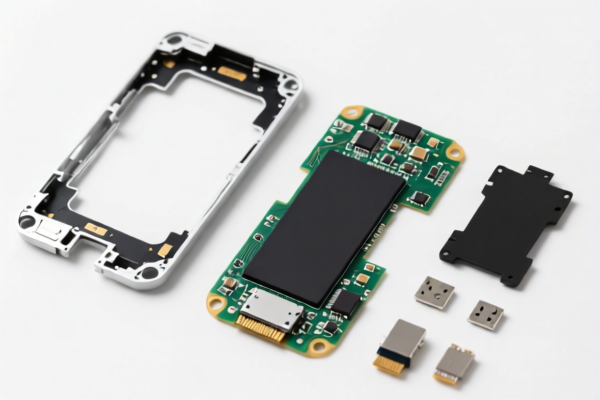
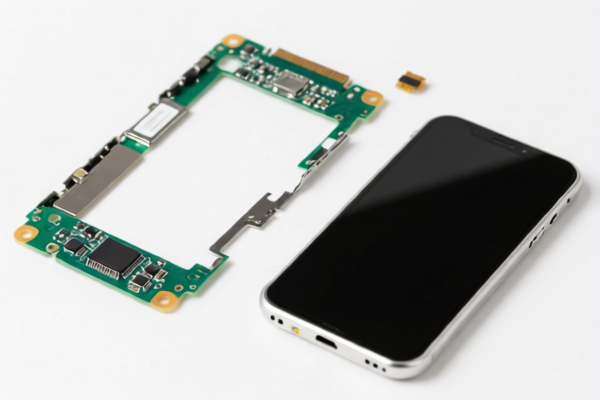
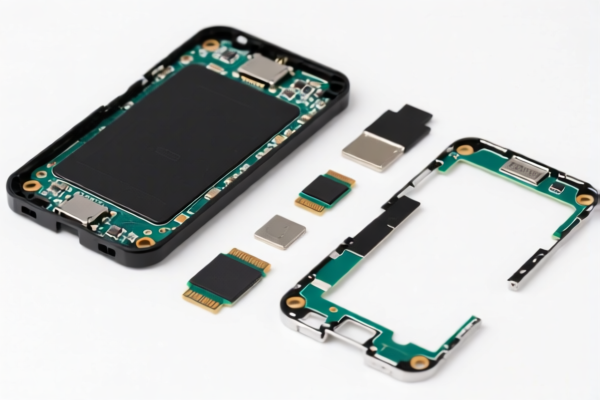
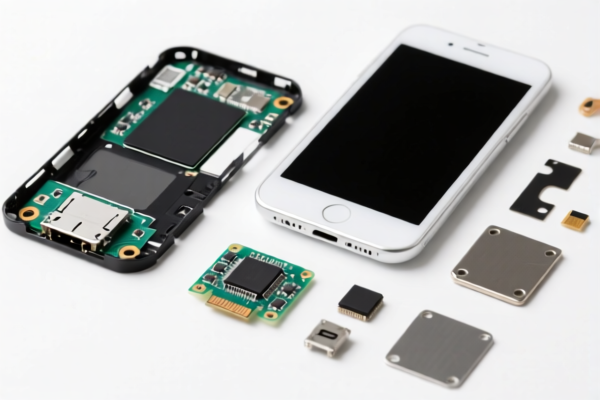
AI Analysis
🧩 Electronic Parts (Capacitors & Components)
🌐 HS Code Reference & Clearance Guide | 2026 Latest Tariff Analysis | Strategic通关 Strategy
📌 I. Product Definition: What are "Electronic Parts"?
In international trade, "Electronic Parts" is a broad umbrella term. However, for customs classification, it must be broken down by function and structure. Based on the provided data, these items primarily fall into Capacitors and Electronic Integrated Circuits/Components.
⚠️ Critical Distinction:
- Capacitors (Passive Components): Typically lower tax rates (35%) if correctly classified under specific capacitor headings.
- General Electronic Components/Packages: Higher tax rates (60%-87.6%) if classified under integrated circuits or general electronic parts.
- Material Matters: Presence of steel, aluminum, or copper can trigger additional 122-Clause tariffs.
📦 II. HS Code Classification Details (2026 Latest Tariff Authority)
| HS Code | Product Description | Summary & Logic | Total Tax Rate |
|---|---|---|---|
8532.29.00.40 |
Capacitor Elements | Matches capacitor category; no material or form conflict. | 35.0% |
8532.90.00.00 |
Parts of Capacitors | Fits capacitor attribute definition; no material/form conflict. | 35.0% |
8542.90.00.00 |
Parts of Integrated Circuits | Matches part usage by form; no material conflict; default tendency for parts. | 60.0% |
8542.39.00.90 |
Other Electronic Integrated Circuits | Passive components within ICs; fallback logic for other categories. | 60.0% |
8544.42.90.90 |
Other Electrical Conductors/Wires | Fallback for electronic equipment parts; no obvious material conflict. | 87.6% |
🔍 Key Insight:
- Capacitors (8532.xx) are the most tax-efficient classification (35%) if the item is strictly a capacitor or its direct parts.
- Integrated Circuit Parts (8542.xx) carry a higher burden (60%) due to being classified as components of advanced electronics.
- General Conductors/Parts (8544.xx) attract the highest rate (87.6%) due to the inclusion of base material tariffs (steel/aluminum/copper).
💰 III. 2026 Latest Tariff Rate Breakdown (Including Surtaxes & Policy Add-ons)
✅ Applicable Country: United States (US)
✅ Origin: China (CN)
✅ Effective Time: November 10, 2025 onwards (including subsequent imports)
🎯 1. 8532.29.00.40 & 8532.90.00.00 —— Capacitors & Parts (Best Case)
| Item | Content |
|---|---|
| Base Tariff | 0.0% |
| Section 301 Surcharge | +25.0% |
| Section 122 Tariff | +10.0% |
| Total Tax Rate | 35.0% |
| Tax Calculation | CIF Value × 35% |
| De Minimis Exemption | ❌ Not Eligible (Deny De Minimis) |
| Legal Basis Path | Section 301 → Section 122 → USITC:8532.xx |
📌 Explanation:
- These HS codes benefit from the lowest combined surcharge among the options.
- Section 122 Tariff (+10%) applies specifically to certain electronic components of national security interest.
- Section 301 (+25%) is the standard trade war surcharge for Chinese goods.
- Total 35% is manageable compared to other electronic parts categories.
🎯 2. 8542.90.00.00 & 8542.39.00.90 —— Integrated Circuit Parts
| Item | Content |
|---|---|
| Base Tariff | 0.0% |
| Section 301 Surcharge | +50.0% |
| Section 122 Tariff | +10.0% |
| Total Tax Rate | 60.0% |
| Tax Calculation | CIF Value × 60% |
| De Minimis Exemption | ❌ Not Eligible |
| Legal Basis Path | Section 301 (Higher Tier) → Section 122 → USITC:8542.xx |
📌 Note:
- The Section 301 rate jumps to 50% for integrated circuit-related parts, reflecting stricter trade controls on semiconductors.
- This is a significant cost increase (+25% vs. capacitors).
- Ensure your product is NOT an IC part if you want to avoid this rate.
🎯 3. 8544.42.90.90 —— Other Electrical Conductors/Parts (Worst Case)
| Item | Content |
|---|---|
| Base Tariff | 2.6% |
| Section 301 Surcharge | +25.0% |
| Section 122 Tariff | +10.0% |
| Steel/Aluminum/Copper Surtax | +50.0% |
| Total Tax Rate | 87.6% |
| Tax Calculation | CIF Value × 87.6% |
| De Minimis Exemption | ❌ Not Eligible |
| Legal Basis Path | Section 301 → Section 122 → USITC:8544.xx + Base Metal Tariffs |
📌 Warning:
- This category includes base metal surcharges (+50%) if the conductors contain steel, aluminum, or copper.
- The 87.6% rate is extremely high and likely to cause cash flow issues.
- Avoid this classification unless the product is genuinely a basic conductor/cable and cannot be classified elsewhere.
🛠️ IV. Customs Clearance Practical Advice (Avoid Pitfalls)
✅ 1. Documentation Checklist (Non-negotiable)
| Document | Must Provide | Description |
|---|---|---|
| ✅ Product Specification Sheet | ✔️ | Must clearly state: Type (Capacitor/IC Part), Material, Voltage, Capacity/PF. |
| ✅ Circuit Diagram/Structure Photo | ✔️ | Proof that it is a passive component (capacitor) vs. active component (IC). |
| ✅ Commercial Invoice | ✔️ | Item name must match HS description: e.g., "Ceramic Capacitor" not just "Electronic Part". |
| ✅ Packing List | ✔️ | Separate items by type to facilitate correct HS coding. |
| ✅ Origin Certificate (CO) | ✔️ | Required for US origin proof; no preferential tariffs apply for China origin. |
| ✅ Material Composition Statement | ✔️ | Critical to avoid the +50% base metal surtax on 8544.42.90.90. |
✅ 2. Classification Strategy (Key Tips)
🔥 “Capacitors First, Avoid ICs, Skip Base Metals!”
| Scenario | Correct HS Code | Tax Rate | Wrong Action |
|---|---|---|---|
| Pure Capacitor | 8532.29.00.40 / 8532.90.00.00 |
35% | Classifying as general part → 60-87% |
| IC Component/Package | 8542.90.00.00 |
60% | Classifying as capacitor → Risk of penalty |
| Cable/Wire with Copper/Steel | 8544.42.90.90 |
87.6% | Hiding material content → Seizure |
| Mixed Shipment | Split Declarations | Varies | Mixed declaration → Delay & Audit |
✅ 3. Special Cases & Risk Management
| Case | Handling Advice |
|---|---|
| Mixed Capacitors & ICs | Must separate in the invoice and HS codes. Do not lump them under one code. |
| Capacitors with Metal Terminals | If terminals are just plating (tin/gold) on plastic/ceramic body → Still 35%. If body is metal → 87.6%. |
| "Generic" Electronic Part | If description is vague ("Electronic Part"), Customs will assign the worst-case code (8544.xx → 87.6%). Be specific! |
| 122-Clause Items | Even if classified under 8532, the 10% surtax is mandatory. No exemption. |
🌍 V. Global Market Comparison (2026)
| Country/Region | Recommended HS Code | Total Tax (China Origin) | Key Requirement | Notes |
|---|---|---|---|---|
| 🇺🇸 USA | 8532.29.00.40 (Capacitor) |
35% | Specific Part Number | Highest cost due to 301+122. |
| 🇨🇳 China | 8532.29.00.40 |
0-5% | CCC (if applicable) | No Section 301/122. |
| 🇪🇺 EU | 8532.29.00.90 |
0% | CE, RoHS | No retaliatory tariffs. |
| 🇬🇧 UK | 8532.29.00.90 |
0% | UKCA, RoHS | Post-Brexit independent tariffs. |
| 🇨🇦 Canada | 8532.29.00.90 |
0% | RCM, UL | No Section 301 equivalent. |
📌 Conclusion:
- USA is the most challenging market for electronic parts due to Section 301 (25-50%) and Section 122 (10%) tariffs.
- Total tax can reach 87.6% if misclassified as basic conductors.
- Accurate classification as "Capacitors" (8532) is crucial to save 25-52% in taxes.
📌 VI. Common Mistakes & Pitfalls (Lessons Learned)
❌ Mistake 1: Using "Electronic Part" as the description for all items.
👉 Consequence: Customs applies the highest default rate (87.6%).
👉 Solution: Specify "Ceramic Capacitor", "Tantalum Capacitor", or "IC Chip".
❌ Mistake 2: Claiming "No Base Metals" for items with copper leads.
👉 Consequence: 50% surtax applied retroactively + penalties.
👉 Solution: Verify material composition. If copper >20%, expect higher rates or different HS.
❌ Mistake 3: Confusing Capacitors (8532) with IC Parts (8542).
👉 Consequence: 60% tax instead of 35%.
👉 Solution: Capacitors are passive; ICs are active/semiconductors. Keep them separate.
❌ Mistake 4: Ignoring Section 122 Tariff.
👉 Consequence: Underpayment by 10% on all electronic parts.
👉 Solution: Always include 10% Section 122 in cost calculations for US-bound electronics.
✅ Correct Declaration Example:
"Ceramic Capacitor, 100uF, 50V, Surface Mount, No Metallic Body, Model XYZ, HS: 8532.29.00.40"
🎯 VII. Conclusion: Precision Pays Off!
🎯 Remember the Rules:
🔹 "Capacitors at 35%, ICs at 60%, Wires at 87%!"
🔹 "Be Specific: No 'Electronic Part' – Use Full Description!"
🔹 "Check Materials: Copper/Steel = +50% Surcharge!"
📌 Pro Tip:
- If your product is a pure capacitor, fight for 8532.xx. It saves you 25% vs. ICs and 52.6% vs. Conductors.
- For ICs, ensure you are not declaring them as generic parts to avoid the 87.6% trap.
- Pre-clearance ruling is highly recommended for high-volume shipments to lock in the 35% rate.
📣 Immediate Action:
📞 Contact your customs broker with detailed specs (not just "electronic part").
📄 Submit material composition and circuit diagrams for verification.
🚀 Save up to 52% in taxes by choosing the right HS Code!
✨ Precision Classification Starts Here!
💼 Every percentage point saved is pure profit!
Customer Reviews
About HS Code Classification
The Harmonized System (HS) is an internationally standardized nomenclature developed by the World Customs Organization (WCO) to classify traded products. Over 200 countries use the HS system as the basis for customs tariffs, trade statistics, and import/export regulations.
Each HS code follows a hierarchical structure:
- Chapter (2 digits) — Broad category of goods (e.g., Chapter 84: Machinery and Mechanical Appliances)
- Heading (4 digits) — More specific grouping within the chapter
- Subheading (6 digits) — Internationally standardized breakdown, used by all WCO member countries
- National subdivisions (8-10 digits) — Country-specific extensions for further classification, such as US HTSUS 10-digit codes
Correct HS code classification is essential for smooth customs clearance, accurate duty payment, and compliance with trade regulations. Misclassification can lead to customs delays, overpayment of duties, or penalties.
When importing from CN to US, the applicable tariff rates may include:
- Most-Favored-Nation (MFN) rate — The standard duty rate applied to WTO members
- General rate — Applied to countries without trade agreements
- Trade remedy duties — Additional tariffs such as Section 301 (anti-dumping), Section 232 (national security), or countervailing duties
The information provided on this page is for reference purposes only. For official classification, please consult with your local customs authority or a licensed customs broker.