embedded power socket
CN → US| HS Code | Tariff Rate | Origin | Destination | Doc |
|---|---|---|---|---|
| 8504407007 | 35.0% | CN | US | Official Doc |
| 8504407018 | 35.0% | CN | US | Official Doc |
| 8536698000 | 37.7% | CN | US | Official Doc |
| 8544429090 | 87.6% | CN | US | Official Doc |
| 8536904000 | 35.0% | CN | US | Official Doc |
Product Images
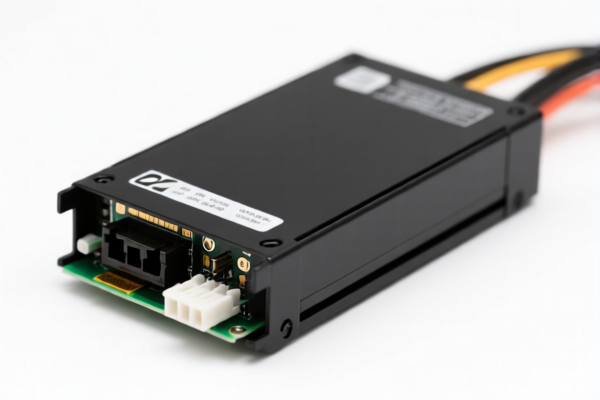
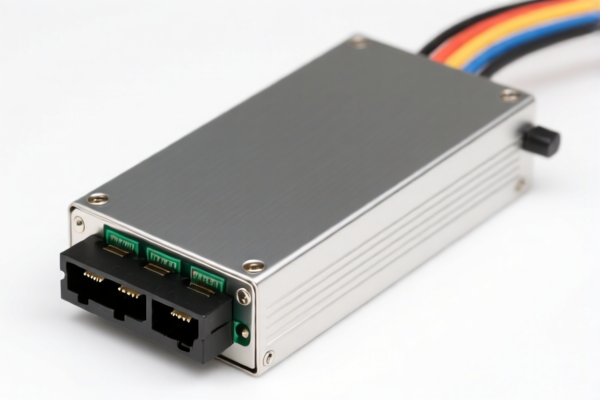
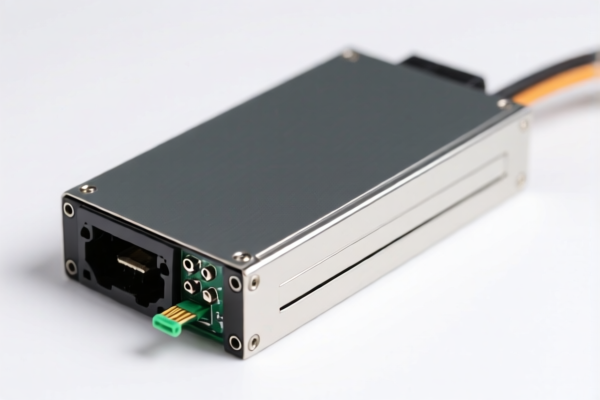
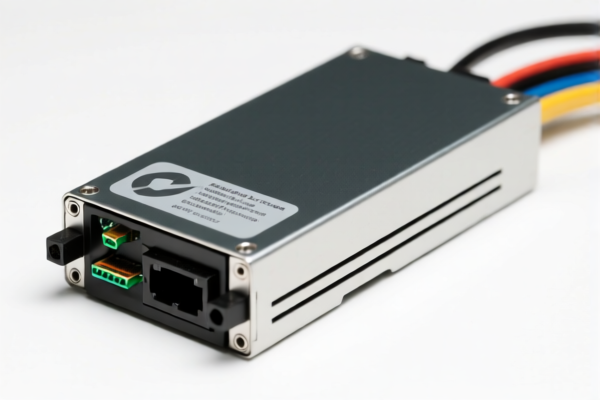
AI Analysis
⚡ Embedded Power Socket (Built-in Receptacle)
🌐 HS Code Reference & Customs Clearance Guide | 2026 Latest Tariff Analysis | Professional Entry Strategy
📌 I. Product Definition: Is It a Converter, a Connector, or a Cable?
An "Embedded Power Socket" usually refers to an electrical outlet built into furniture, desks, or walls. In international trade, this item is ambiguous. It is not just a "socket"; it often includes internal wiring, connectors, or even power conversion modules (DC adapters).
⚠️ Key Distinction Point:
- If it is a standalone plug/adaptor (AC to DC/AC) → It is a Static Converter (8504).
- If it is a passive connector (just the jack/outlet) → It is a Plug/Socket (8536) or Insulated Wire (8544).
- If it is wired into a device as a terminal → It is an Electrical Accessory (8536) or Insulated Conductor (8544).
📦 II. HS Code Classification Details (2026 Latest Tariff Authority对照)
Based on the provided data, here are the five possible classifications for "Embedded Power Socket" components and their corresponding tax structures.
| HS Code | Product Description | Classification Logic | Total Tax Rate (China Origin) |
|---|---|---|---|
8504.40.70.07 |
Static Converter (Power Adapter Plug) | Classified as a "Static Converter" based on power usage principles. The plug is viewed as the conversion unit. | 35.0% |
8504.40.70.18 |
Accessory/Component of Static Converter | Classified as a part/component of a static converter. No material or use conflict found. | 35.0% |
8536.69.80.00 |
Plug & Socket (Circuit Connection) | Matches the category of plugs/sockets for circuits under 1,000V. Attributes align with voltage-limited connection devices. | 37.7% |
8544.42.90.90 |
Insulated Conductor with Connectors | Classified as a connecting terminal of insulated conductors ≤1,000V. Fits the morphology of "conductors with connectors." | 87.6% |
8536.90.40.00 |
Electrical Accessory (Terminal Block) | Classified as an electrical accessory for connecting circuits. Fits the use case of terminal blocks or splices. | 35.0% |
🔍 Critical Analysis:
- The Danger Zone (8544.42.90.90): If Customs views the socket as part of an "insulated wire assembly," the tax jumps to 87.6% due to additional steel/aluminum/copper tariffs.
- The Safe Zone (8504/8536): Classifying as a converter (8504) or standard accessory (8536) yields 35.0%.
- The Middle Ground (8536.69.80.00): If declared purely as a plug/socket, the base tariff is higher (2.7%), resulting in 37.7% total.
💰 III. 2026 Latest Tariff Rate Breakdown (Including Surcharges)
✅ Applicable Country: United States (US)
✅ Origin: China (CN)
✅ Effective Time: Post-November 2025 (Including subsequent imports)
🎯 1. 8504.40.70.07 & 8504.40.70.18 —— Static Converters & Accessories
(Best for: Power adapters embedded in desks/docks)
| Item | Content |
|---|---|
| Base Tariff | 0.0% (Ad Valorem) |
| Section 301 Surtax | +25.0% (USITC Footnote 9903.88.01) |
| IEEPA Surtax | +10.0% (For Chinese/HK products, effective Nov 10, 2025) |
| Total Rate | 35.0% |
| Calculation | CIF Value × 35% |
| De Minimis Exemption | ❌ No (Deny de minimis) |
| Legal Path | IEEPA:9903.01.25 → IEEPA:9903.01.24 → USITC:8504.40.70.07/18 |
📌 Explanation:
- Base duty is 0%, but the 35% combined surtax is severe.
- This classification is often preferred if the device converts voltage (AC to DC), as it avoids the high base tariff of pure connectors.
🎯 2. 8536.69.80.00 —— Plugs and Sockets
(Best for: Passive outlets with no conversion)
| Item | Content |
|---|---|
| Base Tariff | 2.7% (Ad Valorem) |
| Section 301 Surtax | +25.0% |
| IEEPA Surtax | +10.0% |
| Total Rate | 37.7% |
| Calculation | CIF Value × 37.7% |
| De Minimis Exemption | ❌ No |
| Legal Path | IEEPA:9901.25 → IEEPA:9903.01.24 → USITC:8536.69.80.00 |
📌 Note:
- Even though the base rate is low (2.7%), the surcharges push the total to 37.7%.
- This is the most "literal" classification for a simple socket, but it is the most expensive among the "safe" options due to the non-zero base rate.
🎯 3. 8544.42.90.90 —— Insulated Conductors with Connectors
(⚠️ Highest Risk / Highest Cost)
| Item | Content |
|---|---|
| Base Tariff | 2.6% |
| Section 301 Surtax | +25.0% |
| IEEPA Surtax | +10.0% |
| Steel/Aluminum/Copper Surtax | +50.0% (Specific material surcharge) |
| Total Rate | 87.6% |
| Calculation | CIF Value × 87.6% |
| De Minimis Exemption | ❌ No |
| Legal Path | IEEPA:9903.01.25 → USITC:8544.42.90.90 → MATERIAL SURCHARGE: 50% |
📌 WARNING:
- This classification attracts an additional 50% tariff for metal (steel, aluminum, copper) products.
- Total Tax: 87.6%. This makes importing embedded power sockets classified as "wired conductors" prohibitively expensive.
- Avoid this classification unless the product is clearly defined as a pre-wired cable assembly without separate conversion or socket housing.
🎯 4. 8536.90.40.00 —— Electrical Accessories
(Alternative for Terminal/Splice configurations)
| Item | Content |
|---|---|
| Base Tariff | 0.0% |
| Section 301 Surtax | +25.0% |
| IEEPA Surtax | +10.0% |
| Total Rate | 35.0% |
| Calculation | CIF Value × 35% |
| De Minimis Exemption | ❌ No |
| Legal Path | IEEPA:9901.25 → USITC:8536.90.40.00 |
📌 Note:
- Similar to8504.40classification, the base tariff is 0%.
- Useful if the socket is considered a "terminal block" or "splice" rather than a standalone plug.
🛠️ IV. Customs Clearance Practical Advice (Battle-Tested Guide)
✅ 1. Documentation Checklist (Non-Negotiable)
| Document | Required | Explanation |
|---|---|---|
| ✅ Product Specification Sheet | ✔️ | Must detail: Input Voltage, Output Voltage (if conversion), Material (Plastic/Metal), Wattage. |
| ✅ Diagram/Structure Drawing | ✔️ | Crucial to prove it is NOT a simple insulated wire (to avoid 87.6%). Show it is a socket/converter unit. |
| ✅ Product Photos (Label/Nameplate) | ✔️ | Clear view of model number, input/output specs, and safety certifications. |
| ✅ Third-Party Test Report | ✔️ | UL, CE, FCC (for electrical safety). Required to prove compliance. |
| ✅ Commercial Invoice | ✔️ | Use precise description: "Static Power Converter with Integrated Socket" (if 8504) or "Electrical Outlet Accessory" (if 8536). |
| ✅ Packing List | ✔️ | Clearly separate the socket/converter from any cables if sold separately. |
✅ 2. Declaration Strategy (Key Mantras)
🔥 "Convert, Don't Wire! Define the Function!"
| Scenario | Correct Declaration | Wrong Approach |
|---|---|---|
| Desk with built-in DC power hub | HS 8504.40.70.07 (Static Converter) |
Declaring as "Socket" (8536) → Higher base tax |
| Simple AC wall outlet | HS 8536.69.80.00 (Plug/Socket) |
Declaring as "Converter" → Misclassification risk |
| Cable assembly with plug | Split Declaration (Wire + Plug) | Declaring as one unit under 8544 → 87.6% Tax! |
| Embedded Module in Furniture | HS 8536.90.40.00 (Accessory) |
Declaring as "Furniture Part" → Customs rejection |
✅ 3. Special Case Handling
| Situation | Advice |
|---|---|
| OEM Custom Sockets | Provide client order + design specs. Prove it is not a generic "insulated wire." |
| Mixed Materials (Plastic + Metal Contacts) | Emphasize the Plastic Housing and Electronic Function to argue against the "Steel/Aluminum Surtax" in 8544. |
| Pre-wired vs. Standalone | If sold as a standalone socket (no wire attached), use 8536 or 8504. If sold as a wired cable, you risk 8544 (87.6%). Sell them separately if possible. |
| Voltage Conversion | If the socket steps down 110V to 12V (DC), it MUST be 8504 (Converter). This is your best defense against high material tariffs. |
🌍 V. Global Market Clearance Comparison (2026 Latest)
| Country/Region | Recommended HS Code | Tariff (China Origin) | Certification | Notes |
|---|---|---|---|---|
| 🇺🇸 USA | 8504.40.70.07 |
35.0% | UL + FCC | Avoid 8544 (87.6%). 8504 is optimal for converted power. |
| 🇨🇳 China | 8504.40.70.07 |
~10-13% (Est.) | CCC | Lower base tariffs, but US exports are the main concern. |
| 🇪🇺 EU | 8536.69.80.00 |
~0-3% | CE + RoHS | No heavy surtaxes like US. Base tariff is the main cost. |
| 🇬🇧 UK | 8536.69.80.00 |
~0-4% | UKCA | Similar to EU post-Brexit. |
📌 Conclusion:
- USA is the hardest market due to Section 301 + IEEPA tariffs.
- Strategy for USA: Always classify as Static Converter (8504) or Accessory (8536) to keep tax at 35%. Avoid Insulated Conductor (8544) at all costs (87.6%).
📌 VI. Common Errors & Pitfalls (Blood & Tears Lessons)
❌ Error 1: Declaring a "Powered Socket" as "Insulated Wire Assembly" (8544.42.90.90)
👉 Consequence: 87.6% Tax! You will pay an extra 50% metal surcharge.
✅ Fix: Declare as "Power Converter" or "Electrical Accessory."
❌ Error 2: Splitting a "Plug + Cable" into two lines incorrectly
👉 Consequence: Customs may re-attach them and apply 8544 rules, or penalize for misdeclaration.
✅ Fix: If sold as a unit, declare as the component (Plug or Converter), not the wire.
❌ Error 3: Vague Description "Power Socket"
👉 Consequence: Customs examiner guesses → Likely to pick the highest tax code (8544).
✅ Fix: Be specific: "AC-DC Power Converter with Integrated USB/AC Socket, Model XYZ."
✅ Correct Declaration Example:
"Static Power Converter with Integrated Electrical Socket, 120V AC Input, 12V DC Output, Plastic Housing, Model PWR-100, UL Listed"
🎯 VII. Conclusion: Precision Saves Thousands!
🎯 Remember the Mantra:
🔹 "Convert First, Wire Last. Converter is 35%, Wire is 87.6%!"
🔹 "Don't let metal material surcharge eat your profit!"
🔹 "8504 is your friend, 8544 is your enemy!"
📌 Pro Tip:
If your embedded socket does not convert voltage (just AC to AC), you must use 8536.69.80.00 (37.7%).
If it does convert (AC to DC), use 8504.40.70.07 (35.0%).
Design your product to be a "Converter" to save 2.7% + avoid 50% surcharge.
📣 Immediate Action:
📞 Consult a customs broker with your circuit diagram.
📄 Apply for an Advance Ruling if the value is high.
🚀 Classify correctly, clear smoothly, and protect your margins!
✨ Professional Clearance Starts with Accurate Classification!
💼 Every percentage point counts in 2026!
Customer Reviews
About HS Code Classification
The Harmonized System (HS) is an internationally standardized nomenclature developed by the World Customs Organization (WCO) to classify traded products. Over 200 countries use the HS system as the basis for customs tariffs, trade statistics, and import/export regulations.
Each HS code follows a hierarchical structure:
- Chapter (2 digits) — Broad category of goods (e.g., Chapter 84: Machinery and Mechanical Appliances)
- Heading (4 digits) — More specific grouping within the chapter
- Subheading (6 digits) — Internationally standardized breakdown, used by all WCO member countries
- National subdivisions (8-10 digits) — Country-specific extensions for further classification, such as US HTSUS 10-digit codes
Correct HS code classification is essential for smooth customs clearance, accurate duty payment, and compliance with trade regulations. Misclassification can lead to customs delays, overpayment of duties, or penalties.
When importing from CN to US, the applicable tariff rates may include:
- Most-Favored-Nation (MFN) rate — The standard duty rate applied to WTO members
- General rate — Applied to countries without trade agreements
- Trade remedy duties — Additional tariffs such as Section 301 (anti-dumping), Section 232 (national security), or countervailing duties
The information provided on this page is for reference purposes only. For official classification, please consult with your local customs authority or a licensed customs broker.