embedded socket
CN → US| HS Code | Tariff Rate | Origin | Destination | Doc |
|---|---|---|---|---|
| 3926904590 | 38.5% | CN | US | Official Doc |
| 8536698000 | 37.7% | CN | US | Official Doc |
| 8536694010 | 35.0% | CN | US | Official Doc |
| 3926909989 | 22.8% | CN | US | Official Doc |
| 8504409580 | 35.0% | CN | US | Official Doc |
Product Images
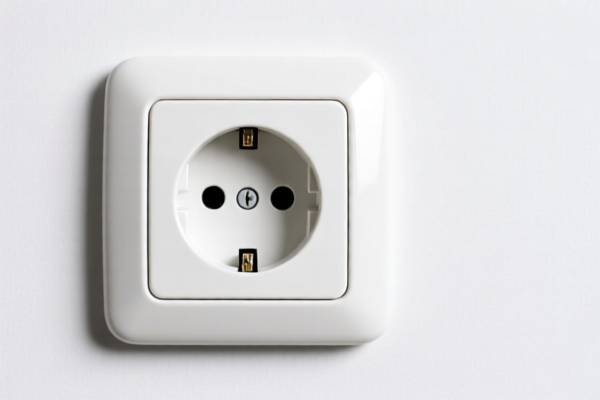
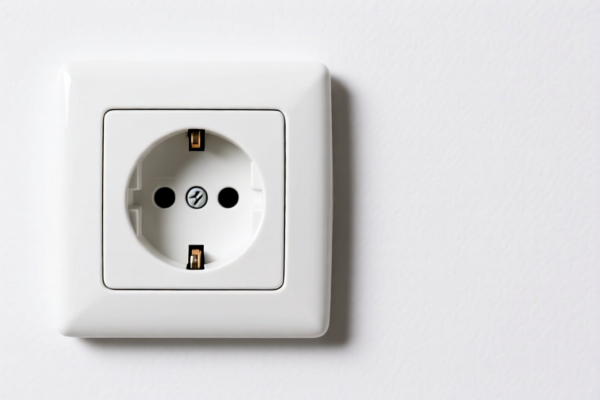
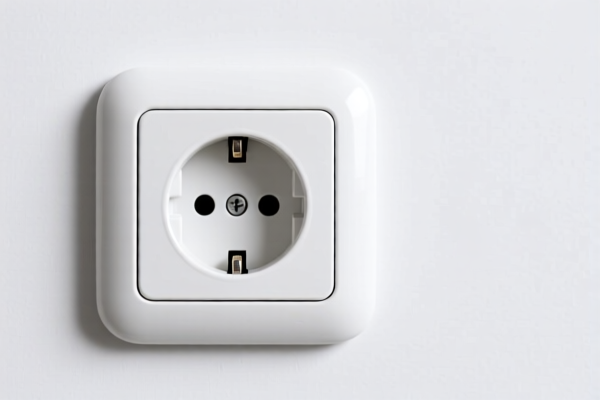
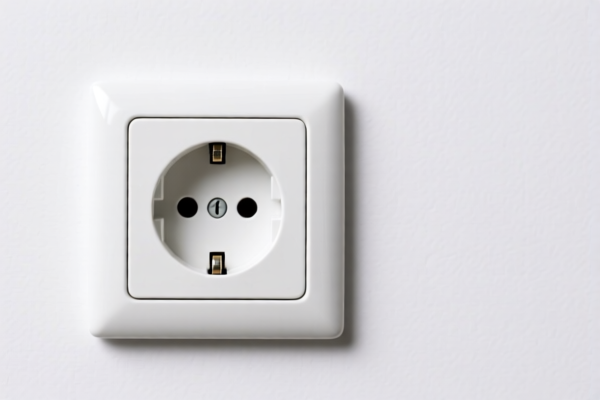
AI Analysis
🔌 Embedded Socket (Wall Plate / Receptacle)
🌐 HS Code Reference & Customs Clearance Guide | 2026 Latest Tariff Analysis | Professional Clearance Strategy
📌 I. Product Definition & Classification: Do You Really Understand "Embedded Sockets"?
An Embedded Socket (often referred to as a Wall Receptacle, Flush-Mount Socket, or Built-in Outlet) is a fundamental component in electrical installation systems. It provides a secure connection point for plugging in electrical appliances into the fixed wiring of a building.
In international trade, classification depends heavily on the primary function and material composition:
- Electrical Connectors/Devices: If the socket is designed for electrical connection (plugging in devices), it typically falls under Chapter 85 (Electrical machinery and equipment).
- Plastic Articles: If classified primarily by its material (plastic housing) without specific electrical function attribution in certain contexts, it may fall under Chapter 39 (Plastics and articles thereof).
⚠️ Key Distinction:
- If the item is an electrical receptacle (capable of connecting live wires to a plug) → It is an electrical device (Chapter 85).
- If the item is a non-conductive cover or purely decorative plastic part without internal contacts → It might be considered a plastic article (Chapter 39).
Note: Standard "embedded sockets" with contact points are almost always classified under Chapter 85.
📦 II. HS Code Classification Details (Based on Provided Data)
Below is the detailed breakdown of the five HS Codes provided in the data, including their summaries, tax rates, and logical basis.
| HS Code | Summary / Rationale | Total Tax Rate | Tax Breakdown |
|---|---|---|---|
| 8536.69.40.10 | Electrical Connection Equipment Product name "Socket" matches the classification explanation for "sockets" used for electrical connections. |
35.0% | Base: 0.0% Add-on: 25.0% Section 122: 10% |
| 8536.69.80.00 | Explicitly Listed "Sockets" The product name "Socket" directly belongs to the explicitly listed category of "sockets" in classification explanations. |
37.7% | Base: 2.7% Add-on: 25.0% Section 122: 10% |
| 8504.40.95.80 | Static Converters Inferred as an electrical conversion device based on material and form, falling under "other" static converters. |
35.0% | Base: 0.0% Add-on: 25.0% Section 122: 10% |
| 3926.90.45.90 | Plastic Articles (Inferred) Inferred material is plastic, categorized as "other plastic articles." |
38.5% | Base: 3.5% Add-on: 25.0% Section 122: 10% |
| 3926.90.99.89 | Plastic Articles (Fallback) Exterior is typically plastic, fitting the "other plastic articles" fallback category. |
22.8% | Base: 5.3% Add-on: 7.5% Section 122: 10% |
🔍 Critical Note:
- Chapter 85 Codes (8536, 8504) are generally more accurate for functional electrical sockets.
- Chapter 39 Codes (3926) may apply if the item is considered a non-functional plastic part or if customs authorities interpret the product differently based on material composition.
- Section 122 Tariff applies to all entries, adding a 10% surcharge.
💰 III. 2026 Latest Tariff Rate Breakdown
✅ Applicable Country: United States (US)
✅ Origin: China (CN)
✅ Effective Date: Post-2025 (Includes subsequent imports)
🎯 1. 8536.69.40.10 — Electrical Connectors (Sockets)
| Item | Content |
|---|---|
| Base Tariff | 0% |
| Add-on Tariff | +25% (Section 301) |
| Section 122 Tariff | +10% |
| Total Rate | 35.0% |
| Tax Calculation | CIF Value × 35.0% |
| De Minimis Eligibility | ❌ No (High tax rate likely disqualifies de minimis) |
| Legal Basis | USITC:8536.69.40.10 → Section 301: 25% → Section 122: 10% |
📌 Explanation:
- This code is for sockets explicitly designed for electrical connection.
- Total tax: 35%. This is a moderate-to-high tariff, requiring careful cost calculation.
🎯 2. 8536.69.80.00 — Other Electrical Sockets
| Item | Content |
|---|---|
| Base Tariff | 2.7% |
| Add-on Tariff | +25% |
| Section 122 Tariff | +10% |
| Total Rate | 37.7% |
| Tax Calculation | CIF Value × 37.7% |
| De Minimis Eligibility | ❌ No |
| Legal Basis | USITC:8536.69.80.00 → Section 301: 25% → Section 122: 10% |
📌 Explanation:
- Slightly higher base rate (2.7%) makes this code more expensive than 8536.69.40.10.
- Total tax: 37.7%. Avoid this code if 8536.69.40.10 is applicable.
🎯 3. 8504.40.95.80 — Static Converters
| Item | Content |
|---|---|
| Base Tariff | 0.0% |
| Add-on Tariff | +25% |
| Section 122 Tariff | +10% |
| Total Rate | 35.0% |
| Tax Calculation | CIF Value × 35.0% |
| De Minimis Eligibility | ❌ No |
| Legal Basis | USITC:8504.40.95.80 → Section 301: 25% → Section 122: 10% |
📌 Explanation:
- This code is less common for standard sockets unless they include conversion features.
- Total tax: 35.0%. Same as 8536.69.40.10 but with a different product scope.
🎯 4. 3926.90.45.90 — Other Plastic Articles
| Item | Content |
|---|---|
| Base Tariff | 3.5% |
| Add-on Tariff | +25% |
| Section 122 Tariff | +10% |
| Total Rate | 38.5% |
| Tax Calculation | CIF Value × 38.5% |
| De Minimis Eligibility | ❌ No |
| Legal Basis | USITC:3926.90.45.90 → Section 301: 25% → Section 122: 10% |
📌 Explanation:
- Classified by material (plastic) rather than function.
- Total tax: 38.5%. Higher due to higher base rate. Risky classification for electrical items.
🎯 5. 3926.90.99.89 — Other Plastic Articles (Fallback)
| Item | Content |
|---|---|
| Base Tariff | 5.3% |
| Add-on Tariff | +7.5% |
| Section 122 Tariff | +10% |
| Total Rate | 22.8% |
| Tax Calculation | CIF Value × 22.8% |
| De Minimis Eligibility | ❌ No (Check specific exemptions) |
| Legal Basis | USITC:3926.90.99.89 → Section 301: 7.5% → Section 122: 10% |
📌 Explanation:
- Lowest total tax rate at 22.8% due to lower add-on tariff (7.5% vs 25%).
- However, this classification is risky for functional electrical sockets. Customs may reclassify and impose higher duties + penalties.
- Use only if the product is non-functional or primarily a plastic housing.
🛠️ IV. Customs Clearance Practical Advice (Pitfall Avoidance Guide)
✅ 1. Documentation Checklist (All Required)
| Document | Mandatory | Description |
|---|---|---|
| ✅ Product Specification Sheet | ✔️ | Dimensions, voltage rating, amperage, plug type |
| ✅ Electrical Diagrams | ✔️ | To prove electrical functionality (for Chapter 85) |
| ✅ Product Photos | ✔️ | Clear images of contacts, housing, and labeling |
| ✅ Third-Party Certification | ✔️ | UL, ETL, CE, or RoHS certificates (if applicable) |
| ✅ Commercial Invoice | ✔️ | Clearly state "Embedded Electrical Socket" or "Wall Receptacle" |
| ✅ Packing List | ✔️ | Detail contents to avoid misclassification |
| ✅ Certificate of Origin | ✔️ | Required for tariff calculation |
✅ 2. Declaration Tips (Key Mantras)
🔥 "Function over Material, Exact Description, Tax Minimized!"
| Scenario | Correct Declaration | Wrong Practice |
|---|---|---|
| Functional Socket (with contacts) | 8536.69.40.10 (Electrical) |
Declare as "Plastic Part" → 38.5% + Penalty |
| Non-Functional Plastic Cover | 3926.90.99.89 (Plastic) |
Declare as "Socket" → Rejected/Reclassified |
| Socket + Wiring Accessories | Combined Declaration | Split into multiple items → Higher total tax |
| Bulk Import | Uniform Description | Mixed descriptions → Delays & Inspections |
✅ 3. Special Cases
| Case | Handling Advice |
|---|---|
| OEM Custom Sockets | Provide design specs to prove electrical function |
| Smart Sockets (IoT) | May require additional FCC certification; classify under 8536.69 if primarily electrical |
| Outdoor/Weatherproof Sockets | Highlight IP rating in description; still 8536.69 |
| High Voltage Sockets | Ensure correct voltage rating documentation; may affect classification |
🌍 V. Global Market Comparison (2026 Latest)
| Country/Region | Recommended HS Code | Tariff | Certification | Remarks |
|---|---|---|---|---|
| 🇺🇸 USA | 8536.69.40.10 |
35% (China) | UL/ETL | High tariff; Section 122 applies |
| 🇨🇳 China | 8536.69.40.10 |
5-9% | CCC | Lower tariffs; no Section 122 |
| 🇪🇺 EU | 8536.69.40.10 |
0-4% | CE | No additional surcharges |
| 🇦🇺 Australia | 8536.69.40.10 |
5% | RCM | No Section 122 |
| 🇯🇵 Japan | 8536.69.40.10 |
0% | PSE | No additional surcharges |
📌 Conclusion:
- USA has the highest effective tax rate due to Section 301 and Section 122 tariffs.
- Chapter 85 classification is generally safer and more accurate for functional sockets.
- Chapter 39 classification offers lower taxes (22.8%) but carries high compliance risk if the product is electrical.
📌 VI. Common Errors & Pitfall Guide (Lessons Learned)
❌ Error 1: Declaring electrical sockets as "Plastic Parts" to save taxes
👉 Consequence: Customs reclassification → 38.5% tax + Penalties + Delay
❌ Error 2: Not providing electrical diagrams
👉 Consequence: Customs cannot verify function → Classification doubt → 37.7% or higher
❌ Error 3: Using vague terms like "Electrical Part"
👉 Consequence: Ambiguity → Higher scrutiny → Delayed clearance
❌ Error 4: Ignoring Section 122 Tariff
👉 Consequence: Underestimating total cost by 10% → Profit margin erosion
✅ Correct Approach:
"Wall-Mounted Electrical Socket, 15A/125V, Plastic Housing with Copper Contacts, UL Listed, Model XYZ"
🎯 VII. Conclusion: Professional Declaration, Cost Optimization!
🎯 Key Takeaways:
🔹 "Function First: Electrical = Chapter 85, Plastic = Chapter 39"
🔹 "Section 122 Adds 10%: Always Factor Into Cost"
🔹 "35% vs 22.8%: Risk vs Reward in Classification"📌 Tip:
If your sockets are functionally electrical, use 8536.69.40.10 (35% tax).
If they are non-functional plastic covers, use 3926.90.99.89 (22.8% tax).
Never misdeclare to avoid penalties.
📣 Immediate Action:
📞 Consult a Customs Broker + Provide Product Specs + Apply for Advance Ruling
🚀 Ensure smooth customs clearance, minimize costs, and maximize profits!
✨ Professional Clearance Starts with Accurate Classification!
💼 Every Dollar Saved is a Dollar Earned!
Customer Reviews
About HS Code Classification
The Harmonized System (HS) is an internationally standardized nomenclature developed by the World Customs Organization (WCO) to classify traded products. Over 200 countries use the HS system as the basis for customs tariffs, trade statistics, and import/export regulations.
Each HS code follows a hierarchical structure:
- Chapter (2 digits) — Broad category of goods (e.g., Chapter 84: Machinery and Mechanical Appliances)
- Heading (4 digits) — More specific grouping within the chapter
- Subheading (6 digits) — Internationally standardized breakdown, used by all WCO member countries
- National subdivisions (8-10 digits) — Country-specific extensions for further classification, such as US HTSUS 10-digit codes
Correct HS code classification is essential for smooth customs clearance, accurate duty payment, and compliance with trade regulations. Misclassification can lead to customs delays, overpayment of duties, or penalties.
When importing from CN to US, the applicable tariff rates may include:
- Most-Favored-Nation (MFN) rate — The standard duty rate applied to WTO members
- General rate — Applied to countries without trade agreements
- Trade remedy duties — Additional tariffs such as Section 301 (anti-dumping), Section 232 (national security), or countervailing duties
The information provided on this page is for reference purposes only. For official classification, please consult with your local customs authority or a licensed customs broker.