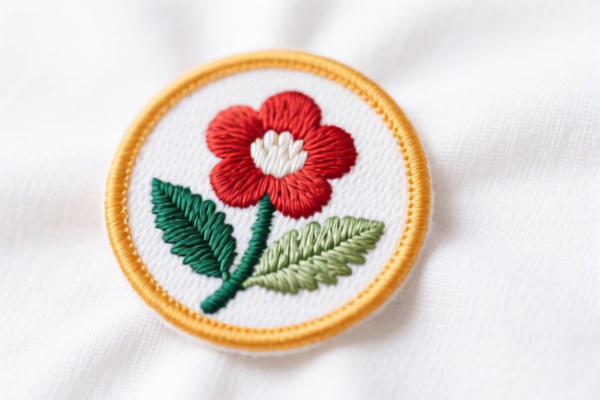
embroidered earphone patch
CN → US| HS Code | Tariff Rate | Origin | Destination | Doc |
|---|---|---|---|---|
| 5810921000 | 0.0% | CN | US | Official Doc |
| 3926903500 | 16.5% | CN | US | Official Doc |
| 4202399000 | 55.0% | CN | US | Official Doc |
| 3926909989 | 22.8% | CN | US | Official Doc |
| 5810999000 | 0.0% | CN | US | Official Doc |
Product Images



AI Analysis
🧵 Embroidered Earphone Patch (Textile Accessories)
🌐 HS Code Reference & Customs Clearance Guide | 2026 Latest Tariff Analysis | Professional Entry Strategy
📌 I. Product Definition & Classification: What Exactly is an "Embroidered Earphone Patch"?
An Embroidered Earphone Patch is a decorative textile accessory, typically shaped like a patch, badge, or emblem, designed to be attached to earphone cases, cords, or storage bags. In international trade, its classification depends heavily on material composition and functional morphology.
Key Classifications: 1. Pure Textile Embroidery: Made primarily from synthetic or natural fibers (e.g., polyester, cotton), intended as a decorative patch. * Likely HS Codes: 5810.92.10.00, 5810.99.90.00 2. Plastic-Coated/Synthetic Blend: Contains plastic backing, PVC coating, or synthetic fiber base that defines its structure. * Likely HS Codes: 3926.90.35.00, 3926.90.99.89 3. General Textile Accessory/Container Part: Viewed as a part of a larger textile container (like a bag) or a general decorative item. * Likely HS Code: 4202.39.90.00
⚠️ Critical Distinction:
- If the item is purely embroidered fabric without significant plastic structural backing → It is likely a Textile/Embroidery (Chapter 58).
- If the item has a plastic base/coating or is classified as a general decorative plastic article → It falls under Plastics (Chapter 39).
- If it is considered a part/accessory of a textile bag/container → It may fall under Articles of Leather/Textile (Chapter 42).
📦 II. HS Code Classification Details (2026 Latest Tariff Authority Comparison)
| HS Code | Product Description | Application Scenario | Material/Structure |
|---|---|---|---|
5810.92.10.00 |
Embroidered patches, badges, and motifs; made of synthetic fibers | Decorative patches for bags, jackets, or earphone cases; synthetic thread base | ✅ Synthetic Fibers |
3926.90.35.00 |
Other articles of plastic and articles of other materials of heading 3902 to 3911; decorative | Plastic-coated patches, PVC-based badges, or synthetic blends with plastic dominance | ✅ Plastic/Coated |
4202.39.90.00 |
Articles of apparel and clothing accessories, of other materials; other | Decorative textile accessories treated as parts of containers/bags | ✅ Textile/General |
3926.90.99.89 |
Other articles of plastic; unclassified elsewhere | Plastic/synthetic base patches not specifically listed in other plastic subheadings | ✅ Plastic/Synthetic |
5810.99.90.00 |
Embroidery in the small; other than that of heading 5810.92; other textile materials | Other textile embroidery, non-synthetic or unspecified textile base | ✅ Textile (Non-Synthetic) |
🔍 Key Reminder:
- Pure Embroidery (5810.xxxx) attracts high tariffs (See Additional US Notes + 35% Total).
- Plastic-Based (3926.xxxx) generally has lower base tariffs but varies by specific plastic type.
- Textile Accessories (4202.xxxx) often face very high tariffs due to broader category duties.
💰 III. 2026 Latest Tariff Rate Breakdown (Including Surcharges, Policy Surcharges)
✅ Applicable Country: United States (US)
✅ Origin: China (CN)
✅ Effective Date: Ongoing (Subject to ongoing trade policies)
🎯 1. 5810.92.10.00 — Embroidered Patches (Synthetic Fibers)
| Item | Content |
|---|---|
| Base Tariff | See Additional U.S. Note 2 |
| Section 301 Surtax | +25.0% |
| 122 Clause Surtax | +10% |
| Total Tariff | See Additional U.S. Note 2 + 35.0% |
| Tax Calculation | CIF Value × (Base Rate + 35%) |
| De Minimis Eligibility | ❌ No (High risk of audit) |
| Legal Basis Path | US Note 2 → Section 301: 25% → 122 Clause: 10% |
📌 Explanation:
- This is a high-risk, high-cost classification.
- "See Additional U.S. Note 2" indicates a variable base rate that must be checked in current tariff tables (often 8-12% for synthetics).
- Total effective rate is extremely high due to the combination of Section 301 (25%) and 122 Clause (10%) on top of the base.
🎯 2. 3926.90.35.00 — Plastic Decorative Articles
| Item | Content |
|---|---|
| Base Tariff | 6.5% |
| Section 301 Surtax | 0.0% (Exempt or Lower Rate) |
| 122 Clause Surtax | +10% |
| Total Tariff | 16.5% |
| Tax Calculation | CIF Value × 16.5% |
| De Minimis Eligibility | ❌ No |
| Legal Basis Path | USITC:3926.90.35.00 → 122 Clause: 10% |
📌 Note:
- This is a more favorable classification if the product contains significant plastic components.
- The 0% Section 301 surcharge makes it significantly cheaper than the pure textile option.
- Requires proof of plastic composition (e.g., PVC backing, synthetic blend).
🎯 3. 4202.39.90.00 — Other Textile Accessories
| Item | Content |
|---|---|
| Base Tariff | 20.0% |
| Section 301 Surtax | +25.0% |
| 122 Clause Surtax | +10% |
| Total Tariff | 55.0% |
| Tax Calculation | CIF Value × 55.0% |
| De Minimis Eligibility | ❌ No |
| Legal Basis Path | USITC:4202.39.90.00 → Section 301: 25% → 122 Clause: 10% |
📌 Warning:
- This is the highest tariff among the options.
- Misclassifying a simple patch as a "textile accessory" can lead to massive cost increases.
- Only use if the item is structurally part of a larger textile container.
🎯 4. 3926.90.99.89 — Other Plastic Articles
| Item | Content |
|---|---|
| Base Tariff | 5.3% |
| Section 301 Surtax | +7.5% |
| 122 Clause Surtax | +10% |
| Total Tariff | 22.8% |
| Tax Calculation | CIF Value × 22.8% |
| De Minimis Eligibility | ❌ No |
| Legal Basis Path | USITC:3926.90.99.89 → Section 301: 7.5% → 122 Clause: 10% |
📌 Note:
- A moderate cost option for plastic-based items not fitting specific plastic categories.
- Lower base tariff (5.3%) helps offset the surcharges.
🎯 5. 5810.99.90.00 — Other Embroidery (Textile)
| Item | Content |
|---|---|
| Base Tariff | See Additional U.S. Note 5 |
| Section 301 Surtax | +25.0% |
| 122 Clause Surtax | +10% |
| Total Tariff | See Additional U.S. Note 5 + 35.0% |
| Tax Calculation | CIF Value × (Base Rate + 35%) |
| De Minimis Eligibility | ❌ No |
| Legal Basis Path | US Note 5 → Section 301: 25% → 122 Clause: 10% |
📌 Explanation:
- Similar to5810.92.10.00, this falls under the high-tariff embroidery category.
- "See Additional U.S. Note 5" implies a variable base rate that must be verified.
- High risk and high cost due to the 35% total surcharge.
🛠️ IV. Customs Clearance Practical Advice (Avoiding Pitfalls)
✅ 1. Preparation Checklist (Essential)
| Document | Required | Explanation |
|---|---|---|
| ✅ Product Specifications | ✔️ | Detail material composition (e.g., "100% Polyester Embroidery with PVC Backing") |
| ✅ Material Composition Certificate | ✔️ | Critical for distinguishing between Chapter 58 (Textile) and Chapter 39 (Plastic) |
| ✅ Product Photos | ✔️ | Show backside (lining/material) and front (embroidery) |
| ✅ Commercial Invoice | ✔️ | Clearly state "Embroidered Patch" or "Decorative Plastic Badge" |
| ✅ Packing List | ✔️ | Indicate quantity and weight |
| ✅ Test Reports | ✔️ | If claiming plastic exemption, provide material test reports |
✅ 2. Declaration Tips (Key Strategy)
🔥 “Material Defines Code, Plastic Lowers Rate, Embroidery is Expensive!”
| Scenario | Correct Declaration | Incorrect Approach |
|---|---|---|
| Pure Fabric Embroidery | 5810.92.10.00 or 5810.99.90.00 |
Calling it "Plastic Badge" → Misclassification |
| PVC/Plastic Backed Patch | 3926.90.35.00 |
Calling it "Textile Patch" → Higher Tariff |
| Part of a Bag/Case | 4202.39.90.00 (if integral) |
Stand-alone patch misdeclared as container part |
| Unspecified Plastic Item | 3926.90.99.89 |
Vague description "Accessory" |
✅ 3. Special Case Handling
| Situation | Handling Advice |
|---|---|
| Mixed Material | If >50% plastic by weight/value, consider 3926 for lower tariffs. |
| OEM Custom Patches | Provide design files and material specs to support 5810 or 3926 classification. |
| High-Value Goods | Apply for Advance Ruling to confirm HS Code and avoid audit risks. |
| Small Parcel (De Minimis) | Note that most of these codes are NOT eligible for de minimis exemption due to high duties. |
🌍 V. Global Market Comparison (2026 Latest)
| Country/Region | Recommended HS Code | Tariff Rate | Certification | Notes |
|---|---|---|---|---|
| 🇺🇸 USA | 3926.90.35.00 (if plastic) |
16.5% | No specific cert | Lowest rate if plastic-based |
| 🇺🇸 USA | 5810.92.10.00 (textile) |
~45%+ | No specific cert | Highest rate due to surcharges |
| 🇪🇺 EU | 5810.92.10.00 |
~12% | No CE needed for patches | No Section 301/122 surcharges |
| 🇨🇳 China | 5810.92.10.00 |
~8-12% | No CCC needed | Lower base tariffs |
📌 Conclusion:
- US Market is Hardest: High surcharges (Section 301 + 122 Clause) make textile embroidery very expensive.
- Plastic-Based Advantage: If your patch has a plastic backing,3926.90.35.00is the most cost-effective option in the US.
- Textile Disadvantage: Avoid5810if possible due to 35%+ surcharges.
📌 VI. Common Errors & Pitfalls (Lessons Learned)
❌ Error 1: Declaring a plastic-backed patch as 5810 (Textile)
👉 Result: Higher base tariff + Same surcharges → Unnecessary cost increase.
👉 Fix: Use 3926 if plastic content is significant.
❌ Error 2: Declaring a pure textile patch as 3926 (Plastic)
👉 Result: Customs audit → Delay, fines, or forced reclassification.
👉 Fix: Provide material composition proof to support 3926 claim.
❌ Error 3: Ignoring Section 301 and 122 Clause surcharges
👉 Result: Underestimated landed cost → Profit margin collapse.
👉 Fix: Always calculate Total Tariff = Base + 25% + 10%.
❌ Error 4: Vague Description "Earphone Accessory"
👉 Result: Customs rejection or random inspection.
👉 Fix: Use precise terms: "Embroidered Patch, Synthetic Fibers" or "Plastic Decorative Badge".
✅ Correct Declaration Example:
"Embroidered Patch, 2-inch, Polyester Thread with PVC Backing, Decorative Accessory for Earphone Case"
🎯 VII. Conclusion: Smart Classification, Cost Saving!
🎯 Remember:
🔹 "Plastic Patch = Lower Tax (16.5%)"; "Textile Embroidery = High Tax (35%+)"
🔹 "Material is Key, Surcharge is King, Declare Accurately!"
📌 Pro Tip:
If your product is manufactured in Vietnam, Mexico, or Malaysia, you may exempt from Section 301/122 Clause surcharges.
Recommend applying for Pre-Clearance (Advance Ruling) to confirm the optimal HS Code and reduce customs risk.
📣 Action Plan:
📞 Contact a professional customs broker + Provide material composition + Apply for HS Code Pre-Ruling
🚀 Clear customs smoothly, save costs, maximize profits!
✨ Professional Customs Clearance Starts with Accurate Classification!
💼 Every cent of cost deserves precise calculation!
Customer Reviews
About HS Code Classification
The Harmonized System (HS) is an internationally standardized nomenclature developed by the World Customs Organization (WCO) to classify traded products. Over 200 countries use the HS system as the basis for customs tariffs, trade statistics, and import/export regulations.
Each HS code follows a hierarchical structure:
- Chapter (2 digits) — Broad category of goods (e.g., Chapter 84: Machinery and Mechanical Appliances)
- Heading (4 digits) — More specific grouping within the chapter
- Subheading (6 digits) — Internationally standardized breakdown, used by all WCO member countries
- National subdivisions (8-10 digits) — Country-specific extensions for further classification, such as US HTSUS 10-digit codes
Correct HS code classification is essential for smooth customs clearance, accurate duty payment, and compliance with trade regulations. Misclassification can lead to customs delays, overpayment of duties, or penalties.
When importing from CN to US, the applicable tariff rates may include:
- Most-Favored-Nation (MFN) rate — The standard duty rate applied to WTO members
- General rate — Applied to countries without trade agreements
- Trade remedy duties — Additional tariffs such as Section 301 (anti-dumping), Section 232 (national security), or countervailing duties
The information provided on this page is for reference purposes only. For official classification, please consult with your local customs authority or a licensed customs broker.