embroidered lace patch
CN → US| HS Code | Tariff Rate | Origin | Destination | Doc |
|---|---|---|---|---|
| 5810929030 | 0.0% | CN | US | Official Doc |
| 5810921000 | 0.0% | CN | US | Official Doc |
| 6214900090 | 28.8% | CN | US | Official Doc |
| 6214900010 | 28.8% | CN | US | Official Doc |
Product Images

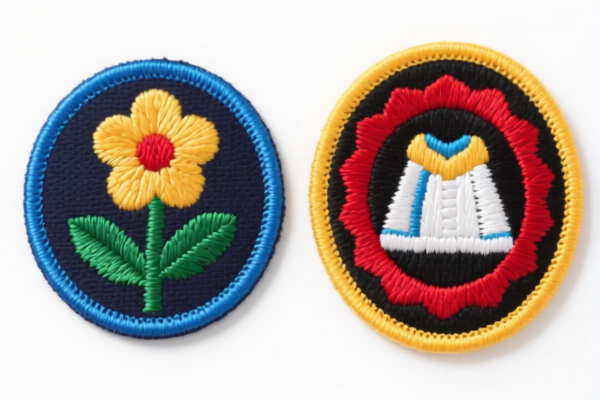
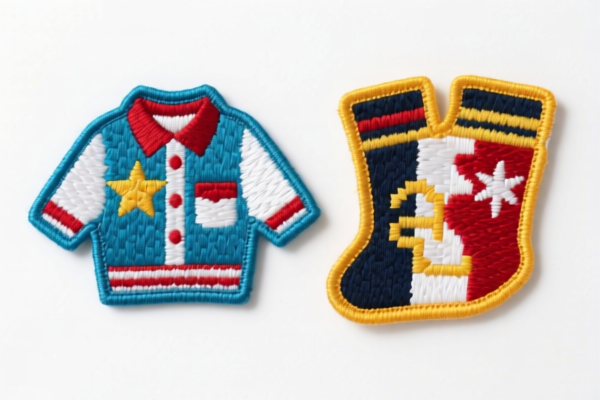
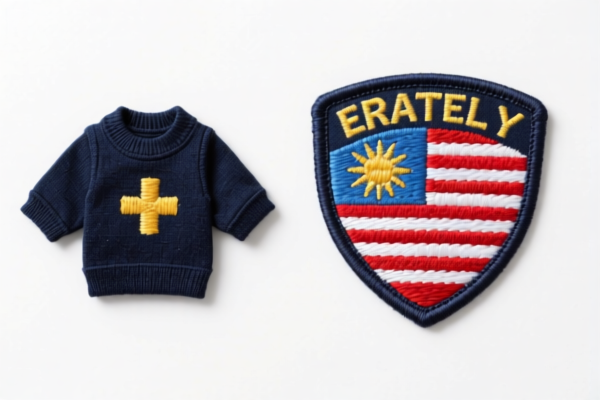
AI Analysis
🧵 Embroidered Lace Patch (Embroidery in Strips/Motifs)
🌐 HS Code Reference & Customs Clearance Guide | 2026 Latest Tariff Analysis | Professional Clearance Strategy
📌 I. Product Definition & Classification: Do You Know What "Embroidered Lace Patch" Really Is?
An Embroidered Lace Patch typically refers to decorative textile elements used for embellishment, branding, or identification. In international trade, these are classified under Chapter 58 (Special Woven Fabrics; Tufted Fabric; Lace; Tapestries; Trimmings; Embroidery).
The key distinction lies in the material composition (Man-made vs. Natural) and the specific end-use (Labels/Flags vs. General Badges/Motifs). Since "Lace Patch" often implies a decorative motif rather than a strict garment label, the classification depends heavily on whether it is a "Badge/Emblem" or a general "Other Embroidery."
⚠️ Key Classification Logic:
- If the product is made of Man-made Fibers (Polyester, Nylon, etc.) AND used as a Badge, Emblem, or Motif → 5810.92.10.00
- If the product is made of Man-made Fibers but does NOT fit the strict definition of a badge/emblem (e.g., general decorative strips) → 5810.92.90.30
- Note: The input data only contains Man-made fiber entries. Cotton entries (6214.x) are excluded as "Lace Patches" are rarely classified under Shawls/Scarves (Ch 62) unless they are actually small scarves, which is a misclassification.
📦 II. HS Code Classification Details (2026 Latest Tariff Authority)
| HS Code | Product Description | Material | Specific Use/Type | Applicable Scenario |
|---|---|---|---|---|
5810.92.10.00 |
Embroidery: Of man-made fibers: Badges, emblems and motifs | Man-Made (e.g., Poly) | Badges, Emblems, Motifs | Team patches, corporate logos, decorative motifs, "Lace" style badges |
5810.92.90.30 |
Embroidery: Of man-made fibers: Labels | Man-Made (e.g., Poly) | Labels | Clothing labels, brand tags, care labels, hang tags |
🔍 Critical Distinction:
- 5810.92.10.00 is for decorative/identifying patches that are sewn or ironed onto garments/hats as a feature. Even if they look like "lace," if they function as a badge or motif, this is the correct code.
- 5810.92.90.30 is specifically for Labels. If your "Lace Patch" is primarily a brand label (e.g., a neck label made of embroidered lace), it goes here.
- Misclassification Risk: Do not classify a decorative "Patch" (e.g., a floral design on a denim jacket) as a "Label" (5810.92.90.30) just because it has text. If its primary function is decoration/motif, use 5810.92.10.00.
💰 III. 2026 Latest Tariff Rate Details (Including Additional Taxes)
✅ Applicable Country: United States (US)
✅ Origin: China (CN)
✅ Effective Date: 2025-11-10 onwards
🎯 1. 5810.92.10.00 —— Embroidery: Badges, Emblems and Motifs (Man-Made)
| Item | Content |
|---|---|
| Base Duty Rate | 0.0% (ad valorem) |
| USITC Additional Duty | 0.0% |
| IEEPA Additional Duty | 0.0% |
| Total Duty Rate | 0.0% |
| Duty Calculation | CIF Value × 0% = $0 |
| De Minimis Eligibility | ✅ Yes (Subject to Section 321 thresholds, but duty is 0% anyway) |
| Legal Basis Path | HTSUS:5810.92.10.00 → No Footnote 9903/9904 |
📌 Explanation:
- Zero Duty! This is one of the most favorable codes for embroidered patches made from synthetic fibers.
- Unlike electronics or steel, textile embroideries (badges/motifs) are currently exempt from the 25% (Section 301) and 10% (IEEPA) additional tariffs.
- Cost Advantage: Importers can bring in large volumes of polyester lace patches with no additional tariff cost, making this a high-volume, low-cost clearance item.
🎯 2. 5810.92.90.90.30 —— Embroidery: Labels (Man-Made)
| Item | Content |
|---|---|
| Base Duty Rate | 0.0% (ad valorem) |
| USITC Additional Duty | 0.0% |
| IEEPA Additional Duty | 0.0% |
| Total Duty Rate | 0.0% |
| Duty Calculation | CIF Value × 0% = $0 |
| De Minimis Eligibility | ✅ Yes |
| Legal Basis Path | HTSUS:5810.92.90.30 → No Footnote 9903/9904 |
📌 Explanation:
- Also 0% Total Duty.
- Even if classified as a "Label" instead of a "Badge," the tariff outcome is identical.
- Caution: While the duty is 0%, the classification audit risk exists. Customs may challenge "Label" vs. "Badge" classification based on the product's physical use. However, since both codes have 0% duty, the financial risk of misclassification between these two is zero.📌 Important Note on Data:
The provided<DATA>also lists6214.90.00.90(Shawls/Scarves of Other Textile Materials) and6214.90.00.10(Shawls/Scarves of Cotton).
- Do NOT use these for "Embroidered Lace Patches" unless the item is literally a wearable scarf.
- Error Impact: Misclassifying a small patch as a "Shawl" (Ch 62) is a serious structural error. Even though the duty is 0%, it shows poor compliance and may lead to audits on other shipments.
🛠️ IV. Customs Clearance Practical Advice (Battle-Tested Pitfall Guide)
✅ 1. Preparation Checklist (Must-Have)
| Document | Mandatory? | Explanation |
|---|---|---|
| ✅ Product Photos | ✔️ | Clear image of the patch showing it is a motif/badge, not a full garment. Show scale (e.g., next to a coin) to prove it's a "patch." |
| ✅ Material Composition | ✔️ | Must state "100% Polyester" or "80% Poly/20% Cotton." If >50% man-made, use Ch 58. If >50% cotton, data provided is incomplete (would need Ch 52/54 codes). |
| ✅ Function Description | ✔️ | State: "Embroidered decorative patch for apparel embellishment." Avoid ambiguous terms like "textile accessory" without context. |
| ✅ Invoice | ✔️ | Clearly describe as "Embroidered Badge" or "Embroidered Motif." Avoid just "Fabric." |
✅ 2. Declaration Tips (Key Mantras)
🔥 "Define Use, Not Just Material: Is it a Badge or a Label?"
| Scenario | Correct HS Code | Why? |
|---|---|---|
| Flower design sewn on a cap | 5810.92.10.00 |
It is a Motif/Badge. |
| Company logo patch on a backpack | 5810.92.10.00 |
It is an Emblem. |
| Neck tag with brand name (lace edge) | 5810.92.90.30 |
It is a Label. |
| Small embroidered square with text | 5810.92.90.30 |
Likely a Label or Tag. |
⚠️ Critical Warning:
If the patch contains metal pieces (e.g., sequins, metal pins, reflective strips), it MAY still be classified under 5810, but ensure no part exceeds the threshold for "accessories" of other headings. However, standard embroidered lace patches are safe.
✅ 3. Special Circumstances
| Situation | Handling Advice |
|---|---|
| Mixed Material (Poly + Cotton) | If the blend is ≤50% Cotton and ≤50% Wool, and man-made fibers predominate by weight, use 5810. If Cotton >50%, this <DATA> is insufficient; you need Cotton-specific codes (not provided in input). |
| Attached to Garments | If the patch is already sewn onto a T-shirt, the entire T-shirt is classified under the garment code (e.g., 6109/6110), NOT 5810. 5810 is for loose patches. |
| Iron-On Backing | Still 5810. The backing (adhesive) does not change the classification from "Embroidery." |
🌍 V. Global Market Clearance Comparison (2026)
| Country/Region | Recommended HS Code | Duty Rate | Certification | Notes |
|---|---|---|---|---|
| 🇺🇸 USA | 5810.92.10.00 |
0% | None | Zero tariff advantage for synthetic patches. |
| 🇨🇳 China | 5810.92.10.00 |
~5-8% | N/A | Export from China to USA benefits from 0% US duty. |
| 🇪🇺 EU | 5810.29 (Typical) |
0% | CE (if functional) | EU uses slightly different code structure, but duty is often 0% for embroidery. |
| 🇬🇧 UK | 5810.92 |
0% | N/A | Post-Brexit rules align closely with pre-Brexit for textiles. |
📌 Conclusion:
- The USA (5810.92.10.00) offers the best transparency and 0% duty for these items.
- Ensure the product is not considered a "Garment" to avoid higher duties (e.g., if it's a small scarf, Ch 62 codes apply, which are also 0% in this data, but misclassification is risky).
📌 VI. Common Errors & Pitfall Guide (Blood Lessons)
❌ Error 1: Classifying a worn patch (already sewn on a shirt) as a standalone 5810.92.10.00 item.
👉 Consequence: Customs may reclassify the entire garment under Ch 61/62, potentially altering duty rates or requiring different certificates.
❌ Error 2: Calling a Cotton Lace Patch 5810.92... (Man-Made).
👉 Consequence: Data Gap! The provided <DATA> does not have accurate Cotton Embroidery codes (only Shawls 6214). You must find the correct Ch 52/54/55 code for Cotton Embroidery. Using Man-Made code for Cotton is fraud.
❌ Error 3: Ambiguous Description "Lace Fabric."
👉 Consequence: If it's a piece of lace fabric for making dresses, it might be Ch 60 (Lace fabrics). If it's a patch/motif, it's Ch 58. Be specific: "Embroidered Motif for Apparel."
✅ Correct Description Example:
"Embroidered Polyester Lace Patch, Iron-On Backing, Decorative Motif for Denim Jackets, HS Code 5810.92.10.00"
🎯 VII. Conclusion: Professional Classification, Zero Cost, Smooth Clearance!
🎯 Remember the Mantra:
🔹 "Man-Made Embroidery = 0% Duty!"
🔹 "Badge/Motif = 5810.92.10.00"
🔹 "Label = 5810.92.90.30"
🔹 "Already Sewn? = Classify the Garment, Not the Patch!"📌 Pro Tip:
Since both relevant codes in the data have 0% Total Tax, the biggest risk is not financial penalty, but compliance audit flags. Always provide clear photos and descriptions distinguishing "Badges" from "Labels" to maintain a clean customs record.
📣 Immediate Action:
📦 Ship with Confidence: Your embroidered patches face 0% additional tariffs.
📄 Document Clearly: Specify "Polyester Embroidered Motif" to secure5810.92.10.00.
🚀 Maximize Margin: Leverage the 0% duty to price competitively in the US market!
✨ Professional Clearance Starts with Precise Classification!
💼 Every Penny Saved in Duty is Pure Profit!
Customer Reviews
About HS Code Classification
The Harmonized System (HS) is an internationally standardized nomenclature developed by the World Customs Organization (WCO) to classify traded products. Over 200 countries use the HS system as the basis for customs tariffs, trade statistics, and import/export regulations.
Each HS code follows a hierarchical structure:
- Chapter (2 digits) — Broad category of goods (e.g., Chapter 84: Machinery and Mechanical Appliances)
- Heading (4 digits) — More specific grouping within the chapter
- Subheading (6 digits) — Internationally standardized breakdown, used by all WCO member countries
- National subdivisions (8-10 digits) — Country-specific extensions for further classification, such as US HTSUS 10-digit codes
Correct HS code classification is essential for smooth customs clearance, accurate duty payment, and compliance with trade regulations. Misclassification can lead to customs delays, overpayment of duties, or penalties.
When importing from CN to US, the applicable tariff rates may include:
- Most-Favored-Nation (MFN) rate — The standard duty rate applied to WTO members
- General rate — Applied to countries without trade agreements
- Trade remedy duties — Additional tariffs such as Section 301 (anti-dumping), Section 232 (national security), or countervailing duties
The information provided on this page is for reference purposes only. For official classification, please consult with your local customs authority or a licensed customs broker.