embroidery patch
CN → US| HS Code | Tariff Rate | Origin | Destination | Doc |
|---|---|---|---|---|
| 6307903020 | 25.4% | CN | US | Official Doc |
| 6307903010 | 25.4% | CN | US | Official Doc |
| 5806103090 | 38.8% | CN | US | Official Doc |
| 5806321095 | 41.0% | CN | US | Official Doc |
| 3926903300 | 16.5% | CN | US | Official Doc |
| 3926903500 | 24.0% | CN | US | Official Doc |
Product Images
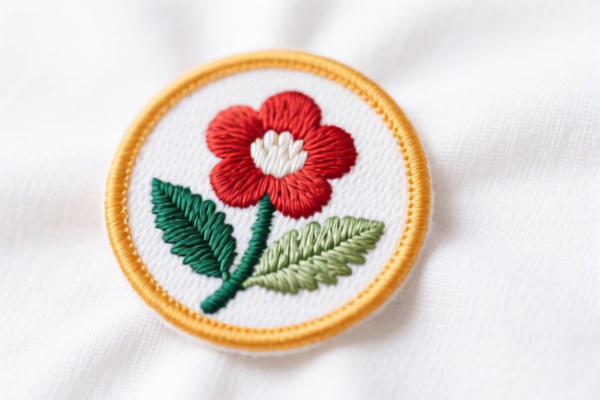
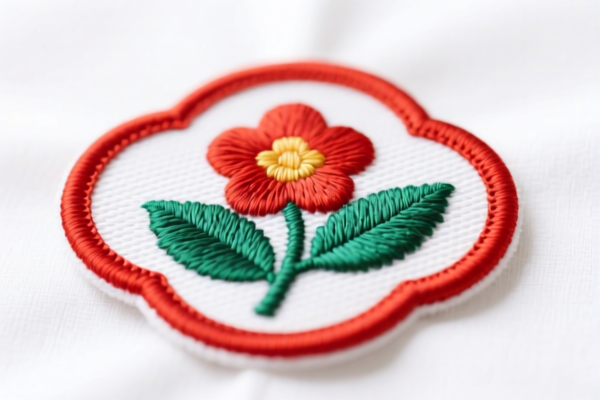


AI Analysis
🧵 Embroidery Patch (Iron-On / Sew-On / Velcro Backing)
🌐 HS Code Reference & Clearance Guide | 2026 Latest Tariff Analysis | Professional Customs Strategy
📌 I. Product Definition & Classification: Do You Really Understand "Embroidery Patches"?
An embroidery patch is a decorative emblem made of threads stitched onto a backing material (often woven fabric, twill, or synthetic mesh). In international trade, they are not classified as a single entity but depend heavily on the material composition, intended use, and construction method (e.g., with adhesive, loop fastener, or iron-on backing).
Key Distinctions in Customs Classification: 1. Textile Patches (Cotton/Wool/Linen): Typically fall under general made-up articles or specific narrow fabric/woven categories depending on the backing. 2. Synthetic/Man-Made Fiber Patches: Often classified under "Other made-up articles" or specific textile headings. 3. Patches with Plastic/Adhesive Backing: If the patch includes a significant plastic component (like a heat-transfer adhesive film or a plastic Velcro hook), it may cross into Chapter 39 (Plastics).
⚠️ Critical Classification Point:
- If the patch is primarily textile-based (cotton, polyester, nylon) without significant plastic structure → Chapter 63 (Other Made-Up Textile Articles).
- If the patch is effectively a plastic accessory (e.g., plastic spangles, beads, or a rigid plastic base with embroidery) → Chapter 39 (Articles of Plastics).
- Labeling vs. Patch: Small labels attached to clothing are different from standalone patches used for decoration. This guide focuses on decorative patches and labels as per the provided data.
📦 II. HS Code Classification Details (2026 Latest Tariff Authority Reference)
Based on the provided <DATA>, here is the precise breakdown for Embroidery Patches and related items. Note that "Embroidery Patches" themselves do not have a single explicit HS code in the provided snippet, but they are categorized under broader "Other made-up articles" or "Labels" depending on material and function.
| HS Code | Product Description | Application Scenario | Material/Construction |
|---|---|---|---|
6307.90.30.20 |
Other made-up articles, including dress patterns: Other: Labels Other | Generic textile patches, decorative patches not specified elsewhere | Textile-based, "Other" category |
6307.90.30.10 |
Other made-up articles, including dress patterns: Other: Labels Of cotton | Cotton-based embroidery patches, cotton labels with embroidered design | 100% Cotton or Cotton-majority |
5806.10.30.90 |
Narrow woven fabrics...: Woven pile fabrics (including terry toweling)...: Other | Patches made from chenille or velvet/pile woven strips | Pile fabric construction, not necessarily a finished "patch" but used in patch making |
5806.32.10.95 |
Narrow woven fabrics...: Ribbons Other: Other | Patches made from synthetic ribbons or narrow woven tapes with embroidered designs | Man-made fibers, ribbon-style construction |
3926.90.33.00 |
Other articles of plastics...: Beads, bugles and spangles...: Handbags | Patches that are essentially plastic beads/spangles attached to handbags or textile items | Plastic-based decorative elements |
3926.90.35.00 |
Other articles of plastics...: Beads, bugles and spangles...: Other | General plastic decorative patches, plastic badges, or spangle-based embellishments | Plastic-based, not strung/set |
🔍 Key Insight:
- Most standard cotton or polyester embroidery patches fall under6307.90.30.x0("Other made-up articles... Labels").
- If the patch is made of chenille or piled fabric, it might be classified under5806.10.30.90if considered a narrow woven fabric piece.
- Plastic-based patches (e.g., PVC patches with embroidered threads) or patches made of plastic spangles/beads fall under3926.90.3x.00.
💰 III. 2026 Latest Tariff Rate Detailed Explanation (Including Surtaxes, Policy Add-ons)
✅ Applicable Country: United States (US)
✅ Country of Origin: China (CN)
✅ Effective Date: Current rates as per provided data (No IEEPA/301 surtaxes indicated in the provided<DATA>snippet, which shows 0% or base rates only).
🎯 1. 6307.90.30.20 & 6307.90.30.10 — Textile Embroidery Patches (Cotton/Other)
| Item | Content |
|---|---|
| Base Tariff | 0% |
| Additional Surcharge (301/IEEPA) | 0.0% |
| Total Tariff Rate | 0% |
| Tax Calculation | CIF Value × 0% = $0 |
| De Minimis Eligibility | ✅ Yes (If value < $800 per person per day, though patches are often low value) |
| Legal Basis Path | HTSUS:6307.90.30.10/20 → No Additional USITC/IEEPA Footnotes in Provided Data |
📌 Explanation:
- According to the provided<DATA>, textile-based patches and labels fall under 0% total tax.
- Crucial Note: The provided data does not show the typical 25% Section 301 tariff often applied to many textile products from China. However, in reality, many6307items may be subject to 301 tariffs. Always verify with the latest USITC search tool. The provided data suggests a 0% rate for these specific subheadings.
- Recommendation: If your patches are purely textile (cotton/polyester), you may benefit from the 0% rate as per the provided data, but double-check if they are considered "textile articles" vs. "made-up garments accessories."
🎯 2. 5806.10.30.90 & 5806.32.10.95 — Narrow Woven/Pile Fabric Patches
| Item | Content |
|---|---|
| Base Tariff | 0% |
| Additional Surcharge | 0.0% |
| Total Tariff Rate | 0% |
| Tax Calculation | CIF Value × 0% = $0 |
| De Minimis Eligibility | ✅ Yes |
📌 Explanation:
- Patches made from chenille, velvet, or synthetic ribbons are classified under 0% total tax in the provided data.
- This is advantageous for manufacturers using premium materials like chenille (common in high-end patches).
🎯 3. 3926.90.33.00 & 3926.90.35.00 — Plastic/Spangle Patches
| Item | Content |
|---|---|
| Base Tariff | 6.5% |
| Additional Surcharge | 0.0% (for 33.00) / 7.5% (for 35.00) |
| Total Tariff Rate | 6.5% (33.00) / 14.0% (35.00) |
| Tax Calculation | CIF Value × 6.5% or 14.0% |
| De Minimis Eligibility | ✅ Yes (If value < $800) |
📌 Explanation:
- Plastic-based patches (e.g., PVC patches, plastic badges with embroidery) are taxed at 6.5% to 14.0%.
-3926.90.33.00(Handbags/beads) has a lower rate (6.5%).
-3926.90.35.00(Other plastic articles) has a higher rate (14.0%) due to the 7.5% additional surcharge.
- Strategic Tip: If your patch is made of PVC with embroidered threads, ensure it is classified under the most favorable subheading. If it is considered "beads/spangles" for handbags, it may qualify for 6.5%. If it is a general plastic article, it is 14.0%.
🛠️ IV. Customs Clearance Practical Advice (Real-World Pitfall Avoidance Guide)
✅ 1. Preparation Checklist (Must-Have Documents)
| Document | Required | Description |
|---|---|---|
| ✅ Product Specifications | ✔️ | Material composition (e.g., 100% Cotton, Polyester backing, PVC base), size, thickness |
| ✅ Material Declaration | ✔️ | Clearly state if the patch is textile-based (Chapter 63) or plastic-based (Chapter 39) |
| ✅ Product Photos | ✔️ | Show the back of the patch (iron-on, Velcro, sew-on) to prove construction |
| ✅ Commercial Invoice | ✔️ | Description must match HS Code (e.g., "Cotton Embroidery Patch" vs. "Plastic PVC Badge") |
| ✅ Origin Certificate | ✔️ | If claiming preferential rates (if any), though provided data shows 0% base rates |
| ✅ Packaging List | ✔️ | Show quantity per box, net/gross weight |
✅ 2. Classification Strategy (Key Mantra)
🔥 "Textile = 6307, Plastic = 3926, Check Backing Type!"
| Scenario | Correct HS Code | Risk if Misclassified |
|---|---|---|
| Cotton/Polyester Embroidery Patch | 6307.90.30.10 or 6307.90.30.20 |
Misclassifying as plastic → Overpaying 14% vs. 0% |
| Chenille/Velvet Patch | 5806.10.30.90 |
Misclassifying as "other made-up" → Potential 0% vs. 0% (same, but ensure correct description) |
| PVC/Plastic Embroidery Badge | 3926.90.35.00 (14%) or 3926.90.33.00 (6.5%) |
Misclassifying as textile → Underpaying tax, leading to penalties |
| Patch with Plastic Velcro Backing | 3926.90.35.00 |
If plastic backing is integral, it becomes a plastic article, not just textile |
✅ 3. Special Situations
| Situation | Handling Advice |
|---|---|
| Mixed Material Patch (e.g., Cotton thread on PVC backing) | Primary Material Rule: If the backing is PVC and provides structural integrity, classify under Chapter 39. If the cotton thread is the main feature, argue for Chapter 63 (requires strong evidence). |
| Iron-On Patches (with adhesive film) | The adhesive film is often negligible. Classify as textile (6307) if the backing is fabric. |
| Velcro Backing Patches | If the Velcro is a separate piece sewn on, it may still be classified as a textile patch (6307). If the Velcro is molded plastic, it may be 3926. |
| Samples | For small quantities (<$800), use De Minimis clearance to avoid formal entry duties and fees, even if the rate is 0%. |
🌍 V. Global Market Clearance Comparison (2026 Latest)
| Country/Region | Recommended HS Code | Tariff Rate | Certification | Note |
|---|---|---|---|---|
| 🇺🇸 USA | 6307.90.30.10 / 3926.90.35.00 |
0% (Textile) / 14% (Plastic) | None specific | Key: Prove material composition. |
| 🇨🇳 China | 6307.90.30.10 |
0% | None | Export from China is free. |
| 🇪🇺 EU | 6307.90.98 |
0% (Most) | CE (if applicable) | Check if PVC patches comply with REACH. |
| 🇯🇵 Japan | 6307.90.000 |
0% | None | Free trade agreement benefits may apply. |
📌 Conclusion:
- USA is the most complex due to potential misclassification between textile and plastic.
- Textile patches (6307) are highly favorable (0%) in the provided data.
- Plastic patches (3926) incur 6.5%-14% tariffs, so avoid over-classifying textile patches as plastic.
📌 VI. Common Mistakes & Pitfall Guide (Lessons Learned)
❌ Mistake 1: Calling all patches "Embroidery Patches" without specifying material.
👉 Result: Customs may classify as the worst-case scenario (e.g., 14% plastic rate).
✅ Fix: Specify "100% Cotton Embroidery Patch" or "PVC Plastic Embroidery Badge."
❌ Mistake 2: Misclassifying PVC patches as textile patches to get 0% duty.
👉 Result: Seizure, penalties, and back-taxes at 14%.
✅ Fix: If the backing is PVC, use 3926.90.35.00.
❌ Mistake 3: Ignoring Velcro/Adhesive Backing.
👉 Result: If the backing is plastic, it may shift classification to Chapter 39.
✅ Fix: Declare the backing material clearly. If it's a sew-on patch, it's safer to classify as textile.
❌ Mistake 4: Using "Dress Pattern" terminology for actual patches.
👉 Result: Customs may reject as "not a dress pattern" (which is a template, not a finished article).
✅ Fix: Use "Embroidery Patch," "Emblem," or "Badge."
🎯 VII. Conclusion: Precision Classification for Maximum Savings
🎯 Remember the Mantra:
🔹 "Textile = 6307 (0%), Plastic = 3926 (6.5%-14%)!"
🔹 "Check the Backing! PVC = Plastic. Cotton = Textile."
🔹 "Clear description = Fast clearance = Lower costs!"
📌 Pro Tip:
If you are exporting cotton or polyester embroidery patches to the US, and the provided data is accurate, you can enjoy 0% duty. However, always verify with the latest USITC tariff schedule, as textile products from China can sometimes face 301 tariffs not reflected in this specific snippet. For plastic patches, expect 14% unless you can qualify for the lower 6.5% subheading.
📣 Immediate Action:
📞 Contact a Customs Broker + Provide Material Composition + Apply for Advance Ruling if volumes are high.
🚀 Optimize your supply chain by choosing textile-based patches for better tariff treatment in the US market.
✨ Professional clearance starts with accurate classification!
💼 Every percent saved in duty is pure profit!
Customer Reviews
About HS Code Classification
The Harmonized System (HS) is an internationally standardized nomenclature developed by the World Customs Organization (WCO) to classify traded products. Over 200 countries use the HS system as the basis for customs tariffs, trade statistics, and import/export regulations.
Each HS code follows a hierarchical structure:
- Chapter (2 digits) — Broad category of goods (e.g., Chapter 84: Machinery and Mechanical Appliances)
- Heading (4 digits) — More specific grouping within the chapter
- Subheading (6 digits) — Internationally standardized breakdown, used by all WCO member countries
- National subdivisions (8-10 digits) — Country-specific extensions for further classification, such as US HTSUS 10-digit codes
Correct HS code classification is essential for smooth customs clearance, accurate duty payment, and compliance with trade regulations. Misclassification can lead to customs delays, overpayment of duties, or penalties.
When importing from CN to US, the applicable tariff rates may include:
- Most-Favored-Nation (MFN) rate — The standard duty rate applied to WTO members
- General rate — Applied to countries without trade agreements
- Trade remedy duties — Additional tariffs such as Section 301 (anti-dumping), Section 232 (national security), or countervailing duties
The information provided on this page is for reference purposes only. For official classification, please consult with your local customs authority or a licensed customs broker.