engineering plastic polyoxymethylene resin
CN → US| HS Code | Tariff Rate | Origin | Destination | Doc |
|---|---|---|---|---|
| 3907100000 | 41.5% | CN | US | Official Doc |
| 3907210000 | 41.5% | CN | US | Official Doc |
| 3902100000 | 41.5% | CN | US | Official Doc |
| 3916905000 | 40.8% | CN | US | Official Doc |
| 3902300000 | 41.5% | CN | US | Official Doc |
Product Images
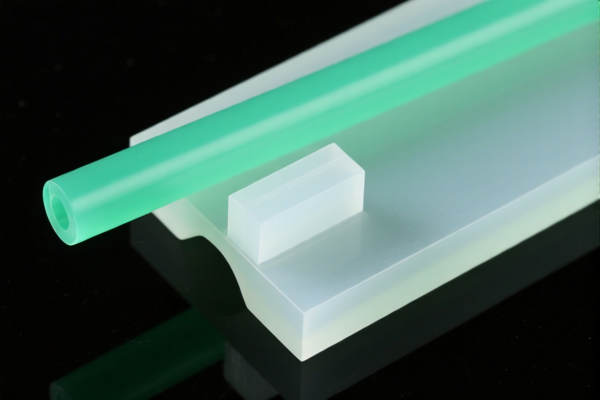


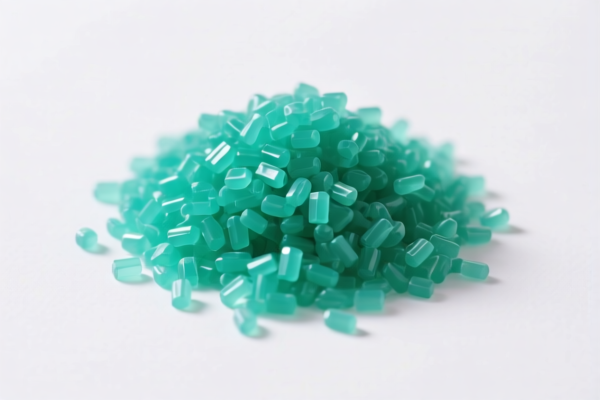
AI Analysis
🧪 Engineering Plastic: Polyoxymethylene (POM) Resin
🌐 HS Code Reference & Customs Clearance Guide | 2026 Tariff Full Analysis | Professional Clearance Strategy
📌 I. Product Definition & Classification: Do You Really Understand "POM Resin"?
Polyoxymethylene (POM), often referred to as Acetal or Polyoxymethylene Resin, is a high-performance engineering plastic known for its high stiffness, low friction, and excellent dimensional stability. In international trade, it is primarily classified under Chapter 39 (Plastics and Articles Thereof), specifically as Primary Forms of Polymers.
Key Distinction:
- Homopolymer POM: Often classified under 3907.10.
- Copolymer POM: Often classified under 3907.21 (or other 3907 subheadings depending on specific chemical structure and form).
- Polypropylene (PP) Confusion: Do not confuse POM with Polypropylene (PP), which falls under 3902. Although both are engineering plastics, their chemical structures and HS codes are entirely different.
⚠️ Critical Classification Point:
- If the material is Polyoxymethylene (POM/Acetal) → Go to 3907 series.
- If the material is Polypropylene (PP) → Go to 3902 series.
- Misclassification leads to severe penalties and delays.
📦 II. HS Code Classification Details (2026 Latest Tariff Authority Comparison)
Based on the provided data, the relevant HS Codes and their explanations are as follows:
| HS Code | Product Description | Applicable Material | Classification Logic |
|---|---|---|---|
3907.10.00.00 |
Polyoxymethylene Resin (Homopolymer) | Polyoxymethylene (POM) | Primary form of homopolymer acetal. Exact match for standard POM resin. |
3907.21.00.00 |
Polyoxymethylene Resin (Copolymer) | Polyoxymethylene (POM) | Primary form of copolymer acetal. Correct for copolymer POM. |
3902.10.00.00 |
Polypropylene Engineering Plastic | Polypropylene (PP) | Primary form of polymers of propylene. Incorrect for POM. |
3902.30.00.00 |
Polypropylene Engineering Plastic | Polypropylene (PP) | Other polymers of propylene. Incorrect for POM. |
3916.90.50.00 |
Polypropylene Engineering Plastic | Polypropylene (PP) | Other plastic products of PP. Incorrect for POM. |
🔍 Key Reminder:
- POM (Polyoxymethylene) belongs to HS 3907.
- PP (Polypropylene) belongs to HS 3902 or 3916.
- Do not mix these up. Even though both are "engineering plastics," their tariff liabilities and regulatory requirements differ.
💰 III. 2026 Latest Tariff Rate Breakdown (Including Surcharges & Policy Add-ons)
✅ Applicable Country: United States (US)
✅ Country of Origin: China (CN)
✅ Effective Date: 2025-11-10 (and subsequent imports)
🎯 1. 3907.10.00.00 & 3907.21.00.00 —— Polyoxymethylene (POM) Resin
| Item | Detail |
|---|---|
| Basic Tariff | 6.5% |
| Additional Tariff (Section 301) | +25.0% |
| Section 122 Tariff | +10.0% |
| Total Tax Rate | 41.5% |
| Tax Calculation | CIF Value × 41.5% |
| De Minimis Exemption | ❌ Not Applicable (Denied) |
| Legal Basis Path | Base: 3907 → Section 301: +25% → Section 122: +10% |
📌 Explanation:
- Basic Tariff (6.5%): Standard Most Favored Nation (MFN) rate for POM resins.
- Section 301 Additional Tariff (25%): Imposed on Chinese goods under Trade Act Section 301.
- Section 122 Tariff (10%): Additional duty under specific U.S. trade provisions for Chinese imports.
- Total: 41.5%. This is a high tariff burden. Precise classification is critical to avoid overpayment or underpayment penalties.
🎯 2. 3902.10.00.00 & 3902.30.00.00 —— Polypropylene (PP) Resin
| Item | Detail |
|---|---|
| Basic Tariff | 6.5% |
| Additional Tariff (Section 301) | +25.0% |
| Section 122 Tariff | +10.0% |
| Total Tax Rate | 41.5% |
| Tax Calculation | CIF Value × 41.5% |
| De Minimis Exemption | ❌ Not Applicable |
📌 Note:
- Same tariff structure as POM if misidentified as PP.
- However, if the material is actually PP, ensure it is not confused with POM.
🎯 3. 3916.90.50.00 —— Polypropylene (PP) Other Products
| Item | Detail |
|---|---|
| Basic Tariff | 5.8% |
| Additional Tariff (Section 301) | +25.0% |
| Section 122 Tariff | +10.0% |
| Total Tax Rate | 40.8% |
| Tax Calculation | CIF Value × 40.8% |
| De Minimis Exemption | ❌ Not Applicable |
📌 Note:
- Slightly lower total rate (40.8%) due to lower base tariff (5.8%).
- Still a high tariff category. Do not assume all plastics have the same rate.
🛠️ IV. Customs Clearance Practical Advice (Avoid Pitfalls)
✅ 1. Required Documentation Checklist
| Document | Required | Notes |
|---|---|---|
| ✅ Material Safety Data Sheet (MSDS) | ✔️ | Must clearly state "Polyoxymethylene (POM)" or "Polypropylene (PP)". |
| ✅ Certificate of Origin | ✔️ | Essential for calculating duties and proving origin. |
| ✅ Commercial Invoice | ✔️ | Clearly describe the product as "Polyoxymethylene Resin" or "Polypropylene Resin". |
| ✅ Packing List | ✔️ | Detail net/gross weight, package count. |
| ✅ Technical Specification Sheet | ✔️ | Include molecular structure, homopolymer vs. copolymer status. |
| ✅ Bill of Lading | ✔️ | Standard shipping document. |
✅ 2. Declaration Tips (Key Mantra)
🔥 "Identify Material First, Then Choose HS Code! POM is 3907, PP is 3902. Don't Mix Them!"
| Scenario | Correct Declaration | Wrong Action |
|---|---|---|
| POM Resin (Homopolymer) | 3907.10.00.00 |
Declare as PP → Audit risk |
| POM Resin (Copolymer) | 3907.21.00.00 |
Declare as PP → Audit risk |
| PP Resin | 3902.10.00.00 or 3902.30.00.00 |
Declare as POM → Possible under/overpayment |
| PP Products (Non-Primary) | 3916.90.50.00 |
Declare as Primary Resin → Classification Error |
✅ 3. Special Cases
| Case | Handling Advice |
|---|---|
| OEM Custom POM | Provide customer orders + technical specs to prove material identity. |
| Blended Plastics | If POM is blended with other materials, consult a customs broker for accurate classification. |
| Recycled POM | May fall under different subheadings; ensure proper documentation. |
| Small Quantity Samples | Even for samples, the same HS code and tax rules apply. De Minimis does not apply. |
🌍 V. Global Market Clearance Comparison (2026 Latest)
| Country/Region | Recommended HS Code | Tariff | Certification | Notes |
|---|---|---|---|---|
| 🇺🇸 USA | 3907.10.00.00 / 3907.21.00.00 |
41.5% | None specific | High tariff due to Section 301 & 122. |
| 🇨🇳 China | 3907.10.00.00 / 3907.21.00.00 |
5-6.5% | None specific | No additional surcharges. |
| 🇪🇺 EU | 3907.10 / 3907.21 |
0-6.5% | REACH | Check REACH compliance for chemical substances. |
| 🇯🇵 Japan | 3907.10 / 3907.21 |
0-6.5% | JIS | Standard import duties apply. |
| 🇦🇺 Australia | 3907.10 / 3907.21 |
0-5% | N/A | Competitive tariff rates. |
📌 Conclusion:
- USA is the most expensive market for POM/PP resins due to high additional tariffs.
- Cost Optimization: Consider supply chain adjustments if shipping to the US from China.
- Certification: EU requires REACH registration for chemical substances. Ensure compliance.
📌 VI. Common Errors & Pitfalls (Lessons Learned)
❌ Error 1: Declaring POM as "General Plastic" without specifying type.
👉 Consequence: Customs may classify under highest duty rate or demand detailed chemical analysis → Delay.
❌ Error 2: Confusing POM (3907) with PP (3902).
👉 Consequence: Incorrect HS code → Potential audit, fines, or retroactive tax payments.
❌ Error 3: Ignoring Section 122 Tariff.
👉 Consequence: Underpayment by 10% → Penalties and interest.
✅ Correct Practice:
"Polyoxymethylene (POM) Resin, Homopolymer, Primary Form, Model XYZ, MSDS Attached"
🎯 VII. Conclusion: Precision Classification, Cost Efficiency
🎯 Remember the Mantra:
🔹 "POM is 3907, PP is 3902. Don't Mix! 41.5% Tax for US Imports. Be Precise!"
🔹 "HS Code Determines Duty. One Digit Wrong, Cost Spikes!"
📌 Pro Tip:
- If your POM resin is originating from Vietnam, Mexico, Thailand, or Malaysia, you may qualify for lower or zero tariffs under specific trade agreements.
- Consider applying for a Binding Ruling (Advance Ruling) from U.S. Customs to secure certainty on HS code classification.
📣 Act Now:
📞 Contact a Professional Customs Broker + Provide Product Spec + Apply for HS Code Advance Ruling
🚀 Ensure Smooth Clearance, Reduce Costs, and Maximize Profit Margins!
✨ Professional Clearance Starts with Accurate Classification!
💼 Every Penny Counts in Global Trade!
Customer Reviews
About HS Code Classification
The Harmonized System (HS) is an internationally standardized nomenclature developed by the World Customs Organization (WCO) to classify traded products. Over 200 countries use the HS system as the basis for customs tariffs, trade statistics, and import/export regulations.
Each HS code follows a hierarchical structure:
- Chapter (2 digits) — Broad category of goods (e.g., Chapter 84: Machinery and Mechanical Appliances)
- Heading (4 digits) — More specific grouping within the chapter
- Subheading (6 digits) — Internationally standardized breakdown, used by all WCO member countries
- National subdivisions (8-10 digits) — Country-specific extensions for further classification, such as US HTSUS 10-digit codes
Correct HS code classification is essential for smooth customs clearance, accurate duty payment, and compliance with trade regulations. Misclassification can lead to customs delays, overpayment of duties, or penalties.
When importing from CN to US, the applicable tariff rates may include:
- Most-Favored-Nation (MFN) rate — The standard duty rate applied to WTO members
- General rate — Applied to countries without trade agreements
- Trade remedy duties — Additional tariffs such as Section 301 (anti-dumping), Section 232 (national security), or countervailing duties
The information provided on this page is for reference purposes only. For official classification, please consult with your local customs authority or a licensed customs broker.