epilator
CN → US| HS Code | Tariff Rate | Origin | Destination | Doc |
|---|---|---|---|---|
| 8510100000 | 17.5% | CN | US | Official Doc |
| 8214203000 | 14.0% | CN | US | Official Doc |
| 8214909000 | 0.0% | CN | US | Official Doc |
| 8510300000 | 14.2% | CN | US | Official Doc |
| 8543709860 | 37.6% | CN | US | Official Doc |
| 8543708900 | 17.5% | CN | US | Official Doc |
Product Images
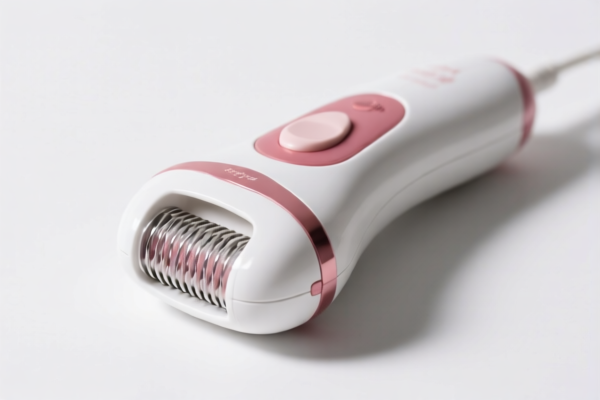
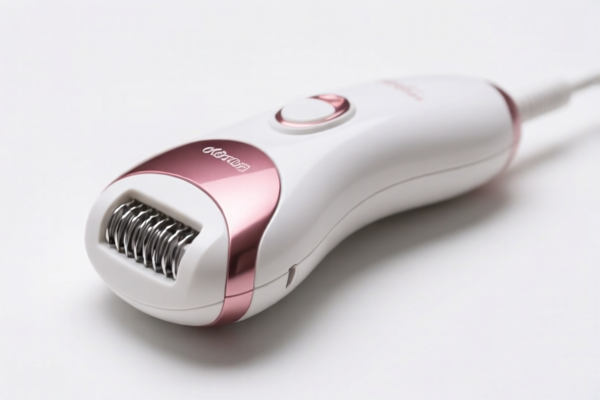
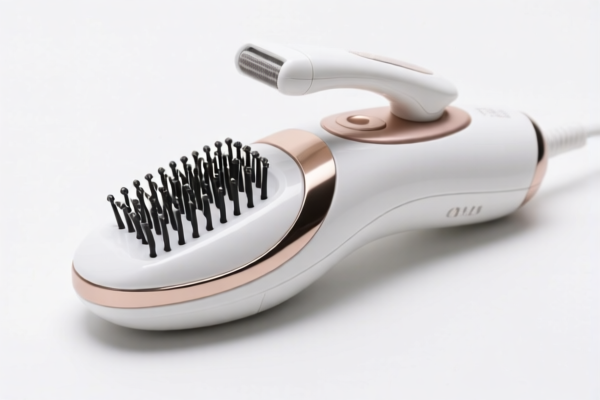

AI Analysis
⚡ Epilators (Electric/Human Hair Removal Appliances)
🌐 HS Code Reference & Customs Clearance Guide | 2026 Latest Tariff Analysis | Professional Clearance Strategy
📌 I. Product Definition & Classification: Do You Really Understand "Epilators"?
An epilator is a device designed for the mechanical or electrical removal of unwanted hair from the human body. In international trade, they are broadly categorized based on their power source and mechanism:
- Electric Epilators (Ch 85): Devices powered by batteries or mains electricity, containing motors, switches, and control circuits. These are classified as electrical appliances.
- Manual/Tethered Epilators (Ch 82/84): Non-electric tools, such as tweezers, waxing kits, or simple mechanical tweezers. These are often classified as hand tools or other mechanical appliances.
⚠️ Key Distinction:
- If the device has a motor, battery, or electric plug → It belongs to Chapter 85 (Electrical Machinery).
- If it is purely manual (e.g., waxing strips, non-electric tweezers) or lacks electric components → It may fall under Chapter 82 (Tools) or Chapter 90 (Instruments).
📦 II. HS Code Classification Details (2026 Latest Tariff Authority Comparison)
Based on the provided data, here are the four most probable classifications for "Epilators," ranging from dedicated electric hair removers to generic electrical apparatuses.
| HS Code | Product Description | Application Scenario | Tax Logic |
|---|---|---|---|
8510.10.00.00 |
Hair Clippers (Specifically for Epilation) | Electric epilators with rotating tweezers/pads. | ✅ Best Match: Explicitly covers "apparatuses for shaving, hair-clippers or epilators." |
8510.30.00.00 |
Other Shaving Appliances | Electric devices for hair removal not falling under clippers/epilators (broad category). | ✅ Good Match: Covers general "shaving" appliances, often used if specific "epilator" isn't distinguished. |
8543.70.98.60 |
Other Machines & Apparatus | Standalone electrical appliances with independent functions not specified elsewhere. | ⚠️ Fallback: Used if the device has unique electronic features not covered by Ch 85 specific headings. |
8214.20.30.00 / 8214.90.90.00 |
Blades & Hand Tools | Manual epilation tools, tweezers, or non-electric waxing applicators. | ⚠️ Non-Electric: Applies only if the item is not electric. High duty variance. |
🔍 Key Takeaway:
- Electric Epilators should primarily target 8510.10.00.00 (Hair Clippers/Epilators) as it is the most specific heading. - Non-Electric Tools fall under 8214. - Misclassifying an electric epilator as a generic appliance (8543) or tool (8214) can lead to significant duty differences and customs delays.
💰 III. 2026 Latest Tariff Rate Breakdown (Including Surtaxes & Policy Add-ons)
✅ Applicable Country: United States (US)
✅ Origin: China (CN)
✅ Effective Time: 2025/2026 (Includes Section 301 & IEEPA implications)
🎯 1. 8510.10.00.00 — Hair Clippers / Epilators (Electric)
| Item | Content |
|---|---|
| Base Tariff | 0.0% |
| Section 301 Surtax | 7.5% (or up to 25% depending on specific sub-category updates) |
| 122 Clause Tariff | +10.0% |
| Total Tariff | 17.5% |
| Tax Calculation | CIF Value × 17.5% |
| De Minimis Eligibility | ❌ Not Eligible (Subject to high duties) |
| Legal Basis | USITC:8510.10.00.00 → Section 301: 7.5% → IEEPA/122: 10% |
📌 Explanation:
- This is the most accurate classification for electric epilators. - The base duty is low (0%), but the Section 301 surcharge (7.5%) and 122 Clause (10%) significantly increase the cost. - Total Effective Rate: 17.5%.
🎯 2. 8510.30.00.00 — Other Shaving Appliances
| Item | Content |
|---|---|
| Base Tariff | 4.2% |
| Section 301 Surtax | 0.0% |
| 122 Clause Tariff | +10.0% |
| Total Tariff | 14.2% |
| Tax Calculation | CIF Value × 14.2% |
| De Minimis Eligibility | ❌ Not Eligible |
| Legal Basis | USITC:8510.30.00.00 → IEEPA/122: 10% |
📌 Explanation:
- If the customs officer does not recognize "Epilator" under 8510.10, they may shift this to 8510.30. - Advantage: Lower base duty (4.2%) and no Section 301 surtax (0%), resulting in a lower total rate (14.2%) compared to 8510.10 (17.5%). - Risk: May be challenged if the device is clearly an epilator, not a shaver.
🎯 3. 8543.70.98.60 — Other Machines & Apparatus
| Item | Content |
|---|---|
| Base Tariff | 2.6% |
| Section 301 Surtax | 25.0% |
| 122 Clause Tariff | +10.0% |
| Total Tariff | 37.6% |
| Tax Calculation | CIF Value × 37.6% |
| De Minimis Eligibility | ❌ Not Eligible |
| Legal Basis | USITC:8543.70.98.60 → Section 301: 25% → IEEPA/122: 10% |
📌 Explanation:
- This is a fallback category for electrical devices that don't fit specific headings. - Disadvantage: High Section 301 surtax (25%) makes this the most expensive option. - Only use if the product has unique electronic functions not covered by Ch 85 specific headings.
🎯 4. 8214.20.30.00 / 8214.90.90.00 — Manual Tools & Blades
| Item | Content |
|---|---|
| Base Tariff | 4.0% (for 8214.20.30) |
| Section 301 Surtax | 0.0% |
| 122 Clause Tariff | +10.0% |
| Total Tariff | 14.0% |
| Ad Valorem + Specific | 1.4¢ each + 3.2% + 10% (for 8214.90.90) |
| De Minimis Eligibility | ❌ Not Eligible |
| Legal Basis | USITC:8214.xxxx → IEEPA/122: 10% |
📌 Explanation:
- Applies to non-electric epilators (e.g., waxing tools, manual tweezers). - Advantage: Low base duty and no Section 301 surtax. - Warning: If you declare an electric epilator under this code, it is misclassification and subject to penalties.
🛠️ IV. Customs Clearance Practical Advice (Pitfall Avoidance Guide)
✅ 1. Documentation Checklist (Non-Negotiable)
| Document | Required | Description |
|---|---|---|
| ✅ Product Specification Sheet | ✔️ | Must clearly state: Electric vs. Manual, Voltage, Power, Battery Type. |
| ✅ User Manual | ✔️ | Shows operation, confirming it is a "Hair Removal Appliance." |
| ✅ Product Photos | ✔️ | Clear images of the device, labels, and any electronic components. |
| ✅ Commercial Invoice | ✔️ | Correctly describe as "Electric Epilator" or "Hair Removal Device." |
| ✅ FCC Certification | ✔️ | Mandatory for Electric Devices in the US. Without it, shipment will be detained. |
| ✅ Test Reports | ✔️ | UL, ETL, or equivalent safety tests for electrical appliances. |
✅ 2. Declaration Strategy (Critical Tips)
🔥 "Be Specific, Be Electric, Be Compliant!"
| Scenario | Correct Declaration | Incorrect Declaration |
|---|---|---|
| Electric Epilator | 8510.10.00.00 - "Electric Hair Epilator" |
8543.70.98.60 (Too broad, higher duty) |
| Non-Electric Tweezers | 8214.20.30.00 - "Manual Tweezers" |
8510.10.00.00 (Misclassification) |
| Kit with Wax + Tool | Declare separately or as "Hair Removal Kit" | Combine electric/non-electric into one HS code |
| Laser/IPL Device | 9018.90.00.00 (Medical/Beauty Device) |
8510.10.00.00 (Different technology) |
📌 Note on IPL/Laser:
If the device uses Light (Laser/IPL) rather than mechanical tweezers, it is NOT an epilator under 8510. It should be classified under 9018.90.00.00 (Electro-diagnostic apparatus) or 9019.10.00.00 (Massage apparatus), depending on its primary function.
✅ 3. Special Cases Handling
| Situation | Handling Advice |
|---|---|
| OEM/White Label | Ensure FCC ID is listed on the device and documentation. |
| Battery-Operated | Include UN38.3 test report and MSDS for lithium batteries. |
| Combined Kit | If the kit contains both electric epilator and manual tweezers, declare the main component (Electric) under 8510, and accessories separately if possible. |
| Sample/Shipment | For small quantities, ensure FCC is still obtained; CBP may inspect samples for safety compliance. |
🌍 V. Global Market Comparison (2026)
| Country/Region | Recommended HS Code | Tariff | Certification | Notes |
|---|---|---|---|---|
| 🇺🇸 USA | 8510.10.00.00 |
17.5% | FCC + UL | High duty due to Section 301 & 122 Clause. |
| 🇨🇳 China | 8510.10.00.00 |
0% | CCC | No import duty, but CCC required for domestic sale. |
| 🇪🇺 EU | 8510.10.00.00 |
0% | CE + RoHS | No duty, but strict safety standards (LVD, EMC). |
| 🇦🇺 Australia | 8510.10.00.00 |
5% | RCM | Low duty, but RCM compliance required. |
| 🇯🇵 Japan | 8510.10.00.00 |
10.0% | PSE | Standard import duty. |
📌 Conclusion:
- The US market is the most challenging due to 17.5% effective duty and FCC requirements. - EU & China offer lower duty barriers but require strict safety certifications (CE/CCC).
📌 VI. Common Mistakes & Pitfalls (Lessons Learned)
❌ Mistake 1: Declaring an Electric Epilator as "Beauty Apparatus" under 9019.10.00.00
👉 Consequence: May be accepted, but if deemed primarily a hair removal tool, CBP may reclassify to 8510.10.00.00 and assess additional duties.
❌ Mistake 2: Ignoring FCC Certification
👉 Consequence: Shipment detained or destroyed by CBP/FDA for lacking electronic safety compliance.
❌ Mistake 3: Mixing Electric and Non-Electric Items in One HS Code
👉 Consequence: Confusion at customs, leading to delays and additional inspections.
❌ Mistake 4: Underestimating 122 Clause Impact
👉 Consequence: Unexpected 10% surtax increases costs by ~7% (10% of 17.5%).
✅ Correct Approach:
"Electric Hair Epilator, Model XYZ, 110V, FCC Certified, for Personal Use"
🎯 VII. Conclusion: Precision in Classification, Savings in Clearance!
🎯 Remember the Rule:
🔹 "Electric = 8510, Manual = 8214, Laser = 9018."
🔹 "FCC is Mandatory, Section 301 is Expensive, 122 Clause is Extra."
🔹 "Best Rate: 8510.30.00.00 (14.2%), but 8510.10.00.00 (17.5%) is more accurate."
📌 Pro Tip:
If your product is not strictly an epilator (e.g., uses light/heat), explore 9018 or 9019 classifications to potentially avoid Section 301 surtaxes.
Always consult with a licensed customs broker for advance rulings (AA) to mitigate risk.
📣 Take Action Now:
📞 Verify FCC Compliance
📦 Prepare Detailed Specifications
🚀 Optimize HS Code for Cost Efficiency
✨ Professional Classification, Efficient Clearance!
💼 Every Percent Counts in International Trade!
Customer Reviews
About HS Code Classification
The Harmonized System (HS) is an internationally standardized nomenclature developed by the World Customs Organization (WCO) to classify traded products. Over 200 countries use the HS system as the basis for customs tariffs, trade statistics, and import/export regulations.
Each HS code follows a hierarchical structure:
- Chapter (2 digits) — Broad category of goods (e.g., Chapter 84: Machinery and Mechanical Appliances)
- Heading (4 digits) — More specific grouping within the chapter
- Subheading (6 digits) — Internationally standardized breakdown, used by all WCO member countries
- National subdivisions (8-10 digits) — Country-specific extensions for further classification, such as US HTSUS 10-digit codes
Correct HS code classification is essential for smooth customs clearance, accurate duty payment, and compliance with trade regulations. Misclassification can lead to customs delays, overpayment of duties, or penalties.
When importing from CN to US, the applicable tariff rates may include:
- Most-Favored-Nation (MFN) rate — The standard duty rate applied to WTO members
- General rate — Applied to countries without trade agreements
- Trade remedy duties — Additional tariffs such as Section 301 (anti-dumping), Section 232 (national security), or countervailing duties
The information provided on this page is for reference purposes only. For official classification, please consult with your local customs authority or a licensed customs broker.