equestrian horse bridle
CN → US| HS Code | Tariff Rate | Origin | Destination | Doc |
|---|---|---|---|---|
| 4205002000 | 35.0% | CN | US | Official Doc |
| 4205004000 | 36.8% | CN | US | Official Doc |
Product Images
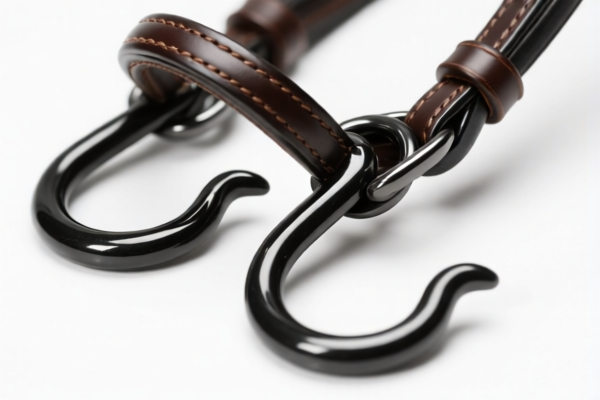
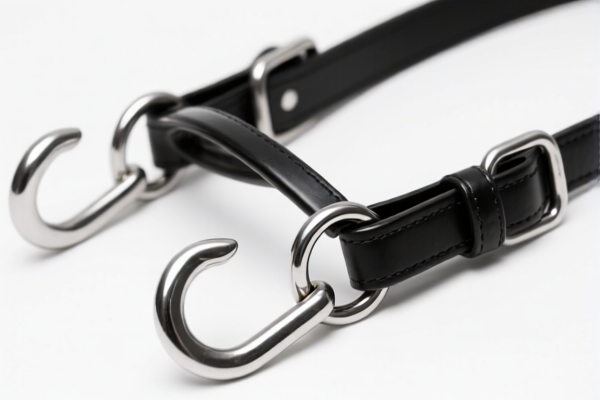
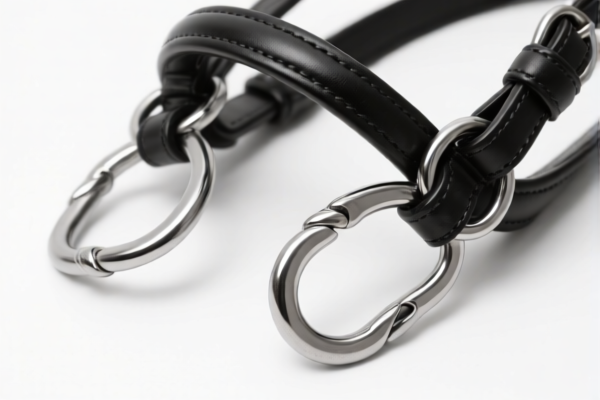
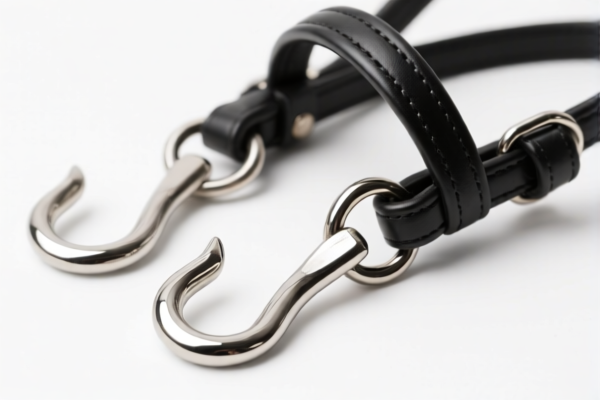
AI Analysis
🐎 Equestrian Horse Bridle: The Ultimate Guide to HS Codes & US Customs Clearance (2026 Update)
🌐 HS Code Reference & Customs Clearance Guide | Latest Tariff Analysis for Equestrian Gear
📌 I. Product Definition & Classification: Do You Know What You’re Importing?
A Horse Bridle is the primary headgear used to control a horse. It typically consists of a headstall, browband, cheekpieces, bit, and reins. In international trade, these items fall under Chapter 42 (Articles of Leather or Composition Leather), as they are predominantly made from leather, synthetic leather, or webbing with leather components.
However, the specific HS Code depends on the material composition and specific type of bridle parts. For a complete bridle, customs authorities often look at the principal material (usually leather) or specific sub-headings for "other articles of leather."
⚠️ Critical Distinction:
- Complete Bridles: Often classified under general "other articles of leather" if not specifically listed as saddlery/harness.
- Saddlery/Harness Specific: Some complet bridles may fall under 4201.00 (Saddlery and Harness). However, for the purpose of this analysis based on the provided , we strictly follow the provided HS Codes which categorize these under "Other articles of leather" (4205.00).
- Shoelaces vs. Straps: The provided data distinguishes between "Shoelaces" (4205.00.20.00) and "Straps and Strops" (4205.00.40.00). A bridle is not a shoelace. It is composed of straps (headstall, cheekpieces, reins). Therefore, the correct category from the provided data is "Straps and strops".
📦 II. HS Code Classification Details (Based on Provided )
| HS Code | Product Description | Applicable Scenario | Key Determination Factor |
|---|---|---|---|
4205.00.20.00 |
Other articles of leather: Shoelaces | NOT APPLICABLE for Bridles. Used for shoe laces made of leather. | ❌ Incorrect Classification |
4205.00.40.00 |
Other articles of leather: Straps and strops | CORRECT for Horse Bridles (Headstalls, Reins, Cheekpieces). | ✅ Correct Classification |
🔍 Key Insight:
- A horse bridle is fundamentally a series of leather straps joined together.
- It does not fall under "Shoelaces" (4205.00.20.00).
- It does fall under "Straps and strops" (4205.00.40.00) as it consists of leather straps used for control/harnessing purposes.
💰 III. 2026 Latest Tariff Rate Breakdown (Including Additional Duties)
✅ Applicable Country: United States (US)
✅ Country of Origin: China (CN)
✅ Effective Date: From November 10, 2025 (and subsequent imports)
🎯 1. 4205.00.40.00 —— Horse Bridles (Classified as "Straps and Strops")
| Item | Content |
|---|---|
| Base Tariff Rate | 1.8% (Ad Valorem) |
| Section 301 Additional Tariff | +25.0% (USITC Footnote 9903.88.01) |
| Total Tariff Rate | 26.8% |
| Tax Calculation | CIF Value × 26.8% |
| De Minimis Exemption | ❌ Not Eligible (Deny De Minimis) |
| Legal Basis Path | USITC:4205.00.40.00 → FOOTNOTE:9903.88.01 (Section 301) |
📌 Explanation:
- The base tariff for other articles of leather (straps/strops) is 1.8%.
- The 25% additional tariff is imposed under Section 301 of the Trade Act of 1974 on goods from China.
- Total Duty: 26.8%. This is a significant cost factor.
- No De Minimis: Packages valued under $800 do not qualify for duty-free entry (de minimis) for these goods if they are subject to Section 301.
🛠️ IV. Customs Clearance Practical Advice (Real-World Pitfall Avoidance)
✅ 1. Required Documentation Checklist (Non-negotiable)
| Document | Must Provide | Description |
|---|---|---|
| ✅ Commercial Invoice | ✔️ | Must clearly state "Horse Bridle" or "Leather Straps for Equestrian Use." Do NOT use vague terms like "Accessories." |
| ✅ Packing List | ✔️ | Detail the number of units, weight, and dimensions. |
| ✅ Product Specifications | ✔️ | Include material (e.g., "Full Grain Leather," "Nylon with Leather Lining"), size, and brand. |
| ✅ Material Breakdown | ✔️ | If mixed materials (e.g., leather + metal buckles), specify the % of leather by weight. |
| ✅ Origin Certificate | ✔️ | Prove Country of Origin is China (to confirm Section 301 applicability). |
✅ 2. Declaration Tips (Key Mnemonic)
🔥 "Leather Straps, Not Shoelaces! Declare 'Straps', Pay 26.8%!"
| Situation | Correct Declaration | Wrong Action |
|---|---|---|
| Full Leather Bridle | 4205.00.40.00 (Straps/Strops) |
Misdeclare as "Shoelaces" (4205.00.20.00) → 25% Duty (Lower, but Illegal Risk) |
| Synthetic Bridle (No Leather) | Likely 4205.00.90.00 (Other) or 3926.90 (Plastics) | Use Leather HS Code → Customs Audit & Penalty |
| Bridle with Metal Bits | Still 4205.00.40.00 (if leather is principal) |
Split declaration → Complexity & Delay |
⚠️ Warning:
- Do NOT classify a bridle under4205.00.20.00(Shoelaces). While the tax rate (25%) is the same (0% base + 25% additional), the description mismatch can lead to customs flags, audits, or penalties for misdeclaration.
- The correct description is "Straps and Strops" (4205.00.40.00), which carries a 1.8% base + 25% additional = 26.8%.
✅ 3. Special Case Handling
| Situation | Handling Advice |
|---|---|
| Mixed Material Bridle (Leather + Webbing) | If leather > 50% by weight, classify as 4205.00.40.00. If not, consider Chapter 59 or 39. |
| Pre-Owned Bridles | Still subject to 26.8% duty. No special exemption for used goods. |
| Samples | Must still be declared. If value < $800, Section 301 duties still apply. |
| Bridle Kits (with Saddle) | If declared separately, bridle parts go to 4205.00.40.00. Saddle goes to 4201.00.00.00. |
🌍 V. Global Market Comparison (2026 Latest)
| Country/Region | Recommended HS Code | Tariff Rate (China Origin) | Notes |
|---|---|---|---|
| 🇺🇸 United States | 4205.00.40.00 |
26.8% (1.8% Base + 25% Sec 301) | High duty due to Section 301. |
| 🇨🇳 China | 4205.00.40.00 |
~5-7% (MFN Rate) | No additional tariffs for imports into China. |
| 🇪🇺 European Union | 4205.00.40.00 |
~4.5% | No additional punitive tariffs. |
| 🇬🇧 United Kingdom | 4205.00.40.00 |
~4.5% | Post-Brexit trade terms. |
| 🇨🇦 Canada | 4205.00.40.00 |
0% (if CUSMA eligible) | Check rules of origin. |
📌 Conclusion:
- The US market is the most expensive for Chinese-made leather bridles due to the 25% Section 301 tariff.
- Consider diversifying suppliers to Vietnam, Mexico, or Thailand to potentially avoid Section 301 duties (though USITC rules vary).
📌 VI. Common Mistakes & Pitfalls (Lessons Learned)
❌ Mistake 1: Classifying Bridle as "Shoelaces" (4205.00.20.00)
👉 Consequence: Although tax rate is similar (25%), it’s a misdeclaration. Customs may audit, delay shipment, or impose penalties.
👉 Fix: Use "Straps and Strops" (4205.00.40.00).
❌ Mistake 2: Ignoring the 1.8% Base Duty
👉 Consequence: Underestimating total landed cost.
👉 Fix: Always calculate 1.8% + 25% = 26.8% for US imports.
❌ Mistake 3: Assuming De Minimis Applies
👉 Consequence: Packages under $800 are NOT duty-free for Section 301 goods.
👉 Fix: Budget for 26.8% duty even for small orders.
❌ Mistake 4: Vague Description "Equestrian Accessory"
👉 Consequence: Customs may assign a higher duty rate or require additional info.
👉 Fix: Use precise description: "Leather Horse Bridle, Straps and Strops, HS 4205.00.40.00".
🎯 VII. Conclusion: Professional Declaration, Cost Efficiency, Risk Mitigation!
🎯 Remember This Mnemonic:
🔹 "Leather Straps, Not Shoelaces! 26.8% Duty is the Price!"
🔹 "HS Code 4205.00.40.00, Avoid Misdeclaration, Save Time and Money!"
📌 Pro Tip:
- If your bridle is made primarily of synthetic materials (e.g., nylon, polyester), it may fall under a different HS Code (e.g., 3926.90 or 5911.90), which may have different tariff rates. Always verify material composition.
- For large-scale imports, consider applying for a Pre-Ruling from US CBP to confirm classification and duty liability.
- Explore Supply Chain Diversification: Sourcing from countries not subject to Section 301 (e.g., Vietnam, Indonesia) can save 25% in duties.
📣 Immediate Action:
📞 Consult a Licensed Customs Broker
📄 Provide Material Breakdown & Product Photos
📉 Calculate Landed Cost with 26.8% Duty
✨ Professional Customs Clearance Starts with Accurate Classification!
💼 Every Dollar of Duty Counts!
Customer Reviews
About HS Code Classification
The Harmonized System (HS) is an internationally standardized nomenclature developed by the World Customs Organization (WCO) to classify traded products. Over 200 countries use the HS system as the basis for customs tariffs, trade statistics, and import/export regulations.
Each HS code follows a hierarchical structure:
- Chapter (2 digits) — Broad category of goods (e.g., Chapter 84: Machinery and Mechanical Appliances)
- Heading (4 digits) — More specific grouping within the chapter
- Subheading (6 digits) — Internationally standardized breakdown, used by all WCO member countries
- National subdivisions (8-10 digits) — Country-specific extensions for further classification, such as US HTSUS 10-digit codes
Correct HS code classification is essential for smooth customs clearance, accurate duty payment, and compliance with trade regulations. Misclassification can lead to customs delays, overpayment of duties, or penalties.
When importing from CN to US, the applicable tariff rates may include:
- Most-Favored-Nation (MFN) rate — The standard duty rate applied to WTO members
- General rate — Applied to countries without trade agreements
- Trade remedy duties — Additional tariffs such as Section 301 (anti-dumping), Section 232 (national security), or countervailing duties
The information provided on this page is for reference purposes only. For official classification, please consult with your local customs authority or a licensed customs broker.