equine leather luggage sides, without hair
CN → US| HS Code | Tariff Rate | Origin | Destination | Doc |
|---|---|---|---|---|
| 4104195080 | 13.3% | CN | US | Official Doc |
| 4104495000 | 13.3% | CN | US | Official Doc |
| 4101901040 | 17.5% | CN | US | Official Doc |
| 4101907000 | 20.8% | CN | US | Official Doc |
| 4107917050 | 15.0% | CN | US | Official Doc |
| 4107927050 | 15.0% | CN | US | Official Doc |
Product Images
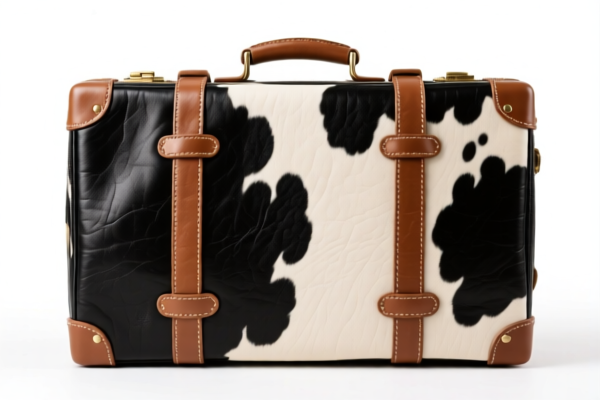


AI Analysis
🧳 Equine Leather Luggage Sides (Without Hair): HS Code & Taxation Guide 2026
🌐 HS Code Classification & Duty Breakdown | Professional Clearance Strategy
📌 One: Product Definition & Classification: Do You Know "Equine Leather Sides"?
Equine leather luggage sides, without hair, refers to prepared leather derived specifically from horses (or similar equine animals), processed through tanning or crusting, and intended for the manufacture of bags, cases, straps, and collars.
- Key Material: Horse hide (Equine).
- Processing State: Tanned or Crust (prepared after tanning/crusting).
- Surface: Without hair on.
- Intended Use: Luggage, Bags, Cases, Straps, Collars (Explicitly stated in the HS description).
- Specific Type: Can be Full Grain (unsplit) or Grain Split.
⚠️ Critical Distinction: - If the product is "Bag, case, strap and collar" grade → Must use 4107.91.70.50 (Full grain) or 4107.92.70.50 (Splits). - If the product is "Fancy Leather" (e.g., embossed, highly decorative) → It falls under different categories not listed in this specific data set. - If it is Raw/Untanned → It falls under 4101.90.10.40.
📦 Two: HS Code Classification Details (Based on Provided Data)
| HS Code | Product Description | Specific Category | Tax Rate |
|---|---|---|---|
4107.91.70.50 |
Full Grain, Unsplit: Leather further prepared, Bo/Equine, "Not Fancy", Bag/Case/Strap/Collar | Full Grain (High Quality) | 0.0% |
4107.92.70.50 |
Grain Splits: Leather further prepared, Bo/Equine, "Not Fancy", Bag/Case/Strap/Collar | Split Leather (Lower Layer) | 0.0% |
🔍 Analysis of the Data: The provided data explicitly distinguishes between Full Grain (
4107.91.70.50) and Grain Splits (4107.92.70.50). * Full Grain: The top layer of the hide, retaining the natural grain pattern. Essential for premium luggage. * Grain Split: The lower layers split from the full grain. Often used for linings or lower-cost luggage components. * Crucial Constraint: Both codes in the data exclusively cover the use case "Not fancy Bag, case, strap and collar". If the leather is intended for other uses (e.g., footwear, upholstery), these specific codes might not apply without further context.
💰 Three: 2026 Duty Rate Breakdown (Detailed Taxation)
Based strictly on the provided data, here is the tax liability structure:
🎯 1. 4107.91.70.50 (Full Grain Equine Leather for Luggage)
| Item | Details |
|---|---|
| Base Tariff | 0.0% |
| Additional Tariff | 0.0% |
| Total Duty Rate | 0.0% |
| Tax Calculation | CIF Value × 0% = $0.00 |
| Eligibility | Applicable for "Not fancy" luggage/collar leather of equine origin. |
🎯 2. 4107.92.70.50 (Grain Split Equine Leather for Luggage)
| Item | Details |
|---|---|
| Base Tariff | 0.0% |
| Additional Tariff | 0.0% |
| Total Duty Rate | 0.0% |
| Tax Calculation | CIF Value × 0% = $0.00 |
| Eligibility | Applicable for "Not fancy" luggage/collar leather of equine origin. |
📌 Critical Note on Raw Leather (Avoiding the 7.5% Pitfall): If the equine leather is NOT tanned/crust (i.e., it is raw, salted, or dried skin intended for further processing), it falls under
4101.90.10.40. * Total Tax: 7.5% (Base 0.0% + Additional 7.5%). * ⚠️ WARNING: Misclassifying tanned luggage leather (4107...) as raw skin (4101...) will result in an incorrect 0% declaration and potential customs penalties. Conversely, misclassifying raw hide as tanned leather will lead to a 7.5% underpayment. Ensure the state of preparation (Tanned vs. Raw) is accurate!
🛠️ Four: Clearance Practical Advice (Actionable Tips)
✅ 1. Documentation Checklist (Must-Have)
| Document | Requirement | Why? |
|---|---|---|
| ✅ Commercial Invoice | Must explicitly state: "Equine Leather, Tanned/Crust, For Bag/Case/Strap/Collar, Not Fancy" | To justify the specific HS subheading (4107.91.70.50 or 4107.92.70.50). |
| ✅ Certificate of Origin | Required if claiming any preferential rates (though current rate is 0%). | Verifies origin to prevent additional surcharges. |
| ✅ Product Sample/Photo | Show the grain structure (Full vs. Split) and confirm no hair. | Customs officers verify "Without hair" and "Full Grain" status visually. |
| ✅ Technical Specs | Specify thickness, width, and intended use (Luggage components). | Proves it fits the "Bag/Case" description, not footwear or other leather goods. |
| ✅ Tanning Certificate | Proof that the leather is Tanned or Crust (not raw). | Distinguishes from 4101.90.10.40 (Raw) which carries 7.5% tax. |
✅ 2. Declaration Strategy (Key Mnemonic)
🔥 "Equine Leather: Tanned? Zero Tax! Split or Grain? Specify Bag Use!"
| Scenario | Correct HS Code | Tax Rate |
|---|---|---|
| Tanned Horse Hide, Full Grain, for Bags | 4107.91.70.50 |
0% |
| Tanned Horse Hide, Split, for Belts/Straps | 4107.92.70.50 |
0% |
| Raw Horse Hide (Untanned, Salted) | 4101.90.10.40 |
7.5% ⚠️ |
| Tanned Horse Hide, "Fancy" (Decorative) | Not in this data | Check other codes |
✅ 3. Special Circumstances Handling
| Situation | Advice |
|---|---|
| "Is it really Equine?" | Provide DNA test or supplier declaration if origin is disputed. Confusion with Bovine (Cattle) can change HS Code entirely. |
| "Split vs. Full Grain" | Visually inspect the cross-section. If the grain is separated, use 4107.92.... If the top grain is intact, use 4107.91.... |
| "Fancy Leather?" | If the leather is embossed or heavily treated for decoration (not just "Bag/Strap"), ensure it doesn't fall under a different category requiring inspection. |
| "Crust State" | If the leather is "Crust" (tanned but not dyed/finished), it still qualifies for 4107... if intended for further preparation, but ensure the description matches the "Crust" definition in the data (4104.49.50.00 is for crust but different tax context). |
🌍 Five: Global Market Comparison (Based on Provided Data)
| Region | HS Code Used | Tax Rate | Notes |
|---|---|---|---|
| China (Import) | 4107.91.70.50 / 4107.92.70.50 |
0% | No base or additional tax for tanned equine luggage leather. |
| China (Import - Raw) | 4101.90.10.40 |
7.5% | High tax if leather is not yet tanned/crust. |
| Other (General) | Varies | Varies | Data provided is specific to the 0% / 7.5% scenario. |
📌 Conclusion: - Tanned/Crust Equine Leather for luggage is Duty-Free (0%) under
4107.91.70.50or4107.92.70.50. - Raw Equine Leather attracts a 7.5% surcharge (4101.90.10.40). - Accuracy is Key: Ensure the product is clearly described as "Tanned/Crust" and "For Bag/Case/Strap/Collar" to secure the 0% rate.
📌 Six: Common Mistakes & Pitfalls (Lessons Learned)
❌ Mistake 1: Confusing "Raw" with "Tanned"
👉 Consequence: If you declare tanned leather as raw (4101...), you pay 7.5% unnecessarily. If you declare raw as tanned, you face underpayment penalties.
✅ Fix: Always include a "Tanning Certificate" or process description.
❌ Mistake 2: Ignoring "Full Grain" vs. "Split"
👉 Consequence: Using the wrong sub-code (4107.91 vs 4107.92) might cause customs delays, though tax is the same (0%) in this specific dataset.
✅ Fix: Clearly label "Full Grain" or "Grain Split" in the invoice.
❌ Mistake 3: Missing "Bag/Case" Specification
👉 Consequence: The HS Code 4107.91.70.50 explicitly states "Not fancy Bag, case, strap and collar". If used for shoes or jackets, this code might be invalid.
✅ Fix: Ensure the commercial invoice states the intended use matches the HS description.
🎯 Seven: Final Conclusion: Clear Shipping, Zero Tax!
🎯 Remember the Rule:
🔹 "Tanned Equine Luggage Leather = 0% Duty" (
4107.91.70.50/4107.92.70.50)
🔹 "Raw Equine Leather = 7.5% Duty" (4101.90.10.40)
🔹 "Specify Use: Bag/Case/Strap" to ensure correct classification!
📌 Pro Tip:
If your supplier provides "Crust" leather (tanned but not finished), it still qualifies for the 0% rate under 4107 series, provided it is intended for further preparation for luggage.
📣 Take Action:
📞 Verify with supplier: "Is this leather Tanned or Raw?" 📄 Ensure Invoice says: "Equine Leather, Tanned, For Bag/Case, Not Fancy." 🚀 Ship with Confidence!
✨ Professional Clearance, Starting from Precise Classification! 💼 Every Dollar Saved Counts!
Customer Reviews
About HS Code Classification
The Harmonized System (HS) is an internationally standardized nomenclature developed by the World Customs Organization (WCO) to classify traded products. Over 200 countries use the HS system as the basis for customs tariffs, trade statistics, and import/export regulations.
Each HS code follows a hierarchical structure:
- Chapter (2 digits) — Broad category of goods (e.g., Chapter 84: Machinery and Mechanical Appliances)
- Heading (4 digits) — More specific grouping within the chapter
- Subheading (6 digits) — Internationally standardized breakdown, used by all WCO member countries
- National subdivisions (8-10 digits) — Country-specific extensions for further classification, such as US HTSUS 10-digit codes
Correct HS code classification is essential for smooth customs clearance, accurate duty payment, and compliance with trade regulations. Misclassification can lead to customs delays, overpayment of duties, or penalties.
When importing from CN to US, the applicable tariff rates may include:
- Most-Favored-Nation (MFN) rate — The standard duty rate applied to WTO members
- General rate — Applied to countries without trade agreements
- Trade remedy duties — Additional tariffs such as Section 301 (anti-dumping), Section 232 (national security), or countervailing duties
The information provided on this page is for reference purposes only. For official classification, please consult with your local customs authority or a licensed customs broker.