ester resin
CN → US| HS Code | Tariff Rate | Origin | Destination | Doc |
|---|---|---|---|---|
| 3907500000 | 41.5% | CN | US | Official Doc |
| 3907995050 | 41.5% | CN | US | Official Doc |
| 3824994140 | 39.6% | CN | US | Official Doc |
| 3824994900 | 41.5% | CN | US | Official Doc |
| 3907995050 | 41.5% | CN | US | Official Doc |
Product Images
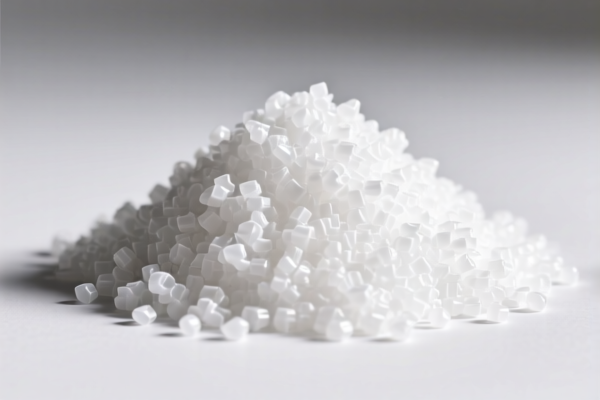
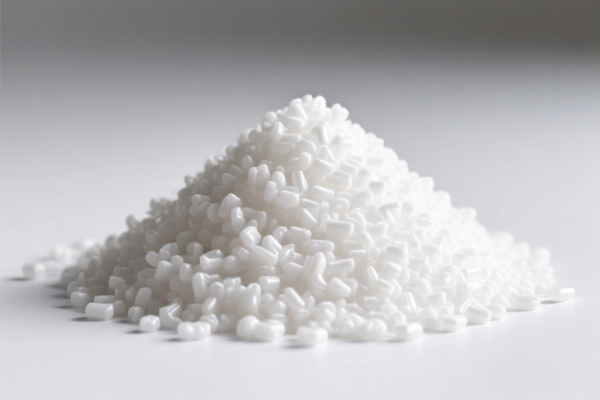

AI Analysis
🧪 Ester Resin (Chemical Industrial Products)
🌐 HS Code Reference & Customs Clearance Guide | 2026 Latest Tariff Analysis | Professional Clearance Strategy
📌 I. Product Definition & Classification: What Exactly is "Ester Resin"?
Ester Resin is a broad category of chemical polymers formed by the reaction of polyols and organic acids (or their anhydrides/esters). In international trade, it is primarily categorized under Chapter 39 (Plastics and Articles Thereof) or Chapter 38 (Miscellaneous Chemical Products), depending on its specific chemical structure and physical state.
The core classification logic hinges on two factors: 1. Chemical Structure: Is it a polyester (polycondensation product)? If yes, it generally falls under HS 3907. 2. Material Composition: Is it a mixture based on fatty acids or hydrocarbon derivatives? If yes, it may fall under HS 3824.
⚠️ Key Distinction Point: - If the resin is a polyester (chemically similar to alkyd resins) → HS 3907 (Polyesters). - If the resin is considered a fatty acid ester or a hydrocarbon mixture → HS 3824 (Miscellaneous Chemical Products). - The specific HS Code depends on the precise "material attribute" and "form" as defined in the summary data below.
📦 II. HS Code Classification Details (Based on Provided Data)
The following 5 HS Codes are derived from the specific material interpretations of "Ester Resin." Note that HS 3907.99.50.50 appears twice due to different contextual interpretations (general category vs. raw material state).
| HS Code | Summary of Classification Logic | Total Tax Rate |
|---|---|---|
| 3907.50.00.00 | Polyester Class: Ester resins share the same chemical structure (polyester) as alkyd resins, fitting the classification scope for polyester resins. | 41.5% |
| 3907.99.50.50 | General Polyester: Matches the definition of "other polyesters." Since the product name doesn't specify form, it falls under the residual/catch-all category for polyesters. | 41.5% |
| 3824.99.41.40 | Fatty Acid Ester: The ester component in ester resins is highly consistent with fatty acid esters in classification explanations, meeting material matching requirements. | 39.6% |
| 3824.99.49.00 | Hydrocarbon Mixture: Belongs to chemical industrial products, matching the material characteristic of mixtures composed of petroleum, shale oil, or natural gas hydrocarbons. | 41.5% |
| 3907.99.50.50 | Raw Material State: Explicitly includes polyester material, is in raw material form, and fits the definition of "other polyesters in primary forms." No conflict in material or form. | 41.5% |
🔍 Critical Note: - HS 3907 Codes (3907.50.00.00 & 3907.99.50.50) treat the product as a Polyester. This is the most common classification for standard polyester resins used in coatings, adhesives, and plastics. - HS 3824 Codes (3824.99.41.40 & 3824.99.49.00) treat the product as a Miscellaneous Chemical Product (either fatty acid ester or hydrocarbon mixture). This may apply to specific industrial mixtures or less polymerized forms.
💰 III. 2026 Latest Tariff Rate Breakdown (Including Surcharges)
✅ Applicable Country: United States (US)
✅ Origin: China (CN)
✅ Effective Date: Rates apply to imports subject to current trade policies (including Section 301 and IEEPA measures).
🎯 1. Polyester Classification (HS 3907.50.00.00 & 3907.99.50.50)
These codes carry the highest combined tax burden due to the base rate plus multiple surcharges.
| Item | Detail |
|---|---|
| Base Tariff | 6.5% (Standard MFN Rate for Polyesters) |
| Section 301 Surcharge | +25.0% (USITC Footnote for Chinese-origin goods) |
| Section 122 Tariff | +10.0% (Specific provision for certain industrial chemicals) |
| Total Tax Rate | 41.5% |
| Calculation Basis | CIF Value × 41.5% |
| De Minimis Exemption | ❌ Not Eligible (High tax rate blocks $800 de minimis entry) |
| Legal Basis Path | USITC:3907.50.00.00 → SECTION301:8524.11.10.00 (Footnote) → IEEPA:9903.01.24 → SECTION122:10% |
📌 Explanation: - Base 6.5%: Standard duty for polyester resins under Chapter 39. - Section 301 (+25%): A significant trade barrier for Chinese-made polyesters. - Section 122 (+10%): An additional levy applicable to specific chemical imports from China. - Total 41.5%: This is a very high effective tariff. Importers must factor this into their landed cost calculations immediately.
🎯 2. Miscellaneous Chemical Classification (HS 3824.99.41.40)
This code offers a slightly lower total rate due to a lower base tariff.
| Item | Detail |
|---|---|
| Base Tariff | 4.6% (Standard MFN Rate for Misc. Chemicals) |
| Section 301 Surcharge | +25.0% (USITC Footnote for Chinese-origin goods) |
| Section 122 Tariff | +10.0% |
| Total Tax Rate | 39.6% |
| Calculation Basis | CIF Value × 39.6% |
| De Minimis Exemption | ❌ Not Eligible |
| Legal Basis Path | USITC:3824.99.41.40 → SECTION301 → IEEPA → SECTION122 |
📌 Note: - While 3.9% lower than the polyester classification, it is still subject to the full 35% in additional duties (25% + 10%). - Classification as a "fatty acid ester" might be contested if the product is a true polymer (polyester), leading to potential audits.
🎯 3. Hydrocarbon Mixture Classification (HS 3824.99.49.00)
| Item | Detail |
|---|---|
| Base Tariff | 6.5% |
| Section 301 Surcharge | +25.0% |
| Section 122 Tariff | +10.0% |
| Total Tax Rate | 41.5% |
| Calculation Basis | CIF Value × 41.5% |
📌 Note: - This classification is less common for "Ester Resins" unless they are specifically formulated as hydrocarbon-based mixtures rather than polycondensation products. - Same high tax burden as the main polyester codes.
🛠️ IV. Customs Clearance Operational Advice (Practical Pitfall Guide)
✅ 1. Preparation Checklist (Essential Documents)
| Document | Required | Purpose |
|---|---|---|
| ✅ Product Specification Sheet | ✔️ | Must detail chemical composition (polyester vs. fatty acid ester), molecular weight, and form (solid, liquid, powder). |
| ✅ Safety Data Sheet (SDS) | ✔️ | Crucial for determining if the product is a hazardous chemical. Also helps customs verify "Chemical Industrial Product" status. |
| ✅ Structure Diagram / Formula | ✔️ | To prove whether it is a polymer (HS 3907) or a mixture/ester (HS 3824). |
| ✅ Commercial Invoice | ✔️ | Clearly state "Ester Resin" and specify the Chemical Name (e.g., "Polyethylene Terephthalate Resin" vs. "Methyl Ester"). |
| ✅ Packing List | ✔️ | Indicate net weight and gross weight accurately. |
| ✅ Certificate of Origin (CO) | ✔️ | Required to apply any potential exemptions or verify Chinese origin for Section 301. |
✅ 2. Declaration Strategy (Key Mnemonics)
🔥 "Polyester is 3907, Mixture is 3824, Base Rate Sets the Tone, Surcharges Double It!"
| Scenario | Recommended HS Code | Risk Level |
|---|---|---|
| Standard Polyester Resin (Solid/Liquid polymer) | 3907.50.00.00 or 3907.99.50.50 |
⚠️ High (41.5%) |
| Industrial Mixture (Based on fatty acids) | 3824.99.41.40 |
⚠️ Medium (39.6%, but risk of reclassification to 3907) |
| Hydrocarbon-Based Mixture | 3824.99.49.00 |
⚠️ High (41.5%, complex verification) |
Warning: Do NOT simply declare "Resin." You must specify "Ester Resin" and provide the chemical identity. If the customs officer determines it is a polyester, they will reclassify it from HS 3824 to HS 3907, potentially causing delays and disputes.
✅ 3. Special Cases Handling
| Situation | Handling Advice |
|---|---|
| OEM Custom Resin | Provide the customer’s formula and design specs. If it’s a standard polyester, use HS 3907. |
| Mixed Form (e.g., Resin + Solvent) | If the solvent is integral to the product, declare as a mixture. If separate, declare separately to avoid misclassification. |
| Raw Material vs. Finished Good | HS 3907.99.50.50 explicitly covers raw material state. If it’s a finished plastic part, it falls under Chapter 39 Subheadings other than 3907. Ensure you are declaring the resin, not the molded part. |
| Hazardous Chemicals | If the ester resin is flammable or toxic, additional DOT/HAZMAT declarations may be required, impacting shipping costs and clearance time. |
🌍 V. Global Market Comparison (2026 Update)
| Region | Recommended HS Code | Est. Total Duty (China Origin) | Key Requirements |
|---|---|---|---|
| 🇺🇸 USA | 3907.50.00.00 |
41.5% | Section 301 + Section 122 Apply. Strict chemical identification. |
| 🇨🇳 China | 3907.50.00.00 |
~5-10% (Import Duty) | Standard chemical import registration. |
| 🇪🇺 EU | 3907.50.00 |
~5-7% + VAT | REACH Registration is mandatory for chemicals. No Section 301, but high compliance cost. |
| 🇬🇧 UK | 3907.50.00 |
~5-7% + VAT | UK REACH compliance required. |
| 🇯🇵 Japan | 3907.50.00 |
~5-6% + Consumption Tax | PRTR Law reporting may apply. |
📌 Conclusion: - The USA has the most aggressive tariff structure for Ester Resins from China, totaling 39.6% - 41.5%. - The EU and UK do not have Section 301/122 tariffs, but REACH/UK REACH chemical registration is a significant barrier to entry. - Strategic Advice: For US market, consider supply chain diversification (e.g., sourcing from Vietnam or Thailand) to mitigate the 35% in additional duties.
📌 VI. Common Mistakes & Pitfalls (Lessons Learned)
❌ Mistake 1: Declaring "Ester Resin" under HS 3907 when it is actually a fatty acid ester mixture. 👉 Consequence: Potential audit. If reclassified to HS 3824, you might save ~2%, but face penalties for misdeclaration. If it is polyester, no change.
❌ Mistake 2: Ignoring Section 122 tariffs. 👉 Consequence: Underpayment of 10%. Customs will assess back duties + interest.
❌ Mistake 3: Using "Plastic Raw Material" instead of "Ester Resin." 👉 Consequence: Customs may reject the entry or demand a Chemical Identification Sheet (CIS), causing delays.
❌ Mistake 4: Assuming De Minimis ($800) applies. 👉 Consequence: FAIL. All 5 HS Codes have total taxes >25%, which disqualifies them from de minimis treatment under current US law.
✅ Correct Practice:
"Ester Resin, Polycondensate, Solid Beads, CAS No. XXXXX-XX-X, Used for Coatings, HS Code 3907.50.00.00"
🎯 VII. Conclusion: Precision Classification Saves Money
🎯 Key Takeaway:
🔹 "Polyester = 3907 (41.5%) | Mixture = 3824 (39.6%)" 🔹 "No De Minimis for Chemicals under 35% Duty" 🔹 "Document the Chemistry, Not Just the Name"
📌 Pro Tip: If your Ester Resin is produced in Vietnam, Malaysia, or India, you may be eligible for lower Section 301 rates or zero tariffs under certain FTAs. Always verify the Country of Origin before declaring. Consider applying for a Binding Ruling from US Customs (CBP) to lock in your HS Code and avoid surprise audits.
📣 Immediate Action:
📞 Contact your customs broker with SDS and Spec Sheets. 🚀 Calculate Landed Cost including 39.6%-41.5% taxes. 💡 Explore Alternative Origins if tariffs impact profitability.
✨ Professional Customs Clearance Starts with Accurate Classification! 💼 Your Margins Depend on Your HS Code!
Customer Reviews
About HS Code Classification
The Harmonized System (HS) is an internationally standardized nomenclature developed by the World Customs Organization (WCO) to classify traded products. Over 200 countries use the HS system as the basis for customs tariffs, trade statistics, and import/export regulations.
Each HS code follows a hierarchical structure:
- Chapter (2 digits) — Broad category of goods (e.g., Chapter 84: Machinery and Mechanical Appliances)
- Heading (4 digits) — More specific grouping within the chapter
- Subheading (6 digits) — Internationally standardized breakdown, used by all WCO member countries
- National subdivisions (8-10 digits) — Country-specific extensions for further classification, such as US HTSUS 10-digit codes
Correct HS code classification is essential for smooth customs clearance, accurate duty payment, and compliance with trade regulations. Misclassification can lead to customs delays, overpayment of duties, or penalties.
When importing from CN to US, the applicable tariff rates may include:
- Most-Favored-Nation (MFN) rate — The standard duty rate applied to WTO members
- General rate — Applied to countries without trade agreements
- Trade remedy duties — Additional tariffs such as Section 301 (anti-dumping), Section 232 (national security), or countervailing duties
The information provided on this page is for reference purposes only. For official classification, please consult with your local customs authority or a licensed customs broker.