ethyl cellulose coating
CN → US| HS Code | Tariff Rate | Origin | Destination | Doc |
|---|---|---|---|---|
| 3208900000 | 38.2% | CN | US | Official Doc |
| 3208100000 | 38.7% | CN | US | Official Doc |
Product Images
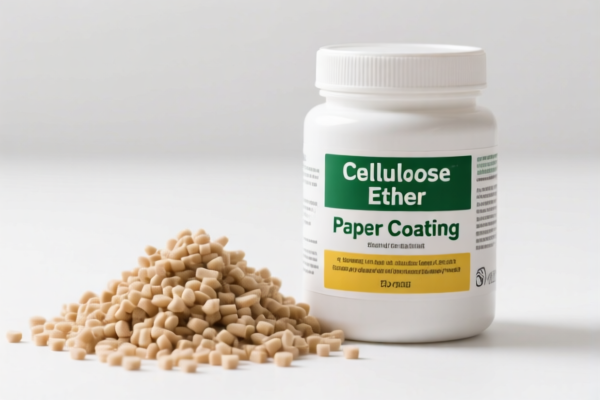
AI Analysis
🎨 Ethyl Cellulose Coating (Pharmaceutical & Industrial Grade)
🌐 HS Code Reference & Customs Clearance Guide | 2026 Latest Tariff Analysis | Professional Entry Strategies
📌 I. Product Definition & Classification: Do You Really Understand "Ethyl Cellulose Coating"?
Ethyl Cellulose (EC) coating refers to aqueous dispersions or non-aqueous solutions of ethyl cellulose polymers, used primarily as film-forming agents in pharmaceuticals (for controlled-release tablets/capsules) and industrial applications (paints, varnishes, coatings). In international trade, it is critical to distinguish between the chemical polymer itself and the finished coating preparation.
Key Distinction:
- Ethyl Cellose Polymer (Powder/Granules): If pure or chemically modified natural polymer dissolved in organic solvent, it may fall under Chapter 39 or 3913/3912 depending on state.
- Coating Solutions/Dispersion (Ready-to-Use): If it is a solution (as defined in Note 4 to Chapter 32) of synthetic polymers or chemically modified natural polymers (like ethyl cellulose) dispersed or dissolved in a nonaqueous medium, it falls under Chapter 32 (Paints and Varnishes).
⚠️ Critical Note:
Ethyl cellulose is a chemically modified natural polymer (derived from cellulose). When sold as a solution or dispersion in a nonaqueous medium (e.g., alcohol, ketone, or other organic solvents), it is classified as a "paint, varnish, or similar coating preparation" under HS Code 3208, not as a raw chemical (Chapter 39).
- If it is aqueous-based (water-dispersed), it may fall under 3210 or 3209.
- If it is non-aqueous (organic solvent-based), it falls under 3208.90.00.00 or 3208.10.00.00 depending on the polymer type.
📦 II. HS Code Classification Details (2026 Latest Tariff Authority Comparison)
Based on your provided data, we focus on non-aqueous medium ethyl cellulose coatings. Ethyl cellulose is not a polyester; it is an ether of cellulose. Therefore, it falls under "Other" rather than "Based on polyesters."
| HS Code | Product Description | Applicable Scenario | Polymer Type |
|---|---|---|---|
3208.90.00.00 |
Paints and varnishes based on synthetic polymers or chemically modified natural polymers, dispersed or dissolved in a nonaqueous medium; Other | Ethyl cellulose solutions in alcohol/ketone, non-aqueous pharmaceutical coatings, industrial lacquers | ✅ Chemically modified natural polymer (EC) |
3208.10.00.00 |
Paints and varnishes based on polyesters | Not Applicable for Ethyl Cellulose | ❌ Polyester-based (Incorrect for EC) |
🔍 Key Reminder:
- Ethyl Cellulose is NOT a polyester. It is an ethyl ether of cellulose.
- Therefore,3208.10.00.00(Polyester-based) is incorrect for ethyl cellulose.
- The correct code is3208.90.00.00("Other" chemically modified natural polymers in nonaqueous medium).
- If the product is aqueous-based (e.g., ACRYLOID FS30D in water), it would fall under3209.90or3210.00, but your data restricts to nonaqueous.
💰 III. 2026 Latest Tariff Rate Details (Including Surcharges & Policy Additions)
✅ Applicable Country: United States (US)
✅ Origin: China (CN)
✅ Effective Date: 2025/2026 Import Period
🎯 1. 3208.90.00.00 —— Ethyl Cellulose Coating (Non-Aqueous, "Other")
| Item | Content |
|---|---|
| Base Tariff | 0.0% |
| Additional Tariff (Section 301/IEEPA) | 0.0% |
| Total Tax Rate | 0.0% |
| Tax Calculation | CIF Value × 0% = $0 Duty |
| De Minimis Eligibility | ✅ Yes (Generally eligible for Section 321.2(a) de minimis if < $800) |
| Legal Basis Path | HTSUS:3208.90.00.00 → USITC Footnote: None → IEEPA/Section 301: Not Applicable |
📌 Explanation:
- Ethyl cellulose coatings classified under 3208.90.00.00 enjoy 0% base tariff and 0% additional tariff.
- This is a significant cost advantage compared to many other chemical preparations.
- No IEEPA or Section 301 surcharge applies to this specific subheading for Chinese origin.
🎯 2. 3208.10.00.00 —— Polyester-Based Coatings (For Comparison Only)
| Item | Content |
|---|---|
| Base Tariff | 3.7% |
| Additional Tariff | 25.0% |
| Total Tax Rate | 28.7% |
| Tax Calculation | CIF Value × 28.7% |
| De Minimis Eligibility | ❌ No (Section 301 goods generally excluded from de minimis) |
| Legal Basis Path | HTSUS:3208.10.00.00 → USITC Footnote: 301 → IEEPA:9903.01.25 |
⚠️ Warning:
- Do NOT misclassify Ethyl Cellulose as Polyester (3208.10.00.00).
- Doing so would incur 28.7% duty instead of 0%, resulting in significant unnecessary costs.
- Ethyl Cellulose is a cellulose ether, not a polyester.
🛠️ IV. Customs Clearance Practical Advice (Battle-Tested Pitfall Avoidance)
✅ 1. Required Documentation Checklist (Non-Negotiable)
| Document | Mandatory? | Description |
|---|---|---|
| ✅ Technical Data Sheet (TDS) | ✔️ | Must explicitly state: "Ethyl Cellulose," "Non-Aqueous Solution," Solvent Type (e.g., Ethanol, Butanone) |
| ✅ Formula/Composition | ✔️ | List all components with percentages. Highlight "Ethyl Cellulose" as the film-forming polymer. |
| ✅ Safety Data Sheet (SDS) | ✔️ | Must confirm it is flammable (if solvent-based) and provide hazard class (e.g., Class 3 Flammable Liquid). |
| ✅ Certificate of Origin | ✔️ | Essential for proving Chinese origin and applying correct tariff. |
| ✅ Commercial Invoice | ✔️ | Clearly describe as: "Ethyl Cellulose Coating Solution, Non-Aqueous, for Pharmaceutical Film Coating" |
| ✅ Product Photos | ✔️ | Show container, label, and product state (liquid/solution) |
✅ 2. Declaration Tips (Key Mnemonics)
🔥 "Non-Aqueous, EC is 'Other', Not Polyester, Zero Duty!"
| Scenario | Correct Declaration | Wrong Declaration |
|---|---|---|
| EC in Alcohol (Non-Aqueous) | 3208.90.00.00 |
3208.10.00.00 → 28.7% Duty |
| EC in Water (Aqueous Dispersion) | 3209.90.00.00 or 3210.00.00 |
3208.90.00.00 → May trigger scrutiny |
| Pure EC Powder | Chapter 39 or 3912 | 3208.90.00.00 → Incorrect chapter |
| EC with Pigments | 3208.90.00.00 (if based on EC) |
3214.10.00.00 (Putties/Paints) → Risk of misclassification |
✅ 3. Special Handling Cases
| Case | Handling Advice |
|---|---|
| Flammable Solvents | If solvent is >50% by weight, ensure Class 3 Flammable Liquid packaging and labeling (UN 1170, UN 1987, etc.). DOT/PHMSA compliance required. |
| Pharmaceutical Grade | Provide FDA compliance statements or GMP certificates. Customs may request proof of intended use (pharma vs. industrial). |
| Mixed Shipments | If EC coating is mixed with other HS codes, separate line items on invoice. Do not combine into one "coating" line. |
| De Minimis Shipment (<$800) | ✅ Eligible under Section 321.2(a) for 3208.90.00.00. No duty, minimal documentation. |
🌍 V. Global Market Comparison (2026 Latest)
| Country/Region | Recommended HS Code | Duty Rate (China Origin) | Certification Required | Notes |
|---|---|---|---|---|
| 🇺🇸 USA | 3208.90.00.00 |
0.0% | SDS, GHS Labeling | Zero duty! |
| 🇨🇳 China | 3208.90.00.00 |
0.0% (Import) | N/A | Low import duty |
| 🇪🇺 EU | 3208.90.00.00 |
6.5% (Standard MFN) | REACH, CLP | Higher than US |
| 🇯🇵 Japan | 3208.90.00.00 |
6.0% | JIS, PSE (if electrical) | Moderate duty |
| 🇦🇺 Australia | 3208.90.00.00 |
5.0% | GMP (if pharma) | Low duty |
📌 Conclusion:
- USA is the most favorable market for Ethyl Cellulose coatings due to 0% duty and no additional surcharges.
- Ensure strict classification under 3208.90.00.00 to avoid 28.7% penalties.
📌 VI. Common Errors & Pitfall Avoidance (Blood-Stained Lessons)
❌ Error 1: Classifying Ethyl Cellulose as Polyester (3208.10.00.00)
👉 Consequence: 28.7% duty instead of 0%. Huge cost increase.
✅ Fix: EC is a cellulose ether, not polyester. Use 3208.90.00.00.
❌ Error 2: Mixing Aqueous and Non-Aqueous shipments without clarification
👉 Consequence: Customs may audit and reclassify, leading to delays or penalties.
✅ Fix: Clearly label product state: "Non-Aqueous Solution" or "Aqueous Dispersion."
❌ Error 3: Using vague description like "Coating" without polymer type
👉 Consequence: Customs may assign higher duty rate or require additional docs.
✅ Fix: Explicitly state: "Ethyl Cellulose, Chemically Modified Natural Polymer, in Non-Aqueous Medium."
❌ Error 4: Ignoring Flammable Liquid regulations for solvent-based EC
👉 Consequence: Shipment held at port, fines, or rejection.
✅ Fix: Ensure UN packaging, proper labels, and SDS for flammable solvents.
🎯 VII. Conclusion: Professional Declaration, Cost Savings, Efficient Clearance!
🎯 Mnemonic:
🔹 "EC is Not Polyester, Use 3208.90, Zero Duty in USA!"
🔹 "Non-Aqueous, Chemically Modified, 'Other' Category, No Surcharge!"
📌 Pro Tip:
- If your Ethyl Cellulose coating is aqueous-based, it may fall under 3209 or 3210, which also have low or zero duties in some cases.
- Always request a Pre-Ruling (Advance Ruling) from US Customs (CBP) if unsure. It provides legal certainty and prevents post-clearance audits.
📣 Immediate Action:
📞 Contact your customs broker with TDS + SDS
📝 Declare as: "Ethyl Cellulose Coating Solution, Non-Aqueous, HS 3208.90.00.00"
🚀 Maximize savings, ensure compliance, clear customs smoothly!
✨ Professional Customs Clearance Starts with Accurate Classification!
💼 Every Dollar Saved is a Dollar Earned!
Customer Reviews
About HS Code Classification
The Harmonized System (HS) is an internationally standardized nomenclature developed by the World Customs Organization (WCO) to classify traded products. Over 200 countries use the HS system as the basis for customs tariffs, trade statistics, and import/export regulations.
Each HS code follows a hierarchical structure:
- Chapter (2 digits) — Broad category of goods (e.g., Chapter 84: Machinery and Mechanical Appliances)
- Heading (4 digits) — More specific grouping within the chapter
- Subheading (6 digits) — Internationally standardized breakdown, used by all WCO member countries
- National subdivisions (8-10 digits) — Country-specific extensions for further classification, such as US HTSUS 10-digit codes
Correct HS code classification is essential for smooth customs clearance, accurate duty payment, and compliance with trade regulations. Misclassification can lead to customs delays, overpayment of duties, or penalties.
When importing from CN to US, the applicable tariff rates may include:
- Most-Favored-Nation (MFN) rate — The standard duty rate applied to WTO members
- General rate — Applied to countries without trade agreements
- Trade remedy duties — Additional tariffs such as Section 301 (anti-dumping), Section 232 (national security), or countervailing duties
The information provided on this page is for reference purposes only. For official classification, please consult with your local customs authority or a licensed customs broker.