ethylene elastomer color masterbatch
CN → USProduct Images


AI Analysis
🎨 Ethylene Elastomer Color Masterbatch (乙烯弹性体着色母料)
🌐 HS Code Reference & Customs Clearance Guide | 2026 Latest Tariff Analysis | Professional Clearance Strategy
📌 I. Product Definition & Classification: Do You Truly Understand "Color Masterbatch"?
Ethylene Elastomer Color Masterbatch is a highly concentrated mixture of pigments (colorants) and/or additives dispersed in a carrier resin. In international trade, the classification depends heavily on whether the product is viewed as a pigment preparation or as a polymer/resin product. For ethylene-based elastomers, the distinction between chemical composition and physical form is critical for accurate HS Code assignment and tax liability.
⚠️ Key Distinction Point:
- If classified primarily by its function as a coloring agent in plastics → Often falls under Chapter 32 (Pigments/Preparations).
- If classified primarily by its material composition as a polymer resin in masterbatch form → Falls under Chapter 39 (Plastics and Articles Thereof).
- Note: The following analysis is strictly based on the provided set for specific variants.
📦 II. HS Code Classification Details (Based on Provided Data)
| HS Code | Product Description (Summary from Data) | Application Scenario | Primary Classification Basis |
|---|---|---|---|
3206.49.10.00 |
Ethylene Elastomer Color Masterbatch: Concentrated dispersion of pigments in plastic materials | General-purpose coloring for ethylene elastomer plastics | Pigment Dispersion (Chapter 32) |
3904.22.00.00 |
PVC Elastomer Color Masterbatch: Material is Polyvinyl Chloride (PVC), Form is Masterbatch | Coloring for PVC-based elastomeric applications | PVC Polymer (Chapter 39) |
3904.90.10.00 |
PVC Elastomer Color Masterbatch: Meets elastic characteristics of vinyl polymers | PVC elastomers with specific elastic properties | Other Vinyl Polymers (Chapter 39) |
3901.90.10.00 |
Ethylene Elastomer UV-Resistant Masterbatch: Material consistent with ethylene polymers, Primary Form | UV-protection and coloring for ethylene-based primary shapes | Ethylene Polymer (Chapter 39) |
🔍 Important Note:
- The data provided includes both Ethylene-based (3206,3901) and PVC-based (3904) masterbatches.
- Ethylene Elastomer Color Masterbatch specifically maps to3206.49.10.00in the provided data, classified as a pigment dispersion.
- Ethylene Elastomer UV-Resistant Masterbatch maps to3901.90.10.00, classified as an ethylene polymer.
- Do not confuse Ethylene-based products with PVC-based products (3904.xx.xx) as their tariff structures differ.
💰 III. 2026 Latest Tariff Rate Breakdown (Including Surtaxes & Policy Add-ons)
✅ Applicable Country: United States (US)
✅ Country of Origin: China (CN)
✅ Effective Date: Subject to current trade policies (2025-2026 context)
🎯 1. 3206.49.10.00 — Ethylene Elastomer Color Masterbatch (Pigment Dispersion)
| Item | Content |
|---|---|
| Base Tariff | 5.9% |
| Section 301 Surtax | +25.0% |
| Section 122 Tariff | +10.0% |
| Total Tax Rate | 40.9% |
| Calculation Basis | CIF Value × 40.9% |
| De Minimis Exemption | ❌ Not Available (High tariff rate excludes it) |
| Legal Basis Path | USITC:3206.49.10.00 → Section 301: Footnote 9903.88.01 → Section 122: Trade Act |
📌 Explanation:
- This code is classified under Chapter 32 (Pigments), which generally attracts a base tariff.
- The 25% Section 301 tariff is standard for most Chinese-origin chemical/plastic preparations.
- The 10% Section 122 tariff (if applicable under current enforcement) adds further burden.
- Total 40.9% is a significant cost factor. Strategic sourcing or alternative classification review is recommended.
🎯 2. 3901.90.10.00 — Ethylene Elastomer UV-Resistant Masterbatch (Primary Form)
| Item | Content |
|---|---|
| Base Tariff | 0.0% |
| Section 301 Surtax | +25.0% |
| Section 122 Tariff | +10.0% |
| Total Tax Rate | 35.0% |
| Calculation Basis | CIF Value × 35.0% |
| De Minimis Exemption | ❌ Not Available |
| Legal Basis Path | USITC:3901.90.10.00 → Section 301 → Section 122 |
📌 Explanation:
- Classified under Chapter 39 (Plastics), specifically Ethylene Polymers.
- The base tariff is 0%, which is significantly lower than Chapter 32 products.
- However, the 35% total rate (25% + 10%) still represents a substantial duty.
- Key Insight: Classification as a "Polymer/Resin" (3901) is cheaper than as a "Pigment Dispersion" (3206) due to the 0% base rate.
🎯 3. PVC-Based Variants (3904.22.00.00 & 3904.90.10.00)
| HS Code | Total Tax Rate | Base Tariff | Surtax | Section 122 |
|---|---|---|---|---|
3904.22.00.00 |
41.5% | 6.5% | 25.0% | 10.0% |
3904.90.10.00 |
35.0% | 0.0% | 25.0% | 10.0% |
📌 Explanation:
- PVC Masterbatches vary based on specific elasticity and polymer type.
-3904.90.10.00offers a 0% base tariff, resulting in a 35% total, similar to Ethylene UV Masterbatch.
-3904.22.00.00has a 6.5% base tariff, leading to a 41.5% total.
🛠️ IV. Customs Clearance Practical Advice (Pitfall Avoidance Guide)
✅ 1. Documentation Checklist (Essential for Clearance)
| Document | Required | Description |
|---|---|---|
| ✅ Product Specification Sheet | ✔️ | Must clearly state: Carrier Resin Type (Ethylene vs. PVC), Pigment Concentration, Elastic Properties. |
| ✅ Formula/Composition Breakdown | ✔️ | Critical to determine if it's "Pigment" (3206) or "Polymer" (3901/3904). |
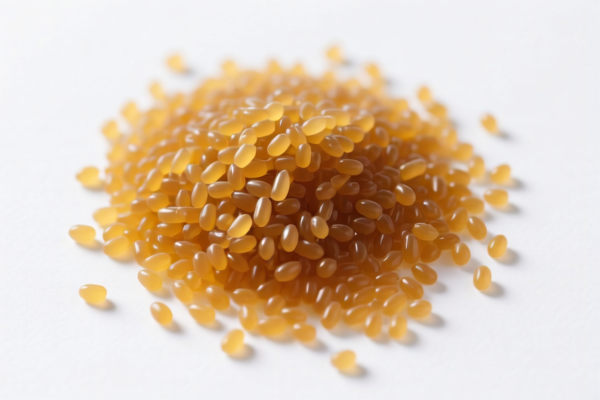
| ✅ Product Photos (Label & Bulk) | ✔️ | Show granule/pellet form, color, and packaging. |
| ✅ Certificate of Origin (CO) | ✔️ | To confirm Chinese origin and apply correct surtaxes. |
| ✅ Commercial Invoice | ✔️ | Describe precisely: e.g., "Ethylene Elastomer Color Masterbatch, Pigment Dispersion, HS 3206.49.10.00". |
| ✅ Packing List | ✔️ | Net/Gross weight, packaging details. |
✅ 2. Declaration Strategy (Key Mantras)
🔥 "Define the Carrier, Define the Tax! Pigment vs. Polymer Determines the Base Rate!"
| Scenario | Correct Declaration | Wrong Declaration | Consequence |
|---|---|---|---|
| Ethylene Masterbatch (Pigment Focus) | 3206.49.10.00 - "Color Concentrate, Pigment Dispersion" |
3901.90.10.00 - "Ethylene Polymer" |
Audited: May be reclassified, back-tariffs, penalties. |
| Ethylene Masterbatch (Resin Focus) | 3901.90.10.00 - "Ethylene Polymer Masterbatch" |
3206.49.10.00 - "Pigment" |
Overpaid: Missed 0% base tariff opportunity. |
| PVC Masterbatch | 3904.90.10.00 (if elastic) |
3904.22.00.00 (if not specific) |
Risk: Misclassification leads to 41.5% vs 35% rate. |
📌 Critical Tip:
- If your masterbatch is primarily a colored ethylene polymer pellet, argue for3901.90.10.00to benefit from the 0% base tariff.
- If it is a high-concentration pigment paste/granule used primarily for coloring other materials,3206.49.10.00may be more accurate, but expect the 5.9% base + surtaxes.
- Do not mix Ethylene and PVC descriptors in one declaration.
✅ 3. Special Handling Cases
| Case | Recommendation |
|---|---|
| OEM Custom Colors | Provide color match standards (Pantone/RAL) and carrier resin certification. |
| Mixed Shipments (Ethylene + PVC) | Declare Separately. Do not consolidate under one HS code. |
| UV-Resistant Specificity | If UV stabilizers are the primary function, highlight "UV Masterbatch" in description to support 3901.90.10.00. |
| Samples vs. Commercial | Both are subject to full tariffs; de minimis does not apply. |
🌍 V. Global Market Clearance Comparison (2026 Context)
| Market | Recommended HS Code | Total Tariff (CN Origin) | Key Certifications | Notes |
|---|---|---|---|---|
| 🇺🇸 USA | 3206.49.10.00 / 3901.90.10.00 |
35.0% - 40.9% | None Specific | High surtaxes (301 + 122) apply. |
| 🇨🇳 China | 3206.49.10.00 / 3901.90.10.00 |
Low/0% (Import) | None | No surtaxes. |
| 🇪🇺 EU | 3206.49 / 3901.90 |
Varies | REACH, RoHS | EU does not have Section 301/122. |
| 🇬🇧 UK | 3206.49 / 3901.90 |
Varies | UKCA, REACH | Post-Brexit rules apply. |
| 🇯🇵 Japan | 3206.49 / 3901.90 |
Varies | JIS, PSE | No US-style surtaxes. |
📌 Conclusion:
- The US market is the most costly due to layered surtaxes (301 + 122).
- Accurate classification between Chapter 32 and Chapter 39 can save 5.9% on base tariff, but surtaxes often dominate the cost.
- Consider supply chain diversification if tariff burden exceeds profit margins.
📌 VI. Common Errors & Pitfalls (Lessons Learned)
❌ Error 1: Declaring all masterbatches under one generic HS code.
👉 Consequence: Customs audit, potential penalties for misclassification.
❌ Error 2: Ignoring the "Section 122" tariff in cost calculations.
👉 Consequence: Unexpected 10% cost increase at customs clearance.
❌ Error 3: Using "Masterbatch" without specifying the carrier resin.
👉 Consequence: Customs may default to the highest duty rate or request additional documentation, causing delays.
❌ Error 4: Confusing Ethylene Elastomers with PVC Elastomers.
👉 Consequence: 3206 (40.9%) vs 3904 (35-41.5%) – subtle differences lead to significant tax variations.
✅ Correct Practice:
"Ethylene Elastomer Color Masterbatch, Pigment Concentration in Ethylene Carrier, Non-UV Stabilized, HS 3206.49.10.00"
🎯 VII. Conclusion: Precision in Classification, Profit in Clearance
🎯 Remember the Mantra:
🔹 "Resin Type First, Function Second. Chapter 39 may offer 0% Base, but Surtaxes Kill. Check 301 & 122 Always!"
🔹 "Masterbatch is not just 'Plastic'. It's 'Pigment' or 'Polymer'. Choose Wisely!"
📌 Pro Tip:
- If you are exporting to the US, apply for a Binding Tariff Ruling (BTR) with US Customs and Border Protection (CBP) before shipment. This provides legal certainty on whether your product is 3206.49.10.00 or 3901.90.10.00.
- Calculate Landed Cost: Include CIF Value + 40.9% Duty for accurate pricing.
📣 Immediate Action:
📞 Contact your customs broker with full formulation details.
🚀 Optimize Classification to ensure compliance and minimize duty burden.
✨ Professional Clearance Starts with Accurate Classification!
💼 Your Margins Depend on Precision!
Customer Reviews
About HS Code Classification
The Harmonized System (HS) is an internationally standardized nomenclature developed by the World Customs Organization (WCO) to classify traded products. Over 200 countries use the HS system as the basis for customs tariffs, trade statistics, and import/export regulations.
Each HS code follows a hierarchical structure:
- Chapter (2 digits) — Broad category of goods (e.g., Chapter 84: Machinery and Mechanical Appliances)
- Heading (4 digits) — More specific grouping within the chapter
- Subheading (6 digits) — Internationally standardized breakdown, used by all WCO member countries
- National subdivisions (8-10 digits) — Country-specific extensions for further classification, such as US HTSUS 10-digit codes
Correct HS code classification is essential for smooth customs clearance, accurate duty payment, and compliance with trade regulations. Misclassification can lead to customs delays, overpayment of duties, or penalties.
When importing from CN to US, the applicable tariff rates may include:
- Most-Favored-Nation (MFN) rate — The standard duty rate applied to WTO members
- General rate — Applied to countries without trade agreements
- Trade remedy duties — Additional tariffs such as Section 301 (anti-dumping), Section 232 (national security), or countervailing duties
The information provided on this page is for reference purposes only. For official classification, please consult with your local customs authority or a licensed customs broker.