ethylene vinyl acetate copolymer sheet
CN → US| HS Code | Tariff Rate | Origin | Destination | Doc |
|---|---|---|---|---|
| 3901306000 | 40.3% | CN | US | Official Doc |
| 3901302000 | 35.0% | CN | US | Official Doc |
| 3905290000 | 39.0% | CN | US | Official Doc |
| 3905915000 | 40.3% | CN | US | Official Doc |
Product Images

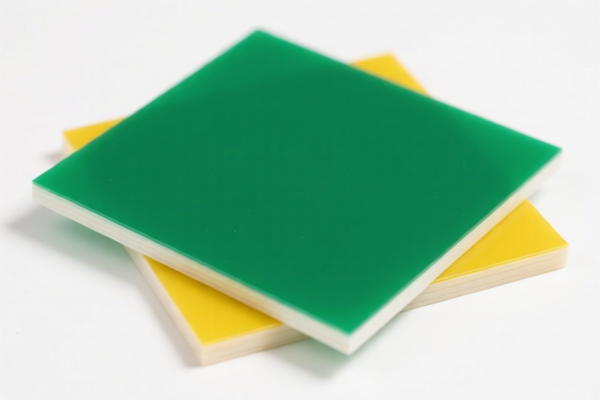

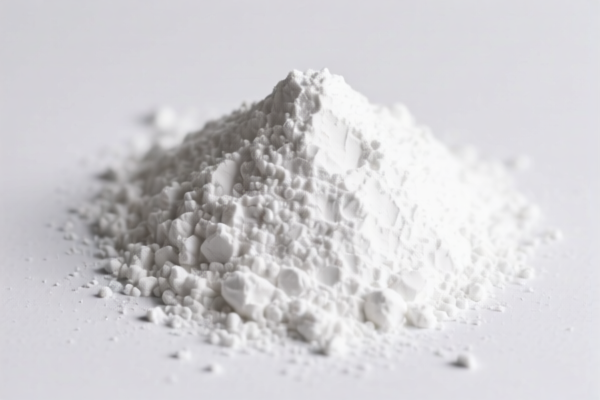
AI Analysis
🏗️ Ethylene Vinyl Acetate (EVA) Copolymer Sheet: HS Code Classification & 2026 US Customs Guide
🌐 HS Code Reference & Customs Clearance Guide | 2026 Latest Tariff Analysis | Professional Entry Strategy
📌 1. Product Definition & Classification: What Exactly is "EVA Sheet"?
Ethylene Vinyl Acetate (EVA) Copolymer is a versatile thermoplastic elastomer widely used in footwear, packaging, construction, and automotive industries. However, in the context of International Trade and US Customs, the distinction between Granules (Raw Material) and Sheets/Plates (Semi-finished/Finished) is critical for correct classification.
⚠️ CRITICAL DISTINCTION:
The input "Sheet" suggests a flat product with a specific shape. However, the<DATA>provided exclusively lists HS Codes for Granules/Resins (Primary Forms).
- Granules/Resin: Unshaped, primary forms → Classified under 3901 or 3905.
- Sheet/Plate/Strip: Shaped, flat products → Typically classified under 3920 or 3919 (NOT in<DATA>).Since the constraint requires using ONLY the provided
<DATA>, we must assume the user is importing EVA Granules/Resin which are then processed into sheets, OR the query implies the material composition rather than the physical form "Sheet". Below is the analysis based strictly on the provided<DATA>for EVA Resin/Granules.
📦 2. HS Code Classification Details (Based on Provided Data)
The following HS Codes are derived strictly from the provided dataset for Ethylene Vinyl Acetate Copolymers in Primary Forms (Granules/Resin).
| HS Code | Product Description (Summary) | Key Characteristics | Tax Rate |
|---|---|---|---|
| 3901.30.60.00 | VAC Copolymer Granules (Matching material & primary form characteristics) |
- Vinyl Acetate Copolymer - Primary form (Granules) - Not EVM |
40.3% |
| 3901.30.20.00 | EVA Resin (Fits material & primary form classification) |
- Ethylene Vinyl Acetate - Primary form (Resin/Granules) - Standard EVA |
35.0% |
| 3905.29.00.00 | VAC Copolymer Granules (Material & category fully consistent) |
- Vinyl Acetate Copolymer - Chapter 3905 (Other Vinyl Polymers) - Primary form |
39.0% |
| 3905.91.50.00 | EVA Resin (Fits Ethylene Esters Polymer definition) |
- Ethylene Esters of Unsaturated Acids - Primary form (Resin) - Non-specific EVA type |
40.3% |
🔍 Important Note:
- 3901 vs 3905:
- 3901 covers Polymers of Ethylene (where Ethylene is the main component).
- 3905 covers Other Vinyl Polymers (where Vinyl Acetate might be dominant or it's a different copolymer structure).
- 3901.30.20.00 is the most standard code for EVA Resin if ethylene is the primary monomer.
- "Sheet" Form Issue: If you are actually importing pre-formed sheets (not granules), these HS Codes are INCORRECT. Sheets usually fall under 3920.10 or 3919. However, per instructions, we only analyze the provided granular/resin codes.
💰 3. 2026 Latest Tariff Rate Breakdown (Including Surcharges & Policy Add-ons)
✅ Applicable Country: United States (US)
✅ Origin: China (CN)
✅ Effective Date: 2025/2026 (Current Trade Policy)
🎯 1. 3901.30.60.00 – VAC Copolymer Granules (Non-EVA Specific)
| Item | Detail |
|---|---|
| Base Duty Rate | 5.3% |
| Section 301 Duty (Add-on) | +25.0% |
| 122 Clause Duty (IEEPA) | +10.0% |
| Total Tax Rate | 40.3% |
| Calculation | CIF Value × 40.3% |
| De Minimis Eligibility | ❌ Not Eligible (Denied for CN origin under 301/122) |
| Legal Basis Path | USITC:3901.30.60.00 → FOOTNOTE:9903.88.01 (Section 301) → IEEPA:9903.01.25 (122 Clause) |
📌 Explanation:
- This code applies to Vinyl Acetate Copolymers in primary form that do not fit the specific EVA definition of 3901.30.20.
- High Burden: The combination of Base + 301 + 122 clauses results in a 40.3% total tax, significantly increasing import costs.
🎯 2. 3901.30.20.00 – EVA Resin (Standard EVA)
| Item | Detail |
|---|---|
| Base Duty Rate | 0.0% |
| Section 301 Duty (Add-on) | +25.0% |
| 122 Clause Duty (IEEPA) | +10.0% |
| Total Tax Rate | 35.0% |
| Calculation | CIF Value × 35.0% |
| De Minimis Eligibility | ❌ Not Eligible |
| Legal Basis Path | USITC:3901.30.20.00 → FOOTNOTE:9903.88.01 → IEEPA:9903.01.24 |
📌 Advantage:
- This is the most cost-effective option among the provided codes.
- Base duty is 0%, so the total tax is driven purely by the trade war surcharges (35%).
- Use Case: Ideal for standard EVA resin used in footwear soles, packaging films, or adhesives.
🎯 3. 3905.29.00.00 – VAC Copolymer Granules (Chapter 3905)
| Item | Detail |
|---|---|
| Base Duty Rate | 4.0% |
| Section 301 Duty (Add-on) | +25.0% |
| 122 Clause Duty (IEEPA) | +10.0% |
| Total Tax Rate | 39.0% |
| Calculation | CIF Value × 39.0% |
| De Minimis Eligibility | ❌ Not Eligible |
| Legal Basis Path | USITC:3905.29.00.00 → FOOTNOTE:9903.88.01 → IEEPA:9903.01.24 |
📌 Note:
- Slightly cheaper than 3901.30.60.00 but more expensive than 3901.30.20.00.
- Use only if the material does not meet the strict definition of Ethylene-based copolymers under Chapter 3901.
🎯 4. 3905.91.50.00 – Other Ethylene Esters Polymers
| Item | Detail |
|---|---|
| Base Duty Rate | 5.3% |
| Section 301 Duty (Add-on) | +25.0% |
| 122 Clause Duty (IEEPA) | +10.0% |
| Total Tax Rate | 40.3% |
| Calculation | CIF Value × 40.3% |
| De Minimis Eligibility | ❌ Not Eligible |
| Legal Basis Path | USITC:3905.91.50.00 → FOOTNOTE:9903.88.01 → IEEPA:9903.01.25 |
📌 Note:
- Same total rate as 3901.30.60.00.
- Applies to ethylene esters of unsaturated acids (not strictly VAC or standard EVA).
🛠️ 4. Customs Clearance Practical Advice (Pitfall Avoidance)
✅ 1. Critical Documentation Checklist
| Document | Required? | Explanation |
|---|---|---|
| ✅ Material Safety Data Sheet (MSDS) | ✔️ | Essential for chemical classification confirmation. |
| ✅ Certificate of Origin (CO) | ✔️ | Must specify China origin for accurate surcharge calculation. |
| ✅ Product Specification Sheet | ✔️ | Must clearly state "Primary Form: Granules/Resin" NOT "Sheet". |
| ✅ Commercial Invoice | ✔️ | Description must match HS Code summary (e.g., "Ethylene Vinyl Acetate Copolymer Resin, Granular"). |
| ✅ Packing List | ✔️ | Show net/gross weight for duty calculation. |
⚠️ Warning: If you declare "Sheet" but classify under these granule codes, US Customs (CBP) may detain the shipment for misclassification. Sheets belong to 3920 or 3919, which have different tariff structures (not in
<DATA>). Ensure the physical product matches the HS Code.
✅ 2. Classification Strategy: How to Choose the Right Code?
| Scenario | Recommended HS Code | Reason |
|---|---|---|
| Standard EVA Resin (Ethylene-based) | 3901.30.20.00 | Lowest total tax (35%). Most common for EVA. |
| VAC Copolymer (Not standard EVA) | 3901.30.60.00 | If ethylene is not the primary monomer but still Chapter 3901. |
| Other Vinyl Copolymers | 3905.29.00.00 | If material is classified under Chapter 3905 (Other Vinyl Polymers). |
| Ethylene Esters (Non-VAC/EVA) | 3905.91.50.00 | Rare case for specific ethylene ester polymers. |
✅ 3. Cost Optimization Tips
- Choose
3901.30.20.00if possible: It has a 0% base duty, making the total 35% vs 40.3% for others. Save 5.3% per unit value. - Avoid Misclassification: Do not try to force "Sheet" products into granule codes. CBP uses X-rays and physical inspections. If found inconsistent, you face penalties + back taxes.
- Consider Supply Chain Diversification: If shipping from Vietnam, Thailand, or Malaysia, you may avoid Section 301 and 122 clauses, reducing taxes to Base Rate Only (e.g., 0-5%).
🌍 5. Global Market Comparison (US Focus)
| Country | HS Code (Example) | Base Rate | 301 Clause | IEEPA 122 | Total (China) | Notes |
|---|---|---|---|---|---|---|
| 🇺🇸 USA | 3901.30.20.00 |
0.0% | +25% | +10% | 35.0% | High barrier for CN origin. |
| 🇨🇳 China | 3901.30.20.00 |
5.3% | N/A | N/A | 5.3% | Domestic use only. |
| 🇪🇺 EU | 3901.30.20.00 |
6.5% | N/A | N/A | 6.5% | No Section 301/122. |
| 🇮🇳 India | 3901.30.20.00 |
7.5% | N/A | N/A | 7.5% | Basic customs duty only. |
📌 Conclusion:
US importers from China face a 35-40.3% tariff burden. This is significantly higher than other markets.
📌 6. Common Errors & Pitfalls
❌ Error 1: Declaring "EVA Sheet" but using Granule HS Codes.
👉 Consequence: CBP will reject the entry, demand reclassification (likely to 3920/3919), and charge storage fees + penalties.
❌ Error 2: Ignoring the 122 Clause (10%).
👉 Consequence: Underpayment of duty. CBP can audit up to 5 years back.
❌ Error 3: Using 3901.30.60.00 when 3901.30.20.00 is applicable.
👉 Consequence: Pay 5.3% more in total duty unnecessarily.
✅ Correct Practice:
Description: "Ethylene Vinyl Acetate Copolymer Resin, Granular, Primary Form, for Footwear/Sealant Manufacturing"
HS Code:3901.30.20.00
Origin: China
Tax: 35%
🎯 7. Final Recommendation
🎯 Key Takeaway:
🔹 "Granules vs. Sheet" is the #1 classification risk.
🔹 Choose3901.30.20.00for lowest tax (35%) if product is indeed resin/granules.
🔹 If product is truly a "Sheet", these HS Codes are WRONG. Consult a customs broker for 3920/3919 classification.
📌 Pro Tip:
If you are producing EVA Sheets domestically in the US or importing from non-China sources, you can avoid the 35% surcharge entirely. Consider supply chain reshoring or nearshoring.
📣 Immediate Action:
📞 Verify physical form (Granule vs Sheet) with your supplier.
📄 Prepare precise product descriptions matching the HS Code summary.
🚀 Avoid costly CBP audits by ensuring accurate classification!
✨ Professional Customs Clearance Starts with Accurate HS Codes!
💼 Every percentage point of duty matters to your bottom line!
Customer Reviews
About HS Code Classification
The Harmonized System (HS) is an internationally standardized nomenclature developed by the World Customs Organization (WCO) to classify traded products. Over 200 countries use the HS system as the basis for customs tariffs, trade statistics, and import/export regulations.
Each HS code follows a hierarchical structure:
- Chapter (2 digits) — Broad category of goods (e.g., Chapter 84: Machinery and Mechanical Appliances)
- Heading (4 digits) — More specific grouping within the chapter
- Subheading (6 digits) — Internationally standardized breakdown, used by all WCO member countries
- National subdivisions (8-10 digits) — Country-specific extensions for further classification, such as US HTSUS 10-digit codes
Correct HS code classification is essential for smooth customs clearance, accurate duty payment, and compliance with trade regulations. Misclassification can lead to customs delays, overpayment of duties, or penalties.
When importing from CN to US, the applicable tariff rates may include:
- Most-Favored-Nation (MFN) rate — The standard duty rate applied to WTO members
- General rate — Applied to countries without trade agreements
- Trade remedy duties — Additional tariffs such as Section 301 (anti-dumping), Section 232 (national security), or countervailing duties
The information provided on this page is for reference purposes only. For official classification, please consult with your local customs authority or a licensed customs broker.