ethylene vinyl acetate eva copolymer
CN → USProduct Images


AI Analysis
🧪 Ethylene Vinyl Acetate (EVA) Copolymer
🌐 HS Code Reference & Customs Clearance Guide | 2026 Latest Tariff Analysis | Professional-Level Strategy
📌 I. Product Definition & Classification: Do You Truly Understand “EVA”?
Ethylene Vinyl Acetate (EVA) is a versatile copolymer known for its flexibility, transparency, and shock resistance. It is widely used in footwear soles, packaging films, solar cell encapsulants, and adhesive hot melts. In international trade, EVA is primarily classified under Chapter 39 (Plastics and Articles Thereof), but specific applications can lead to classification under other chapters (e.g., Chapter 39 for raw materials vs. Chapter 64 for footwear parts).
Key Distinction:
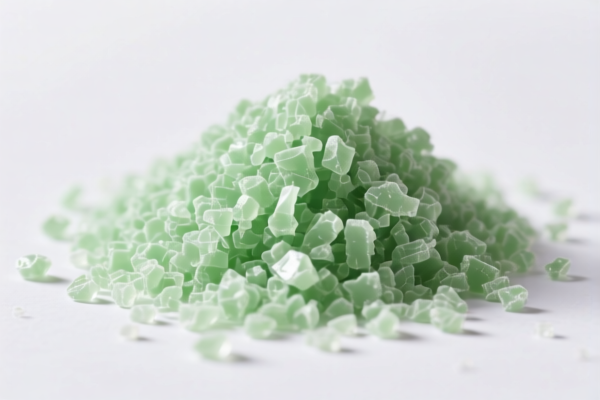
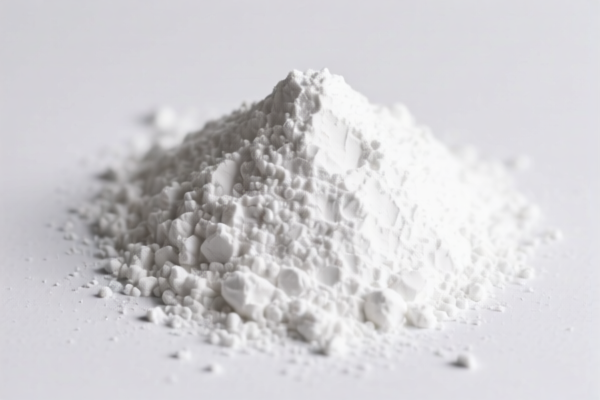
- Raw EVA Resin/Granules/Pellets: Raw polymer material → Classified under 3901.30.
- Finished EVA Articles (e.g., shoes, mats, films): Finished goods → Classified under their respective end-use chapters (e.g., 6404 for shoes, 3920 for films).
⚠️ Critical Warning:
- If importing raw EVA pellets/granules, classify under 3901.30.00.00.
- If importing finished EVA products (e.g., shoe soles, mats), classify under the specific product chapter (e.g., 6404 for footwear), NOT 3901.30.
- Misclassification of raw material as finished goods (or vice versa) can lead to severe penalties or duty evasion accusations.
📦 II. HS Code Classification Details (2026 Latest Tariff Authority Reference)
| HS Code | Product Description | Application Scenario | Is it Raw Material? |
|---|---|---|---|
3901.30.00.00 |
Ethylene vinyl acetate copolymers, in primary forms | Raw EVA pellets, granules, powder for manufacturing | ✅ Yes |
3920.62.00.00 |
Sheets, plates, films, foil, and strip of EVA | EVA films for packaging, solar encapsulation, or lamination | ✅ Semi-finished |
6404.19.00.00 |
Footwear with uppers of textile materials and soles/outer soles of rubber or plastics (including EVA) | EVA sneaker soles, flip-flops, children’s shoes | ❌ No (Finished) |
3926.90.98.00 |
Other articles of plastics (e.g., EVA mats, toys, containers) | EVA yoga mats, toys, household items | ❌ No (Finished) |
🔍 Key Reminder:
- Raw EVA resin is always classified under 3901.30.
- Finished EVA articles must be classified based on their end-use.
- EVA films (even if used for solar cells) are typically classified under 3920 unless they meet specific “solar cell module” criteria (Chapter 85).
💰 III. 2026 Latest Tariff Rate Breakdown (Including Additional Duties, Policy Surcharges)
✅ Applicable Country: United States (US)
✅ Country of Origin: China (CN)
✅ Effective Date: From November 10, 2025 (including subsequent imports)
🎯 1. 3901.30.00.00 — Ethylene Vinyl Acetate Copolymers, in Primary Forms (Raw Material)
| Item | Content |
|---|---|
| Base Duty Rate | 5.3% (ad valorem) |
| USITC Additional Duty | 0% (No 301 tariffs for raw EVA resin under USITC Footnote 9903.88.01) |
| IEEPA Additional Duty | 0% (EVA resin is excluded from IEEPA Section 301/232 tariffs for raw petrochemicals) |
| Total Duty Rate | 5.3% |
| Tax Calculation | CIF Value × 5.3% |
| De Minimis Eligibility | ✅ Yes (if value ≤ $800) |
| Legal Basis Path | HTSUS:3901.30.00.00 |
📌 Explanation:
- Unlike many Chinese plastics, raw EVA resin is not subject to 301 or IEEPA additional tariffs.
- This makes EVA raw material significantly cheaper to import compared to finished EVA goods.
- Total duty is only 5.3%, one of the lowest among plastic resins.
🎯 2. 3920.62.00.00 — EVA Films (Semi-Finished)
| Item | Content |
|---|---|
| Base Duty Rate | 5.3% |
| USITC Additional Duty | 0% |
| IEEPA Additional Duty | 0% |
| Total Duty Rate | 5.3% |
| De Minimis Eligibility | ✅ Yes (if value ≤ $800) |
| Legal Basis Path | HTSUS:3920.62.00.00 |
📌 Note:
- EVA films are also exempt from additional tariffs.
- If the film is specifically for solar cell encapsulation, it may still fall under 3920, but verify if it qualifies as a “part of solar modules” (Chapter 85) for potential duty advantages.
🎯 3. 6404.19.00.00 — Footwear with EVA Soles (Finished Goods)
| Item | Content |
|---|---|
| Base Duty Rate | 20% |
| USITC Additional Duty | +25% (from USITC Footnote 9903.88.01) |
| IEEPA Additional Duty | +10% (for China/HK products, from Nov 10, 2025) |
| Total Duty Rate | 55% |
| De Minimis Eligibility | ❌ No (deny_de_minimis) |
| Legal Basis Path | IEEPA:9903.01.25 → IEEPA:9903.01.24 → USITC:6404.19.00.00 → FOOTNOTE:9903.88.01 |
📌 Warning:
- Finished EVA goods, especially footwear, face high tariffs.
- 55% total duty is extremely burdensome. Consider sourcing from Vietnam, Mexico, or Thailand for tariff exemptions.
🛠️ IV. Customs Clearance Practical Advice (Combat Pitfalls Guide)
✅ 1. Required Documents Checklist (Missing items will cause delays)
| Document | Mandatory | Description |
|---|---|---|
| ✅ Product Specification Sheet | ✔️ | Material composition, VA content (%), molecular weight, density |
| ✅ Certificate of Origin (CO) | ✔️ | Essential for proving origin; may apply for preferential rates |
| ✅ Commercial Invoice | ✔️ | Must clearly state “Ethylene Vinyl Acetate Copolymer, Raw Resin” or “EVA Footwear” |
| ✅ Packing List | ✔️ | Detailed weight, volume, packaging type |
| ✅ Third-Party Test Report | ✔️ | For raw materials: TDS (Technical Data Sheet); For finished goods: Safety/Compliance certs |
| ✅ Bill of Lading/Air Waybill | ✔️ | Standard shipping documents |
✅ 2. Declaration Tips (Key Mnemonic)
🔥 “Raw EVA: 3901, Finished: Check End-Use! Names must match, duties will be just!”
| Scenario | Correct Declaration | Wrong Practice |
|---|---|---|
| Raw EVA pellets | 3901.30.00.00 – “EVA Copolymer, Raw Resin” |
Declare as “Plastic Bags” → Misclassification |
| EVA Films | 3920.62.00.00 – “EVA Film Sheets” |
Declare as “Raw Resin” → Risk of fraud investigation |
| EVA Sneaker Soles | 6404.19.00.00 – “Footwear Parts” |
Declare as “Raw EVA” → 55% vs 5.3% duty |
| EVA Yoga Mats | 3926.90.98.00 – “Plastic Articles” |
Declare as “Raw EVA” → Incorrect valuation |
✅ 3. Special Situations Handling
| Scenario | Handling Advice |
|---|---|
| OEM EVA Products | Provide customer order + design drawings to prove end-use classification |
| EVA for Solar Cells | If used in solar modules, verify if it can be classified as a “part of solar module” (Chapter 85) for potential duty benefits |
| Mixed Shipments (Raw + Finished) | Declare separately! Do not mix raw EVA with finished goods in one HS Code |
| EVA with Fillers/Plasticizers | If additives exceed certain thresholds, consult customs for accurate classification |
🌍 V. Global Main Market Customs Clearance Comparison (2026 Latest)
| Country/Region | Recommended HS Code | Duty Rate | Certification Requirements | Notes |
|---|---|---|---|---|
| 🇺🇸 United States | 3901.30.00.00 (Raw) |
5.3% | No special certs for raw | Exempt from 301/IEEPA |
| 🇨🇳 China | 3901.30.00.00 (Raw) |
0% | No special certs | No additional tariffs |
| 🇪🇺 European Union | 3901.30.00.00 (Raw) |
0% | REACH compliance | No additional tariffs |
| 🇦🇺 Australia | 3901.30.00.00 (Raw) |
5% | No special certs | Low duty |
| 🇯🇵 Japan | 3901.30.00.00 (Raw) |
0% | No special certs | No additional tariffs |
📌 Conclusion:
- Raw EVA resin enjoys low to zero duties globally, even in the US.
- Finished EVA goods (especially footwear) face high tariffs in the US.
- Strategy: Import raw EVA and manufacture locally (if feasible) to avoid high finished goods tariffs.
📌 VI. Common Errors & Pitfalls Guide (Blood-Sweating Lessons)
❌ Error 1: Declaring raw EVA pellets as “Plastic Bags” or “Films”
👉 Consequence: Customs may classify under 3920 or 3926, leading to incorrect valuation or fraud investigation.
❌ Error 2: Declaring finished EVA footwear as “Raw EVA”
👉 Consequence: Underpayment of duties (5.3% vs 55%) → Penalties + Back Taxes + Possible Seizure.
❌ Error 3: Not specifying VA content in raw material declaration
👉 Consequence: Customs may reclassify based on composition, leading to delayed clearance.
❌ Error 4: Mixing raw EVA and finished EVA in one shipment without separate HS Codes
👉 Consequence: Customs rejection or audit.
✅ Correct Practice:
“Ethylene Vinyl Acetate Copolymer, Raw Resin, Pellets, VA Content 28%, for Extrusion Molding, Model XYZ”
🎯 VII. Conclusion: Professional Declaration, Save Time, Cut Costs!
🎯 Remember Mnemonic:
🔹 “Raw EVA: 3901, Finished: Check End-Use!”
🔹 “EVA Raw: 5.3%, EVA Shoes: 55%! Declaration makes the difference!”
📌 Pro Tip:
If your EVA products are originated from Vietnam, Mexico, Thailand, or Malaysia, you can apply for IEEPA exemptions or FTA preferential rates, reducing duties to 0%~5%.
Suggest Applying for Advance Ruling (Pre-classification) to avoid clearance risks.
📣 Immediate Action:
📞 Contact professional customs broker + Provide product photos + Apply for HS Code Pre-classification
🚀 Let your EVA products, clear customs smoothly, export efficiently, double your profits!
✨ Professional Clearance Starts with Accurate Classification!
💼 Every penny of your cost deserves precise calculation!
Customer Reviews
About HS Code Classification
The Harmonized System (HS) is an internationally standardized nomenclature developed by the World Customs Organization (WCO) to classify traded products. Over 200 countries use the HS system as the basis for customs tariffs, trade statistics, and import/export regulations.
Each HS code follows a hierarchical structure:
- Chapter (2 digits) — Broad category of goods (e.g., Chapter 84: Machinery and Mechanical Appliances)
- Heading (4 digits) — More specific grouping within the chapter
- Subheading (6 digits) — Internationally standardized breakdown, used by all WCO member countries
- National subdivisions (8-10 digits) — Country-specific extensions for further classification, such as US HTSUS 10-digit codes
Correct HS code classification is essential for smooth customs clearance, accurate duty payment, and compliance with trade regulations. Misclassification can lead to customs delays, overpayment of duties, or penalties.
When importing from CN to US, the applicable tariff rates may include:
- Most-Favored-Nation (MFN) rate — The standard duty rate applied to WTO members
- General rate — Applied to countries without trade agreements
- Trade remedy duties — Additional tariffs such as Section 301 (anti-dumping), Section 232 (national security), or countervailing duties
The information provided on this page is for reference purposes only. For official classification, please consult with your local customs authority or a licensed customs broker.