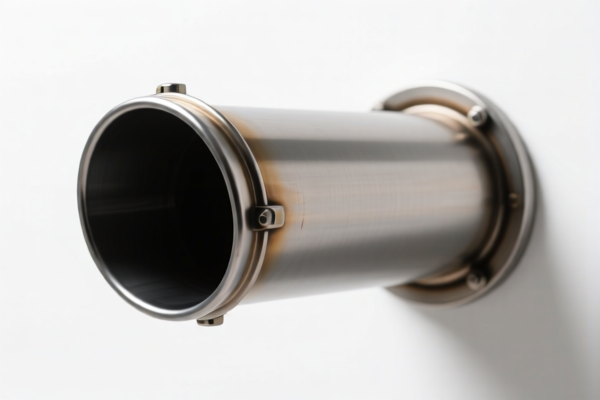
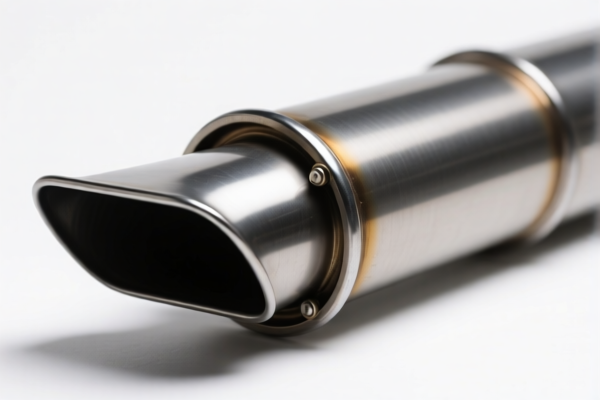
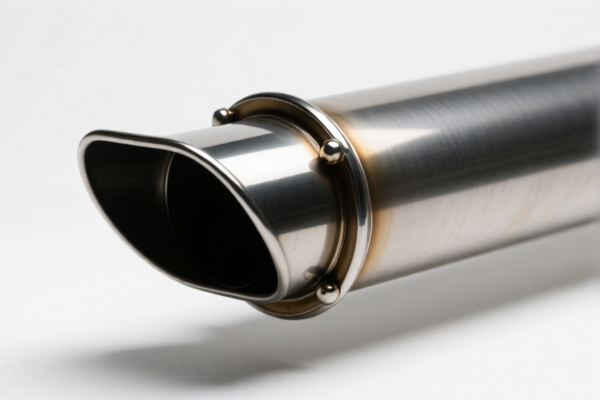
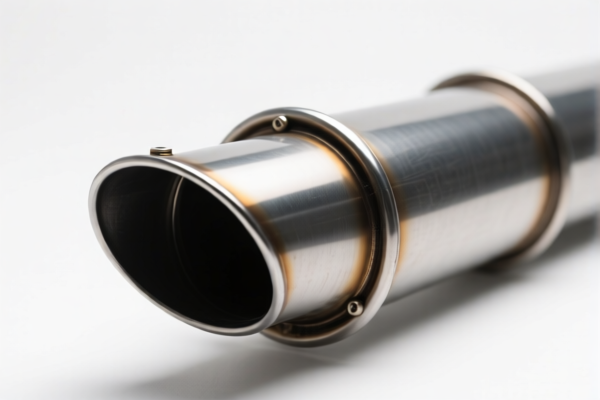
exhaust pipe fixing ring
CN → US| HS Code | Tariff Rate | Origin | Destination | Doc |
|---|---|---|---|---|
| 8483908040 | 37.8% | CN | US | Official Doc |
| 8483907000 | 40.5% | CN | US | Official Doc |
| 7326190080 | 87.9% | CN | US | Official Doc |
| 7326908688 | 87.9% | CN | US | Official Doc |
| 8708927500 | 37.5% | CN | US | Official Doc |
Product Images
AI Analysis
🚗 Exhaust Pipe Fixing Ring: HS Code Classification & Clearance Strategy | 2026 Updated Guide
🌐 HS Code Reference & Customs Clearance Guide | Expert-Level Duty Analysis for Auto Parts
📌 I. Product Definition & Classification: What Exactly is an "Exhaust Pipe Fixing Ring"?
The Exhaust Pipe Fixing Ring (often made of steel or iron) is a critical mechanical component used in automotive exhaust systems. Its primary function is to secure, support, and align exhaust pipes, mufflers, or catalytic converters to the vehicle chassis or engine block.
In international trade, this item faces a classification dilemma: Is it a general metal article (Chapter 73) or a specific automotive part (Chapter 87)? This distinction drastically impacts the tariff rate, especially under current US trade policies (Section 301 & Section 232).
⚠️ Key Classification Logic:
- If classified as a general steel product (Ch. 73): Subject to higher total duties due to broader metal tariffs.
- If classified as an automotive spare part (Ch. 87): Generally subject to lower total duties (37.5% vs. 87.9%).
- Crucial Factor: Customs officers will look at the specificity of the use. If it is exclusively for automotive exhaust systems, Ch. 87 is often the stronger argument for lower duties.
📦 II. HS Code Classification Details (2026 Authoritative Comparison)
Based on the provided data, here are the four most likely HS Codes and their corresponding duty structures.
| HS Code | Product Description | Classification Logic | Total Tax Rate | Tax Breakdown |
|---|---|---|---|---|
| 7326.19.00.80 | Steel/Metal fixing rings, forged or stamped, not further worked. | Classified as General Steel Articles (Ch. 73). Broad category. | 87.9% | Base: 2.9% + Sec 301: 25.0% + Sec 232 (Steel): 10% + Steel/Alu/Cu Surcharge: 50% |
| 7326.90.86.88 | Iron/Steel fixing rings, classified as other iron/steel articles. | Classified as General Steel Articles (Ch. 73). "Other" category. | 87.9% | Base: 2.9% + Sec 301: 25.0% + Sec 232 (Steel): 10% + Steel/Alu/Cu Surcharge: 50% |
| 8708.92.75.00 | Fixing rings for exhaust systems, classified as Mufflers & Exhaust Parts. | Classified as Automotive Parts (Ch. 87). Specific to exhaust systems. | 37.5% | Base: 2.5% + Sec 301: 25.0% + Sec 232: 10% |
| 8708.99.81.80 | Auto exhaust system spare parts, classified as Other Auto Parts (brackets/rings). | Classified as Automotive Parts (Ch. 87). General auto part category. | 37.5% | Base: 2.5% + Sec 301: 25.0% + Sec 232: 10% |
| 8483.90.80.40 | Transmission/Connection parts (rings/fasteners) for exhaust fixing. | Classified as General Machinery Parts (Ch. 84). Less likely if auto-specific. | 37.8% | Base: 2.8% + Sec 301: 25.0% + Sec 232: 10% |
🔍 Critical Insight:
- Ch. 73 (7326.19.00.80 / 7326.90.86.88) incurs a 50% surcharge under the "Steel, Aluminum, Copper Products" clause, pushing the total tax to 87.9%.
- Ch. 87 (8708.92.75.00 / 8708.99.81.80) avoids the 50% steel surcharge, resulting in a 37.5% total tax.
- Recommendation: Aim for 8708.92.75.00 as it is the most specific description for exhaust system components.
💰 III. 2026 Tariff Rate Breakdown (Detailed Tax Clauses)
✅ Applicable Country: United States (US)
✅ Country of Origin: China (CN)
✅ Effective Date: From Nov 10, 2025 (including subsequent imports)
🎯 1. High-Tax Scenario: Classification as General Steel (HS 7326...)
Target Codes: 7326.19.00.80 / 7326.90.86.88
| Item | Details |
|---|---|
| Base Duty Rate | 2.9% (Ad Valorem) |
| Section 301 Tariff | +25.0% (US Trade Act, Item 9903.88.01) |
| Section 232 Tariff | +10% (Steel Products) |
| Special Steel Surcharge | +50.0% (Steel, Aluminum, Copper Products) |
| Total Effective Rate | 87.9% |
| Calculation Basis | CIF Value × 87.9% |
| De Minimis Exemption? | ❌ No (Deny De Minimis) |
| Legal Reference Path | IEEPA:9903.01.25 → USITC:7326.xxxx → FOOTNOTE:Steel/Alu/Cu |
📌 Explanation:
- The 50% surcharge is the key driver here. It applies to iron/steel articles under Ch. 72-73.
- This rate is prohibitive for most commercial imports. Proper classification is vital to avoid this.
🎯 2. Low-Tax Scenario: Classification as Auto Parts (HS 8708...)
Target Codes: 8708.92.75.00 / 8708.99.81.80
| Item | Details |
|---|---|
| Base Duty Rate | 2.5% - 2.8% |
| Section 301 Tariff | +25.0% |
| Section 232 Tariff | +10.0% |
| Special Steel Surcharge | 0% (Exempt as auto part, not general steel) |
| Total Effective Rate | 37.5% |
| Calculation Basis | CIF Value × 37.5% |
| De Minimis Exemption? | ❌ No (Deny De Minimis) |
| Legal Reference Path | IEEPA:9901.25 → USITC:8708.92/99 → FOOTNOTE:Auto Parts |
📌 Explanation:
- 8708.92.75.00 is preferred because it specifically mentions "Exhaust System."
- These codes are exempt from the 50% steel surcharge because they are considered parts of vehicles (Ch. 87), not raw steel articles.
🛠️ IV. Customs Clearance Practical Advice (Avoiding Pitfalls)
✅ 1. Documentation Checklist (Non-Negotiable)
| Document | Required? | Purpose |
|---|---|---|
| ✅ Product Specification Sheet | ✔️ | Must specify: Material (Steel/Iron), Usage (Exhaust System), Manufacturing Process (Forged/Stamped). |
| ✅ Technical Drawings | ✔️ | Show how the ring fits into the exhaust pipe. Proves it is a part, not a generic fastener. |
| ✅ Commercial Invoice | ✔️ | Description must read: "Exhaust Pipe Fixing Ring for Automotive Use, Steel, HS Code 8708.92.75.00" |
| ✅ Packing List | ✔️ | Ensure no mixing with general steel rods or angles that could confuse customs. |
| ✅ Certificate of Origin | ✔️ | Essential for determining Section 301/232 applicability. |
✅ 2. Classification Strategy (Key Mnemonic)
🔥 "Be Specific to Save 50%: Exhaust Part Wins Over General Steel!"
| Scenario | Correct HS Code | Tax Rate | Risk |
|---|---|---|---|
| Generic Steel Ring (No auto context) | 7326.19.00.80 |
87.9% | ⚠️ High Duty |
| Exhaust Fixing Ring (Auto Context) | 8708.92.75.00 |
37.5% | ✅ Optimal |
| Auto Part (Generic Bracket/Ring) | 8708.99.81.80 |
37.5% | ✅ Good Alternative |
📌 Advice:
- Do NOT describe the item simply as "Steel Ring" or "Fastener."
- DO emphasize: "For Use in Automotive Exhaust Systems."
- If the ring is used in both auto and industrial applications, customs may revert to Ch. 73. Ensure exclusive or primary use in auto exhausts.
✅ 3. Special Handling for Section 232 & 301
| Issue | Solution |
|---|---|
| Steel Surcharge (50%) | Must prove the item is not a "general steel article" but a specific automotive component. Use HS 8708. |
| Section 301 (25%) | Applies to both Ch. 73 and Ch. 87 if originating from China. Cannot be avoided for CN origin. |
| Section 232 (10%) | Applies to both categories for steel/iron articles. Cannot be avoided for CN origin. |
| De Minimis (Section 321) | ❌ Excluded. Items under 301/232 are explicitly denied de minimis entry. |
🌍 V. Global Market Comparison (2026)
| Country/Region | Recommended HS Code | Estimated Total Tax | Key Requirement |
|---|---|---|---|
| 🇺🇸 USA | 8708.92.75.00 |
37.5% | Prove auto-specific use. Avoid Ch. 73. |
| 🇨🇳 China | 8708.92.75.00 |
Low | No 301/232 tariffs domestically. |
| 🇪🇺 EU | 8708.92 |
Varies (0-4%) | CE marking may be required. |
| 🇲🇽 Mexico | 8708.92 |
0-5% | USMCA benefits if produced in NA. |
📌 Conclusion:
- The USA is the most challenging market due to the 87.9% vs. 37.5% disparity.
- European and North American markets are more favorable, but origin certification is key.
📌 VI. Common Errors & Pitfalls (Lessons Learned)
❌ Error 1: Classifying as "Steel Fastener" (HS 7318) or "General Steel Article" (HS 7326).
👉 Result: 87.9% Tax + Potential penalties for misclassification.
❌ Error 2: Describing as "Metal Ring" without specifying "Exhaust System."
👉 Result: Customs defaults to Ch. 73 → Higher Duty.
❌ Error 3: Ignoring Section 232 Steel Surcharge.
👉 Result: Unexpected 10% + 50% add-ons if classified incorrectly.
❌ Error 4: Assuming De Minimis applies for small shipments.
👉 Result: Seizure or forced formal entry for CN-origin items.
✅ Correct Approach:
"Automotive Exhaust Pipe Fixing Ring, Steel, Forged, Specifically Designed for Muffler/Exhaust Pipe Connection, HS Code 8708.92.75.00."
🎯 VII. Conclusion: Precision Saves Money!
🎯 Remember the Golden Rule:
🔹 "Exhaust Part = Ch. 87 = 37.5%"
🔹 "General Steel = Ch. 73 = 87.9%"
🔹 "The difference is 50%! Classify specifically!"🔹 "HS Code is King, Tariff is Queen, Misclassification is the Enemy!"
📌 Pro Tip:
If your supplier is not in China, you may avoid Section 301 (25%) and Section 232 (10%) surcharges entirely.
✅ Vietnam/Mexico/Taiwan Origin: Potentially 0-5% total duty.
✅ China Origin: 37.5% minimum (if classified as auto part).
📣 Action Plan:
1. Verify Material: Confirm it is steel/iron.
2. Document Usage: Get a statement that it is exclusively for exhaust systems.
3. Apply for Pre-Ruling: Submit an AA Ruling Request to US Customs for HS 8708.92.75.00.
4. Clearance: Declare with full technical details to avoid Ch. 73 misclassification.
✨ Expert Customs Clearance, Start with Accurate Classification!
💼 Your Profit Margin Depends on This 50% Difference!
Customer Reviews
About HS Code Classification
The Harmonized System (HS) is an internationally standardized nomenclature developed by the World Customs Organization (WCO) to classify traded products. Over 200 countries use the HS system as the basis for customs tariffs, trade statistics, and import/export regulations.
Each HS code follows a hierarchical structure:
- Chapter (2 digits) — Broad category of goods (e.g., Chapter 84: Machinery and Mechanical Appliances)
- Heading (4 digits) — More specific grouping within the chapter
- Subheading (6 digits) — Internationally standardized breakdown, used by all WCO member countries
- National subdivisions (8-10 digits) — Country-specific extensions for further classification, such as US HTSUS 10-digit codes
Correct HS code classification is essential for smooth customs clearance, accurate duty payment, and compliance with trade regulations. Misclassification can lead to customs delays, overpayment of duties, or penalties.
When importing from CN to US, the applicable tariff rates may include:
- Most-Favored-Nation (MFN) rate — The standard duty rate applied to WTO members
- General rate — Applied to countries without trade agreements
- Trade remedy duties — Additional tariffs such as Section 301 (anti-dumping), Section 232 (national security), or countervailing duties
The information provided on this page is for reference purposes only. For official classification, please consult with your local customs authority or a licensed customs broker.