exposed lamp
CN → US| HS Code | Tariff Rate | Origin | Destination | Doc |
|---|---|---|---|---|
| 9405294010 | 38.7% | CN | US | Official Doc |
| 9405296010 | 41.0% | CN | US | Official Doc |
| 8539228040 | 12.6% | CN | US | Official Doc |
| 8539228060 | 12.6% | CN | US | Official Doc |
Product Images
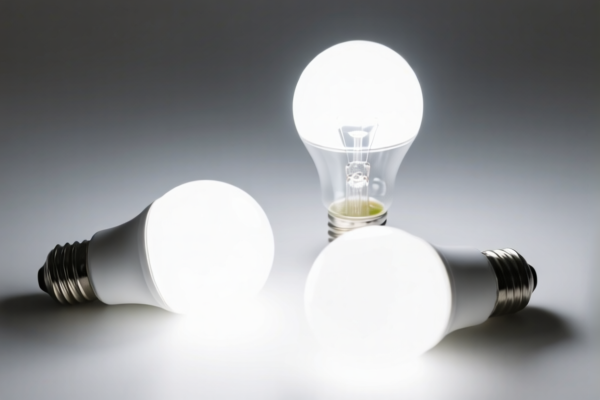
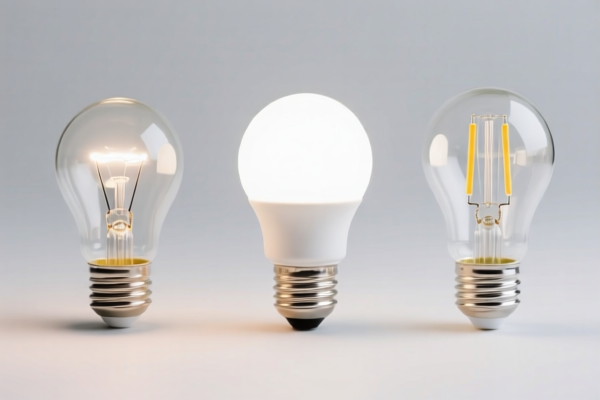
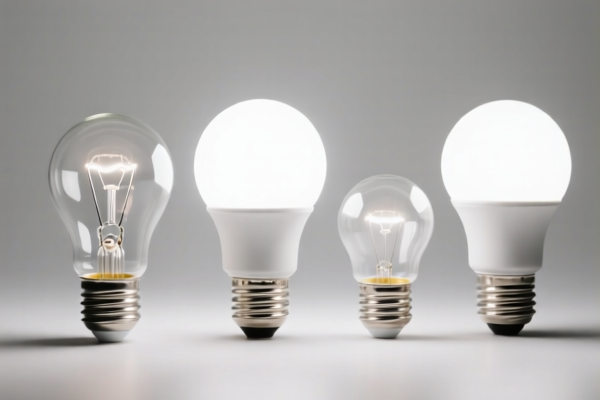
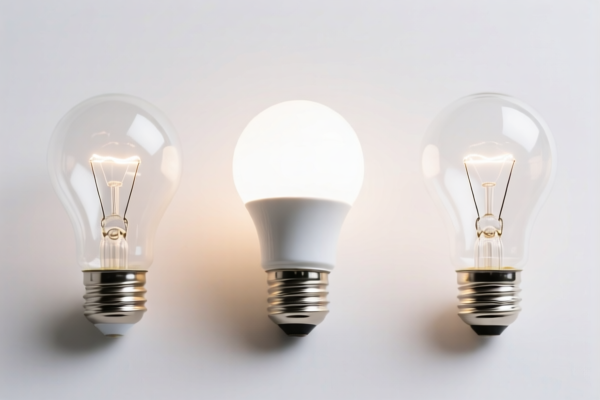
AI Analysis
💡 Exposed Lamp (Unshaded Lighting Fitting)
🌐 HS Code Reference & Clearance Guide | 2026 Latest Tariff Analysis | Professional Clearance Strategy
📌 I. Product Definition: What is an "Exposed Lamp"?
An "Exposed Lamp" in international trade typically refers to luminaires (lighting fittings) where the light source (bulb) is visible and not enclosed within a complex diffuser or opaque housing. Crucially, it is not the bulb itself, but the fixture holding the bulb.
However, customs classification depends heavily on two key factors: 1. Is it the lamp (bulb) or the luminaire (fixture)? 2. What is the base material?
In your provided data, we see a split between Filament Lamps (Bulbs) and Luminaires (Fixtures).
⚠️ Critical Distinction:
- If you are importing the bulb only (e.g., an Edison-style LED filament bulb): See Section II.
- If you are importing the fixed lighting fixture (e.g., a pendant light, desk lamp, or floor lamp with a visible bulb): See Section III.
📦 II. HS Code Classification for Filament Lamps (Bulbs Only)
If "Exposed Lamp" refers to the light source itself (e.g., visible filament bulbs):
| HS Code | Product Description | Key Parameters | Power Limit | Voltage Limit |
|---|---|---|---|---|
8539.22.80.40 |
Other filament lamps, excluding UV/IR | Household/Standard | 15 W ≤ Power ≤ 150 W | > 100 V |
8539.22.80.60 |
Other filament lamps, excluding UV/IR | Non-household/Special | Power ≤ 150 W | > 100 V |
🔍 Note:
- These codes apply only to the bulb/filament, not the fixture.
- Power must not exceed 200 W total, but these specific sub-codes target ≤ 150 W.
- Voltage must exceed 100 V.
🏠 III. HS Code Classification for Luminaires (Fixtures)
If "Exposed Lamp" refers to the complete lighting fitting (e.g., a table lamp, floor lamp, or pendant light with exposed bulb):
| HS Code | Product Description | Material Base | Tax Rate |
|---|---|---|---|
9405.29.40.10 |
Electric table, desk, bedside, or floor-standing luminaires | Brass (Household) | 28.7% |
9405.29.60.10 |
Electric table, desk, bedside, or floor-standing luminaires | Other Base Metal (Household) | 31.0% |
🔍 Note:
- These codes apply to complete luminaires (fixture + bulb may or may not be included, but the fixture is the key).
- Must be for household use.
- "Exposed" style does not change the code from9405.29.xxxx, but the material determines the sub-code.
💰 IV. 2026 Latest Tariff Rate Breakdown
✅ Applicable Country: Likely China (based on high additional tariffs mentioned in
9405.29codes implying trade tensions, or US import from China).
⚠️ Context: The high rates (28.7% and 31.0%) suggest significant trade barriers (e.g., Section 301 tariffs for US imports from China).
🎯 1. 8539.22.80.40 & 8539.22.80.60 — Filament Lamps (Bulbs)
| Item | Content |
|---|---|
| Base Tariff | 0.0% |
| Additional Tariff | 0.0% |
| Total Tax | 0.0% |
| Tax Detail | Base: 0.0%, Additional: 0.0% |
| Legal Basis | Standard MFN rate, no additional trade war tariffs for this specific sub-category. |
📌 Explanation:
- Filament lamps under 150W with voltage >100V currently enjoy zero duty in this dataset.
- No extra penalties. This makes bulb imports very cost-effective.
🎯 2. 9405.29.40.10 — Brass Household Luminaires
| Item | Content |
|---|---|
| Base Tariff | 3.7% |
| Additional Tariff | 25.0% |
| Total Tax | 28.7% |
| Tax Detail | Base: 3.7%, Additional: 25.0% |
| Legal Basis | Likely Section 301 (US-China) or similar retaliatory tariff. |
📌 Explanation:
- The 25% additional tariff is the major cost driver.
- This applies to brass household lamps.
- Total cost impact: Nearly 30% of CIF value.
🎯 3. 9405.29.60.10 — Other Base Metal Household Luminaires
| Item | Content |
|---|---|
| Base Tariff | 6.0% |
| Additional Tariff | 25.0% |
| Total Tax | 31.0% |
| Tax Detail | Base: 6.0%, Additional: 25.0% |
| Legal Basis | Same as above, but higher base rate for non-brass metals (e.g., iron, steel, aluminum). |
📌 Explanation:
- Even higher total tax (31.0%) due to higher base rate.
- Applies to lamps made of steel, aluminum, etc.
- "Exposed" style does not lower the tariff; material determines the base rate.
🛠️ V. Clearance Practical Advice (Pitfall Avoidance Guide)
✅ 1. Prepare Required Documents
| Document | Mandatory? | Notes |
|---|---|---|
| ✅ Product Specs | ✔️ | Must specify: Bulb power, Voltage, Fixture Material (Brass/Other Metal), Intended Use (Household). |
| ✅ Photos | ✔️ | Show the lamp with and without bulb. Clearly show material finish (brass plating vs. painted steel). |
| ✅ Invoice | ✔️ | Clearly state: "Household Luminaire" or "Filament Lamp". Do not use vague terms like "Decorative Light". |
| ✅ Declaration of Compliance | ✔️ | For electrical safety (UL/CE). |
✅ 2. Classification Tips (Key Rules)
| Scenario | Correct HS Code | Why? |
|---|---|---|
| Only the bulb (Edison style, LED filament) | 8539.22.80.40 or .60 |
It's a "Lamp", not a "Luminaire". Zero tariff. |
| Complete lamp (Brass material, household use) | 9405.29.40.10 |
Brass triggers lower base rate (3.7%) but still high total due to 25% add-on. |
| Complete lamp (Steel/Aluminum, household use) | 9405.29.60.10 |
Other metal triggers higher base rate (6.0%) + 25% add-on. |
| Industrial/Commercial fixture | ❌ Not in Data | Not in provided dataset. Likely different code (e.g., 9405.91). |
🔥 Golden Rule:
"Bulb is 0%, Fixture is 28-31%. Material matters!"
- If you can ship bulbs only, save massive tariffs.
- If shipping fixtures, declare exact material (Brass vs. Steel) to avoid misclassification penalties.
✅ 3. Special Cases
| Case | Advice |
|---|---|
| Mixed Container (Bulbs + Fixtures) | Declare separately! Do not lump them. Bulbs go to 8539, Fixtures to 9405. |
| Non-Household Fixtures | Not covered in this dataset. Likely commercial/industrial. Must consult additional codes. |
| Vintage/Industrial Style | Still classified by material and use. If it looks like a factory lamp but is for home, it's 9405.29. |
🌍 VI. Global Market Comparison (2026)
| Market | Recommended HS Code | Total Tariff | Notes |
|---|---|---|---|
| 🇺🇸 USA (from China) | 9405.29.xxxx |
28-31% | High Section 301 tariffs. |
| 🇪🇺 EU | 9405.49 (approx) |
~0-4% | Lower base tariffs, no 25% add-on. |
| 🇨🇳 China | 9405.29 |
5-8% | Domestic import rates may differ. |
📌 Conclusion:
- USA imports of household luminaires face high barriers (28-31%).
- Bulbs (8539) remain tariff-free in this dataset, offering a cost advantage for bulb-only shipments.
- Material selection (Brass vs. Other Metal) affects base rate but not the additional 25% tariff.
📌 VII. Common Errors & Pitfalls
❌ Error 1: Classifying a complete brass lamp as a bulb (8539)
👉 Result: Misdeclaration. Customs will reclassify and fine.
👉 Fix: Declare as 9405.29.40.10.
❌ Error 2: Classifying a steel lamp as brass
👉 Result: Base rate mismatch (6% vs 3.7%).
👉 Fix: Verify material composition. Even "brass-plated" may be classified as "other metal" if not solid brass.
❌ Error 3: Using vague descriptions like "Light"
👉 Result: Delays. Customs needs to know: Household? Material? Power?
👉 Fix: Use precise descriptions: "Household Table Lamp, Brass, 100-240V".
✅ Correct Description Example:
"Household Electric Luminaire, Table Lamp, Brass Base, Exposed Bulb Style, 150W Max, 120V"
→ HS:9405.29.40.10| Tax: 28.7%
🎯 VIII. Conclusion: Smart Clearance for Exposed Lamps
🎯 Key Takeaways:
🔹 Bulbs vs. Fixtures: Bulbs (
8539) are 0% tax. Fixtures (9405) are 28-31% tax.
🔹 Material Matters: Brass (9405.29.40.10) has a lower base rate (3.7%) than other metals (6.0%), but both carry the 25% additional tariff.
🔹 Declare Precisely: Do not use generic terms. Specify "Household Luminaire" and "Brass/Other Metal".
📣 Action Plan:
- If importing bulbs only: Use
8539.22.80.40→ 0% Tax.- If importing fixtures: Confirm material → Brass (
9405.29.40.10) or Other Metal (9405.29.60.10).- Plan for high tariffs: Budget for ~30% duty on fixtures.
- Consult a broker: For mixed shipments, ensure separate line items.
✨ Professional clearance, precise classification, cost efficiency!
💼 Every percent of tariff matters. Get it right from the start.
Customer Reviews
About HS Code Classification
The Harmonized System (HS) is an internationally standardized nomenclature developed by the World Customs Organization (WCO) to classify traded products. Over 200 countries use the HS system as the basis for customs tariffs, trade statistics, and import/export regulations.
Each HS code follows a hierarchical structure:
- Chapter (2 digits) — Broad category of goods (e.g., Chapter 84: Machinery and Mechanical Appliances)
- Heading (4 digits) — More specific grouping within the chapter
- Subheading (6 digits) — Internationally standardized breakdown, used by all WCO member countries
- National subdivisions (8-10 digits) — Country-specific extensions for further classification, such as US HTSUS 10-digit codes
Correct HS code classification is essential for smooth customs clearance, accurate duty payment, and compliance with trade regulations. Misclassification can lead to customs delays, overpayment of duties, or penalties.
When importing from CN to US, the applicable tariff rates may include:
- Most-Favored-Nation (MFN) rate — The standard duty rate applied to WTO members
- General rate — Applied to countries without trade agreements
- Trade remedy duties — Additional tariffs such as Section 301 (anti-dumping), Section 232 (national security), or countervailing duties
The information provided on this page is for reference purposes only. For official classification, please consult with your local customs authority or a licensed customs broker.