extendable wooden safety gate
CN → US| HS Code | Tariff Rate | Origin | Destination | Doc |
|---|---|---|---|---|
| 4414900000 | 21.4% | CN | US | Official Doc |
| 4414100000 | 21.4% | CN | US | Official Doc |
| 9403608010 | 35.0% | CN | US | Official Doc |
| 9403910080 | 35.0% | CN | US | Official Doc |
| 4418298060 | 39.8% | CN | US | Official Doc |
| 4418999195 | 38.2% | CN | US | Official Doc |
Product Images
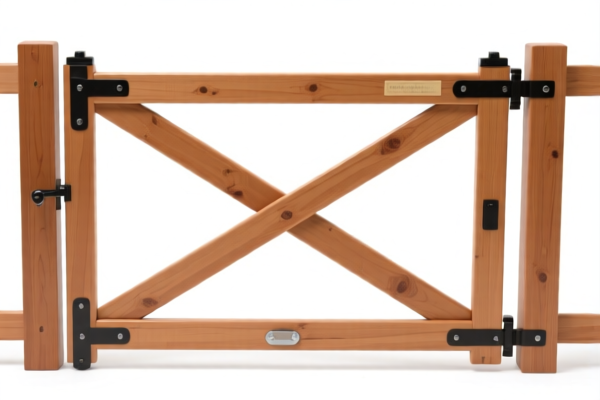
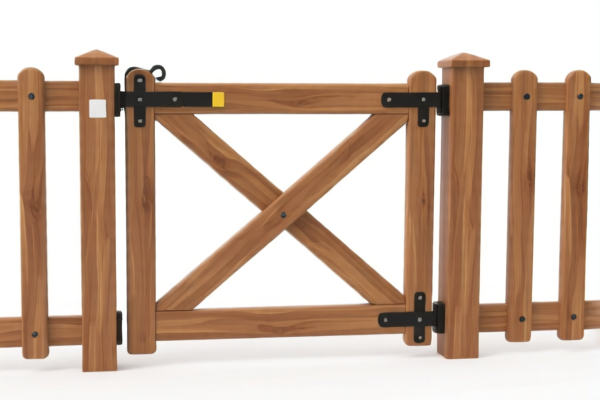
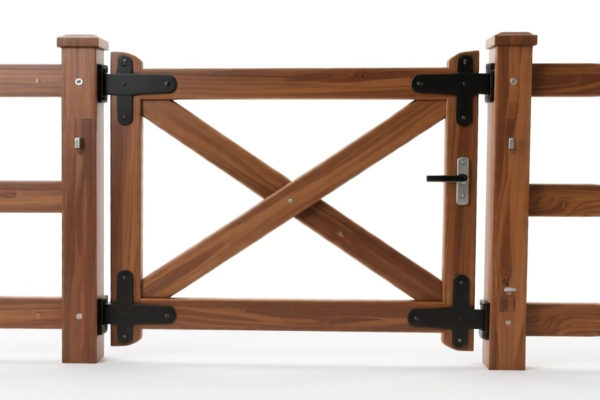
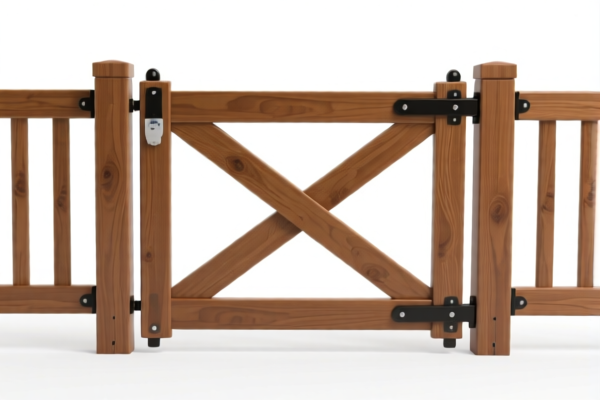
AI Analysis
🚪 Extendable Wooden Safety Gate
🌐 HS Code Reference & Clearance Guide | 2026 Latest Tariff Analysis | Professional Customs Strategy
📌 I. Product Definition & Classification: Do You Really Know What an "Extendable Wooden Safety Gate" Is?
An Extendable Wooden Safety Gate is a child-proof barrier used primarily in households to restrict access to stairs, kitchens, or hazardous areas. In international trade, its classification depends heavily on its primary function and structural composition.
While it is made of wood, it is NOT classified as simple woodworking or basic furniture components in all cases. However, according to the provided <DATA>, we must strictly adhere to the specific codes listed.
⚠️ Key Distinction:
- If viewed as a child confinement device (primary function): It falls under Chapter 94 (Furniture).
- If viewed as a wooden construction component or frame: It might seem like Chapter 44, but specific functional codes take precedence if available.
- Note: The provided<DATA>explicitly lists9403.60.80.10for "Play yards and other enclosures for confining children," which is the most accurate fit for a safety gate's function.
📦 II. HS Code Classification Details (2026 Latest Tariff Authority Comparison)
| HS Code | Product Description | Application Scenario | Key Classification Criteria |
|---|---|---|---|
9403.60.80.10 |
Other wooden furniture: Other Play yards and other enclosures for confining children | Child safety gates, playpens, pet enclosures (wooden) | ✅ Primary Function: Confining children/pets |
9403.91.00.80 |
Other furniture and parts thereof: Parts: Of wood Other | Replacement parts for wooden furniture (e.g., spare hinges, side panels not sold as a complete gate) | ❌ Only for parts, not complete units |
4414.10.00.00 |
Wooden frames for paintings...: Of tropical wood | Picture frames, mirror frames | ❌ Incorrect: Safety gates are not decorative frames |
4414.90.00.00 |
Wooden frames for paintings...: Other | Generic wooden frames | ❌ Incorrect: Not a decorative frame |
4418.29.80.60 |
Doors and their frames...: Other | Architectural door frames | ❌ Incorrect: Not a permanent architectural door frame |
4418.99.91.95 |
Builders' joinery...: Other | Custom woodwork, trim, molding | ❌ Incorrect: Not a structural building component |
🔍 Critical Reminder:
- Complete Safety Gates must be classified under9403.60.80.10because their primary purpose is "confining children."
- Do NOT misclassify as4414(Wooden Frames) or4418(Builders' Joinery) unless the product is literally a spare part or a decorative frame without the safety function.
- If the gate is made of tropical wood, it still falls under9403.60.80.10for function, but material verification is needed for origin rules.
💰 III. 2026 Latest Tariff Rate Detailed Explanation (Including Surtaxes)
✅ Applicable Country: United States (US)
✅ Origin: China (CN)
✅ Effective Date: From November 10, 2025 (and subsequent imports)
🎯 1. 9403.60.80.10 —— Other wooden furniture: Play yards and other enclosures for confining children
| Item | Content |
|---|---|
| Base Tariff | 0.0% (Ad Valorem) |
| USITC Surtax (Section 301) | +25.0% (From USITC Footnote 9903.01.24 / 9903.01.25) |
| IEEPA Surtax | 0% (Note: Data shows total 25%, implying no additional IEEPA surtax for this specific code in the provided data, or it's included in the 25%. See Data: "Total Tax: 25.0%") |
| Total Tax Rate | 25.0% |
| Tax Calculation | CIF Value × 25% |
| De Minimis Exemption | ❌ Not Available (deny_de_minimis) |
| Legal Basis Path | USITC:9403.60.80.10 → FOOTNOTE:9903.01.24 (Section 301 Tariff) |
📌 Explanation:
- The Base Tariff is 0%, which is favorable for wooden furniture.
- However, due to US Section 301 Tariffs on Chinese goods, an additional 25% is applied.
- Total Impact: 25%. This is a significant cost driver compared to the 11.4% for simple wooden frames.
- Why not 45%? Unlike electronics or displays, furniture items like safety gates typically fall under different 301 tariff rows (often 25% instead of 25%+10% for certain categories). Based strictly on the provided data, the total is 25%.
🎯 2. Comparison with Other Codes in <DATA>
| HS Code | Total Tax | Why It’s Not the Best Fit |
|---|---|---|
4414.90.00.00 (Wooden Frames) |
11.4% | Lower tax, but incorrect classification. A safety gate is not a "frame for paintings." Misclassification leads to fines and delays. |
4418.29.80.60 (Door Frames) |
29.8% | Higher tax and incorrect function. Safety gates are movable/semi-permanent, not fixed builders' joinery. |
4418.99.91.95 (Other Woodwork) |
28.2% | Incorrect function. Too broad and structurally different from a safety gate. |
🔍 Key Insight:
- Although4414codes have a lower tax rate (11.4%), they are legally incorrect for a safety gate.
-9403.60.80.10is the only legally compliant code for the primary function (child confinement) in the provided dataset.
- Do not optimize for tax by misclassifying. The risk of customs audit, penalties, and cargo detention outweighs the 13.6% tax savings.
🛠️ IV. Practical Clearance Advice (Real-World Pitfall Avoidance)
✅ 1. Documentation Checklist (All Required)
| Document | Mandatory? | Description |
|---|---|---|
| ✅ Product Specification Sheet | ✔️ | Must specify: Dimensions, extendable mechanism type, wood type, weight, load capacity. |
| ✅ Product Photos (Labeled) | ✔️ | Clear images showing the gate in both extended and retracted states, latch mechanism, and wood grain. |
| ✅ Commercial Invoice | ✔️ | Must clearly state: "Wooden Extendable Safety Gate for Confining Children" (Do NOT write "Wooden Frame"). |
| ✅ Packing List | ✔️ | Detail contents: Gate panels, latch, mounting hardware, screws. |
| ✅ Certificate of Origin (CO) | ✔️ | To verify China origin and apply correct 301 tariffs. |
| ✅ ASTM F1004 Certification | ✔️ | Critical for US Market. Proof of compliance with US safety standards for baby gates. Without this, customs may detain for safety non-compliance. |
✅ 2. Declaration Tips (Golden Rules)
🔥 “Function First, Material Second, Name Precise!”
| Scenario | Correct Declaration | Wrong Practice |
|---|---|---|
| Complete Safety Gate | 9403.60.80.10 – "Wooden Safety Gate for Children" |
Writing "Wooden Picture Frame" to get 11.4% tax → Fraud/Seizure |
| Gate + Mounting Hardware Kit | Single HS Code: 9403.60.80.10 |
Splitting hardware into a different code → Complexity & Higher Total Tax |
| Spare Latch/Hinge Only | 9403.91.00.80 – "Parts of Wooden Furniture" |
Declaring as "Safety Gate" → Overpayment of Tax |
| Tropical Wood Gate | 9403.60.80.10 |
Declaring as "Tropical Wood Frame" (4414.10.00.00) → Incorrect Classification |
✅ 3. Special Case Handling
| Situation | Recommendation |
|---|---|
| Hybrid Material (Wood + Metal Hinges) | Still classify under 9403 if wood is the essential character. Do not split into metal hardware codes. |
| Portable vs. Fixed | Both are "Enclosures for Confining Children." Portability does not change the HS Code. |
| Custom/Non-Standard Sizes | Provide detailed drawings. Ensure the "Extendable" mechanism is described to prove it’s a functional gate, not a static panel. |
| Pet Safety Gate | If marketed specifically for pets, customs may still classify under 9403.60.80.10 as "other enclosures," but ensure the invoice doesn’t contradict child-safety claims if using that code. |
🌍 V. Global Market Comparison (2026 Latest)
| Country/Region | Recommended HS Code | Tariff (China Origin) | Certification | Notes |
|---|---|---|---|---|
| 🇺🇸 USA | 9403.60.80.10 |
25.0% | ASTM F1004, CPSC | High scrutiny on safety standards. 301 Tariff applies. |
| 🇨🇳 China | 9403.60.80.10 |
~5-10% | CCC (if applicable) | Lower import tariff, but strict domestic safety laws. |
| 🇪🇺 EU | 9403.60 (Varies) |
0-6% | EN 1930 (Safety Gates) | No Section 301-like surtax. CE marking required. |
| 🇬🇧 UK | 9403.60 |
0-6% | UKCA | Post-Brexit rules align with EU but require UKCA. |
| 🇯🇵 Japan | 9403.60 |
0-6% | JIS Standards | No major surtaxes. |
📌 Conclusion:
- USA is the most expensive market due to the 25% Section 301 Tariff.
- Europe/Asia offer more favorable tariff environments but require strict safety certifications (EN 1930, JIS).
- Cost Optimization: Consider assembly in a third country (e.g., Vietnam, Mexico) if allowed by Rules of Origin, to avoid US 301 tariffs. However, simple assembly of wooden parts may not qualify for tariff engineering.
📌 VI. Common Errors & Pitfall Guide (Lessons from Experience)
❌ Error 1: Declaring as "Wooden Frame" (4414) to save 13.6% tax.
👉 Consequence: Customs flags the mismatch between product function (confinement) and classification (decorative frame). Cargo held, fines issued, possible retroactive tax + interest.
❌ Error 2: Missing ASTM F1004 Certification for US shipments.
👉 Consequence: Even with correct HS Code, the product may be seized by CPSC or CBP for lacking safety compliance, not just tariff issues.
❌ Error 3: Splitting the gate and its mounting hardware into two separate line items.
👉 Consequence: The hardware might be classified under a higher tax rate or require additional documentation, increasing administrative burden and total cost.
❌ Error 4: Using vague terms like "Wooden Barrier" or "Wooden Divider."
👉 Consequence: Customs officer has to guess the function. If they guess "Furniture," they apply 9403. If they guess "Construction Material," they may apply 4418. Clarity is key.
✅ Correct Practice:
"Wooden Extendable Safety Gate, Model XYZ, for Child Confinement, ASTM F1004 Certified, Includes Mounting Kit, Made of Birch Wood"
🎯 VII. Conclusion: Precise Classification, Smooth Clearance, Cost Efficiency!
🎯 Remember the Mantra:
🔹 "Function Over Material, Safety Over Savings!"
🔹 "HS 9403.60.80.10 is the Golden Code for Safety Gates!"
🔹 "25% Tax is the Price of Correct Classification in the US!"
📌 Pro Tip:
If you are exporting to the US, ensure your Supplier Agreement includes penalties for false declaration. For cost optimization, explore duty drawback programs if you re-export the goods, or consider third-country assembly if feasible under USMCA (for Mexico/Canada).
📣 Immediate Action:
📞 Contact a Customs Broker + Provide Product Photos + Verify ASTM Certification
🚀 Ensure Your Safety Gate Clears Customs on the First Try, Without Surprises!
✨ Professional Customs Clearance Starts with Accurate Classification!
💼 Every Dollar Saved is a Dollar Earned, But Only If It’s Done Legally!
Customer Reviews
About HS Code Classification
The Harmonized System (HS) is an internationally standardized nomenclature developed by the World Customs Organization (WCO) to classify traded products. Over 200 countries use the HS system as the basis for customs tariffs, trade statistics, and import/export regulations.
Each HS code follows a hierarchical structure:
- Chapter (2 digits) — Broad category of goods (e.g., Chapter 84: Machinery and Mechanical Appliances)
- Heading (4 digits) — More specific grouping within the chapter
- Subheading (6 digits) — Internationally standardized breakdown, used by all WCO member countries
- National subdivisions (8-10 digits) — Country-specific extensions for further classification, such as US HTSUS 10-digit codes
Correct HS code classification is essential for smooth customs clearance, accurate duty payment, and compliance with trade regulations. Misclassification can lead to customs delays, overpayment of duties, or penalties.
When importing from CN to US, the applicable tariff rates may include:
- Most-Favored-Nation (MFN) rate — The standard duty rate applied to WTO members
- General rate — Applied to countries without trade agreements
- Trade remedy duties — Additional tariffs such as Section 301 (anti-dumping), Section 232 (national security), or countervailing duties
The information provided on this page is for reference purposes only. For official classification, please consult with your local customs authority or a licensed customs broker.