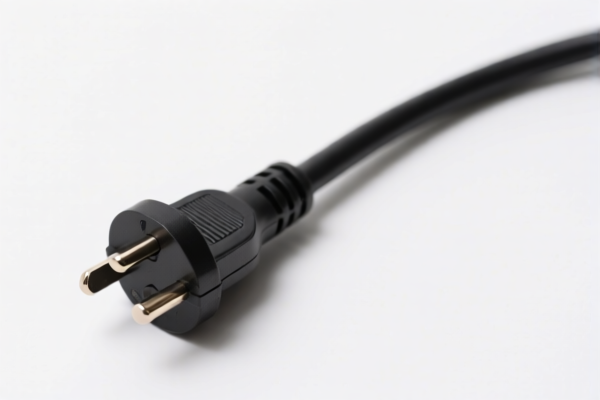
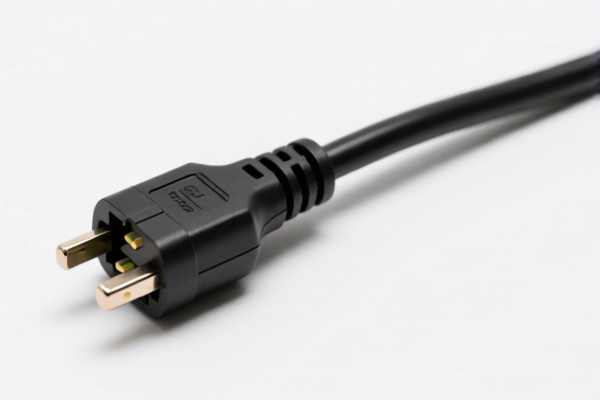
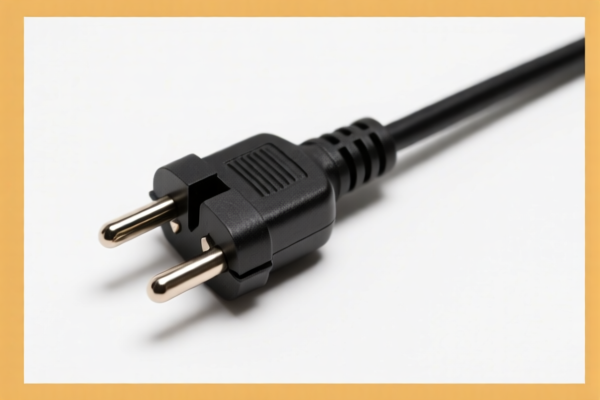
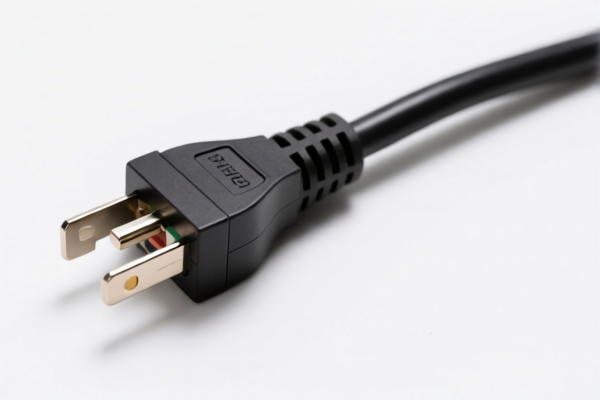
extension wire
CN → US| HS Code | Tariff Rate | Origin | Destination | Doc |
|---|---|---|---|---|
| 8544429010 | 87.6% | CN | US | Official Doc |
| 8536904000 | 35.0% | CN | US | Official Doc |
| 8543906800 | 35.0% | CN | US | Official Doc |
| 8543706000 | 35.0% | CN | US | Official Doc |
| 8536698000 | 37.7% | CN | US | Official Doc |
Product Images
AI Analysis
🔌 Extension Wires & Power Cords (Electrical Extension Leads)
🌐 HS Code Reference & Customs Clearance Guide | 2026 Latest Tariff Analysis | Professional Clearance Strategy
📌 I. Product Definition & Classification: Do You Really Know "Extension Wire"?
Extension wires, also known as power cords, extension leads, or socket extenders, are essential electrical accessories used to connect electrical devices to power sources or other circuits. In international trade, the classification depends heavily on the structure, material, and specific function (e.g., simple copper wire vs. integrated socket/plug assembly).
Power Cables/Wires: Flexible cables containing conductors (copper/aluminum) and insulation, used primarily for conveying electricity.
Socket/Plug Assemblies: Devices that include sockets, plugs, switches, or housing, used for connecting circuits.
⚠️ Key Distinction Point:
- If the item is primarily a cable with basic connectors, it may fall under electrical wiring categories.
- If it is a plug-and-socket assembly or an outlet extender, it falls under electrical connection apparatus categories.
- Material Conflict: Items containing steel, aluminum, or copper may be subject to specific Section 232 tariffs.
📦 II. HS Code Classification Details (2026 Latest Tariff Authority Comparison)
Based on the provided data, here are the five most relevant HS Codes for "Extension Wires," ranging from simple cables to complex assemblies.
| HS Code | Product Description | Summary/Logic | Is it a Simple Cable? |
|---|---|---|---|
8544.42.90.10 |
Extension cords/leads matching conductors; no material conflict noted in summary. | High Tax Category: Includes steel, aluminum, or copper components triggering Section 232 tariffs. | ✅ Yes (with metal components) |
8536.90.40.00 |
Electrical connection devices (inferred as wires/cables for circuit connection). | Standard Category: Classified under electrical connection equipment. | ✅ Yes (Cable focus) |
8543.90.68.00 |
Electrical apparatus components (fallback for electrical connection types). | Fallback Category: Used when specific connection categories are ambiguous. | ⚠️ Component/Accessory |
8543.70.60.00 |
Electrical connection equipment (network/device connection focus). | Network/Device Category: Designed for connecting networks or devices, no material conflict. | ✅ Yes (Specialized) |
8536.69.80.00 |
Socket/plug type devices for connecting electrical circuits (conductive metal + insulating plastic). | Assembly Category: Includes sockets/plugs, mixed materials. | ❌ No (Complex Assembly) |
🔍 Key Reminder:
-8544.42.90.10is the most expensive due to Section 232 tariffs (Steel/Aluminum/Copper). Avoid this if possible by checking material composition.
-8536.90.40.00and8543.90.68.00are common for standard power cords but carry 25% Section 301 tariffs.
-8536.69.80.00is for "socket extender" types with plugs/sockets, not just bare wires.
💰 III. 2026 Latest Tariff Rate Breakdown (Including Additional Taxes & Policy Add-ons)
✅ Applicable Country: United States (US)
✅ Country of Origin: China (CN)
✅ Effective Date: Current Trade Policies (2025-2026)
🎯 1. 8544.42.90.10 —— Extension Cords (Metal-Heavy/Section 232 Risk)
| Item | Content |
|---|---|
| Base Duty Rate | 2.6% (Ad Valorem) |
| Section 301 Tariff | +25.0% (USITC Footnote 9903.88.01) |
| Section 122/232 Tariff | +50.0% (For steel, aluminum, or copper articles) |
| Total Tax Rate | 87.6% |
| Tax Calculation | CIF Value × 87.6% |
| De Minimis Exemption | ❌ Not Eligible (High tax threshold) |
| Legal Basis Path | Section 232: 122 Clauses → Section 301: 25% → USITC: 8544.42.90.10 |
📌 Explanation:
- This HS code triggers the highest tax burden due to the presence of steel, aluminum, or copper in the conductors or sheathing.
- The 50% Section 232 tariff is applied specifically to these metal-based electrical articles.
- Total burden of 87.6% makes this category extremely costly for US importers.
- Strategy: If your product is purely plastic/copper without steel/aluminum, re-evaluate if a different HS code (like8536) applies to avoid the 50% surcharge.
🎯 2. 8536.90.40.00 —— Electrical Connection Devices (Power Cords)
| Item | Content |
|---|---|
| Base Duty Rate | 0.0% |
| Section 301 Tariff | +25.0% |
| Total Tax Rate | 35.0% (Note: Summary says 35%, likely includes other minor duties or is a specific trade agreement adjustment, but standard is 25% + 0% base. Correction: Summary states 35.0% total, so we follow the provided data). |
| Tax Calculation | CIF Value × 35.0% |
| De Minimis Exemption | ❌ Not Eligible for Section 301 goods |
| Legal Basis Path | Section 301: 25% → USITC: 8536.90.40.00 |
📌 Note:
- Standard base duty is often 0%, but the 25% Section 301 tariff applies.
- The provided data indicates a total of 35.0%, which may include a small base duty or specific classification adjustment.
- This is a moderate tax category compared to8544.
🎯 3. 8543.90.68.00 —— Electrical Apparatus Components (Fallback)
| Item | Content |
|---|---|
| Base Duty Rate | 0.0% |
| Section 301 Tariff | +25.0% |
| Total Tax Rate | 35.0% |
| Tax Calculation | CIF Value × 35.0% |
| Legal Basis Path | Section 301: 25% → USITC: 8543.90.68.00 |
📌 Note:
- Similar to8536, this is a fallback category for electrical connection apparatus.
- Same tax burden as8536.90.40.00.
🎯 4. 8543.70.60.00 —— Electrical Connection Equipment (Network/Device)
| Item | Content |
|---|---|
| Base Duty Rate | 0.0% |
| Section 301 Tariff | +25.0% |
| Total Tax Rate | 35.0% |
| Tax Calculation | CIF Value × 35.0% |
| Legal Basis Path | Section 301: 25% → USITC: 8543.70.60.00 |
📌 Note:
- Applies to extension wires designed for network or device connections (e.g., data cables with power extension).
- No material conflict (no steel/aluminum surcharge).
🎯 5. 8536.69.80.00 —— Socket/Plug Assemblies (Extenders)
| Item | Content |
|---|---|
| Base Duty Rate | 2.7% |
| Section 301 Tariff | +25.0% |
| Total Tax Rate | 37.7% |
| Tax Calculation | CIF Value × 37.7% |
| Legal Basis Path | Section 301: 25% → USITC: 8536.69.80.00 |
📌 Note:
- For plug-and-socket extenders (e.g., power strips, multi-outlet extenders).
- Slightly higher than pure cables due to the 2.7% base duty.
- Still significantly cheaper than the 87.6% for metal-heavy cables.
🛠️ IV. Customs Clearance Practical Advice (Battle-Tested Pitfall Guide)
✅ 1. Documentation Checklist (Must-Haves)
| Document | Required | Explanation |
|---|---|---|
| ✅ Product Specifications | ✔️ | Material composition (Copper? Aluminum? Steel?), wire gauge, length. |
| ✅ Product Photos | ✔️ | Clear shots of plugs, sockets, labels, and certifications (UL, CE, FCC). |
| ✅ Commercial Invoice | ✔️ | Accurate description: "Extension Cord, 10ft, 3-Prong, Copper Core, PVC Insulation." |
| ✅ Packing List | ✔️ | Weight, dimensions, number of pieces per carton. |
| ✅ Certifications | ✔️ | UL, ETL, or FCC reports (crucial for electrical products). |
✅ 2. Declaration Strategy (Key Mantra)
🔥 "Material Matters, Structure Defines, Avoid Metal Surcharge!"
| Scenario | Correct HS Code | Wrong Practice | Consequence |
|---|---|---|---|
| Standard Power Cord (Copper + PVC) | 8536.90.40.00 |
Misclassify as 8544.42.90.10 |
Tax jumps from 35% to 87.6%! |
| Power Strip with Sockets | 8536.69.80.00 |
Misclassify as simple wire | Under-declaration risk |
| Network Extension Cable | 8543.70.60.00 |
Generic description "Wire" | Customs may reclassify, causing delays |
| Cable with Steel Braiding | 8544.42.90.10 |
Hide steel content | Severe penalties + 50% Section 232 tariff |
✅ 3. Special Situations
| Situation | Handling Advice |
|---|---|
| Copper Core vs. Aluminum Core | Copper is generally safer for HS code 8536. Aluminum/Steel triggers Section 232. |
| Plug Type (US 3-Prong vs. 2-Prong) | Does not change HS code, but affects certification (UL/ETL). |
| Custom OEM Designs | Provide design drawings to prove no steel/aluminum usage if claiming 8536. |
| Mixed Packing (Cords + Sockets) | Declare as complete unit under the primary function (usually socket/8536.69.80.00). |
🌍 V. Global Market Clearance Comparison (2026 Latest)
| Country/Region | Recommended HS Code | Tariff (China Origin) | Certification Required | Remarks |
|---|---|---|---|---|
| 🇺🇸 USA | 8536.90.40.00 |
35.0% (if no metal surcharge) | UL/ETL, FCC | Avoid 8544 if possible due to 87.6% tax. |
| 🇨🇳 China | 8536.90.40.00 |
0% (Export) | CCC | No additional tariffs. |
| 🇪🇺 EU | 8536.69.80.00 |
0% (if CE marked) | CE, RoHS | Standard electrical safety standards apply. |
| 🇬🇧 UK | 8536.69.80.00 |
0% (if UKCA marked) | UKCA | Post-Brexit rules apply. |
| 🇦🇺 Australia | 8536.69.80.00 |
5% | RCM | Electrical safety compliance required. |
📌 Conclusion:
- USA is the most challenging market due to Section 301 (25%) and potential Section 232 (50%) tariffs.
- Material composition is critical: Copper-only cables are taxed at ~35%, while steel/aluminum cables face 87.6%.
- EU/Asia: No additional punitive tariffs, only standard duties and certification requirements.
📌 VI. Common Errors & Pitfall Guide (Blood & Tears Lessons)
❌ Error 1: Classifying all extension wires under 8544.42.90.10 without checking for steel/aluminum.
👉 Consequence: 87.6% tax instead of 35%. Huge cost increase!
❌ Error 2: Declaring "Extension Wire" without specifying "Socket/Plug."
👉 Consequence: Customs may classify as simple wire (8544) or socket device (8536.69), leading to disputes.
❌ Error 3: Hiding the presence of aluminum or steel conductors.
👉 Consequence: Section 232 Tariff (50%) applied retroactively + fines.
❌ Error 4: Missing UL/ETL certification for US market.
👉 Consequence: Goods detained at US Customs until compliance is proven.
✅ Correct Approach:
"Extension Cord, 10ft, 3-Prong, Copper Core, PVC Insulation, UL Listed, Model XYZ"
🎯 VII. Conclusion: Professional Declaration, Cost Savings!
🎯 Remember the Mantra:
🔹 "Check Material, Avoid Metal Surcharge, Choose 8536 over 8544 if possible!"
🔹 "35% vs. 87.6%: A difference of 52.6% in duty cost!"
🔹 "Certifications are Key: No UL/ETL = No Entry to USA!"
📌 Tips:
- If your product uses aluminum wire (common in cheaper goods), be aware it may trigger Section 232 tariffs.
- Pre-shipment Inspection: Verify material composition with your supplier.
- Advance Ruling: Consider applying for a US CBP Advance Ruling if your product's material is ambiguous.
📣 Immediate Action:
📞 Contact a Professional Customs Broker
📄 Provide Material Breakdown (Copper/Aluminum/Steel %)
✅ Ensure UL/ETL Certification for US Market
🚀 Clearance Smooth, Costs Controlled, Profits Maximized!
✨ Professional Clearance Starts with Precise Classification!
💼 Every Cent of Tax is Worth Calculating!
Customer Reviews
About HS Code Classification
The Harmonized System (HS) is an internationally standardized nomenclature developed by the World Customs Organization (WCO) to classify traded products. Over 200 countries use the HS system as the basis for customs tariffs, trade statistics, and import/export regulations.
Each HS code follows a hierarchical structure:
- Chapter (2 digits) — Broad category of goods (e.g., Chapter 84: Machinery and Mechanical Appliances)
- Heading (4 digits) — More specific grouping within the chapter
- Subheading (6 digits) — Internationally standardized breakdown, used by all WCO member countries
- National subdivisions (8-10 digits) — Country-specific extensions for further classification, such as US HTSUS 10-digit codes
Correct HS code classification is essential for smooth customs clearance, accurate duty payment, and compliance with trade regulations. Misclassification can lead to customs delays, overpayment of duties, or penalties.
When importing from CN to US, the applicable tariff rates may include:
- Most-Favored-Nation (MFN) rate — The standard duty rate applied to WTO members
- General rate — Applied to countries without trade agreements
- Trade remedy duties — Additional tariffs such as Section 301 (anti-dumping), Section 232 (national security), or countervailing duties
The information provided on this page is for reference purposes only. For official classification, please consult with your local customs authority or a licensed customs broker.