eye drops bottle
CN → US| HS Code | Tariff Rate | Origin | Destination | Doc |
|---|---|---|---|---|
| 3923300010 | 38.0% | CN | US | Official Doc |
| 3923300090 | 38.0% | CN | US | Official Doc |
| 3926901000 | 20.9% | CN | US | Official Doc |
| 3926902100 | 21.7% | CN | US | Official Doc |
Product Images
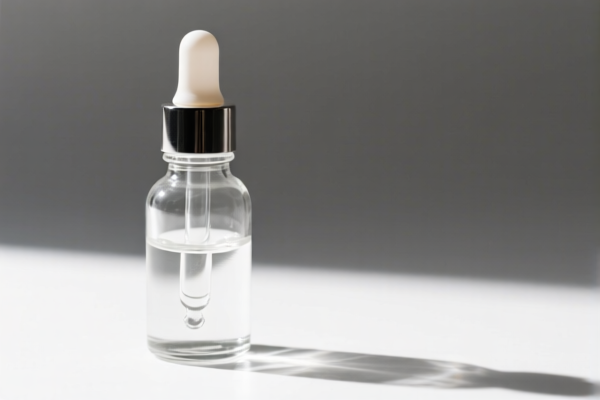
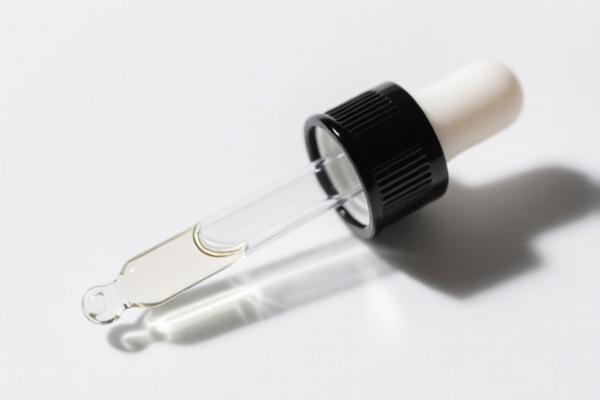
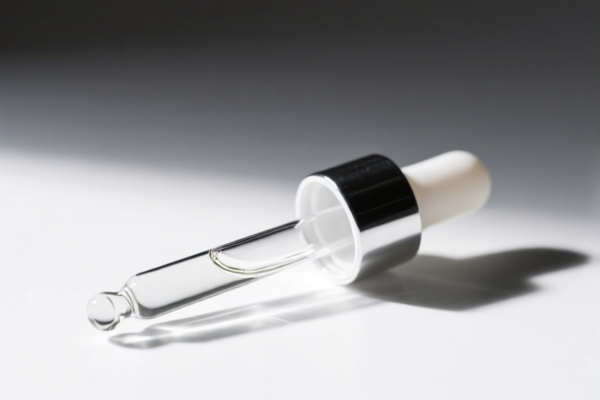
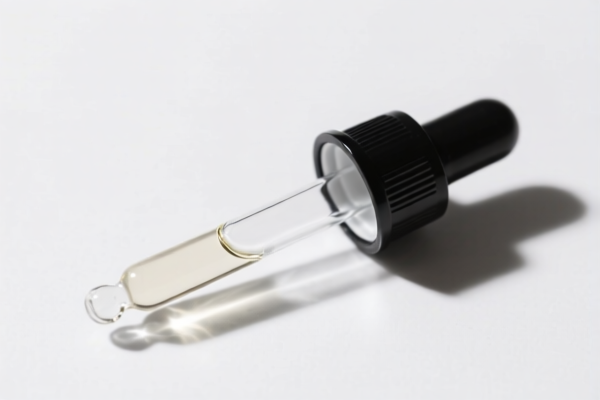
AI Analysis
👁️ Eye Drops Bottles (Plastic Pharmaceutical Packaging)
🌐 HS Code Reference & Customs Clearance Guide | 2026 Latest Tariff Analysis | Professional通关 Strategy
📌 I. Product Definition & Classification: Do You Really Understand "Eye Drop Bottles"?
Plastic eye drop bottles are specialized pharmaceutical packaging containers used to hold and dispense sterile liquid medications. In international trade, the classification depends heavily on the structural definition and specific material characteristics under the Harmonized System (HS).
While these are essentially "plastic containers," US Customs and Border Protection (CBP) distinguishes between: 1. Small-volume plastic bottles specifically defined under heading 3923.30 (Flasks, Bottles, Carboys, and Similar Articles). 2. General plastic articles or other container types that may fall under the broader heading 3926.90 (Other Articles of Plastics).
⚠️ Key Distinction Point:
- If the bottle fits the specific legal definition of a "plastic article of a kind used for the conveyance or packaging of goods" with a capacity typically under specific thresholds or matching the 3923.30 description → HS 3923.30.xx.xx.
- If the bottle is considered a "general plastic container" or does not strictly fit the "bottle/flask" definition in 3923.30, it may be classified under 3926.90.xx.xx as other plastic articles.
- Note: The specific structure (e.g., squeeze bottle vs. dropper bottle) can influence whether it is seen as a standard "bottle" or a "general article."
📦 II. HS Code Classification Details (2026 Latest Tariff Authority Comparison)
| HS Code | Product Description | Applicable Scenario | Classification Logic |
|---|---|---|---|
3923.30.00.10 |
Plastic eye drop bottles; material is plastic; form is bottle-type; purpose is packaging; fits the definition of small-volume plastic bottles. | Standard prescription eye drops, squeeze bottles with droppers. | ✅ Specific Definition: Matches "Flasks, Bottles, Carboys... of plastics" |
3923.30.00.90 |
Plastic eye drop bottles; material is plastic; form is bottle-type product; falls under the "other" category of this subheading. | Variants not listed in 3923.30.00.10, but still strictly "plastic bottles." | ✅ Specific Definition: Other plastic bottles not specifically listed in .10 |
3926.90.10.00 |
Plastic eye drop bottles; material is plastic; form is container-type; fits the container attribute in the "Buckets and Pails" category. | General plastic containers that do not strictly meet the "bottle" definition of 3923.30 but are used for packaging. | ⚠️ General Category: Broad "Other articles of plastics" |
3926.90.21.00 |
Plastic eye drop bottles; material is plastic; form belongs to container-type, fits the scope of other plastic articles under this tariff number. | Alternative classification for plastic packaging articles if specific bottle definitions are disputed. | ⚠️ General Category: Other plastic articles |
🔍 Key Reminder:
- HS 3923.30 is the preferred classification for "bottles" as it is more specific.
- HS 3926.90 is a residual category ("Other articles of plastics"). Using this may lead to higher scrutiny or different duty rates if CBP determines the item is strictly a "bottle" under 3923.
- Always provide structural diagrams or photos showing the dropper/nozzle mechanism to prove it is a functional "bottle" for dispensing, not just a generic container.
💰 III. 2026 Latest Tariff Rate Details (Including Surtaxes & Policy Add-ons)
✅ Applicable Country: United States (US)
✅ Country of Origin: China (CN)
✅ Effective Date: From November 10, 2025 (and subsequent imports)
🎯 1. 3923.30.00.10 & 3923.30.00.90 —— Plastic Bottles (Specific Definition)
| Item | Content |
|---|---|
| Base Tariff | 3.0% (ad valorem) |
| Section 301 Surcharge | +25.0% (USITC Footnote 9903.01.25) |
| Section 122 Tariff | +10.0% (IEEPA/Other policy add-on) |
| Total Tariff Rate | 38.0% |
| Tax Calculation | CIF Value × 38.0% |
| De Minimis Eligibility | ❌ No (Not eligible for Section 321 de minimis exemption due to high tariff rate and specific country restrictions) |
| Legal Basis Path | HTS:3923.30 → USITC:9903.01.25 (Section 301) → IEEPA:9903.01.22 (Section 122/Add-on) |
📌 Explanation:
- The 3.0% base duty applies to plastic bottles of a kind used for the conveyance or packaging of goods.
- The 25% surcharge is due to Section 301 tariffs on Chinese-origin plastics and plastic articles.
- The 10% additional tariff (often referred to as Section 122 or related IEEPA actions) is applied on top, resulting in a 38% total duty.
- High Duty Alert: This is a significant cost factor. Importers must budget accordingly.
🎯 2. 3926.90.10.00 & 3926.90.21.00 —— Other Plastic Articles (General Definition)
| Item | Content |
|---|---|
| Base Tariff | 3.4% - 4.2% (Varies by specific sub-subheading) |
| Section 301 Surcharge | +7.5% (USITC Footnote 9903.01.25 - Note: Some plastic articles may have different surcharge levels depending on specific HTS list updates) |
| Section 122 Tariff | +10.0% |
| Total Tariff Rate | 20.9% - 21.7% |
| Tax Calculation | CIF Value × 20.9%~21.7% |
| De Minimis Eligibility | ❌ No |
| Legal Basis Path | HTS:3926.90 → USITC:9903.01.25 → IEEPA:9903.01.22 |
📌 Explanation:
- If classified under 3926.90, the base duty is slightly higher (3.4%-4.2%), but the Section 301 surcharge is lower (7.5% vs 25%), leading to a lower total tax burden (approx. 21%).
- Risk: Misclassification. If CBP determines the item is a "bottle" under 3923.30, you will face back taxes (difference between 21% and 38%) plus penalties.
- Strategy: Only use 3926.90 if the product clearly does not fit the "bottle" definition (e.g., if it's a complex assembly with non-plastic components that change the essential character, though rare for simple eye drop bottles).
🛠️ IV. Customs Clearance Practical Advice (Battle-Tested Pitfall Avoidance Guide)
✅ 1. Required Documentation Checklist (All are Mandatory)
| Document | Must Provide | Description |
|---|---|---|
| ✅ Product Specification Sheet | ✔️ | Dimensions, capacity (ml), material type (e.g., PP, PE, PET), closure type. |
| ✅ Product Photos | ✔️ | Clear images of the bottle, dropper mechanism, and packaging. |
| ✅ Structure Diagram | ✔️ | Critical to prove it is a "bottle" (3923.30) or a "general container" (3926.90). |
| ✅ Commercial Invoice | ✔️ | Must clearly state "Plastic Eye Drop Bottle, Model XYZ, Country of Origin: China." |
| ✅ Packing List | ✔️ | Quantity, weight, and dimensions per carton. |
| ✅ Certification | ✔️ | FDA Registration (if intended for human use in the US), GMP Certificate. |
✅ 2. Declaration Tips (Key Mantras)
🔥 "Be Specific, Define Structure, Name Accurately, Avoid Ambiguity!"
| Scenario | Correct Declaration | Wrong Practice |
|---|---|---|
| Standard Plastic Eye Drop Bottle | "Plastic Eye Drop Bottle, PP Material, for Pharmaceutical Packaging, HS 3923.30.00.10" | "Plastic Container" (Too vague → may be checked against 3926.90) |
| Bottle with Dropper Tip | "Plastic Bottle with Integral Dropper Tip, HS 3923.30.00.10" | "Pharmaceutical Container" (Avoid vague terms) |
| Bulk Unfilled Bottles | "Empty Plastic Bottles, HS 3923.30.00.10" | "Drug Packaging Materials" (Could trigger FDA/Drug-related scrutiny if not clear they are empty) |
✅ 3. Special Situations
| Situation | Handling Advice |
|---|---|
| Empty vs. Filled | Empty bottles are classified as plastic articles (3923.30/3926.90). Filled bottles may be classified as pharmaceuticals (Chapter 30) with different duties. Ensure declaration clearly states "EMPTY" if applicable. |
| Material Mix | If the bottle has a non-plastic component (e.g., metal spring, glass dropper), the classification may change. Check if the plastic part defines the "essential character." |
| FDA Requirements | Even if classified as plastic, eye drop bottles for the US market must comply with FDA Drug Packaging regulations. Ensure you have a valid FDA Establishment Registration. |
🌍 V. Global Market Customs Comparison (2026 Latest)
| Country/Region | Recommended HS Code | Tariff | Certification Requirements | Notes |
|---|---|---|---|---|
| 🇺🇸 USA | 3923.30.00.10 |
38.0% (CN Origin) | FDA Registration | High duty due to Section 301 + 122. |
| 🇨🇳 China | 3923.30.00.10 |
3.0% | None (for export) | Low base duty. |
| 🇪🇺 EU | 3923.30.00 |
4.5% | REACH, FDA (if for US market) | No Section 301 surcharge. |
| 🇬🇧 UK | 3923.30.00 |
4.5% | UKCA (if applicable) | Post-Brexit rules apply. |
| 🇦🇺 Australia | 3923.30.00 |
5.0% | TGA (if for medical use) | Low duty, no surcharges. |
📌 Conclusion:
- USA is the most expensive market for Chinese-made plastic eye drop bottles due to 38% total tariff.
- EU/UK/Australia offer significantly lower duties (~4.5%-5%), making them more competitive for non-US markets.
- Strategy: Consider diversifying export markets or exploring supply chain adjustments (e.g., third-country manufacturing) if targeting the US.
📌 VI. Common Mistakes & Pitfall Avoidance (Lessons Learned)
❌ Mistake 1: Declaring as "Plastic Container" (General) to avoid Section 301 tariffs
👉 Consequence: CBP may reclassify as "Plastic Bottle" (3923.30) → Back taxes + penalties. The 25% vs 7.5% difference is risky.
❌ Mistake 2: Failing to declare "Empty" for unfilled bottles
👉 Consequence: Customs may assume it contains pharmaceuticals → FDA hold, delays, or destruction.
❌ Mistake 3: Ignoring FDA Registration for pharmaceutical packaging
👉 Consequence: Product rejection at US border, even if HS classification is correct.
❌ Mistake 4: Using vague descriptions like "Bottle" without material specification
👉 Consequence: Customs request for information (RFI) → Clearance delays.
✅ Correct Practice:
"Empty Plastic Eye Drop Bottle, Polypropylene (PP), 10ml Capacity, with Dropper Tip, for Pharmaceutical Packaging, Model EDB-10, FDA Registered Facility, CN Origin"
🎯 VII. Conclusion: Professional Declaration, Save Time & Money!
🎯 Remember the Mantras:
🔹 "Specific Definition First: Bottle (3923) vs. Other (3926)"
🔹 "USA Tariff Shock: 38% for Bottles, 21% for Other – Be Careful!"
🔹 "Empty is Key: Declare 'Empty' Clearly to Avoid FDA Issues."
📌 Pro Tip:
If your plastic eye drop bottles are originating from Vietnam, Malaysia, or Thailand, you may qualify for lower or zero Section 301 tariffs.
Consider Advance Ruling with CBP to confirm the HS code before shipment to mitigate risk.
📣 Immediate Action:
📞 Contact a licensed Customs Broker + Provide Product Photos + Verify FDA Status
🚀 Ensure smooth clearance, minimize tariff costs, and maximize your profit margin!
✨ Professional Customs Clearance Starts with Accurate Classification!
💼 Every Dollar of Duty Matters!
Customer Reviews
About HS Code Classification
The Harmonized System (HS) is an internationally standardized nomenclature developed by the World Customs Organization (WCO) to classify traded products. Over 200 countries use the HS system as the basis for customs tariffs, trade statistics, and import/export regulations.
Each HS code follows a hierarchical structure:
- Chapter (2 digits) — Broad category of goods (e.g., Chapter 84: Machinery and Mechanical Appliances)
- Heading (4 digits) — More specific grouping within the chapter
- Subheading (6 digits) — Internationally standardized breakdown, used by all WCO member countries
- National subdivisions (8-10 digits) — Country-specific extensions for further classification, such as US HTSUS 10-digit codes
Correct HS code classification is essential for smooth customs clearance, accurate duty payment, and compliance with trade regulations. Misclassification can lead to customs delays, overpayment of duties, or penalties.
When importing from CN to US, the applicable tariff rates may include:
- Most-Favored-Nation (MFN) rate — The standard duty rate applied to WTO members
- General rate — Applied to countries without trade agreements
- Trade remedy duties — Additional tariffs such as Section 301 (anti-dumping), Section 232 (national security), or countervailing duties
The information provided on this page is for reference purposes only. For official classification, please consult with your local customs authority or a licensed customs broker.