eyebrow razors
CN → US| HS Code | Tariff Rate | Origin | Destination | Doc |
|---|---|---|---|---|
| 7326190080 | 87.9% | CN | US | Official Doc |
| 7326908688 | 87.9% | CN | US | Official Doc |
| 8211929060 | 0.0% | CN | US | Official Doc |
| 8214909000 | 0.0% | CN | US | Official Doc |
| 8214203000 | 14.0% | CN | US | Official Doc |
| 8211945000 | 0.0% | CN | US | Official Doc |
Product Images
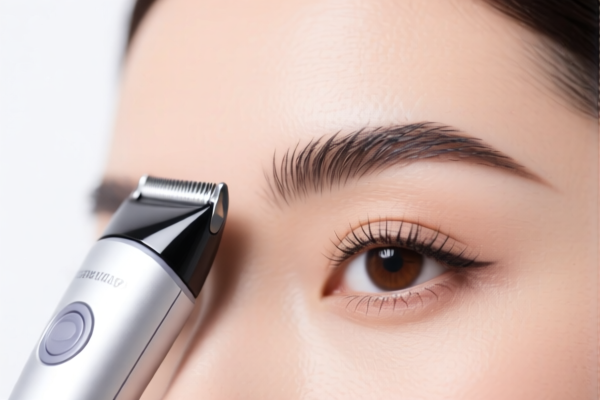
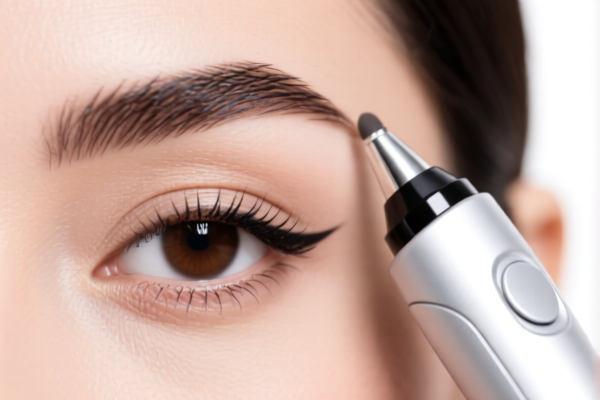
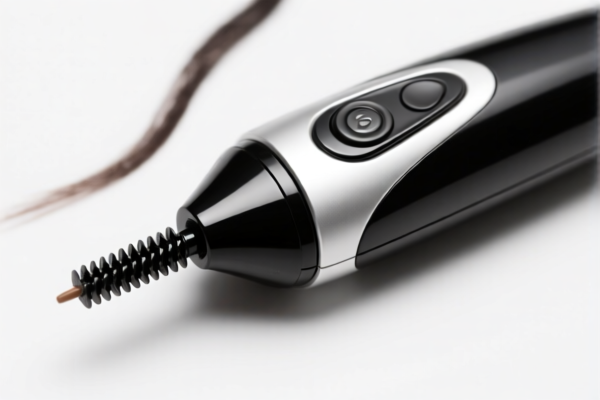
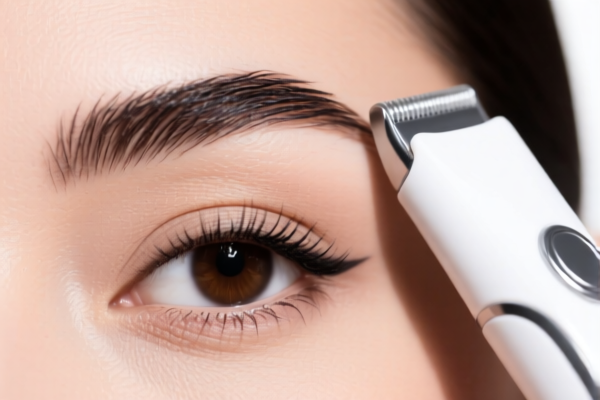
AI Analysis
✂️ Eyebrow Razors (Grooming Blades for Personal Care)
🌐 HS Code Reference & Customs Clearance Guide | 2026 Latest Tariff Analysis | Professional Strategy for US Imports
📌 I. Product Definition & Classification: Do You Really Understand "Eyebrow Razors"?
Eyebrow razors are small, specialized grooming tools used for trimming, shaping, and removing unwanted hair from the face (specifically the eyebrow area). In international trade, their classification varies significantly depending on material composition, structural design, and intended function.
Key Distinctions: * Steel/Alloy Blades (Non-cutting edge specific): If classified broadly as "articles of iron or steel" without specific cutting edge features → Group 73 (Articles of Iron or Steel). * Specific Grooming Tools: If designed explicitly for nail/eyebrow grooming with specific handles/blades → Group 82 (Articles of Knife-cutting) or 8214 (Manicure/Curdier’s Instruments). * Fixed Blade Knives: If the blade is permanently fixed and not replaceable → Group 8211 (Knives with fixed blades).
⚠️ Critical Classification Point:
- If the product is a simple steel shaving blade without complex mechanical parts, customs may view it as a general steel article (7326).
- If it has a specific ergonomic handle and disposable/replaceable blade for personal grooming, it falls under 8214 (Manicure/nail/eyebrow tools).
- If it is a fixed-blade razor (like a straight razor or fixed safety razor), it may fall under 8211 or 8212.
📦 II. HS Code Classification Details (2026 Latest Tariff Authority Comparison)
| HS Code | Product Description | Application Scenario | Tax Burden (China Origin → US) |
|---|---|---|---|
7326.19.00.80 |
Other articles of iron or steel (stainless steel eyebrow razor, unworked) | Basic steel blades, no ergonomic handle, or generic steel grooming tools | 87.9% |
7326.90.86.88 |
Other articles of iron or steel (non-specific) | Stainless steel razors classified broadly as "steel articles" | 87.9% |
8211.92.90.60 |
Knives with fixed blades (stainless steel) | Fixed-blade eyebrow razors (not disposable) | Base: $0.004/pc + 6.1% + 7.5% (Sec 301) + 10% (IEEPA) |
8214.90.90.00 |
Manicure, pedicure, or similar instruments (other) | Disposable or multi-blade eyebrow razors designed for grooming | Base: $0.014/pc + 3.2% + 10% (IEEPA) |
8214.20.30.00 |
Manicure/curdier’s instruments (eyebrow/nail trimmers) | Specific eyebrow/nail grooming tools | 14.0% |
🔍 Key Insight:
- Group 73 (7326) carries the highest penalty due to broad "steel article" classification + 25% Sec 301 tariff.
- Group 8214 is often more favorable if the product is clearly defined as a "manicure/grooming instrument."
- Group 8211 applies if the razor has a fixed blade and is classified as a "knife."
💰 III. 2026 Latest Tariff Rate Breakdown (Including Additional Taxes & Policies)
✅ Applicable Country: United States (US)
✅ Origin: China (CN)
✅ Effective Date: Post-November 2025 (Current Policy)
🎯 1. 7326.19.00.80 & 7326.90.86.88 —— Stainless Steel Eyebrow Razors (General Steel Articles)
| Item | Detail |
|---|---|
| Base Duty | 2.9% |
| Section 301 Tariff | +25.0% (Largest penalty component) |
| Section 232/122 Tariff | +10.0% (Steel, Aluminum, Copper products) |
| Additional 122 Tariff | +50.0% (Specific steel/aluminum/copper items) |
| Total Effective Rate | 87.9% |
| Calculation Basis | Ad Valorem (CIF Value × 87.9%) |
| De Minimis Eligibility | ❌ Not Eligible (High tariff items excluded) |
📌 Explanation:
- These codes classify eyebrow razors as generic steel products, triggering multiple layers of punitive tariffs:
- 25% from Trade Act Section 301 (China-specific).
- 10% from Section 232/122 (Steel/Aluminum security tariffs).
- 50% additional levy on specific steel/copper/aluminum items.
- Result: Extremely high cost. Avoid this classification if possible.
🎯 2. 8211.92.90.60 —— Fixed Blade Knives (Stainless Steel)
| Item | Detail |
|---|---|
| Base Duty | $0.004 per piece + 6.1% |
| Section 301 Tariff | +7.5% |
| IEEPA Tariff | +10% |
| Total Effective Rate | Approx. $0.004/pc + ~23.6% |
| Calculation Basis | Specific Duty ($0.004/pc) + Ad Valorem (%) |
| De Minimis Eligibility | ❌ Not Eligible |
📌 Note:
- Applies if the razor has a fixed, non-replaceable blade.
- Lower than Group 73, but still significant due to 301 & IEEPA tariffs.
🎯 3. 8214.90.90.00 —— Manicure/Nail/Eyebrow Instruments (Other)
| Item | Detail |
|---|---|
| Base Duty | $0.014 per piece + 3.2% |
| Section 301 Tariff | 0.0% (Note: Data shows 0.0% for this subheading in 2026) |
| IEEPA Tariff | +10% |
| Total Effective Rate | Approx. $0.014/pc + 13.2% |
| Calculation Basis | Specific Duty + Ad Valorem |
| De Minimis Eligibility | ❌ Not Eligible |
📌 Key Advantage:
- No Section 301 (25%) tariff listed for this specific subheading in the provided data.
- Only 10% IEEPA applies.
- Best option for disposable/multi-blade eyebrow razors if classified correctly.
🎯 4. 8214.20.30.00 —— Manicure/Curdier’s Instruments (Specific)
| Item | Detail |
|---|---|
| Total Effective Rate | 14.0% |
| Breakdown | Base 4.0% + Section 301 0.0% + IEEPA 10.0% |
| Calculation Basis | Ad Valorem (14%) |
| De Minimis Eligibility | ❌ Not Eligible |
📌 Note:
- Flat 14% rate for specific grooming instruments.
- Lower than8214.90if the product fits this narrow definition.
🛠️ IV. Customs Clearance Practical Advice (Pitfall Avoidance Guide)
✅ 1. Documentation Checklist (Mandatory)
| Document | Required | Notes |
|---|---|---|
| ✅ Product Specifications | ✔️ | Material (Stainless Steel), Type (Disposable/Fixed), Handle Design |
| ✅ Product Photos | ✔️ | Clear images of blade, handle, and packaging |
| ✅ Commercial Invoice | ✔️ | Must state "Eyebrow Razor, Stainless Steel, for Personal Grooming" |
| ✅ Packing List | ✔️ | Quantity, Weight, HS Code |
| ✅ Origin Certificate | ✔️ | Proves China origin (triggers tariffs) |
✅ 2. Declaration Tips (Critical!)
🔥 "Define by Function, Not Material!"
| Scenario | Recommended HS Code | Risk if Misclassified |
|---|---|---|
| Disposable/Multi-blade Razor | 8214.90.90.00 |
Misclassifying as 7326 → 87.9% Tax |
| Fixed Blade Safety Razor | 8211.92.90.60 |
Misclassifying as 7326 → 87.9% Tax |
| Specific Nail/Eyebrow Tool | 8214.20.30.00 |
Broad classification → Higher rates |
| Generic Steel Blade | 7326.19.00.80 |
Highest tax burden |
📌 Key Strategy:
- Avoid terms like "Steel Article" or "Unworked Metal."
- Use terms like "Grooming Instrument," "Manicure/Eyebrow Razor," "Personal Care Tool."
- Provide clear function descriptions to justify8214or8211classification.
✅ 3. Special Cases
| Situation | Handling Advice |
|---|---|
| OEM Private Label | Provide brand authorization + design specs to prove "grooming instrument" status |
| Combined Packages | If razor + comb + case, declare as single "Grooming Set" if possible; otherwise, split carefully |
| Non-China Origin | If made in Vietnam/Malaysia, IEEPA/301 may not apply → Significant Savings |
🌍 V. Global Market Clearance Comparison (2026)
| Country/Region | Recommended HS Code | Tariff (China Origin) | Certification | Notes |
|---|---|---|---|---|
| 🇺🇸 USA | 8214.90.90.00 |
~13.2% + $0.014/pc | FCC (if electronic), None for manual | Avoid 7326 (87.9%) |
| 🇪🇺 EU | 8214.90.00.90 |
0-4% (depending on country) | CE (if applicable) | No 301/IEEPA tariffs |
| 🇨🇳 China | 8214.90.90.00 |
4-6% (Import Duty) | None | Low barrier |
| 🇬🇧 UK | 8214.90.00.00 |
0-6% | UKCA | Post-Brexit rules apply |
📌 Conclusion:
- USA is the most expensive market for eyebrow razors due to layered tariffs.
- Correct HS Code selection is critical to reduce tax from 87.9% to ~13%.
📌 VI. Common Errors & Pitfalls (Lessons Learned)
❌ Error 1: Classifying eyebrow razors as "Steel Articles" (7326)
👉 Consequence: 87.9% tariff → Profit margin wiped out.
❌ Error 2: Declaring as "Knives" without specifying "Fixed Blade"
👉 Consequence: Misclassification under 8211 vs 8214 → Potential duty difference.
❌ Error 3: Ignoring IEEPA/301 Tariffs
👉 Consequence: Unexpected costs at customs → Delays or seizures.
✅ Best Practice:
"Stainless Steel Disposable Eyebrow Razor, for Personal Grooming, HS Code 8214.90.90.00, Made in China"
🎯 VII. Conclusion: Precision in Classification Saves Money!
🎯 Remember the Golden Rule:
🔹 "Function over Material! Grooming Tool = 8214, Not 7326."
🔹 "87.9% vs 13%: A 75% Tax Difference! Classify Correctly!"
📌 Pro Tip:
If you source from Vietnam, Thailand, or Malaysia, you may qualify for lower or zero Section 301 tariffs. Consider supply chain diversification for US market.
📣 Immediate Action:
📞 Consult a licensed customs broker for Advance Ruling
🚀 Ensure accurate HS Code declaration to save thousands in duties.
✨ Professional Clearance, Starts with Accurate Classification!
💼 Every Percent Saved is Pure Profit!
Customer Reviews
About HS Code Classification
The Harmonized System (HS) is an internationally standardized nomenclature developed by the World Customs Organization (WCO) to classify traded products. Over 200 countries use the HS system as the basis for customs tariffs, trade statistics, and import/export regulations.
Each HS code follows a hierarchical structure:
- Chapter (2 digits) — Broad category of goods (e.g., Chapter 84: Machinery and Mechanical Appliances)
- Heading (4 digits) — More specific grouping within the chapter
- Subheading (6 digits) — Internationally standardized breakdown, used by all WCO member countries
- National subdivisions (8-10 digits) — Country-specific extensions for further classification, such as US HTSUS 10-digit codes
Correct HS code classification is essential for smooth customs clearance, accurate duty payment, and compliance with trade regulations. Misclassification can lead to customs delays, overpayment of duties, or penalties.
When importing from CN to US, the applicable tariff rates may include:
- Most-Favored-Nation (MFN) rate — The standard duty rate applied to WTO members
- General rate — Applied to countries without trade agreements
- Trade remedy duties — Additional tariffs such as Section 301 (anti-dumping), Section 232 (national security), or countervailing duties
The information provided on this page is for reference purposes only. For official classification, please consult with your local customs authority or a licensed customs broker.