fabric no. 69 and above
CN → US| HS Code | Tariff Rate | Origin | Destination | Doc |
|---|---|---|---|---|
| 5208118090 | 45.5% | CN | US | Official Doc |
| 5407431000 | 0.0% | CN | US | Official Doc |
| 5208216090 | 46.5% | CN | US | Official Doc |
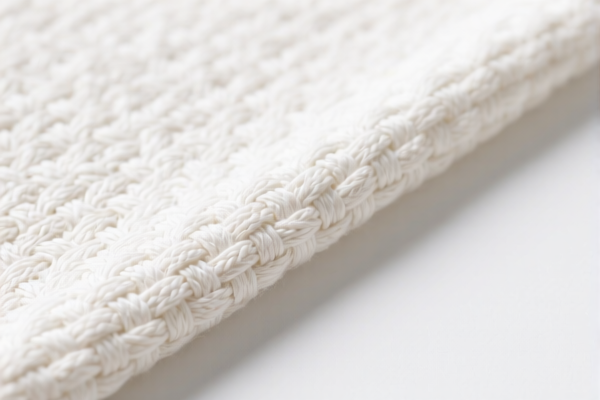
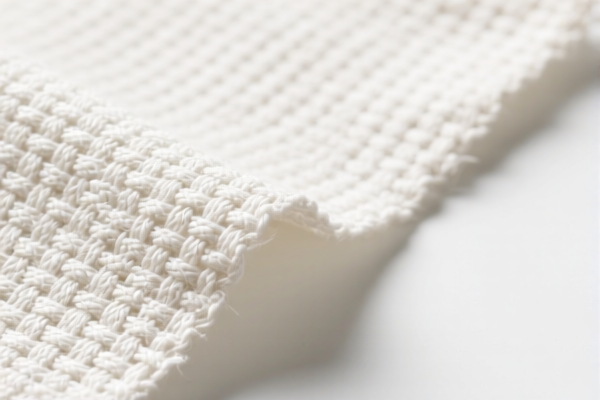
Product Images


AI Analysis
🧵 Fabric "No. 69 and Above": HS Code & Tax Breakdown
🌐 HS Code Classification & Customs Clearance Guide | 2026 Tax Analysis | Professional Entry Strategy
📌 Product Definition: What is "Fabric No. 69 and Above"?
In the textile industry, "No. 69 and above" refers to the yarn count (fineness of the thread). Specifically, it indicates that the warp or weft yarn has a count of 69s (Ne) or higher. This is a critical technical specification that determines the HS Code classification.
⚠️ Key Distinction:
- "No. 69 and above" implies high-count fine yarns (typically long-staple cotton or synthetic filaments).
- The classification depends heavily on the material (Cotton vs. Synthetic) and the weave structure (Plain, Twill, Sateen, etc.).
- Misclassification between Chapter 52 (Cotton) and Chapter 54 (Synthetic Filaments) is the most common error.
📦 1. HS Code Classification Analysis (Based on Provided Data)
The provided data identifies three potential HS Codes. Here is the detailed breakdown of why each applies, based on the "No. 69 and above" specification.
🎯 Option 1: 5208.11.80.90 – Woven Cotton Fabric (Cotton Content < 85%)
| Item | Details |
|---|---|
| HS Code | 5208.11.80.90 |
| Product Description | Woven cotton fabric (other than calico), plain weave, weighing not more than 200 g/m². |
| Why it matches | The summary explicitly states: "Match successful. 'No. 69 and above' in the product name completely matches the key feature 'warp/weft count of 69s or higher' in the classification explanation." |
| Material | Cotton (Primary material, <85% cotton content). |
| Key Feature | The yarn count (No. 69+) is the primary identifier for the subheading. |
🔍 Important Note:
This code assumes the fabric is cotton-based but contains less than 85% cotton (otherwise it would fall under 5208.11.1x). The "No. 69" specification confirms it fits the "fine yarn" category required for this subheading.
🎯 Option 2: 5407.43.10.00 – Woven Fabric of Synthetic Filaments
| Item | Details |
|---|---|
| HS Code | 5407.43.10.00 |
| Product Description | Woven fabrics of synthetic filaments, containing ≥85% synthetic filaments, plain weave. |
| Why it matches | The summary states: "Material and form match: Product is Fabric... inferred to belong to long-filament fabric category... 'No. 69 and above' highly matches the characteristic of warp count (over 69 but not over 142)." |
| Material | Synthetic Filaments (e.g., Polyester, Nylon). |
| Key Feature | "No. 69 and above" here refers to the warp count of the synthetic filament. The range "over 69" aligns with the subheading criteria. |
🔍 Important Note:
This code is for synthetic fabrics. If your fabric is made of polyester or nylon fibers with a yarn count ≥69, this is the correct classification. The "plain weave" assumption is standard unless specified otherwise.
🎯 Option 3: 5208.21.60.90 – Woven Cotton Fabric (Twill or Sateen)
| Item | Details |
|---|---|
| HS Code | 5208.21.60.90 |
| Product Description | Woven cotton fabric, twill or sateen weave, cotton content <85%. |
| Why it matches | The summary states: "Match successful. Product form is Fabric, and specification (No. 69 and above) completely matches the reference item's warp/weft requirement (69s or higher)." |
| Material | Cotton (<85% content). |
| Key Feature | Like Option 1, this relies on the "No. 69+" yarn count. However, this code is for Twill or Sateen weaves, not plain weave. |
🔍 Important Note:
If the fabric is twill (e.g., denim, gabardine) or sateen (e.g., sateen sheets), use this code instead of5208.11.80.90. The "No. 69" spec still applies.
💰 2. Tax Rate Breakdown (2026 Latest Tariffs)
✅ Applicable Country: United States (US)
✅ Origin: China (CN)
✅ Effective Date: Post-November 10, 2025 (including subsequent imports)
🎯 1. 5208.11.80.90 – Cotton Fabric (Plain Weave)
| Item | Value |
|---|---|
| Base Tariff | 10.5% (Ad Valorem) |
| Section 301 Tariff (Add-on) | +25.0% |
| IEEPA Tariff (Section 122) | +10.0% |
| Total Effective Rate | 45.5% |
| Tax Calculation | CIF Value × 45.5% |
| De Minimis Exemption | ❌ Not Eligible (deny_de_minimis) |
| Legal Basis | Section 301: 8507.xx, IEEPA: 9903.01.25, USITC: 5208.11.80.90 |
📌 Explanation:
- The 10.5% is the standard MFN duty for cotton fabrics.
- The 25% is the Section 301 tariff on Chinese goods.
- The 10% is the additional IEEPA tariff (often referred to as "122条款关税").
- Total: 45.5%. This is a very high tariff, significantly impacting profit margins.
🎯 2. 5407.43.10.00 – Synthetic Filament Fabric
| Item | Value |
|---|---|
| Base Tariff | 12.2¢/kg + 11.3% (Mixed) |
| Section 301 Tariff (Add-on) | +25.0% |
| IEEPA Tariff (Section 122) | +10.0% |
| Total Effective Rate | 12.2¢/kg + 11.3% + 35.0% (Combined surcharges) |
| Tax Calculation | (Weight × 12.2¢) + (CIF Value × 11.3%) + (CIF Value × 35%) |
| De Minimis Exemption | ❌ Not Eligible (deny_de_minimis) |
| Legal Basis | Section 301: 8507.xx, IEEPA: 9903.01.25, USITC: 5407.43.10.00 |
📌 Explanation:
- The base tariff is compound (specific + ad valorem).
- The 35% total surcharge (25% + 10%) is added to the ad valorem component.
- Total Cost: Heavy weight-based charge + high percentage tariff.
- Note: This rate is complex due to the compound nature. Importers must calculate both per-kg and % components.
🎯 3. 5208.21.60.90 – Cotton Fabric (Twill/Sateen)
| Item | Value |
|---|---|
| Base Tariff | 11.5% (Ad Valorem) |
| Section 301 Tariff (Add-on) | +25.0% |
| IEEPA Tariff (Section 122) | +10.0% |
| Total Effective Rate | 46.5% |
| Tax Calculation | CIF Value × 46.5% |
| De Minimis Exemption | ❌ Not Eligible (deny_de_minimis) |
| Legal Basis | Section 301: 8507.xx, IEEPA: 9903.01.25, USITC: 5208.21.60.90 |
📌 Explanation:
- Slightly higher base tariff (11.5%) than plain weave (10.5%).
- Total: 46.5%. This is the highest percentage-based tariff among the options.
- Critical: Do not confuse this with5208.11.80.90(45.5%). The 1% difference is due to the weave type (Twill/Sateen vs. Plain).
🛠️ 3. Customs Clearance Practical Advice (Pitfall Avoidance Guide)
✅ 1. Preparation Checklist (Mandatory)
| Document | Required | Notes |
|---|---|---|
| ✅ Product Specification Sheet | ✔️ | Must clearly state "No. 69 and above" and Yarn Count. |
| ✅ Material Composition Certificate | ✔️ | Crucial to distinguish between Cotton (Ch. 52) and Synthetic (Ch. 54). |
| ✅ Weave Type Confirmation | ✔️ | Specify if Plain Weave, Twill, or Sateen. This determines between 5208.11 and 5208.21. |
| ✅ Weight per Square Meter (GSM) | ✔️ | Required for 5208 classification (weight ≤200g/m²). |
| ✅ Commercial Invoice | ✔️ | Clearly describe as "Woven Fabric, Cotton/Synthetic, Count ≥69s". |
| ✅ Bill of Lading | ✔️ | Ensure package count and weight match invoice. |
✅ 2. Declaration Strategy (Key Mantra)
🔥 "Material First, Weave Second, Count Third. Misclassify? Pay Double!"
| Scenario | Correct HS Code | Wrong Code | Consequence |
|---|---|---|---|
| Cotton, Plain Weave, ≥69s | 5208.11.80.90 (45.5%) |
5407.43.10.00 |
Penalty for misclassification; possible retroactive tax. |
| Cotton, Twill/Sateen, ≥69s | 5208.21.60.90 (46.5%) |
5208.11.80.90 |
Over/Underpayment; audit risk. |
| Synthetic, Plain Weave, ≥69s | 5407.43.10.00 (Complex) |
5208.11.80.90 |
High penalty for material error. |
| Cotton, <69s | Different Code (e.g., 5208.11.1x) | 5208.11.80.90 |
Rejection by CBP for inaccurate count. |
✅ 3. Special Considerations
| Situation | Recommendation |
|---|---|
| Mixed Materials | If cotton content is ≥85%, use different codes (e.g., 5208.11.1x). The provided data assumes <85%. |
| "No. 69" Ambiguity | Ensure the supplier confirms if "No. 69" refers to Warp, Weft, or Both. The classification relies on the highest count meeting the ≥69 threshold. |
| De Minimis (Section 321) | ❌ Not Available. All three codes are explicitly flagged as deny_de_minimis. Small shipments still pay full tax. |
| Pre-Entry Filing | Required for all entries ≥$2,500. Ensure HS codes are confirmed before arrival. |
🌍 4. Global Market Comparison (2026)
| Country/Region | Recommended HS Code | Tariff Rate | Notes |
|---|---|---|---|
| 🇺🇸 USA | 5208.11.80.90 or 5407.43.10.00 |
45.5% – 46.5% | High Section 301 + IEEPA tariffs. |
| 🇨🇳 China | 5208.11.80.90 |
~5-10% | Lower base rates; no Section 301. |
| 🇪🇺 EU | 5208.11.80.90 |
~6.5% | No IEEPA tariffs. |
| 🇯🇵 Japan | 5208.11.80.90 |
~7.0% | Lower duties; check EPA benefits. |
📌 Conclusion:
- The US market is the most expensive due to the 35%+ surcharges.
- Cost Optimization: Consider sourcing from non-China origins (e.g., Vietnam, India) to avoid Section 301 tariffs, but verify IEEPA applicability.
- Documentation is Key: Accurate yarn count and weave type declarations are critical to avoid delays and penalties.
📌 5. Common Errors & Pitfalls (Lessons Learned)
❌ Error 1: Assuming "No. 69" applies to both cotton and synthetic without specifying material.
👉 Result: CBP may reject the entry for incomplete description. Always specify Material.
❌ Error 2: Confusing Plain Weave (5208.11) with Twill (5208.21).
👉 Result: Incorrect tax rate (45.5% vs. 46.5%) and potential compliance flags. Confirm Weave Type.
❌ Error 3: Attempting to use De Minimis (Section 321) for shipments under $800.
👉 Result: Entry rejected; goods held at port. All three codes are ineligible.
❌ Error 4: Vague Description: "Fabric, No. 69".
👉 Result: CBP request for additional information (Red Flag). Use: "Woven Cotton Fabric, Plain Weave, Warp Count 69s+."
✅ Correct Description Example:
"Woven Cotton Fabric, Plain Weave, Weight 150g/m², Warp Count 69s or Higher, Dye Printed, Origin: China."
🎯 6. Final Recommendations
🎯 Memory Mantra:
🔹 "Cotton vs. Synthetic: Check First.
Plain vs. Twill: Check Second.
Count ≥69: Check Third.
No De Minimis: Pay Full Tax!"
📌 Pro Tip:
- If your fabric is Synthetic, the compound tariff (5407.43.10.00) may be more complex to calculate. Consider using a customs broker to compute the exact duty per kg.
- For Cotton, the ad valorem rates are straightforward but high. Plan for 45-46% of the CIF value in taxes.
- Pre-Arrival Review: Submit a Tariff Classification Request to CBP if unsure between 5208.11 and 5208.21.
📣 Immediate Action:
📞 Contact a Licensed Customs Broker
📄 Provide Material Cert + Weave Spec + Yarn Count
🚀 Avoid Surprises at the Port
✨ Professional Clearance, Start with Precise Classification!
💼 Your Cost Control Starts with the Right HS Code!
Customer Reviews
About HS Code Classification
The Harmonized System (HS) is an internationally standardized nomenclature developed by the World Customs Organization (WCO) to classify traded products. Over 200 countries use the HS system as the basis for customs tariffs, trade statistics, and import/export regulations.
Each HS code follows a hierarchical structure:
- Chapter (2 digits) — Broad category of goods (e.g., Chapter 84: Machinery and Mechanical Appliances)
- Heading (4 digits) — More specific grouping within the chapter
- Subheading (6 digits) — Internationally standardized breakdown, used by all WCO member countries
- National subdivisions (8-10 digits) — Country-specific extensions for further classification, such as US HTSUS 10-digit codes
Correct HS code classification is essential for smooth customs clearance, accurate duty payment, and compliance with trade regulations. Misclassification can lead to customs delays, overpayment of duties, or penalties.
When importing from CN to US, the applicable tariff rates may include:
- Most-Favored-Nation (MFN) rate — The standard duty rate applied to WTO members
- General rate — Applied to countries without trade agreements
- Trade remedy duties — Additional tariffs such as Section 301 (anti-dumping), Section 232 (national security), or countervailing duties
The information provided on this page is for reference purposes only. For official classification, please consult with your local customs authority or a licensed customs broker.