fabric notebook
CN → US| HS Code | Tariff Rate | Origin | Destination | Doc |
|---|---|---|---|---|
| 4820102060 | 35.0% | CN | US | Official Doc |
| 4820104000 | 35.0% | CN | US | Official Doc |
| 6217109550 | 32.1% | CN | US | Official Doc |
Product Images
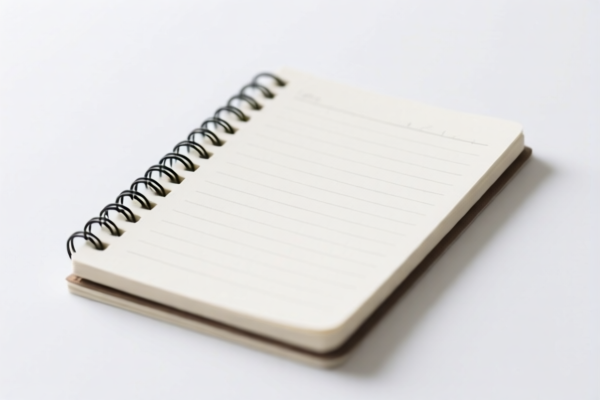



AI Analysis
📓 Fabric Notebook (布面装订笔记本)
🌐 HS Code Reference & Customs Clearance Guide | 2026 Latest Tariff Analysis | Professional Entry Strategies
📌 I. Product Definition & Classification: Do You Really Understand "Fabric Notebook"?
A Fabric Notebook is a stationary product characterized by a binding mechanism and a cover made of fabric material. In international trade, its classification depends heavily on whether it is viewed as a paper-based writing instrument, a printed paper product, or potentially a clothing accessory. The ambiguity lies in the material (fabric) versus the function (note-taking/paper carrier).
Key Distinction Points:
- Paper-Centric: If the primary value and function are the paper pages for writing, it falls under Chapter 48 (Paper Products).
- Accessory-Centric: If classified as a finished consumer good where the fabric cover is the dominant feature resembling a garment accessory, it might fall under Chapter 62 (Articles of Apparel).
⚠️ Critical Note: Most US Customs and Border Protection (CBP) rulings favor Chapter 48 for notebooks because the paper content is the core carrier of value. However, specific rulings exist for "fabric-bound" items that may divert to Chapter 62 if deemed "accessories to garments."
📦 II. HS Code Classification Details (2026 Latest Tariff Authority Comparison)
Based on the provided data <DATA>, there are three potential HS Codes. Here is the detailed breakdown:
| HS Code | Product Description | Logic/Justification | Core Carrier |
|---|---|---|---|
4820.10.20.60 |
Fabric-Bound Notebook, Bound Format | Classified based on the physical form (bound notebook). The fabric cover does not conflict with the paper classification. | Paper |
4820.10.40.00 |
Fabric-Bound Notebook, General Notebook | Classified based on the general nature of the item. Focuses on it being a notebook where paper is the core carrier. | Paper |
6217.10.95.50 |
Fabric-Bound Notebook, Consumer Good/Accessory | Classified as a finished consumer good where the fabric material aligns with garment accessories. | Fabric/Textile |
🔍 Analysis of Conflict:
- HS 4820.10 entries imply the item is treated as paper goods (Notebooks, exercise books, etc.).
- HS 6217.10 entry implies the item is treated as an apparel accessory (Parts of accessories of clothing).
- Risk: Misclassification can lead to significant duty differences (see Section III).
💰 III. 2026 Latest Tariff Rate Breakdown (Including Surcharges & Policy Add-ons)
✅ Applicable Country: United States (US)
✅ Origin: China (CN)
✅ Effective Time: Post-2025 Trade Policy (Includes Section 301 & Section 122)
🎯 1. 4820.10.20.60 & 4820.10.40.00 — Paper-Based Notebooks (Chapter 48)
| Item | Content |
|---|---|
| Base Tariff | 0.0% (Ad Valorem) |
| Section 301 Surcharge | +25.0% (USITC Footnote related to Chinese origin paper products) |
| Section 122 Tariff | +10.0% (Specific provision for certain textile/apparel-related goods, applied here due to fabric cover) |
| Total Tariff Rate | 35.0% |
| Tax Calculation | CIF Value × 35% |
| De Minimis Exemption | ❌ Not Applicable (Section 301 and 122 duties generally do not qualify for $800 de minimis exemption under current enforcement trends for high-risk categories) |
| Legal Basis Path | USITC:4820.10.xx.xx → Section 301: +25% → Section 122: +10% |
📌 Explanation:
- Despite being paper products, the fabric cover triggers the Section 122 tariff (often associated with textile/apparel oversight), adding 10%.
- The Section 301 tariff (25%) is standard for many Chinese-manufactured goods.
- Total 35% is a high-cost barrier.
- Both 4820 codes have identical tax structures in the provided data.
🎯 2. 6217.10.95.50 — Fabric-Bound Notebook as Apparel Accessory (Chapter 62)
| Item | Content |
|---|---|
| Base Tariff | 14.6% (Ad Valorem) |
| Section 301 Surcharge | +7.5% (Reduced or different Section 301 rate for specific textile accessories) |
| Section 122 Tariff | +10.0% (Same as above, applies to fabric/textile components) |
| Total Tariff Rate | 32.1% |
| Tax Calculation | CIF Value × 32.1% |
| De Minimis Exemption | ❌ Not Applicable (Likely blocked due to Section 122/301 applicability) |
| Legal Basis Path | USITC:6217.10.95.50 → Section 301: +7.5% → Section 122: +10% |
📌 Explanation:
- By reclassifying as an accessory to clothing (Chapter 62), the Base Tariff jumps from 0% to 14.6%.
- However, the Section 301 surcharge drops significantly from 25% to 7.5%.
- Net Result: The total rate is 32.1%, which is 2.9 percentage points lower than the Chapter 48 classification (35.0%).
- Strategy: This classification offers a slight tax advantage but carries higher classification risk with CBP, as notebooks are rarely considered "apparel accessories."
🛠️ IV. Customs Clearance Practical Advice (Pitfall Avoidance Guide)
✅ 1. Recommended Classification Strategy
| Scenario | Recommended HS Code | Reason |
|---|---|---|
| Standard Notebooks (Paper dominant, fabric cover only) | 4820.10.20.60 or 4820.10.40.00 |
Safest. CBP views notebooks primarily as paper goods. Lower risk of rejection, but higher duty (35%). |
| High-Volume/Luxury (Focus on fabric quality, branding) | 6217.10.95.50 |
Optimization. Saves ~2.9% in duties. Requires strong justification (e.g., marketed as "fashion accessory" or "clutch-style notebook"). Higher audit risk. |
⚠️ Warning: Do not arbitrarily switch between Chapter 48 and 62 without a Customs Ruling Letter or solid precedent. Inconsistent classification can lead to penalties.
✅ 2. Declaration Tips (Key Keywords)
| Situation | Correct Declaration | Avoid |
|---|---|---|
| Paper-Based | "Notebook, bound, fabric cover, paper pages" | "Fabric Accessory" (if misclassified) |
| Accessory-Based | "Accessory to clothing, fabric-bound storage case/notebook" | "Notebook" (if using Chapter 62) |
| General | "Stationery, Notebook, HS 4820.10.20.60" | Vague terms like "Book" or "Folder" |
✅ 3. Documentation Requirements
| Document | Requirement |
|---|---|
| Product Photo | Must clearly show the binding type (stitching, glue) and fabric texture to prove "fabric cover." |
| Composition Statement | Specify: "Cover: 100% Polyester Fabric; Pages: 80gsm Paper." |
| Commercial Invoice | Clearly state "Notebook" or "Stationery". If using 6217, describe as "Fabric Accessory". |
| Proof of Origin | Essential for calculating Section 301 and 122 duties accurately. |
🌍 V. Global Market Comparison (2026 Latest)
| Market | Recommended HS Code | Est. Total Tariff (China Origin) | Notes |
|---|---|---|---|
| 🇺🇸 USA | 4820.10.20.60 |
35.0% | High due to Section 301 + 122. |
| 🇺🇸 USA | 6217.10.95.50 |
32.1% | Slightly lower, but high classification risk. |
| 🇪🇺 EU | 4820.10.xx |
~6.5% | No Section 301/122 equivalents. Lower base duty. |
| 🇨🇳 China | 4820.10.xx |
~6.5% | Import duty for Chinese manufacturers re-importing. |
📌 Conclusion:
- The USA is the most expensive market for Fabric Notebooks due to layered surcharges.
- Chapter 48 (4820) is the standard, low-risk path despite the 35% rate.
- Chapter 62 (6217) is a niche strategy for duty optimization, requiring strong legal backing.
📌 VI. Common Mistakes & Pitfalls
❌ Mistake 1: Classifying as Textile Product without justifying "accessory" status.
👉 Consequence: CBP may reject 6217 and force reclassification to 4820, causing delays.
❌ Mistake 2: Ignoring Section 122.
👉 Consequence: Even if classified as paper (4820), the fabric cover may trigger the 10% surcharge. Always include it in cost calculations.
❌ Mistake 3: Using De Minimis ($800) for shipments from China.
👉 Consequence: Under current enforcement, goods subject to Section 301/122 are often excluded from de minimis exemptions. Assume duties apply.
✅ Correct Approach:
"Fabric-bound notebook, 50 sheets, A5 size, polyester cover. Classified under HS 4820.10.20.60. Includes all applicable US trade remedy duties (301 & 122)."
🎯 VII. Conclusion: Professional Declaration, Cost Efficiency!
🎯 Remember:
🔹 "Paper Core = Chapter 48 (Safe, 35%)"
🔹 "Fabric Fashion = Chapter 62 (Risky, 32.1%)"
🔹 "Section 122 is inevitable for fabric covers!"
📌 Tip:
If you are exporting to the US, calculate landed cost with 35% duty for safe budgeting. If pursuing the 32.1% rate, consult a customs broker for a pre-filing ruling or strong legal precedent.
📣 Immediate Action:
📞 Confirm with your customs broker whether your specific "fabric notebook" design qualifies as an "accessory" under
6217.10.95.50.
🚀 Clear Compliance, Clear Customs, Clear Profits!
✨ Professional Customs Classification Starts Here!
💼 Every 2.9% saved is pure profit!
Customer Reviews
About HS Code Classification
The Harmonized System (HS) is an internationally standardized nomenclature developed by the World Customs Organization (WCO) to classify traded products. Over 200 countries use the HS system as the basis for customs tariffs, trade statistics, and import/export regulations.
Each HS code follows a hierarchical structure:
- Chapter (2 digits) — Broad category of goods (e.g., Chapter 84: Machinery and Mechanical Appliances)
- Heading (4 digits) — More specific grouping within the chapter
- Subheading (6 digits) — Internationally standardized breakdown, used by all WCO member countries
- National subdivisions (8-10 digits) — Country-specific extensions for further classification, such as US HTSUS 10-digit codes
Correct HS code classification is essential for smooth customs clearance, accurate duty payment, and compliance with trade regulations. Misclassification can lead to customs delays, overpayment of duties, or penalties.
When importing from CN to US, the applicable tariff rates may include:
- Most-Favored-Nation (MFN) rate — The standard duty rate applied to WTO members
- General rate — Applied to countries without trade agreements
- Trade remedy duties — Additional tariffs such as Section 301 (anti-dumping), Section 232 (national security), or countervailing duties
The information provided on this page is for reference purposes only. For official classification, please consult with your local customs authority or a licensed customs broker.