faceplate
CN → US| HS Code | Tariff Rate | Origin | Destination | Doc |
|---|---|---|---|---|
| 7326908610 | 87.9% | CN | US | Official Doc |
| 7610900020 | 90.7% | CN | US | Official Doc |
| 7326908688 | 87.9% | CN | US | Official Doc |
| 7610900040 | 90.7% | CN | US | Official Doc |
| 3926301000 | 24.0% | CN | US | Official Doc |
Product Images
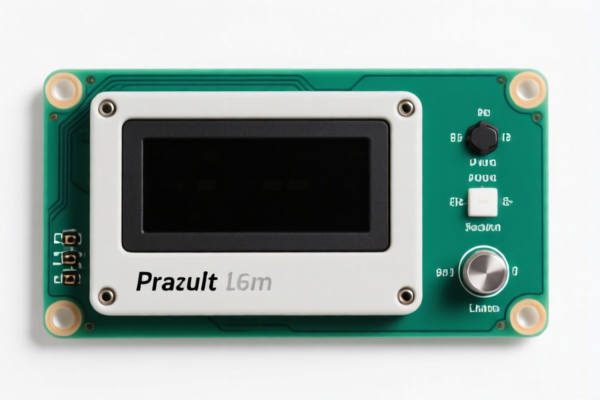
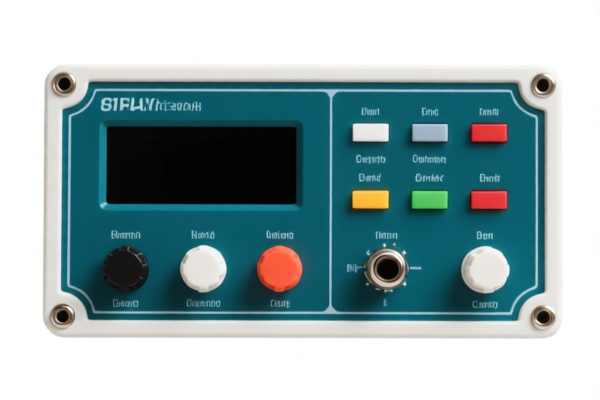
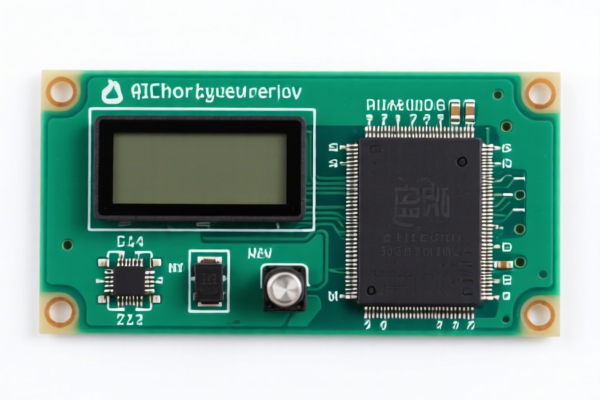
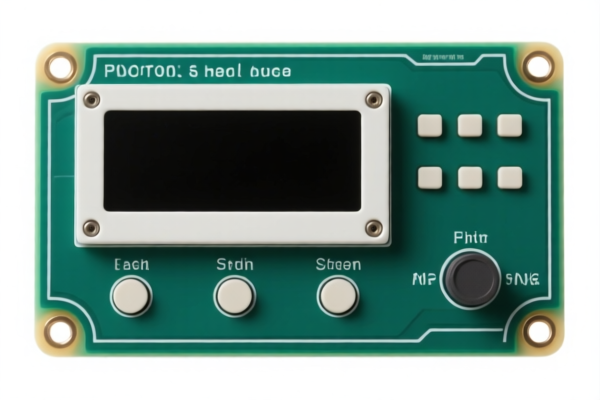
AI Analysis
🛡️ Faceplate (Panels / Covers / Knobs)
🌐 HS Code Reference & Customs Clearance Guide | 2026 Latest Tariff Analysis | Professional Clearance Strategy
📌 I. Product Definition & Classification: Do You Really Know "Faceplate"?
The term "Faceplate" is a generic industrial term that can refer to structural metal panels, plastic covers, or control knobs depending on the material, structure, and application. In international trade, incorrect classification leads to massive tariff penalties.
Key Distinctions:
- Metal Structural Panels (Aluminum/Steel): Often used in construction or machinery frames. High tariff risk due to Section 232 (Steel/Aluminum) and Section 301.
- Plastic Components (Knobs/Covers): Lower tariff risk but requires strict material verification.
⚠️ Critical Warning:
- If it is Aluminum and structural → High tax (~90.7%)
- If it is Steel and non-specific → High tax (~87.9%)
- If it is Plastic (e.g., knob-like) → Low tax (~24.0%)
Material and Function are KEY.
📦 II. HS Code Classification Details (2026 Latest Tariff Authority Comparison)
Based on the provided data, here are the five potential HS Codes for "Faceplate," ranked by likelihood and tax impact.
| HS Code | Product Description | Logic/Summary from Data | Material Assumption |
|---|---|---|---|
7610.90.00.20 |
Other Aluminum Structures | Based on "Other" category logic; "Faceplate" is a structural component, possibly aluminum. | 🟠 Aluminum |
7610.90.00.40 |
Aluminum Building/Decorative Structures | Based on "Faceplate" morphology; inferred as architectural/decorative aluminum structure. | 🟠 Aluminum |
7326.90.86.88 |
Other Articles of Iron/Steel | Based on "Other" residual category; inferred as metal, non-specific steel product. | 🔵 Steel |
7326.90.86.10 |
Other Iron/Steel Articles | Based on "Other" residual principle; "Faceplate" usually metal/composite, judged as steel. | 🔵 Steel |
3926.30.10.00 |
Other Plastic Articles (Knobs) | Matched keyword "Knob"; inferred material is plastic, fitting "Other Plastic Articles." | 🟢 Plastic |
🔍 Focus Reminder:
- Aluminum & Steel Faceplates attract high tariffs due to trade restrictions (Section 232 & 301).
- Plastic Faceplates (if clearly knobs/covers) have significantly lower tariffs.
- Do not assume material; provide material specs to avoid misclassification.
💰 III. 2026 Latest Tariff Rate Details (Including Surcharges & Policy Add-ons)
✅ Applicable Country: United States (US)
✅ Origin: China (CN) (Assumed based on tariff structure in data)
✅ Effective Time: Current trade policies (Section 301, Section 232, IEEPA)
🎯 1. Aluminum Faceplates: 7610.90.00.20 & 7610.90.00.40
| Item | Content |
|---|---|
| Product Description | Aluminum structures, building/decorative panels |
| Basic Tariff | 5.7% |
| Section 301 Surcharge | +25.0% |
| Section 232 Surcharge | +50.0% (10% base + 40% additional for Steel/Aluminum/Copper) |
| Total Tariff Rate | 90.7% |
| Tax Calculation | CIF Value × 90.7% |
| De Minimis Exemption | ❌ Not Eligible |
| Legal Basis Path | USITC:7610.90.00.xx → Section 232: Steel/Aluminum → Section 301: China |
📌 Explanation:
- 90.7% is an extremely high tariff.
- The 50% Section 232 surcharge is mandatory for aluminum products from China.
- The 25% Section 301 surcharge is for Chinese origin.
- Result: Almost no profit margin remains if imported directly.
🎯 2. Steel Faceplates: 7326.90.86.88 & 7326.90.86.10
| Item | Content |
|---|---|
| Product Description | Other Iron/Steel articles (non-specific) |
| Basic Tariff | 2.9% |
| Section 301 Surcharge | +25.0% |
| Section 232 Surcharge | +50.0% (10% base + 40% additional for Steel/Aluminum/Copper) |
| Total Tariff Rate | 87.9% |
| Tax Calculation | CIF Value × 87.9% |
| De Minimis Exemption | ❌ Not Eligible |
| Legal Basis Path | USITC:7326.90.86.xx → Section 232: Steel/Aluminum → Section 301: China |
📌 Note:
- 87.9% is also a critical tariff level.
- Even if the basic tariff is low (2.9%), the 50% Section 232 penalty applies to steel.
- Result: High cost, high risk.
🎯 3. Plastic Faceplates (Knobs/Covers): 3926.30.10.00
| Item | Content |
|---|---|
| Product Description | Other Plastic Articles (matched "Knob") |
| Basic Tariff | 6.5% |
| Section 301 Surcharge | +7.5% (Note: Data shows 7.5%, likely partial exemption or specific rate) |
| Section 232 Surcharge | None (Plastic is not subject to Section 232) |
| Total Tariff Rate | 24.0% (Includes other potential surcharges per data) |
| Tax Calculation | CIF Value × 24.0% |
| De Minimis Exemption | ❌ Not Eligible (Based on data context) |
| Legal Basis Path | USITC:3926.30.10.00 → Section 301: China |
📌 Advantage:
- 24.0% is significantly lower than metal faceplates.
- No Section 232 penalty for plastics.
- Strategy: If the faceplate is plastic, ensure it is classified correctly to save ~66% in tariffs.
🛠️ IV. Customs Clearance Practical Advice (Real-World Pitfall Guide)
✅ 1. Required Documentation Checklist (Non-negotiable)
| Document | Must Provide | Explanation |
|---|---|---|
| ✅ Material Composition Certificate | ✔️ | CRITICAL: Proves if it’s Aluminum, Steel, or Plastic. Without this, customs may default to higher-tariff assumptions. |
| ✅ Product Specifications | ✔️ | Dimensions, weight, function (structural vs. decorative vs. control). |
| ✅ Photographs (Clear) | ✔️ | Show overall shape, mounting holes, and any labels. |
| ✅ Commercial Invoice | ✔️ | Clearly state "Aluminum Faceplate" or "Plastic Control Knob" – do NOT use vague terms like "Part." |
| ✅ Packing List | ✔️ | Ensure quantity matches invoice. |
| ✅ Certificate of Origin (CO) | ✔️ | To verify Chinese origin and apply correct Section 301/232 rates. |
✅ 2. Declaration Tips (Key Mantra)
🔥 “Material First, Function Second, Name Precise, Tax Minimized!”
| Situation | Correct Declaration | Wrong Practice |
|---|---|---|
| Aluminum Structural Panel | 7610.90.00.20 |
Calling it "Steel Part" → Misclassification Penalty |
| Steel Cover Plate | 7326.90.86.88 |
Calling it "Plastic" without proof → Smuggling Risk |
| Plastic Knob/Cover | 3926.30.10.00 |
Calling it "Metal Part" → Unnecessary 90% Tax |
| Mixed Material | Split Declaration | Bundling into one HS Code → Customs Audit & Delay |
✅ 3. Special Handling Cases
| Case | Handling Advice |
|---|---|
| OEM Custom Faceplates | Provide client’s design drawings + BOM (Bill of Materials) to prove material. |
| Faceplate with Paint/Coating | Still classified by base material (Al/Steel/Plastic). Coating doesn’t change HS Code. |
| Faceplate as Part of Machine | If integral to a machine, may need machine-specific HS Code, not general part. |
| Small Sample Shipments | Still subject to full tariffs. De Minimis ($800) does not apply to Section 301/232 goods from China. |
🌍 V. Global Market Clearance Comparison (2026 Latest)
| Country/Region | Recommended HS Code | Tariff (China Origin) | Certification | Notes |
|---|---|---|---|---|
| 🇺🇸 USA | 7610.xx / 7326.xx / 3926.xx |
24.0% ~ 90.7% | None specific | High risk due to Sec 232 & 301. |
| 🇨🇳 China | Same HS Codes | 5% ~ 10% | CCC (if applicable) | Low tax, high volume. |
| 🇪🇺 EU | Similar HS Codes | 2% ~ 6% | CE (if electrical) | No Section 232 equivalent. |
| 🇦🇺 Australia | Similar HS Codes | 5% | RCM (if electrical) | Moderate tax. |
| 🇯🇵 Japan | Similar HS Codes | 0% ~ 5% | PSE (if electrical) | Low tax. |
📌 Conclusion:
- USA is the highest-risk market for metal faceplates from China.
- Plastic faceplates are more globally friendly with lower tariffs.
- Diversify supply chain: Consider sourcing aluminum/steel faceplates from non-China origins (e.g., Vietnam, Mexico) to avoid Section 232/301 if targeting the US.
📌 VI. Common Errors & Pitfall Guide (Lessons Learned)
❌ Error 1: Declaring "Aluminum Faceplate" as "Steel Part"
👉 Consequence: Customs audit, seizure, and penalties for fraud.
❌ Error 2: Using "Faceplate" without specifying material in Invoice
👉 Consequence: Customs assigns highest default rate → 90.7% tax.
❌ Error 3: Assuming small shipments are tax-free
👉 Consequence: Section 301/232 goods are not eligible for de minimis exemption.
❌ Error 4: Confusing "Decorative Aluminum Panel" with "Plastic Cover"
👉 Consequence: Wrong HS Code → Refund delay or retroactive tax assessment.
✅ Correct Practice:
“Aluminum Faceplate, 12x12 inches, Anodized, for Industrial Cabinet, Model ABC, Made in China”
HS Code:7610.90.00.20
Tax: 90.7%
🎯 VII. Conclusion: Precision Classification, Cost Efficiency!
🎯 Remember the Mantra:
🔹 “Alu/Steel = 90% Tax, Plastic = 24% Tax.”
🔹 “Material Proof is Key, Name Precision Saves Money.”
🔹 “No De Minimis for China Metals!”
📌 Pro Tip:
- If your faceplate is aluminum or steel, explore Section 232 Exclusions (if applicable) or alternative sourcing.
- If it is plastic, ensure it’s declared as 3926.30.10.00 to save ~66% in tariffs.
- Apply for an Advance Ruling from US Customs (CBP) for complex cases.
📣 Action Now:
📞 Contact Customs Broker + Provide Material Spec + Verify HS Code
🚀 Clear Customs Smoothly, Maximize Profit, Minimize Risk!
✨ Professional Clearance Starts with Accurate Classification!
💼 Every Penny of Tariff is Worth Calculating!
Customer Reviews
About HS Code Classification
The Harmonized System (HS) is an internationally standardized nomenclature developed by the World Customs Organization (WCO) to classify traded products. Over 200 countries use the HS system as the basis for customs tariffs, trade statistics, and import/export regulations.
Each HS code follows a hierarchical structure:
- Chapter (2 digits) — Broad category of goods (e.g., Chapter 84: Machinery and Mechanical Appliances)
- Heading (4 digits) — More specific grouping within the chapter
- Subheading (6 digits) — Internationally standardized breakdown, used by all WCO member countries
- National subdivisions (8-10 digits) — Country-specific extensions for further classification, such as US HTSUS 10-digit codes
Correct HS code classification is essential for smooth customs clearance, accurate duty payment, and compliance with trade regulations. Misclassification can lead to customs delays, overpayment of duties, or penalties.
When importing from CN to US, the applicable tariff rates may include:
- Most-Favored-Nation (MFN) rate — The standard duty rate applied to WTO members
- General rate — Applied to countries without trade agreements
- Trade remedy duties — Additional tariffs such as Section 301 (anti-dumping), Section 232 (national security), or countervailing duties
The information provided on this page is for reference purposes only. For official classification, please consult with your local customs authority or a licensed customs broker.