facial cream
CN → US| HS Code | Tariff Rate | Origin | Destination | Doc |
|---|---|---|---|---|
| 3004909244 | 10.0% | CN | US | Official Doc |
| 3307900000 | 40.4% | CN | US | Official Doc |
| 3004490050 | 10.0% | CN | US | Official Doc |
| 3304995000 | 35.0% | CN | US | Official Doc |
Product Images
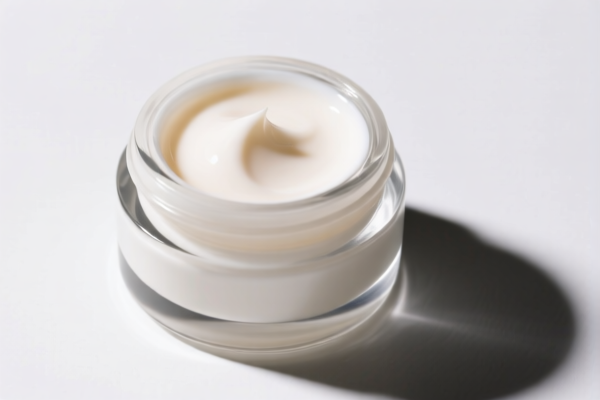
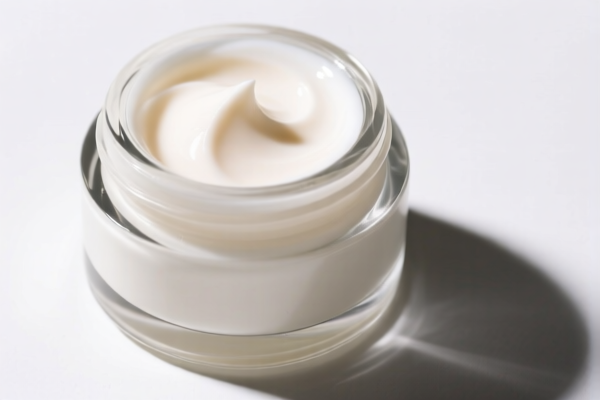
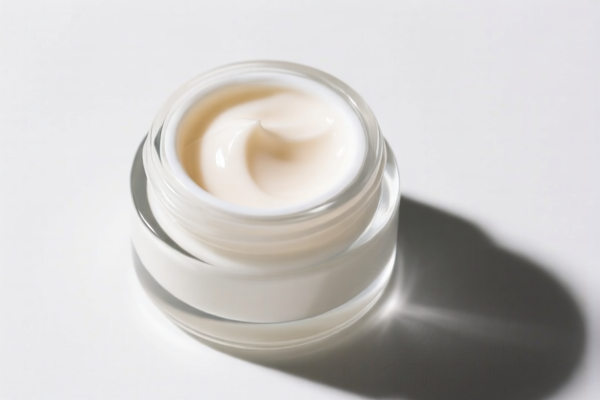
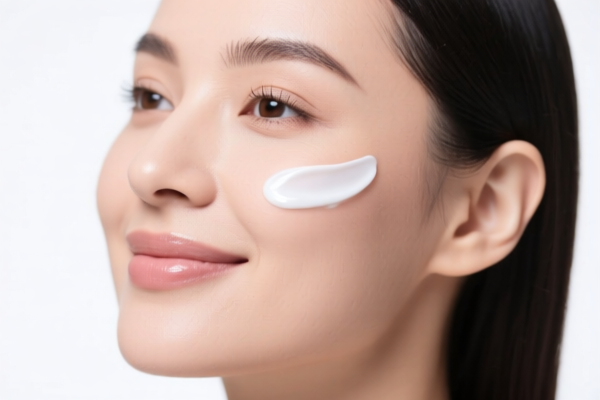
AI Analysis
🧴 Facial Cream (The Chameleon of Customs)
🌐 HS Code Reference & Clearance Guide | 2026 Latest Tariff Analysis | Professional Strategy for Skincare & Pharmaceuticals
📌 I. Product Definition & Classification: Is it a Drug or a Cosmetic?
Facial creams are ubiquitous in daily life, but in international trade, they are the most complex items to classify. The distinction lies entirely in medical claims vs. beauty claims. Customs authorities scrutinize the product’s ingredients, marketing materials, and intended use to determine if it is a "medicine" or a "cosmetic."
Key Distinction Points:
Pharmaceutical (Drug) Contains active therapeutic ingredients (e.g., anesthetics, specific dermatological agents) intended to treat, cure, or prevent disease/condition. → Higher scrutiny, lower duty in some cases due to medical exemptions.
* Cosmetic/Beauty: Intended to cleanse, beautify, promote attractiveness, or alter appearance without affecting the body's structure or functions. → Subject to standard beauty tariffs, often higher due to trade wars.*
⚠️ Critical Warning:
- If the label says "treats acne," "anesthetizes pain," or "dermatological remedy," it risks being classified as a Drug (Chapter 30).
- If the label says "moisturizes," "anti-aging," "beautifies," or "care," it is classified as a Cosmetic (Chapter 33).
- Misclassification is the #1 cause of delays and penalties in skincare imports.
📦 II. HS Code Classification Details (2026 Latest Tariff Concordance)
Based on the provided data, there are four potential classifications for "Facial Cream." The choice depends on the specific formulation and intent.
| HS Code | Product Description | Application Scenario | Key Distinction |
|---|---|---|---|
3004.90.92.44 |
Dermatological preparations / Local anesthetics | Medicated creams for skin diseases, pain relief, or specific dermatological treatments. | Drug Category. Focuses on medical treatment/anesthesia. |
3307.90.00.00 |
Cosmetics / Toilet preparations | General skincare products, cleansing agents, or unclassified beauty items not fitting other specific cosmetic headings. | Cosmetic Category. General "toilet preparation" status. |
3004.49.00.50 |
Dermatological drugs / local preparations | Skin care-related local agents or formulations with therapeutic intent. | Drug Category. Specific to dermatological drug formulations. |
3304.99.50.00 |
Skin care preparations (Beauty) | Standard beauty creams, moisturizers, anti-aging creams fitting the definition of "cosmetic or skin care." | Cosmetic Category. Purely for beautification/skin maintenance. |
🔍 Focus Reminder:
- Drug Codes (3004.xx) Are generally safer if the product has strong medical backing, but require drug regulatory approval (e.g., FDA NDA/ANDA).
- Cosmetic Codes (3304/3307.xx) Are easier to clear for standard beauty brands but attract higher tariffs due to the 122-Clause and Section 301 tariffs.
- Do not split shipments of the same product into different HS codes to save tax; this is fraud.
💰 III. 2026 Latest Tariff Rate Breakdown (Including Surcharges)
✅ Applicable Country: United States (US)
✅ Origin: China (CN) (Implied by "122-Clause" and specific tariff structures)
✅ Effective Time: Current Trade War & IEEPA measures apply.
🎯 1. 3004.90.92.44 & 3004.49.00.50 —— Dermatological Drugs / Local Anesthetics
| Item | Content |
|---|---|
| Base Duty Rate | 0.0% (Ad Valorem) |
| Section 301 Surcharge | 0.0% (Exempted due to medical/therapeutic classification) |
| IEEPA / 122-Clause Surcharge | +10.0% (Specifically applied to these medical/dermatological items under 122-Clause) |
| Total Effective Rate | 10.0% |
| Tax Calculation | CIF Value × 10% |
| De Minimis Eligibility | ❌ Not Eligible (Generally, drugs/medical items face stricter scrutiny and are often excluded from de minimis exemptions if above certain value, though rates are low). |
| Legal Basis Path | USITC:3004.90.92.44 → FOOTNOTE:122-Clause (or equivalent IEEPA provision for medical exceptions). |
📌 Explanation:
- The 0% base duty reflects the US policy of supporting medical access.
- The 10% surcharge is specific to the "122-Clause" (often related to specific trade actions or IEEPA provisions targeting certain Chinese imports, even medical ones in some contexts, or distinct from the main 301 list).
- No Section 301 (25%) is applied here, making this a cost-effective classification if the product qualifies as a drug.
🎯 2. 3307.90.00.00 —— Cosmetics / Toilet Preparations (General)
| Item | Content |
|---|---|
| Base Duty Rate | 5.4% (Ad Valorem) |
| Section 301 Surcharge | +25.0% (Standard 301 tariff on Chinese cosmetics) |
| IEEPA / 122-Clause Surcharge | +10.0% (Additional layer applicable to this category) |
| Total Effective Rate | 40.4% |
| Tax Calculation | CIF Value × 40.4% |
| De Minimis Eligibility | ❌ Not Eligible (High-risk category for inspection). |
| Legal Basis Path | USITC:3307.90.00.00 → IEEPA:9903.01.24 (301) → FOOTNOTE:122-Clause |
📌 Explanation:
- This is a high-cost classification.
- The 5.4% base is standard for cosmetics.
- The 25% 301 tariff is the bulk of the cost.
- The 10% IEEPA adds further burden.
- Total 40.4% makes this category very expensive for Chinese-origin goods.
🎯 3. 3304.99.50.00 —— Skin Care Preparations (Beauty/Cosmetic)
| Item | Content |
|---|---|
| Base Duty Rate | 0.0% (Ad Valorem) |
| Section 301 Surcharge | +25.0% (Standard 301 tariff on Chinese beauty products) |
| IEEPA / 122-Clause Surcharge | +10.0% (Additional layer applicable) |
| Total Effective Rate | 35.0% |
| Tax Calculation | CIF Value × 35.0% |
| De Minimis Eligibility | ❌ Not Eligible. |
| Legal Basis Path | USITC:3304.99.50.00 → IEEPA:9903.01.24 (301) → FOOTNOTE:122-Clause |
📌 Explanation:
- While the base duty is 0% (unlike 3307), the 301 and IEEPA surcharges remain high.
- 35.0% Total is cheaper than3307(40.4%) but still significantly higher than the drug classification (10.0%).
- This code is for "Skin care preparations" defined under beauty/cosmetic usage.
🛠️ IV. Practical Clearance Advice (Avoiding Pitfalls)
✅ 1. Preparation Checklist (Non-Negotiable)
| Document | Required? | Details |
|---|---|---|
| ✅ Ingredient List (INCI) | ✔️ Mandatory | Must be complete. If it contains "lidocaine," "pramoxine," or specific drug claims, it must go to Chapter 30. |
| ✅ Product Labeling Photos | ✔️ Mandatory | Check for words like "Treat," "Cure," "Anesthetic," "Anti-inflammatory." These trigger Drug classification. |
| ✅ FDA Registration (if Drug) | ✔️ Mandatory | For 3004 codes, ensure FDA prior notice and registration are complete. |
| ✅ Cosmetic GMP Certificate | ✔️ Recommended | For 3304/3307 codes, proof of good manufacturing practice helps. |
| ✅ Commercial Invoice | ✔️ Mandatory | Clear description: "Cosmetic Facial Cream" vs. "Dermatological Cream." Do NOT be vague. |
| ✅ Country of Origin (COO) | ✔️ Mandatory | Must state China if imported from China to trigger tariff accuracy. |
✅ 2. Classification Strategy (The "Claim" Test)
🔥 Rule of Thumb:
"If it heals, it's a Drug (10%). If it beautifies, it's a Cosmetic (35-40%). Be honest!"
| Scenario | Correct HS Code | Total Tax | Why? |
|---|---|---|---|
| Moisturizer with Hyaluronic Acid | 3304.99.50.00 |
35.0% | Purely cosmetic. No therapeutic claim. |
| Anti-aging Cream with Retinol | 3304.99.50.00 |
35.0% | Beauty/Appearance. |
| Numbing Cream for Tattoo/Pain | 3004.90.92.44 |
10.0% | Local Anesthetic. Medical purpose. |
| Antibiotic Cream for Acne | 3004.49.00.50 |
10.0% | Dermatological drug. Treats condition. |
| General "Toilet Prep" | 3307.90.00.00 |
40.4% | Catch-all for cosmetics. Highest tax. Avoid if 3304 applies. |
📌 Warning:
- Do not declare a medicated cream as a cosmetic (3304) to save tax. If Customs finds out, they will reclassify it, impose back-taxes, and penalize you.
- Conversely, do not declare a simple moisturizer as a drug (3004) just to get 10% tax. It requires drug registration, which is expensive and time-consuming.
✅ 3. Special Considerations for "122-Clause" & IEEPA
| Issue | Detail |
|---|---|
| 122-Clause Surcharge (10%) | This appears in ALL provided HS codes. It is an additional layer on top of base and 301 tariffs. Do not ignore it. |
| IEEPA (Section 301) | Applies only to Cosmetic codes (3304, 3307). Drug codes (3004) are often exempt from the 25% 301 tariff, which is why the drug tax is lower. |
| De Minimis (Section 321) | Most likely excluded for these high-value or regulated items. Do not rely on $800 de minimis exemption for bulk shipments. |
🌍 V. Global Market Comparison (2026 Snapshot)
| Market | Recommended HS Code | Est. Tax Rate (China Origin) | Key Requirement |
|---|---|---|---|
| 🇺🇸 USA | 3304.99.50.00 (Beauty) / 3004.xx (Drug) |
10% - 40.4% | FDA Registration (Drug) or VCRP (Cosmetic). |
| 🇨🇳 China | 3304.99.50.00 |
~0-10% (Varies) | NMPA Filing (Cosmetic). |
| 🇪🇺 EU | 3304.99.90 (CPNP) |
0-6.5% | CPNP Notification. No "122-Clause". |
| 🇬🇧 UK | 3304.99.90 |
0-6.5% | SCPIF Notification. |
| 🇯🇵 Japan | 3304.99.90 |
0-10% | Quasi-drug registration if claims exist. |
📌 Conclusion:
- The USA is the most complex and expensive due to the layered tariffs (Base + 301 + IEEPA/122).
- Classifying as a Drug (3004) saves ~25-30% in taxes compared to Cosmetic, BUT only if the product legally qualifies as a drug.
- For pure beauty brands, prepare for 35%+ tax.
📌 VI. Common Mistakes & Pitfalls (Lessons Learned)
❌ Mistake 1: Using "Facial Cream" on the invoice without specifying type.
👉 Result: Customs holds shipment for inspection → Delays + Storage Fees.
✅ Fix: Specify "Moisturizing Facial Cream" or "Lidocaine Topical Cream."
❌ Mistake 2: Misusing 3307.90.00.00 when 3304.99.50.00 is more accurate.
👉 Result: Paying 40.4% instead of 35.0%. Unnecessary loss.
✅ Fix: Use 3304 for skin care preparations specifically.
❌ Mistake 3: Claiming Drug status for a cosmetic product to save tax.
👉 Result: FDA Import Alert. Goods destroyed or returned. Fines up to $50,000+.
✅ Fix: Only use 3004 codes if you have FDA approval/directory listing for the active ingredient.
🎯 VII. Conclusion: Strategic Tax Planning
🎯 Key Takeaway:
🔹 "If it's beauty, pay 35-40%. If it's medicine, pay 10%. Be accurate, not clever."
🔹 "122-Clause is universal. 301 is cosmetic-specific. IEEPA is the wildcard."
📌 Pro Tip:
- For high-volume skincare brands, consider supply chain diversification (e.g., produce in Vietnam or Thailand) to potentially avoid Section 301 (25%) and IEEPA/122 surcharges, depending on current trade policies.
- Always obtain a Pre-Ruling from CBP (Customs and Border Protection) if your product sits in a gray area (e.g., "medicated cosmetic").
📣 Immediate Action:
📞 Audit Your Labels: Do they contain therapeutic claims?
📂 Check Ingredients: Are they OTC Monograph drugs?
🚀 Consult a Customs Broker: Before shipping your next container!
✨ Smart Classification = Higher Profit Margins!
💼 Don't let tariffs eat your skin care profits!
Customer Reviews
About HS Code Classification
The Harmonized System (HS) is an internationally standardized nomenclature developed by the World Customs Organization (WCO) to classify traded products. Over 200 countries use the HS system as the basis for customs tariffs, trade statistics, and import/export regulations.
Each HS code follows a hierarchical structure:
- Chapter (2 digits) — Broad category of goods (e.g., Chapter 84: Machinery and Mechanical Appliances)
- Heading (4 digits) — More specific grouping within the chapter
- Subheading (6 digits) — Internationally standardized breakdown, used by all WCO member countries
- National subdivisions (8-10 digits) — Country-specific extensions for further classification, such as US HTSUS 10-digit codes
Correct HS code classification is essential for smooth customs clearance, accurate duty payment, and compliance with trade regulations. Misclassification can lead to customs delays, overpayment of duties, or penalties.
When importing from CN to US, the applicable tariff rates may include:
- Most-Favored-Nation (MFN) rate — The standard duty rate applied to WTO members
- General rate — Applied to countries without trade agreements
- Trade remedy duties — Additional tariffs such as Section 301 (anti-dumping), Section 232 (national security), or countervailing duties
The information provided on this page is for reference purposes only. For official classification, please consult with your local customs authority or a licensed customs broker.