fake nail practice model
CN → US| HS Code | Tariff Rate | Origin | Destination | Doc |
|---|---|---|---|---|
| 4016990500 | 20.9% | CN | US | Official Doc |
| 4016991500 | 20.2% | CN | US | Official Doc |
| 4820900000 | 35.0% | CN | US | Official Doc |
| 4820500000 | 35.0% | CN | US | Official Doc |
| 3926903500 | 24.0% | CN | US | Official Doc |
| 3926909989 | 22.8% | CN | US | Official Doc |
| 9023000000 | 17.5% | CN | US | Official Doc |
| 9023000000 | 17.5% | CN | US | Official Doc |
Product Images
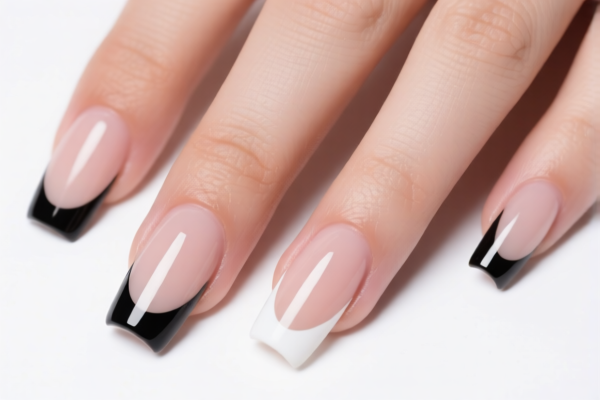
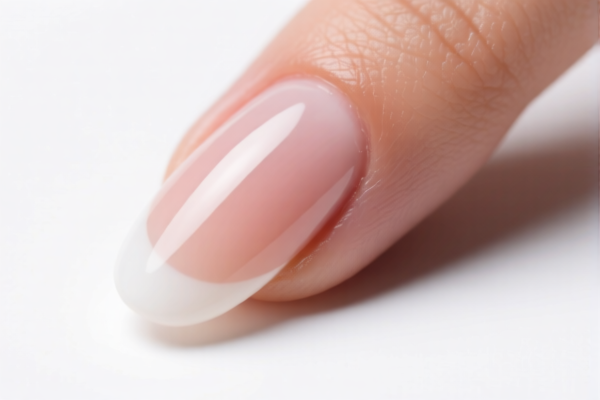
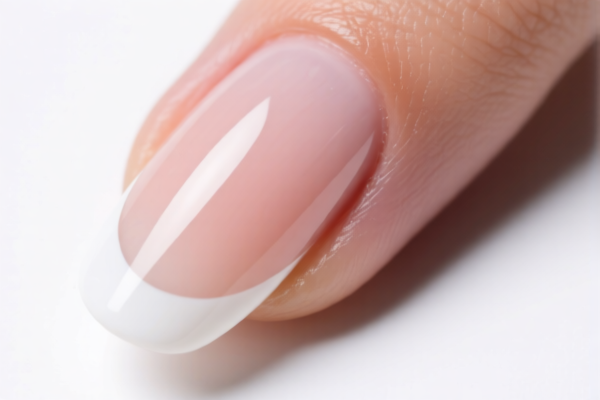
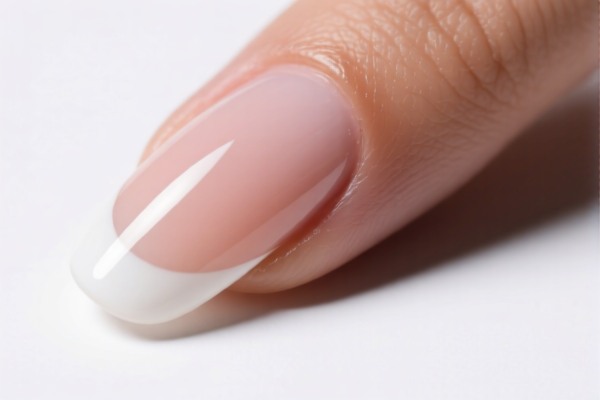
AI Analysis
💅 Fake Nail Practice Models (Manicure Trainers)
🌐 HS Code Reference & Customs Clearance Guide | 2026 Latest Tariff Analysis | Professional Strategy for Beauty Industry Imports
📌 I. Product Definition & Classification: Do You Truly Understand "Practice Models"?
Fake nail practice models, also known as nail trainer hands or artificial mannequin hands, are essential tools in beauty education and professional training. They simulate human fingers to allow students and technicians to practice acrylic application, gel polish, nail art, and tip attachment without harming a client's natural nails.
In international trade, these items are often misclassified. They are not jewelry, nor are they simple plastic toys. Their classification depends heavily on material composition and specific design features (e.g., movable joints, specific rubber formulation).
⚠️ Key Distinction Points:
- If made of vulcanized rubber (soft, flexible, realistic feel) → Likely 4016.99
- If made of hard plastics (beads, spangles, or general plastic parts) → Likely 3926.90
- If designed specifically as demonstrational apparatus for education → Likely 9023.00
- If made of paper/cardboard (rare, but possible for low-cost training books) → Likely 4820.90
📦 II. HS Code Classification Details (2026 Latest Tariff Authority Cross-Reference)
| HS Code | Product Description | Applicable Scenario | Material/Feature Check |
|---|---|---|---|
9023.00.00.00 |
Instruments, apparatus and models, designed for demonstrational purposes (for example, in education or exhibitions), unsuitable for other uses, and parts and accessories thereof | High-end training models specifically marketed for "educational demonstration" | ✅ Educational/Demonstrational Purpose |
4820.90.00.00 |
Other articles of stationery, of paper or paperboard; Albums for samples or for collections | Paper-based nail art sample books or low-cost cardboard trainers | ✅ Paper/Cardboard |
3926.90.35.00 |
Other articles of plastics... Beads, bugles and spangles, not strung... | Plastic nail art accessories (not full hands), or small plastic decorative parts used with the model | ✅ Plastic Accessories/Decor |
3926.90.99.89 |
Other articles of plastics... Other | Generic plastic nail practice fingers (non-rubber, non-specialized) | ✅ Hard Plastic |
4016.99.05.00 |
Other articles of vulcanized rubber other than hard rubber... Household articles not elsewhere specified or included | Realistic silicone/rubber hands with movable joints, high flexibility | ✅ Vulcanized Rubber/Soft |
4016.99.15.00 |
Other articles of vulcanized rubber... Caps, lids, seals, stoppers and other closures | Rubber caps for nail tips (if sold separately as closures) | ✅ Rubber Closures |
🔍 Critical Reminder:
- Do NOT simply label as "Plastic Toy." If the product has movable joints made of rubber, customs may classify it as 4016.99.
- If the product is a full mannequin hand with realistic texture, 4016.99.05.00 is often the most accurate for high-quality models.
- If marketed strictly as an "Educational Demonstrational Model" with no other use, 9023.00.00.00 may apply, but you must prove it is unsuitable for other uses.
💰 III. 2026 Latest Tariff Rate Detailed Explanation (Including Additional Duties & Policy Surcharges)
✅ Applicable Country: United States (US)
✅ Country of Origin: China (CN)
✅ Effective Date: From November 10, 2025 (including subsequent imports)
🎯 1. 9023.00.00.00 – Demonstrational Models (Educational Use)
| Item | Content |
|---|---|
| Base Tariff | 0.0% (ad valorem) |
| USITC Surtax | +7.5% (Section 301 / Additional Duty) |
| IEEPA Surtax | 0% (Not listed in IEEPA specific footnotes for this code) |
| Total Tax Rate | 7.5% |
| Tax Calculation | CIF Value × 7.5% |
| De Minimis Eligibility | ❌ No (For China-origin goods, Section 301 duties apply) |
| Legal Path | USITC:9023.00.00.00 → FOOTNOTE:Section301 |
📌 Explanation:
- While the base tariff is 0%, the 7.5% additional tariff applies due to China origin.
- Why 7.5%? This reflects the current residual Section 301 tariff level for certain educational/demonstrational instruments.
- Advantage: Significantly lower than general plastic goods.
🎯 2. 4820.90.00.00 – Paper/Cardboard Stationery (Sample Books)
| Item | Content |
|---|---|
| Base Tariff | 0.0% |
| USITC Surtax | +25.0% |
| IEEPA Surtax | 0% |
| Total Tax Rate | 25.0% |
| Tax Calculation | CIF Value × 25.0% |
| De Minimis Eligibility | ❌ No |
📌 Explanation:
- Only applies if the practice model is made of paper (e.g., a nail art sample book).
- If your product is rubber/plastic, do not use this code. Misclassification leads to penalties.
🎯 3. 3926.90.35.00 – Plastic Beads/Spangles/Accessories
| Item | Content |
|---|---|
| Base Tariff | 6.5% |
| USITC Surtax | +7.5% |
| IEEPA Surtax | 0% |
| Total Tax Rate | 14.0% |
| Tax Calculation | CIF Value × 14.0% |
| De Minimis Eligibility | ❌ No |
📌 Explanation:
- Applies if the product is composed of plastic beads, bugles, or spangles (e.g., decorative nail art pieces, not the hand itself).
- High base rate (6.5%) + 7.5% surtax.
🎯 4. 3926.90.99.89 – Other Plastic Articles
| Item | Content |
|---|---|
| Base Tariff | 5.3% |
| USITC Surtax | +7.5% |
| IEEPA Surtax | 0% |
| Total Tax Rate | 12.8% |
| Tax Calculation | CIF Value × 12.8% |
| De Minimis Eligibility | ❌ No |
📌 Explanation:
- Catch-all for generic hard plastic nail practice fingers.
- Common for low-cost, rigid plastic trainers.
🎯 5. 4016.99.05.00 – Vulcanized Rubber Household Articles
| Item | Content |
|---|---|
| Base Tariff | 0.0% |
| USITC Surtax | 0.0% |
| IEEPA Surtax | 0.0% |
| Total Tax Rate | 0.0% |
| Tax Calculation | CIF Value × 0.0% |
| De Minimis Eligibility | ⚠️ Check De Minimis Rules (But Subject 301 Check) |
📌 Explanation:
- Best Case Scenario!
- If your practice model is made of vulcanized rubber (soft, flexible, realistic), it may qualify for 0% total tax.
- Condition: Must be clearly identified as "vulcanized rubber" and not "plastic."
- Risk: Customs may challenge this if the rubber content is low or if it's mixed with plastic. Requires strong material documentation.
🎯 6. 4016.99.15.00 – Rubber Closures
| Item | Content |
|---|---|
| Base Tariff | 0.0% |
| USITC Surtax | 0.0% |
| IEEPA Surtax | 0.0% |
| Total Tax Rate | 0.0% |
📌 Explanation:
- Only for rubber caps/lids for nail tips.
- Not applicable for the hand/model itself unless sold as a closure component.
🛠️ IV. Customs Clearance Practical Advice (Real-World Pitfall Avoidance Guide)
✅ 1. Documentation Checklist (Missing Items = Delays)
| Document | Required? | Notes |
|---|---|---|
| ✅ Material Composition Report | ✔️ | Crucial! Must specify % of Vulcanized Rubber vs. Plastic. |
| ✅ Product Photos (Clear) | ✔️ | Show flexibility, joints, and any "Educational" labeling. |
| ✅ Commercial Invoice | ✔️ | Must clearly state: "Nail Practice Model – Vulcanized Rubber" or "Educational Demonstrational Model." |
| ✅ Packing List | ✔️ | Itemize components (e.g., "Hand Base," "Finger Tips"). |
| ✅ Third-Party Test Report | ✔️ | If claiming 0% rubber tariff, provide material analysis. |
✅ 2. Classification Strategy (Key Mnemonics)
🔥 "Rubber Zero, Plastic Twelve, Educational Seven, Paper Twenty-Five!"
| Scenario | Recommended HS Code | Expected Tax | Why? |
|---|---|---|---|
| High-End Realistic Hand (Soft, Moveable) | 4016.99.05.00 |
0.0% | Classified as Vulcanized Rubber Article |
| Educational Demo Model (Specific Design) | 9023.00.00.00 |
7.5% | Classified as Demonstrational Apparatus |
| Generic Plastic Fingers (Rigid) | 3926.90.99.89 |
12.8% | Classified as Other Plastic Article |
| Paper Sample Book | 4820.90.00.00 |
25.0% | Classified as Paper Stationery |
| Plastic Decorations (Beads/Spangles) | 3926.90.35.00 |
14.0% | Classified as Plastic Beads/Spangles |
📌 Warning:
- Do not use9023.00.00.00for generic rubber hands unless you can prove they are unsuitable for other uses. If they are used for general manicure practice,4016.99.05.00is safer and cheaper (0% vs 7.5%).
- Misclassification Risk: Declaring plastic as rubber to get 0% tax can lead to penalties, back-taxes, and audits. Only use4016if the material is truly vulcanized rubber.
✅ 3. Special Handling Cases
| Situation | Handling Advice |
|---|---|
| Mixed Material (Plastic Frame + Rubber Fingers) | Declare the essential character material. If rubber fingers dominate, argue for 4016.99.05.00. Provide material breakdown. |
| OEM Custom Models | Provide design drawings showing movable joints. Highlight "Educational Use" on invoice to support 9023.00.00.00 if rubber classification is weak. |
| Nail Art Sample Books | Clearly state "Paper/Cardboard" on invoice. Do not include plastic tools in the same HS code. |
| Small Plastic Accessories | Keep separate. Use 3926.90.35.00 for beads/spangles. |
🌍 V. Global Market Clearance Comparison (2026 Latest)
| Country/Region | Recommended HS Code | Tariff (China Origin) | Certifications Required | Notes |
|---|---|---|---|---|
| 🇺🇸 USA | 4016.99.05.00 |
0.0% | None | Best option for rubber models. |
| 🇺🇸 USA | 9023.00.00.00 |
7.5% | None | If rubber claim is risky. |
| 🇪🇺 EU | 4016.99.90 |
0.0% | CE (if applicable) | Low duty for rubber goods. |
| 🇬🇧 UK | 4016.99.90 |
0.0% | UKCA | Similar to EU. |
| 🇨🇳 China | 4016.99.05.00 |
0.0% | N/A | Import tax may apply, but low. |
📌 Conclusion:
- USA is the most complex market due to Section 301 tariffs.
- Rubber classification (4016.99.05.00) offers the best tax savings (0%) in the US.
- Plastic classification incurs 12.8%–14.0%, so material documentation is critical.
📌 VI. Common Errors & Pitfall Guide (Lessons Learned from Blood & Tears)
❌ Error 1: Labeling rubber hands as "Plastic Toys"
👉 Consequence: Tax jumps from 0% to 12.8% → Higher costs.
👉 Fix: Provide material analysis report proving vulcanized rubber.
❌ Error 2: Using 9023.00.00.00 for all nail models
👉 Consequence: Tax is 7.5% instead of 0% if rubber claim fails.
👉 Fix: Use 9023 only if you can prove "demonstrational/educational exclusivity." Otherwise, use 4016 for rubber or 3926 for plastic.
❌ Error 3: Mixing Plastic Accessories with Rubber Hands in One HS Code
👉 Consequence: Customs may reject the entire shipment or apply the highest tax rate to all items.
👉 Fix: Split shipments or declare separately on invoice.
✅ Correct Practice:
"Vulcanized Rubber Nail Practice Model, 5 Fingers, Movable Joints, For Beauty Training, Model XYZ, Non-Toxic"
🎯 VII. Conclusion: Professional Declaration Saves Money!
🎯 Remember the Motto:
🔹 "Rubber Hands = 0%, Plastic = 12.8%, Educational = 7.5%, Paper = 25%!"
🔹 "HS Code Decides Your Profit, Misclassification Costs You Thousands!"
📌 Pro Tip:
If your practice models are made of Silicone or Thermoplastic Elastomer (TPE), they may fall under 4016 (Rubber) or 3926 (Plastic). Consult a customs broker to determine the exact classification based on material composition. Do not guess!
📣 Immediate Action:
📞 Contact a Professional Customs Broker + Provide Material Spec Sheet + Apply for Pre-Ruling (if value is high)
🚀 Ensure your nail models pass smoothly, reduce costs, and maximize your beauty business profits!
✨ Professional Clearance Starts with Accurate Classification!
💼 Every Cent of Tariff Saved is Pure Profit!
Customer Reviews
About HS Code Classification
The Harmonized System (HS) is an internationally standardized nomenclature developed by the World Customs Organization (WCO) to classify traded products. Over 200 countries use the HS system as the basis for customs tariffs, trade statistics, and import/export regulations.
Each HS code follows a hierarchical structure:
- Chapter (2 digits) — Broad category of goods (e.g., Chapter 84: Machinery and Mechanical Appliances)
- Heading (4 digits) — More specific grouping within the chapter
- Subheading (6 digits) — Internationally standardized breakdown, used by all WCO member countries
- National subdivisions (8-10 digits) — Country-specific extensions for further classification, such as US HTSUS 10-digit codes
Correct HS code classification is essential for smooth customs clearance, accurate duty payment, and compliance with trade regulations. Misclassification can lead to customs delays, overpayment of duties, or penalties.
When importing from CN to US, the applicable tariff rates may include:
- Most-Favored-Nation (MFN) rate — The standard duty rate applied to WTO members
- General rate — Applied to countries without trade agreements
- Trade remedy duties — Additional tariffs such as Section 301 (anti-dumping), Section 232 (national security), or countervailing duties
The information provided on this page is for reference purposes only. For official classification, please consult with your local customs authority or a licensed customs broker.