false eyelash
CN → US| HS Code | Tariff Rate | Origin | Destination | Doc |
|---|---|---|---|---|
| 3304200000 | 35.0% | CN | US | Official Doc |
| 3304995000 | 35.0% | CN | US | Official Doc |
| 6704110000 | 17.5% | CN | US | Official Doc |
| 6704190000 | 17.5% | CN | US | Official Doc |
Product Images
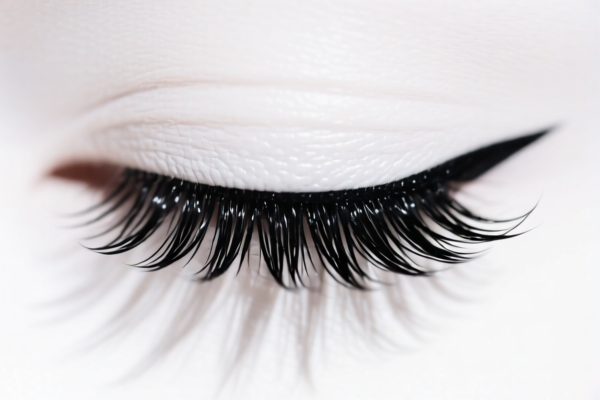
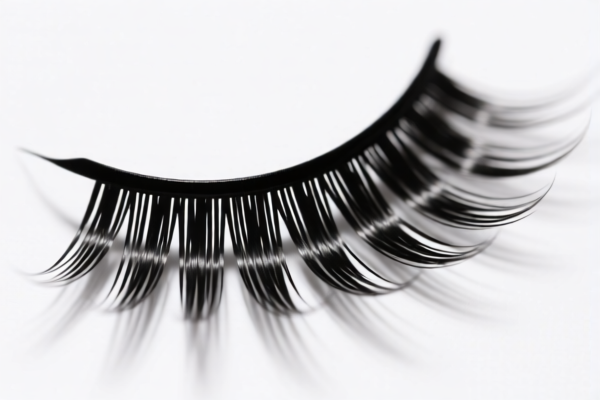
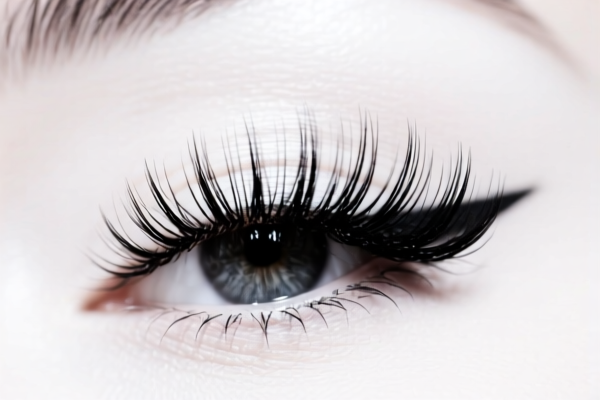
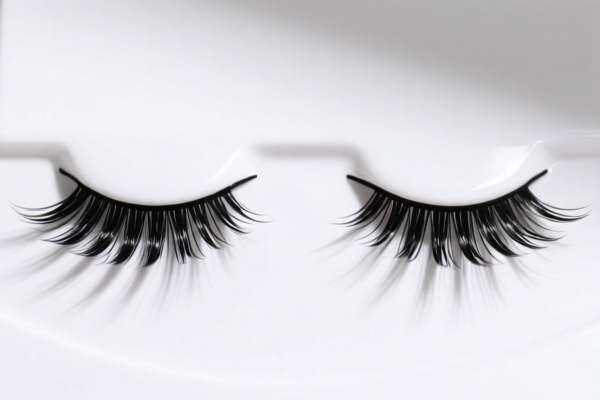
AI Analysis
💄 False Eyelashes (Mink/Synthetic/Lash Strips)
🌐 HS Code Reference & Customs Clearance Guide | 2026 Latest Tariff Analysis | Professional Clearance Strategy
📌 I. Product Definition & Classification: Do You Really Know "False Eyelashes"?
False eyelashes are cosmetic accessories designed to enhance or alter the appearance of the eyes. In international trade, they sit at a crossroads between Cosmetics and Wigs/Hair Products. The classification depends heavily on whether they are treated as a "beauty preparation" (cosmetic) or an "artificial hair product" (textile/accessory).
Cosmetic Interpretation (3304): Treated as an "eye cosmetic" or beauty aid applied for aesthetic purposes.
Article 67 Interpretation (6704): Treated as "wigs, false hair or similar articles" made of textile materials, specifically listing "false eyelashes" as a distinct category.
⚠️ Key Distinction Point:
- If declared as Cosmetics/Beauty Preparations →归类 to 3304 (Tax: 35%)
- If declared as Artificial Hair/Textile Products → 归类 to 6704 (Tax: 17.5%)
- Note: The "Artificial Hair" classification often results in lower tariffs but requires precise material declaration (e.g., synthetic fibers).
📦 II. HS Code Classification Details (2026 Latest Tariff Authority Comparison)
| HS Code | Product Description | Application Scenario | Material/Logic |
|---|---|---|---|
3304.20.00.00 |
Beauty or make-up preparations and preparations for the removal of make-up; eye make-up | Makeup aids, cosmetic-grade lash kits, adhesive-inclusive sets | ✅ Cosmetic Use: Fits "Eye Cosmetics" definition |
3304.99.50.00 |
Beauty or make-up preparations and preparations for the removal of make-up; other | Cosmetic aids, skin/hair care auxiliary beauty products | ✅ Cosmetic Use: Fits "Beauty Preparation" definition |
6704.11.00.00 |
Wigs, false hair or similar articles: of human hair | ❌ Not Applicable (False eyelashes are rarely human hair in mass trade) | ❌ N/A |
6704.19.00.00 |
Wigs, false hair or similar articles: of other materials (Synthetic/Textile) | Standard synthetic fiber lashes, mink-style synthetic lashes | ✅ Material: Synthetic textile/hair-like material |
6704.20.00.00 |
Wigs, false hair or similar articles: of feathers or down | ❌ Not Applicable | ❌ N/A |
🔍 Critical Reminder:
- 3304 Codes: Treats the item as a cosmetic product. Higher tax burden (35%).
- 6704 Codes: Treats the item as an article of artificial hair. Lower tax burden (17.5%).
- Common Practice: Many importers prefer 6704.19.00.00 for standard synthetic lashes to save on tariffs, provided the product is not packaged or described primarily as a "makeup preparation" with adhesive/primers.
💰 III. 2026 Latest Tariff Rate Breakdown (Including Surcharges & Policy Add-ons)
✅ Applicable Country: USA (US)
✅ Origin: China (CN)
✅ Effective Date: Post-November 2025 (Current Trade Policy)
🎯 1. 3304.20.00.00 / 3304.99.50.00 —— Classified as Eye Cosmetics/Beauty Preparations
| Item | Content |
|---|---|
| Base Tariff | 0% (Ad Valorem) |
| USITC Section 301 Surcharge | +25% |
| IEEPA Section 122 Surcharge | +10% |
| Total Tariff Rate | 35.0% |
| Tax Calculation | CIF Value × 35% |
| De Minimis Eligibility | ❌ Not Eligible (deny_de_minimis) |
| Legal Basis Path | IEEPA:9903.01.25 → IEEPA:9903.01.24 → USITC:3304.20.00.00 → FOOTNOTE:9903.88.01 |
📌 Explanation:
- 25% USITC Surcharge: From Section 301 of the Trade Act.
- 10% IEEPA Surcharge: From the International Emergency Economic Powers Act (specifically targeting Chinese goods under recent directives).
- Total 35%: This is a high tariff bracket. If your product is marketed strictly as a "cosmetic makeup aid," this rate applies.
🎯 2. 6704.19.00.00 —— Classified as Other Artificial Hair Products (Synthetic)
| Item | Content |
|---|---|
| Base Tariff | 0% |
| USITC Section 301 Surcharge | +7.5% |
| IEEPA Section 122 Surcharge | +10% |
| Total Tariff Rate | 17.5% |
| Tax Calculation | CIF Value × 17.5% |
| De Minimis Eligibility | ❌ Not Eligible (deny_de_minimis) |
| Legal Basis Path | IEEPA:9903.01.25 → IEEPA:9903.01.24 → USITC:6704.19.00.00 → FOOTNOTE:9903.88.01 |
📌 Explanation:
- 7.5% USITC Surcharge: A lower rate for certain textile/artificial hair categories compared to general electronics or cosmetics.
- 10% IEEPA Surcharge: Still applies as it is a Chinese-origin good.
- Total 17.5%: Significant Savings! This is why many importers classify synthetic false lashes as "articles of artificial hair" rather than cosmetics, provided the packaging and description support this (e.g., "Synthetic Fiber Eyelash Extensions" rather than "Eyelash Makeup Kit").
🛠️ IV. Customs Clearance Practical Advice (Real-World Pitfall Avoidance Guide)
✅ 1. Document Preparation Checklist (No Compromises)
| Document | Required? | Notes |
|---|---|---|
| ✅ Product Specification Sheet | ✔️ | Must specify: Material (Synthetic/Mink/Human), Length, Curl, Quantity. |
| ✅ Product Photos (Clear Labeling) | ✔️ | Show the lash band, fibers, and any packaging text. |
| ✅ Commercial Invoice | ✔️ | Crucial: Use precise terminology. Avoid "Cosmetic Makeup" if aiming for 6704. Use "Artificial Hair Extensions - Eyelashes." |
| ✅ Packing List | ✔️ | Detail individual pairs/boxes. |
| ✅ Material Declaration | ✔️ | Confirm if fibers are synthetic polymers (polyester, etc.) to justify 6704.19. |
✅ 2. Declaration Tips (Key Mnemonic)
🔥 “Material Defines Code, Description Defines Risk!”
| Scenario | Correct Declaration Strategy | Wrong Approach |
|---|---|---|
| Standard Synthetic Lashes | HS 6704.19.00.00Description: "Synthetic False Eyelashes (Artificial Hair)" |
Describing as "Makeup" or "Cosmetics" → Triggers 35% tax |
| Lash Kit with Glue/Pump | Risk Zone! May be forced to 3304 due to "preparation" nature. |
Trying to hide glue → Customs inspection leads to penalties |
| Premium Mink (Non-Synthetic) | Check 6704.11 (Human) vs 6704.19 (Other). Note: "Mink" often implies animal hair, check specific HTS rules. |
Misdeclaring animal hair as synthetic → Fraud risk |
| Individual Pairs in Blister Pack | Can still be 6704.19 if main character is the hair, not the packaging. |
Splitting declaration to avoid detection |
✅ 3. Special Circumstances Handling
| Situation | Handling Advice |
|---|---|
| "Mink" Lashes | If truly natural mink hair, it may fall under animal hair categories. Ensure proper bio-security declarations. |
| With Adhesive Glue | If glue is the main component or inseparable, Customs may classify the whole kit as 3304 (Cosmetic). Consider shipping lashes and glue separately if possible. |
| Sample Shipments | Even samples are subject to the 35% or 17.5% rates if from China. De Minimis (Section 321) is NOT available for Chinese goods under current IEEPA rules. |
🌍 V. Global Market Comparison (2026 Latest)
| Country/Region | Recommended HS Code | Tariff (China Origin) | Certification/Remarks |
|---|---|---|---|
| 🇺🇸 USA | 6704.19.00.00 (Preferred) |
17.5% | Avoid 3304 (35%). Strict IEEPA enforcement. |
| 🇨🇳 China | 6704.19.00.00 |
0% - 5% | Domestic trade varies. |
| 🇪🇺 EU | 6704.19.00.00 |
0% - 5% | CE marking not always required for cosmetics, but safety data needed. |
| 🇬🇧 UK | 6704.19.00.00 |
0% - 5% | Post-Brexit rules apply. |
| 🇦🇺 Australia | 6704.19.00.00 |
5% | TGA regulations if claimed as medical/cosmetic. |
📌 Conclusion:
- The USA is the most critical market due to the 17.5% vs 35% difference.
- EU/UK/Australia have more stable, lower tariffs, making classification less critical for cost, but still important for compliance.
📌 VI. Common Errors & Pitfall Guide (Lessons Learned)
❌ Mistake 1: Describing synthetic lashes as "Cosmetics" in the invoice when aiming for 6704.
👉 Consequence: Customs may reclassify to 3304 OR flag for inconsistency. Better to stick to 6704 with consistent "Artificial Hair" description to secure the 17.5% rate.
❌ Mistake 2: Claiming De Minimis ($800) for Chinese false eyelashes.
👉 Consequence: Seizure or Return! The IEEPA 10% surcharge explicitly denies de minimis privileges for Chinese goods. You must pay the full duty + surcharge.
❌ Mistake 3: Ignoring the "Glue" issue.
👉 Consequence: If lashes come with glue, they are "preparations." Classifying as 6704 might be rejected. Split shipments are safer.
✅ Correct Practice:
"False Eyelashes, Synthetic Fiber, Artificial Hair Product, Not for Medical Use, Packaged in Boxes, Origin: China."
HS Code:6704.19.00.00
Rate: 17.5%
🎯 VII. Conclusion: Precision in Classification, Profit in Clearance!
🎯 Key Takeaway:
🔹 "Synthetic Lashes = 17.5% (via 6704)" vs "Cosmetic Lashes = 35% (via 3304)".
🔹 Do NOT rely on De Minimis for China. Every single pair is dutiable.
🔹 Documentation is King: Your product description must align with the HS Code's logic (Hair vs. Cosmetic).
📌 Pro Tip:
If your false eyelashes contain natural fur (mink/sable), ensure you have CITES certificates if applicable, and verify the correct animal hair HS code. For synthetic lashes, 6704.19.00.00 is your cost-saving ally in the US market.
📣 Immediate Action:
📞 Consult your Customs Broker to confirm the "Main Character" of your product (Hair vs. Cosmetic Prep).
📝 Update your Invoice Description to match the HS Code strategy.
🚀 Optimize Your Landed Cost by choosing the right classification!
✨ Professional Clearance Starts with Accurate Classification!
💼 Your Margin Depends on Your HS Code!
Customer Reviews
About HS Code Classification
The Harmonized System (HS) is an internationally standardized nomenclature developed by the World Customs Organization (WCO) to classify traded products. Over 200 countries use the HS system as the basis for customs tariffs, trade statistics, and import/export regulations.
Each HS code follows a hierarchical structure:
- Chapter (2 digits) — Broad category of goods (e.g., Chapter 84: Machinery and Mechanical Appliances)
- Heading (4 digits) — More specific grouping within the chapter
- Subheading (6 digits) — Internationally standardized breakdown, used by all WCO member countries
- National subdivisions (8-10 digits) — Country-specific extensions for further classification, such as US HTSUS 10-digit codes
Correct HS code classification is essential for smooth customs clearance, accurate duty payment, and compliance with trade regulations. Misclassification can lead to customs delays, overpayment of duties, or penalties.
When importing from CN to US, the applicable tariff rates may include:
- Most-Favored-Nation (MFN) rate — The standard duty rate applied to WTO members
- General rate — Applied to countries without trade agreements
- Trade remedy duties — Additional tariffs such as Section 301 (anti-dumping), Section 232 (national security), or countervailing duties
The information provided on this page is for reference purposes only. For official classification, please consult with your local customs authority or a licensed customs broker.