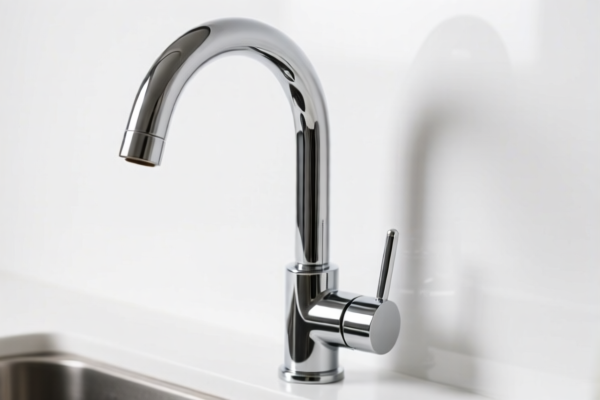
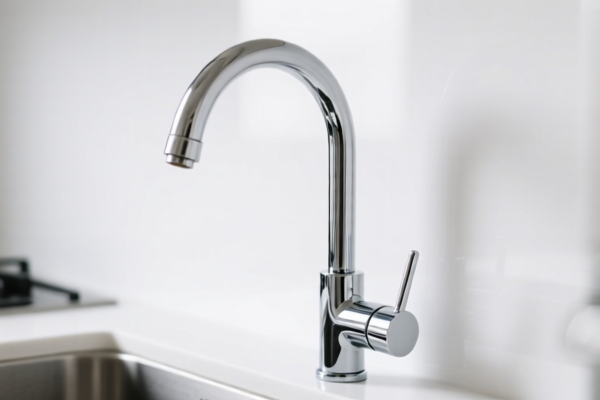
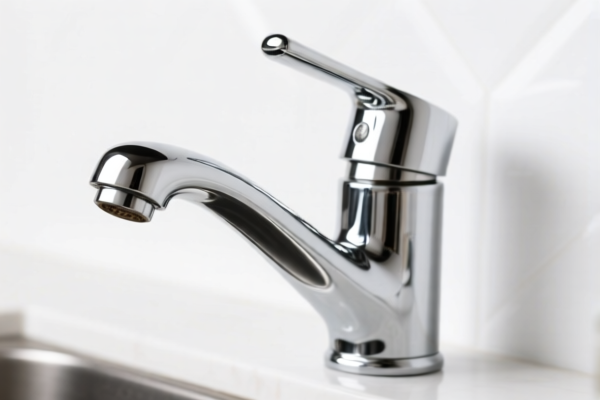
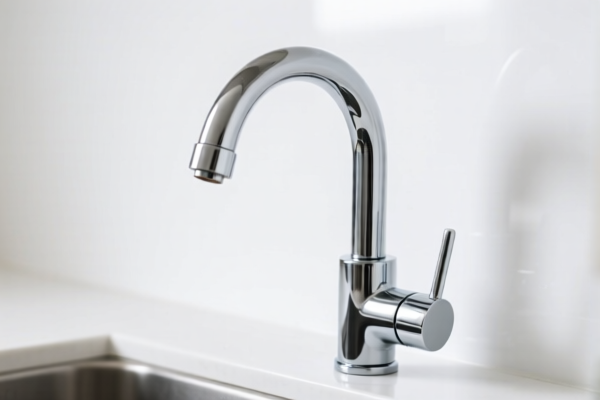
faucet outlet
CN → US| HS Code | Tariff Rate | Origin | Destination | Doc |
|---|---|---|---|---|
| 7418201000 | 88.0% | CN | US | Official Doc |
| 8481805060 | 38.0% | CN | US | Official Doc |
| 8481801030 | 39.0% | CN | US | Official Doc |
| 7418205000 | 88.0% | CN | US | Official Doc |
| 7324900000 | 85.0% | CN | US | Official Doc |
Product Images
AI Analysis
🚰 Faucet Outlet (Taps & Valves)
🌐 HS Code Reference & Clearance Guide | 2024/2025 Tariff Structure | Professional Compliance Strategy
📌 I. Product Definition & Classification: What Exactly is a "Faucet"?
A "Faucet Outlet" (commonly referred to as a Tap or Faucet) is a critical component in plumbing systems, used to control the flow of water. In international trade, classification depends heavily on material composition (Copper/Brass vs. Steel/Stainless) and function (Sanitary vs. Mechanical/Valve).
The Two Main Categories: 1. Sanitary Ware (Plumbing Fixtures): Typically made of brass, copper, or stainless steel, used in kitchens, bathrooms, and labs. These are viewed as "furniture" for bathrooms. * Key HS Chapters: 73 (Iron/Steel), 74 (Copper). 2. Mechanical Appliances (Valves/ cocks): Used for industrial piping, tanks, or general fluid control. * Key HS Chapter: 84 (Nuclear reactors, boilers, machinery and mechanical appliances).
⚠️ Critical Distinction:
- If the item is a finished sanitary fixture (brass/copper) → Chapter 73 or 74.
- If the item is a valve/mechanical part (regardless of material) → Chapter 84.
- Note: Misclassification leads to massive tariff discrepancies (e.g., 38% vs. 88%).
📦 II. HS Code Classification Details (Data-Verified)
Based on the provided dataset, here are the valid classifications for Faucet Outlets:
| HS Code | Product Description | Material/Type | Total Tax Rate | Key Tariff Components |
|---|---|---|---|---|
7418.20.10.00 |
Copper/Brass Sanitary Fittings | Copper/Brass body, sanitary ware | 88.0% | Base: 3% + Sec 301: 25% + IEEPA: 10% + Section 232/201: 50% |
8481.80.50.60 |
Valves & Pipes (General) | Mechanical appliance, pipe fittings | 38.0% | Base: 3% + Sec 301: 25% + IEEPA: 10% |
8481.80.10.30 |
Sink/Basin Taps | Often inferred as Copper/Brass, sanitary | 39.0% | Base: 4% + Sec 301: 25% + IEEPA: 10% |
7418.20.50.00 |
Other Copper Sanitary Fittings | Copper/Brass, other sanitary | 88.0% | Base: 3% + Sec 301: 25% + IEEPA: 10% + Section 232/201: 50% |
7324.90.00.00 |
Electric Hot Water Faucets (Steel) | Iron/Steel body, electric | 85.0% | Base: 0% + Sec 301: 25% + IEEPA: 10% + Section 232/201: 50% |
7324.10.00.50 |
Stainless Steel Sinks/Basins | Stainless Steel, kitchen/basin | 88.4% | Base: 3.4% + Sec 301: 25% + IEEPA: 10% + Section 232/201: 50% |
🔍 Data Insight:
- Highest Risk (88%+): Products classified under Chapter 74 (Copper) or Chapter 73 (Steel/Iron) as sanitary ware.
- Lower Risk (38-39%): Products classified under Chapter 84 as "valves" or "mechanical appliances."
- Why the huge difference? The 50% additional tariff for Steel/Copper (Section 232) applies to sanitary ware made of these metals, but not to the mechanical valve classification (8481).
💰 III. Detailed Tariff Breakdown (2024/2025)
✅ Applicable Market: USA (Assumed based on "122 Clause" and specific rates)
✅ Origin: China (CN)
✅ Effective Date: Current Trade War Tariffs Apply
🎯 1. The "High Tax" Trap: Chapter 73 & 74 (Sanitary Ware)
| Item | Content |
|---|---|
| Base MFN Rate | 0% - 4.0% (varies by sub-heading) |
| Section 301 (25%) | +25% (Trade War Tariff) |
| IEEPA / Section 122 (10%) | +10% (China-specific tariff) |
| Section 232 / Steel & Copper (50%) | +50% (Applicable to Steel/Iron & Copper products under 7324/7418) |
| Total Effective Rate | 85.0% – 88.4% |
| De Minimis Exemption | ❌ Not Eligible (Usually blocked for these HS codes due to high duty) |
📌 Explanation for 88.0% (
7418.20.10.00):
- This is for Copper/Brass faucets.
- The 50% additional tariff is triggered because copper and steel sanitary products fall under specific trade remedy lists (often linked to Section 232 or 201 expansions).
- Formula:(Base 3% + 301 25% + IEEPA 10%) + 50% = 88%.
🎯 2. The "Optimized" Path: Chapter 84 (Valves/Machinery)
| Item | Content |
|---|---|
| Base MFN Rate | 3.0% - 4.0% |
| Section 301 (25%) | +25% |
| IEEPA / Section 122 (10%) | +10% |
| Additional Steel/Copper Tariff | 0% (Not applicable to 8481 mechanical valves) |
| Total Effective Rate | 38.0% - 39.0% |
| De Minimis Exemption | ❌ Not Eligible |
📌 Explanation for 38.0% (
8481.80.50.60):
- This classification treats the faucet as a valve or pipe fitting (mechanical appliance).
- Crucial Advantage: It avoids the 50% steel/copper surcharge.
- Formula:Base 3% + 301 25% + IEEPA 10% = 38%.
🛠️ IV. Clearance Practical Advice (Battle-Tested)
✅ 1. Classification Strategy: Choose Your Fighter
| Scenario | Recommended HS Code | Tax Rate | Strategy |
|---|---|---|---|
| Standard Brass Faucet (Kitchen/Bath) | 8481.80.50.60 or 8481.80.10.30 |
38-39% | Declare as Valve. Emphasize "Mechanical Appliance," "Flow Control Valve," "Pipe Fitting." Avoid words like "Sanitary Ware" or "Furniture" if possible. |
| Stainless Steel Sink Faucet | 7324.10.00.50 |
88.4% | High Risk. Often forced into Chapter 73 due to material. Must provide precise material composition (e.g., "Stainless Steel 304"). |
| Electric Hot Water Faucet | 7324.90.00.00 |
85.0% | Steel Classification. Treat as electrical appliance with steel body. High tax unavoidable unless classified as machine part (risky). |
| Pure Copper Faucet | 7418.20.10.00 |
88.0% | High Risk. Copper sanitary goods attract the 50% surcharge. Hard to offset. |
🚀 Pro Tip:
If your faucet is technically a valve (e.g., a specialized industrial tap or a complex mixer valve), try to argue for 8481. The savings are ~49% tax reduction. However, if it is a simple residential bathroom tap, customs may force 7418/7324.
✅ 2. Documentation Checklist (Must-Have)
| Document | Requirement | Why? |
|---|---|---|
| Product Specification Sheet | Must state material (Brass, SS, Steel) and function | Determines Chapter 73/74 vs 84 |
| Commercial Invoice | Clear description: "Mechanical Valve, Model XYZ, for Pipe Control" | Avoid "Sanitary Faucet" if aiming for 8481 |
| Certificate of Origin | Standard Form A or General | Prove Chinese origin for accurate tariff calc |
| Material Declaration | Specify alloy types (e.g., "Lead-free Brass," "SS304") | Critical for Steel/Copper surcharge assessment |
| User Manual/Photos | Show internal mechanism | Proves it functions as a valve/mechanical part |
✅ 3. Common Pitfalls & How to Avoid Them
❌ Mistake 1: Describing the product as "Sanitary Ware" in the invoice.
👉 Consequence: Customs will classify it under 7418 or 7324, triggering the 50% steel/copper surcharge → Total tax jumps to 88%.
✅ Fix: Use terms like "Water Control Valve," "Fluid Control Appliance," "Pipe Fitting."
❌ Mistake 2: Ignoring the Material Composition.
👉 Consequence: If you say "Metal Faucet" and it’s copper, they may default to the highest duty copper rate.
✅ Fix: Be specific: "Zinc Alloy with Chrome Plating" (if applicable) or "Stainless Steel 304."
❌ Mistake 3: Assuming De Minimis (Section 321) applies.
👉 Consequence: Most of these HS codes (7324, 7418, 8481) are excluded from the $800 de minimis exemption for Chinese imports due to Section 301/IEEPA.
✅ Fix: Plan for full duty payment. Do not rely on B2C small package loopholes for these items.
🌍 V. Global Market Comparison (2024/2025)
| Market | Recommended HS | Est. Total Tax | Notes |
|---|---|---|---|
| 🇺🇸 USA | 8481.80.50.60 (Preferred) |
38.0% | Aggressive classification possible. High risk if classified as sanitary. |
| 🇺🇸 USA | 7418.20.10.00 (Fallback) |
88.0% | Inevitable for obvious brass bathroom taps if not structured as valve. |
| 🇨🇳 China | 7324.10 / 7418.20 |
10-15% | Low import duty, but VAT 13%. Much cheaper than US. |
| 🇪🇺 EU | 7324.10 / 7418.20 |
1.5-3.7% | Low base duty. No Section 301/232 equivalents. Best market for volume. |
📌 Conclusion:
The USA market is hostile to faucet imports due to layered tariffs (301 + IEEPA + Steel/Copper).
EU/Asia markets are far more competitive for this product category.
📌 VI. Final Recommendations & Action Plan
🎯 1. Immediate Actions for Importers
- Review Invoice Description: Change "Faucet" to "Water Control Valve" or "Mechanical Appliance."
- Check Material: If it is Stainless Steel, it falls under 7324 (88.4%) or 8481 (38%). Try to justify 8481.
- Avoid "Sanitary" Language: Do not use "Bathroom Fixture," "Lavatory Accessory," or "Sanitary Ware" in commercial documents.
- Pre-Arbitration (Ruling): For large volumes, request an Advance Ruling (R195) from CBP to confirm if your specific design qualifies as 8481.
🎯 2. Risk Summary
- Best Case: Classified as 8481 → 38% Tax.
- Worst Case: Classified as 7418/7324 → 88% Tax.
- Gap: 50% difference.
💡 Golden Rule:
"If it controls flow, it's a valve (84). If it's a bathroom fixture, it's sanitary (73/74). Fight for 84 to save 50% in tax."
📣 Disclaimer:
This guide is based on the provided data and current US trade policies. Tariff laws change frequently. Always consult a licensed customs broker for final classification and clearance.
✨ Precision in Classification = Profit in your Pocket.
Customer Reviews
About HS Code Classification
The Harmonized System (HS) is an internationally standardized nomenclature developed by the World Customs Organization (WCO) to classify traded products. Over 200 countries use the HS system as the basis for customs tariffs, trade statistics, and import/export regulations.
Each HS code follows a hierarchical structure:
- Chapter (2 digits) — Broad category of goods (e.g., Chapter 84: Machinery and Mechanical Appliances)
- Heading (4 digits) — More specific grouping within the chapter
- Subheading (6 digits) — Internationally standardized breakdown, used by all WCO member countries
- National subdivisions (8-10 digits) — Country-specific extensions for further classification, such as US HTSUS 10-digit codes
Correct HS code classification is essential for smooth customs clearance, accurate duty payment, and compliance with trade regulations. Misclassification can lead to customs delays, overpayment of duties, or penalties.
When importing from CN to US, the applicable tariff rates may include:
- Most-Favored-Nation (MFN) rate — The standard duty rate applied to WTO members
- General rate — Applied to countries without trade agreements
- Trade remedy duties — Additional tariffs such as Section 301 (anti-dumping), Section 232 (national security), or countervailing duties
The information provided on this page is for reference purposes only. For official classification, please consult with your local customs authority or a licensed customs broker.