faux fur rugs
CN → US| HS Code | Tariff Rate | Origin | Destination | Doc |
|---|---|---|---|---|
| 5702109030 | 35.0% | CN | US | Official Doc |
| 5703310030 | 41.0% | CN | US | Official Doc |
| 5702322000 | 42.0% | CN | US | Official Doc |
| 5705002090 | 38.3% | CN | US | Official Doc |
| 5705002030 | 38.3% | CN | US | Official Doc |
| 5703392090 | 41.0% | CN | US | Official Doc |
Product Images
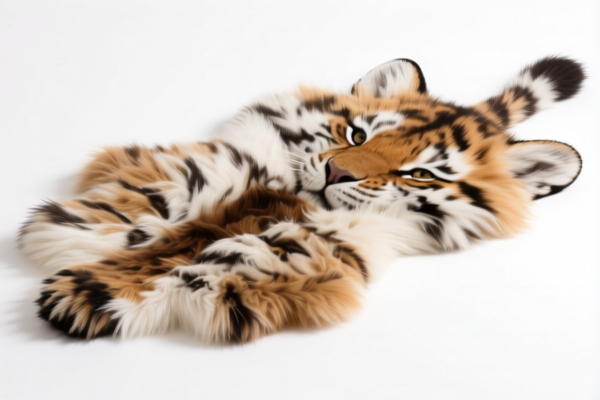
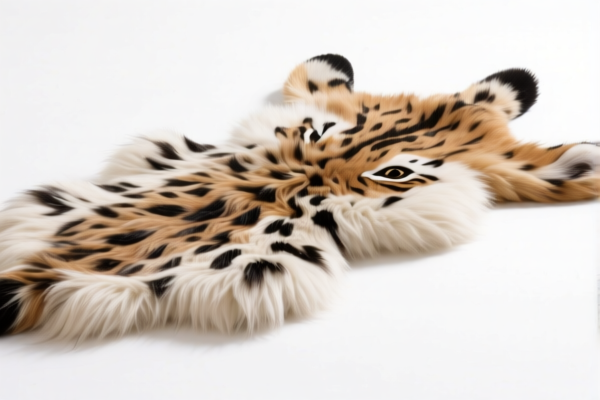


AI Analysis
🐾 Faux Fur Rugs (Synthetic Fur Carpets)
🌐 HS Code Reference & Customs Clearance Guide | 2026 Latest Tariff Analysis | Professional Entry Strategies
📌 I. Product Definition & Classification: Do You Really Understand "Faux Fur Rugs"?
Faux fur rugs are home textile products made from man-made fibers (synthetic materials such as acrylic, polyester, or nylon), designed to mimic the texture and appearance of animal fur. They are typically used for flooring, bedding, or decorative purposes.
In international trade, these products are classified based on their manufacturing process (weaving vs. tufting vs. other methods) and material composition.
⚠️ Key Distinction Points:
- If the rug is woven (threads interlaced on a loom) → Generally falls under Chapter 57.02.
- If the rug is tufted (yarns punched into a backing fabric) → Generally falls under Chapter 57.03.
- If the rug is knitted, crocheted, or of a different type not covered above → Generally falls under Chapter 57.05.
- Material: All codes below specify "Man-made fibers" or "Textile materials" as the primary raw material.
📦 II. HS Code Classification Details (2026 Latest Tariff Authority Comparison)
| HS Code | Product Description | Application Scenario | Manufacturing Method |
|---|---|---|---|
5702.10.90.30 |
Man-made fiber carpets, woven, other | Woven faux fur rugs, traditional weaving method | ✅ Woven |
5703.31.00.30 |
Man-made fiber carpets, tufted | Tufted faux fur rugs, yarns punched into backing | ✅ Tufted |
5702.32.20.00 |
Man-made fiber carpets, other woven forms | Woven rugs not specified elsewhere | ✅ Woven |
5705.00.20.90 |
Other textile floor coverings | Knitted/crocheted faux fur or other non-woven/non-tufted | ✅ Other |
5705.00.20.30 |
Other textile floor coverings (specifically "Carpet") | Faux fur rugs categorized generally under "Other" | ✅ Other |
🔍 Key Reminder:
- The primary determinant for classification is the construction method: Woven (5702), Tufted (5703), or Other (5705).
- Misclassification between "Woven" and "Tufted" is a common error that can lead to customs delays.
- All listed codes carry significant additional tariffs due to US-China trade policies.
💰 III. 2026 Latest Tariff Rate Breakdown (Including Surcharges & Policy Add-ons)
✅ Applicable Country: United States (US)
✅ Country of Origin: China (CN)
✅ Effective Date: From 2025/2026 imports (depending on specific policy updates)
🎯 1. 5702.10.90.30 — Man-made Fiber Carpets, Woven
| Item | Detail |
|---|---|
| Base Duty Rate | 0.0% (ad valorem) |
| Section 301 Surcharge | +25.0% |
| Section 122 Surcharge | +10.0% |
| Total Duty Rate | 35.0% |
| Tax Calculation | CIF Value × 35% |
| De Minimis Exemption | ❌ Not Eligible (High-risk item for scrutiny) |
| Legal Basis Path | Section 301: Footnote 9903.88.01 → Section 122: IEEPA → USITC: 5702.10.90.30 |
📌 Explanation:
- Base Rate 0%: Woven carpets often have low base duties.
- Section 301 (25%): Standard retaliatory tariff on Chinese textiles.
- Section 122 (10%): Additional tariff under the International Emergency Economic Powers Act (IEEPA).
- Total 35%: This is a high-cost category. Accurate description of "woven" structure is critical to avoid misclassification penalties.
🎯 2. 5703.31.00.30 — Man-made Fiber Carpets, Tufted
| Item | Detail |
|---|---|
| Base Duty Rate | 6.0% (ad valorem) |
| Section 301 Surcharge | +25.0% |
| Section 122 Surcharge | +10.0% |
| Total Duty Rate | 41.0% |
| Tax Calculation | CIF Value × 41% |
| De Minimis Exemption | ❌ Not Eligible |
| Legal Basis Path | Section 301: Footnote 9903.88.01 → Section 122: IEEPA → USITC: 5703.31.00.30 |
📌 Explanation:
- Base Rate 6.0%: Tufted carpets have a higher base duty than woven ones.
- Surcharges: Same 25% + 10% as above.
- Total 41%: Highest base cost among the options.
- Critical Note: Must prove the "tufted" structure (yarns inserted into backing) via photos or technical specs.
🎯 3. 5702.32.20.00 — Man-made Fiber Carpets, Other Woven
| Item | Detail |
|---|---|
| Base Duty Rate | 7.0% (ad valorem) |
| Section 301 Surcharge | +25.0% |
| Section 122 Surcharge | +10.0% |
| Total Duty Rate | 42.0% |
| Tax Calculation | CIF Value × 42% |
| De Minimis Exemption | ❌ Not Eligible |
| Legal Basis Path | Section 301: Footnote 9903.88.01 → Section 122: IEEPA → USITC: 5702.32.20.00 |
📌 Explanation:
- Base Rate 7.0%: Slightly higher than5702.10.
- Total 42.0%: Highest total rate in the dataset.
- Risk: This code is a "catch-all" for woven rugs. Customs may scrutinize this code more heavily if the product clearly fits5702.10.
🎯 4. 5705.00.20.90 — Other Textile Floor Coverings
| Item | Detail |
|---|---|
| Base Duty Rate | 3.3% (ad valorem) |
| Section 301 Surcharge | +25.0% |
| Section 122 Surcharge | +10.0% |
| Total Duty Rate | 38.3% |
| Tax Calculation | CIF Value × 38.3% |
| De Minimis Exemption | ❌ Not Eligible |
| Legal Basis Path | Section 301: Footnote 9903.88.01 → Section 122: IEEPA → USITC: 5705.00.20.90 |
📌 Explanation:
- Base Rate 3.3%: Lower base than woven/tufted.
- Total 38.3%: Middle ground.
- Usage: Apply if the rug is knitted, crocheted, or non-woven (e.g., felted faux fur). Not for woven or tufted rugs.
🎯 5. 5705.00.20.30 — Other Textile Floor Coverings (Specifically "Carpet")
| Item | Detail |
|---|---|
| Base Duty Rate | 3.3% (ad valorem) |
| Section 301 Surcharge | +25.0% |
| Section 122 Surcharge | +10.0% |
| Total Duty Rate | 38.3% |
| Tax Calculation | CIF Value × 38.3% |
| De Minimis Exemption | ❌ Not Eligible |
| Legal Basis Path | Section 301: Footnote 9903.88.01 → Section 122: IEEPA → USITC: 5705.00.20.30 |
📌 Explanation:
- Identical rate to5705.00.20.90.
- Differentiation: This code may be used for specific "carpet" definitions under the "Other" category. Ensure the product does not fit Chapter 5702/5703.
🛠️ IV. Customs Clearance Practical Advice (Battle-Tested Pitfall Guide)
✅ 1. Required Documentation Checklist (Non-Negotiable)
| Document | Required? | Notes |
|---|---|---|
| ✅ Product Specification Sheet | ✔️ | Must detail: Material (e.g., 100% Polyester), Construction (Woven/Tufted), Pile Height, Weight (GSM). |
| ✅ High-Resolution Photos | ✔️ | Close-ups showing the weave pattern or tufted backing. Critical for distinguishing between 5702 and 5703. |
| ✅ Commercial Invoice | ✔️ | Description must match HS Code exactly. Use terms like "Synthetic Faux Fur Woven Rug". |
| ✅ Packing List | ✔️ | Include dimensions, weight, and number of pieces. |
| ✅ Origin Certificate | ✔️ | Confirm Chinese origin to apply correct surcharges. |
✅ 2. Declaration Tips (Key Mnemonics)
🔥 "Look at the Backing, Check the Weave, Name it Right, Save the Fee!"
| Scenario | Correct Declaration | Wrong Action | Consequence |
|---|---|---|---|
| Woven Rug (threads interlaced) | 5702.10.90.30 or 5702.32.20.00 |
Declare as "Tufted" | Overpay 6-7% base duty + risk penalty |
| Tufted Rug (yarns punched in) | 5703.31.00.30 |
Declare as "Woven" | Underpay base duty → Customs Audit & Back Taxes |
| Knitted/Felted Rug | 5705.00.20.90 / .30 |
Declare as "Woven" | Misclassification → Delay/Seizure |
| Rug with Rubber Backing | Still classify by top textile structure | Classify as "Rubber Product" | Major Error → 30%+ penalty |
✅ 3. Special Cases Handling
| Situation | Advice |
|---|---|
| Multi-Material Rugs | If >50% of surface is man-made fiber, classify under Man-Made Fiber codes. If mixed with natural fibers (wool), re-evaluate Chapter 57.04. |
| Faux Fur with Leather Base | The textile surface determines classification, not the backing. Still 57xx series. |
| Sample vs. Bulk | Sample shipments are also subject to these tariffs. Do not use "Gift" or "Sample" to evade. |
| Return/Exchange | Provide original invoice and proof of return to claim duty drawback if applicable. |
🌍 V. Global Market Comparison (2026 Latest)
| Country/Region | Recommended HS Code | Approx. Total Duty | Certification Notes |
|---|---|---|---|
| 🇺🇸 USA | Varies (5702/5703/5705) | 35% - 42% | High scrutiny. Must prove construction. |
| 🇨🇳 China | Same HS Codes | ~5% - 10% | Low base duty, no Section 301/122. |
| 🇪🇺 EU | Same HS Codes | ~12% - 15% | CE marking may apply if used in specific contexts. |
| 🇬🇧 UK | Same HS Codes | ~12% - 15% | Post-Brexit rules. No US-style surcharges. |
📌 Conclusion:
- USA is the most expensive market due to Section 301 (25%) and Section 122 (10%) tariffs.
- Accurate classification is paramount. A mistake of just one digit (e.g., 5702 vs 5703) can change the base duty by 1-7%, plus potential penalties.
📌 VI. Common Mistakes & Pitfalls (Blood & Tears Lessons)
❌ Mistake 1: Calling all "Faux Fur Rugs" the same HS Code.
👉 Result: If you send a tufted rug with a woven code, Customs may reclassify and charge back-taxes + interest.
❌ Mistake 2: Ignoring the "Backing" material.
👉 Result: If the backing is significant (e.g., rubber mat), it might still be classified as a textile floor covering, but must be described precisely.
❌ Mistake 3: Assuming "Man-made fiber" means low duty.
👉 Result: Base duty is low (0-7%), but total duty is 35-42% due to surcharges. Budget accordingly!
✅ Correct Action:
"Synthetic Faux Fur Woven Rug, Polyester, 100% Man-Made Fiber, Floor Covering, Model XYZ"
vs.
"Synthetic Faux Fur Tufted Rug, Polyester, 100% Man-Made Fiber, Floor Covering, Model XYZ"
🎯 VII. Conclusion: Precise Declaration, Cost Control, Smooth Clearance!
🎯 Remember the Mnemonics:
🔹 "Woven is 5702, Tufted is 5703, Other is 5705.
Base is low, Surcharges are high (35-42%).
Photos prove the structure, Avoid the audit trap!"
📌 Pro Tip:
- If you are shipping small quantities under De Minimis, note that textiles are often excluded or heavily scrutinized under current US policies.
- For high-volume shipments, consider Advance Rulings from CBP to lock in the HS Code and avoid disputes.
📣 Take Action Now:
📞 Contact a Licensed Customs Broker
📸 Provide Clear Photos of the Rug's Backing and Surface
📄 Request an HS Code Pre-Ruling
🚀 Ensure Your Faux Fur Rugs Clear Customs Smoothly, Maximize Profit, and Minimize Risk!
✨ Professional Customs Clearance Starts with Accurate Classification!
💼 Every Percentage Point of Duty Counts!
Customer Reviews
About HS Code Classification
The Harmonized System (HS) is an internationally standardized nomenclature developed by the World Customs Organization (WCO) to classify traded products. Over 200 countries use the HS system as the basis for customs tariffs, trade statistics, and import/export regulations.
Each HS code follows a hierarchical structure:
- Chapter (2 digits) — Broad category of goods (e.g., Chapter 84: Machinery and Mechanical Appliances)
- Heading (4 digits) — More specific grouping within the chapter
- Subheading (6 digits) — Internationally standardized breakdown, used by all WCO member countries
- National subdivisions (8-10 digits) — Country-specific extensions for further classification, such as US HTSUS 10-digit codes
Correct HS code classification is essential for smooth customs clearance, accurate duty payment, and compliance with trade regulations. Misclassification can lead to customs delays, overpayment of duties, or penalties.
When importing from CN to US, the applicable tariff rates may include:
- Most-Favored-Nation (MFN) rate — The standard duty rate applied to WTO members
- General rate — Applied to countries without trade agreements
- Trade remedy duties — Additional tariffs such as Section 301 (anti-dumping), Section 232 (national security), or countervailing duties
The information provided on this page is for reference purposes only. For official classification, please consult with your local customs authority or a licensed customs broker.